Exchange Ranking
 Top Exchanges
 24h Volume Ranking
 Popularity Ranking
 Exchange BTC Balance
 Proof of Reserves
 Decentralized Exchanges
 Funding Rate
 Funding Heatmap
 Liquidation Data
 Max Pain
 Long/Short Ratio
 Whale L/S Ratio
 Binance/Okex/Huobi L/S
 Bitfinex Margin L/S
 ETF Tracker
 Solana ETF
 XRP ETF
 Hong Kong ETF
 Bitcoin Treasuries
 Crypto Reversal
 Ethereum Reserves
 HyperLiquid Wallet Analysis
 Hyperliquid Whale Watch
 Large Transactions
 On-chain Movement
 Bitcoin ROI
 Stablecoin Market Cap
 Options Analysis
 News
 Articles
 Economic Calendar
 Features
 Wallet
 Contract Calculator


 Security
 Collections
 Watchlist
 Following
 BTC
 ETH
Ethereum researcher Justin Drake calls on large bitcoin and ether holders to enter "bunker mode"
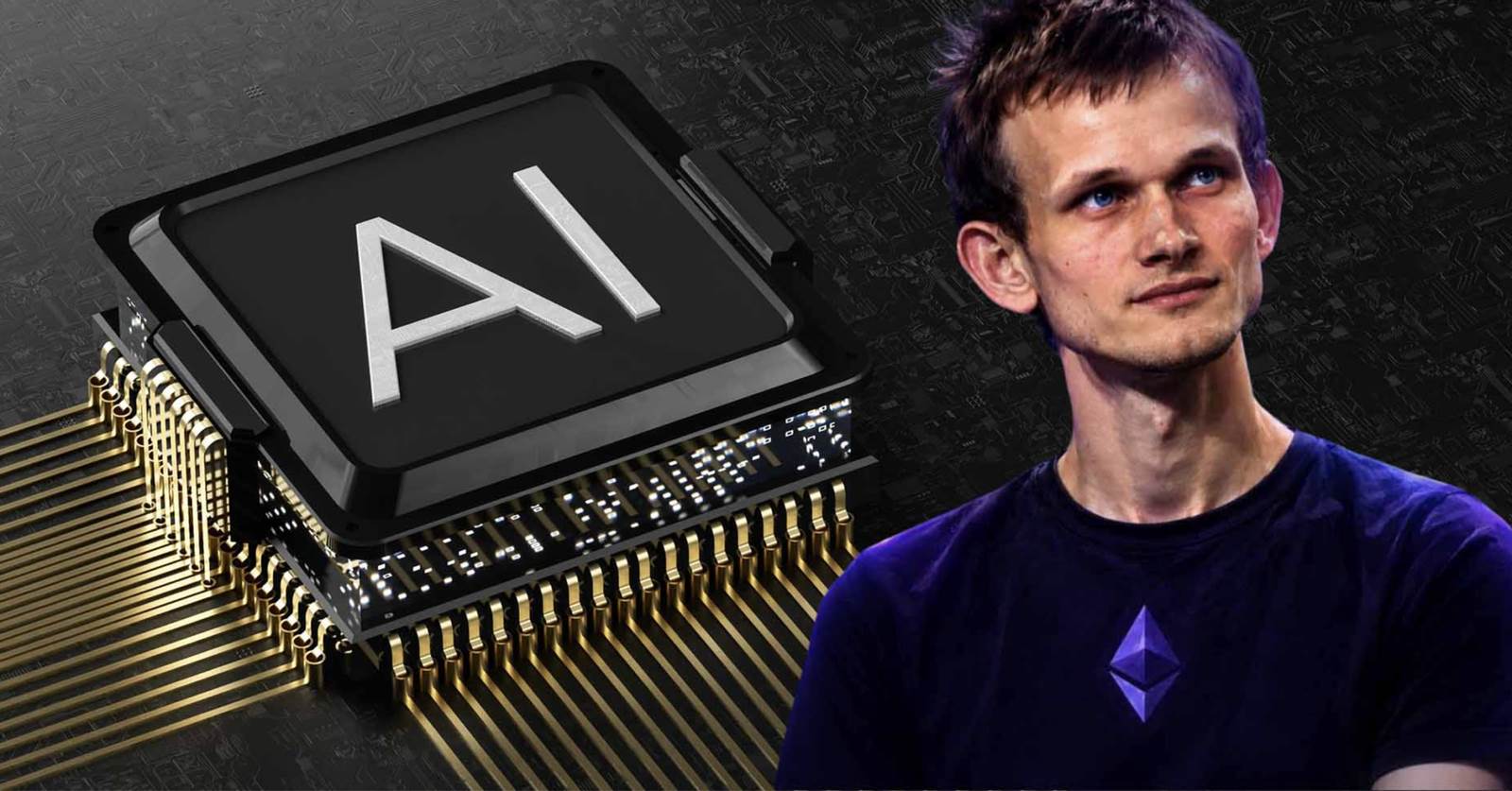
Ethereum Foundation researcher Justin Drake is urging large bitcoin and ether holders to start preparing for the so-called "bunker mode." He warned that in the worst-case scenario, artificial intelligence could discover a mathematical shortcut that could recover private keys from exposed public keys "within months rather than years."
Currently, there have been no such actual attack cases against Bitcoin or Ethereum. Drake's warning is a precautionary measure based on the AI system's ability to accelerate generative mathematical research, rather than evidence that any online wallet cryptography has been cracked.
Bitcoin was trading close to $81,750 late Thursday, down about 2% from 24 hours earlier, after falling below the $83,000 mark in the session. Drake's warning should not be blamed for the price drop. Rising oil prices, rising bond yields, outflows of ETF funds and forced liquidations have already put pressure on the crypto market. Previous data showed that as Bitcoin fell below $84,000,$487.2 million in leverage was liquidated, while Thursday's market was still under pressure in the broader context of risk aversion.
What is the real "bunker mode"?
Drake's proposal is relatively simple: Large holders should gradually move assets to new addresses where public keys have never been exposed on the chain. Cryptocurrency wallets are controlled by private keys, and their corresponding public keys allow the network to verify the authenticity of transactions without revealing the private key itself. Current system design is based on the assumption that computing private keys from public keys is computationally infeasible. Drake's concern is that advanced artificial intelligence may discover unknown mathematical shortcuts and change this assumption.
For many bitcoin address types, the public key can be hidden behind the hash value before funds are spent. Use new addresses and avoid address reuse, thus limiting the information that can theoretically be utilized by attackers. On Ethereum, the public key of an externally owned account (EOA) can actually be restored after the account is signed to issue a transaction.
Investor revelation: The public key exposed does not mean that the wallet has been stolen. Drake believes that reducing unnecessary exposure can provide an additional layer of defense in case artificial intelligence accidentally weakens elliptic curve cryptography.
Why did Drake suddenly move the timeline forward?
Drake's Oct. 7 warning followed OpenAI's release on Tuesday of 722 mathematical manuscripts generated from its internal cutting-edge models and tested against approximately 4,000 research questions. Some of these results contain certificates that can be verified by a computer, while others have not yet been verified. This release does not prove an attack on cryptocurrency cryptography. However, Drake believes that the rapid advancement of artificial intelligence in mathematics means that developers should consider the possibility that elliptic curve cryptography may fail through classical mathematical breakthroughs before sufficiently powerful quantum computers arrive.
This poses a time problem for Ethereum. The Ethereum Foundation's protocol team currently aims to make Ethereum's execution, consensus and data layers quantum-resistant by December 2029.
Vitalik Buterin agrees with the risks, but opposes hasty action
Ethereum co-founder Vitalik Buterin agrees that mathematical research accelerated by artificial intelligence deserves to be taken seriously, but he opposes hasty migration of wallets. Butrin also warned that the problem may not be limited to today's elliptic curve signatures. He said advances in artificial intelligence could weaken some lattice-based cryptography thought to be used in post-quantum systems, and noted that hash-based methods may provide fewer opportunities for unexpected mathematical shortcuts. At the same time, he warned users not to introduce more immediate risks by mistakenly transferring funds. Buterin said he personally lost more money due to poor migration operations than he lost due to hacking.
This tension is already linked to Ethereum's development roadmap. Previous reports have pointed out that Buterin's EIP-8288 proposal may significantly reduce the cost of anti-quantum signatures, making stronger cryptographic schemes practical without having to have each transaction carry huge certificates directly on the chain.
Investor message: The current message is preparation, not panic. There is currently no demonstrated artificial intelligence technology that can recover Bitcoin or Ethereum's private key from the public key, and rushing transfers introduce its own operational risks.
What should Bitcoin and Ethereum holders do now?
The lowest-risk precaution for Bitcoin holders is to maintain ordinary wallet hygiene: avoid address reuse, use wallets that generate new receiving addresses, and keep software updated. Large holders who understand their own custody settings can consider Drake's step-by-step migration recommendations to minimize potential theoretical risks.