Exchange Ranking
 Top Exchanges
 24h Volume Ranking
 Popularity Ranking
 Exchange BTC Balance
 Proof of Reserves
 Decentralized Exchanges
 Funding Rate
 Funding Heatmap
 Liquidation Data
 Max Pain
 Long/Short Ratio
 Whale L/S Ratio
 Binance/Okex/Huobi L/S
 Bitfinex Margin L/S
 ETF Tracker
 Solana ETF
 XRP ETF
 Hong Kong ETF
 Bitcoin Treasuries
 Crypto Reversal
 Ethereum Reserves
 HyperLiquid Wallet Analysis
 Hyperliquid Whale Watch
 Large Transactions
 On-chain Movement
 Bitcoin ROI
 Stablecoin Market Cap
 Options Analysis
 News
 Articles
 Economic Calendar
 Features
 Wallet
 Contract Calculator


 Security
 Collections
 Watchlist
 Following
 ENA
 HNT
 HYPE
 JUP
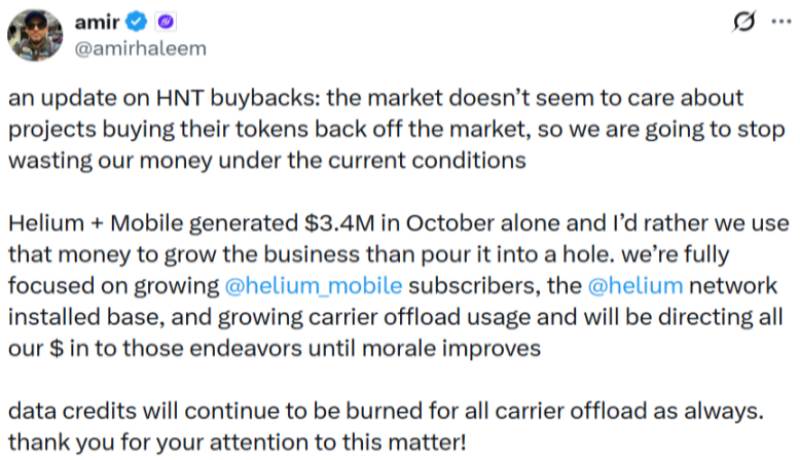
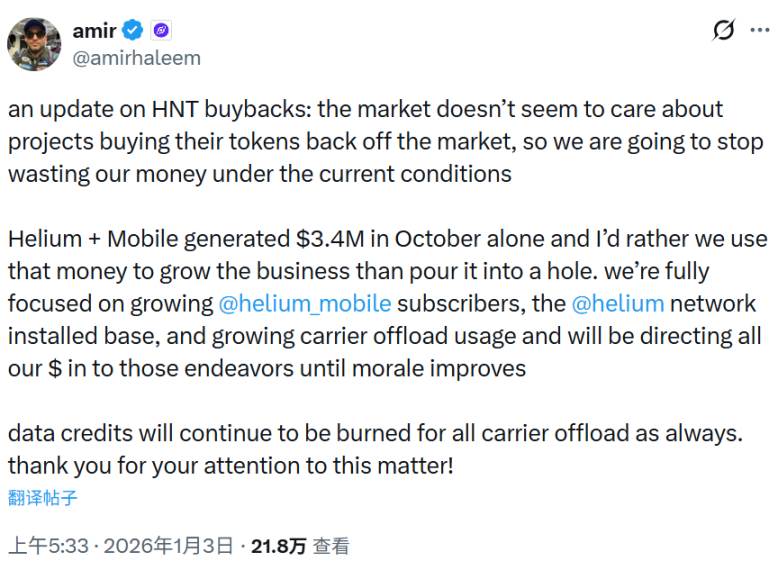
在加密市场中,代币回购曾被不少项目当作刺激币价、安抚投资者的“万能工具”,尤其在币价低迷时更是常见操作。但随着市场成熟,效果正在被重新审视。1月3日,Helium创始人Amir Haleem发推宣布,将停止回购代币。他直言,市场对回购并不在意,币价也未因此明显上涨,因此继续回购只是“浪费资金”。这一表态折射出一个趋势:项目方正逐渐从短期价格干预转向更注重生态建设和长期价值的策略。
Helium是一个去中心化电信基础设施项目,2022年3月,曾完成2亿美元的D轮融资,a16z与Tiger Global领投。其代币HNT主要用于网络激励和治理。
今年10月,该项目计划实施回购机制,主要利用网络产生的部分收入(如移动服务和数据传输费用)来从公开市场买入HNT。
具体细则包括:每月从Helium Mobile等业务收入中划拨固定比例(约10-20%)用于回购,回购资金来源于真实业务现金流而非新发行代币;回购操作通过自动化脚本在二级市场执行,优先选择流动性高的交易所;买入的HNT部分用于销毁(burn),以减少流通供应,剩余部分锁定在项目金库,用于未来网络激励或生态发展。Haleem强调,回购的初衷是“回报持有者,并通过减少供应来稳定价格”。
项目团队原本计划持续到2026年底。然而币价还是给项目方创始人泼了一盆冷水。
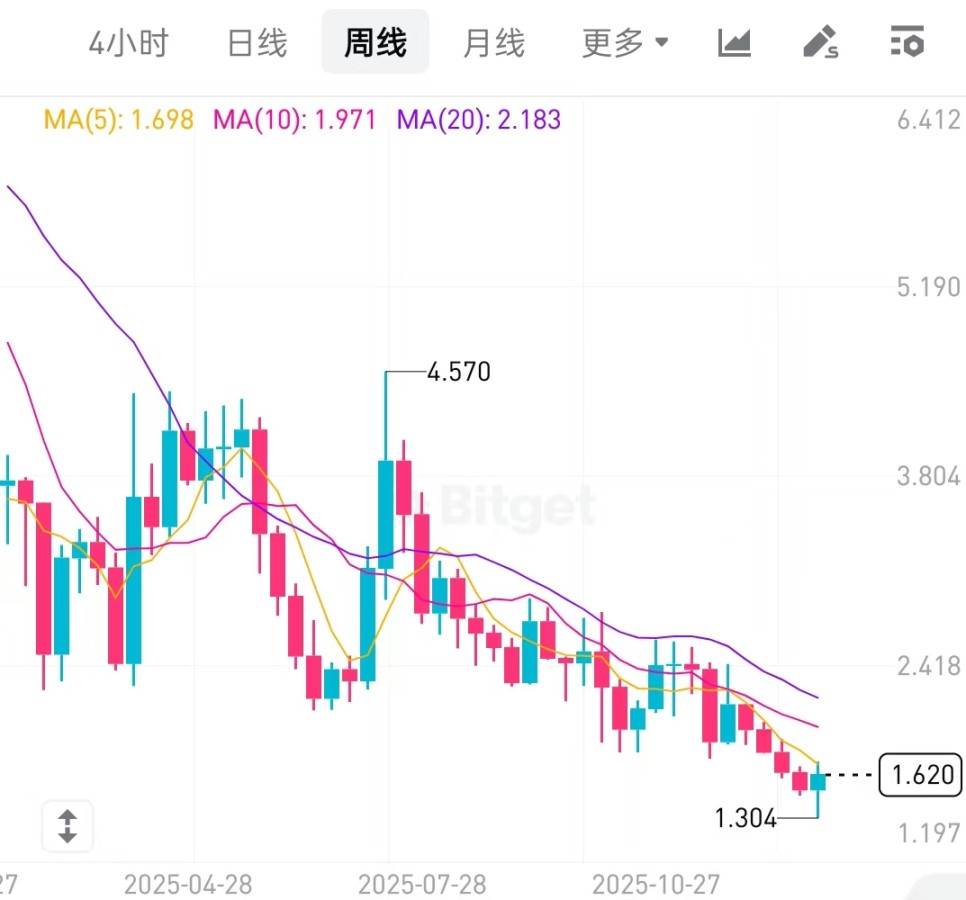
自今年7月创下局部高点4.57美元后,随后一路阴跌,最低下探至1.3美元。回购效用微小。
Haleem称在今年10月份Helium+Mobile业务单月收入达340万美元。目前其代币已近乎处于全流通,并无大额解锁代币,若按照每月业务收入20%进行回购,其回购资金约68万美元。
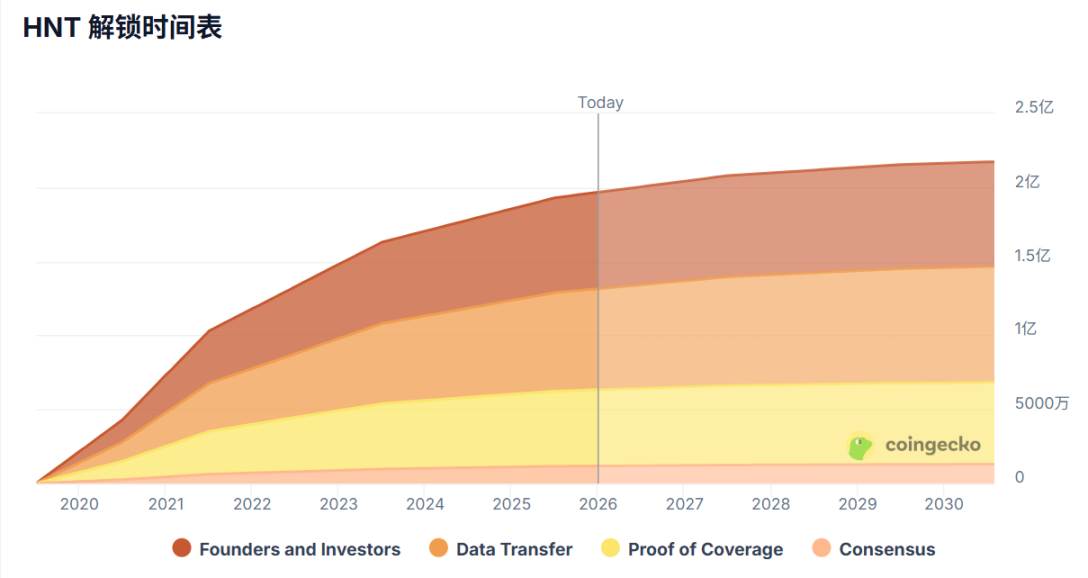
加密市场转熊中,不到数百万美元的回购资金,显得杯水车薪。
也难怪Haleem表示,「要全力发展Helium Mobile用户,扩大其网络装机量,并提高运营商分流使用率。要把将把所有资金都投入到这些方面,直到士气好转。」
如果说这个「古老」明星项目的回购并没掀起热烈讨论,那么Jupiter联合创始人Siong Ong则再次将回购问题推上舆论风口。
Jupiter回购7000万美元难挽币价颓势
Jupiter是Solana生态中最大的DEX聚合器,其代币JUP用于治理和激励。1月3日,Jupiter创始人之一Siong Ong发帖询问社区是否暂停JUP回购。
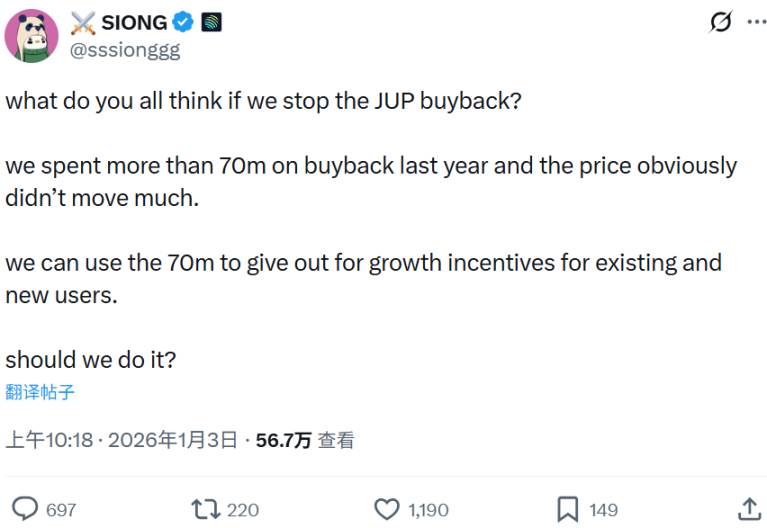
He said, “Last year, over $70 million was spent on repurchasing JUP, but the token price didn’t change much at all. We can use this $70 million to provide incentives for both existing and new users.” He also left a question mark at the end: Should we do this?
In January 2025, Jupiter announced that 50% of its protocol fees would be used for repurchasing JUP, with the tokens being locked up for three years.
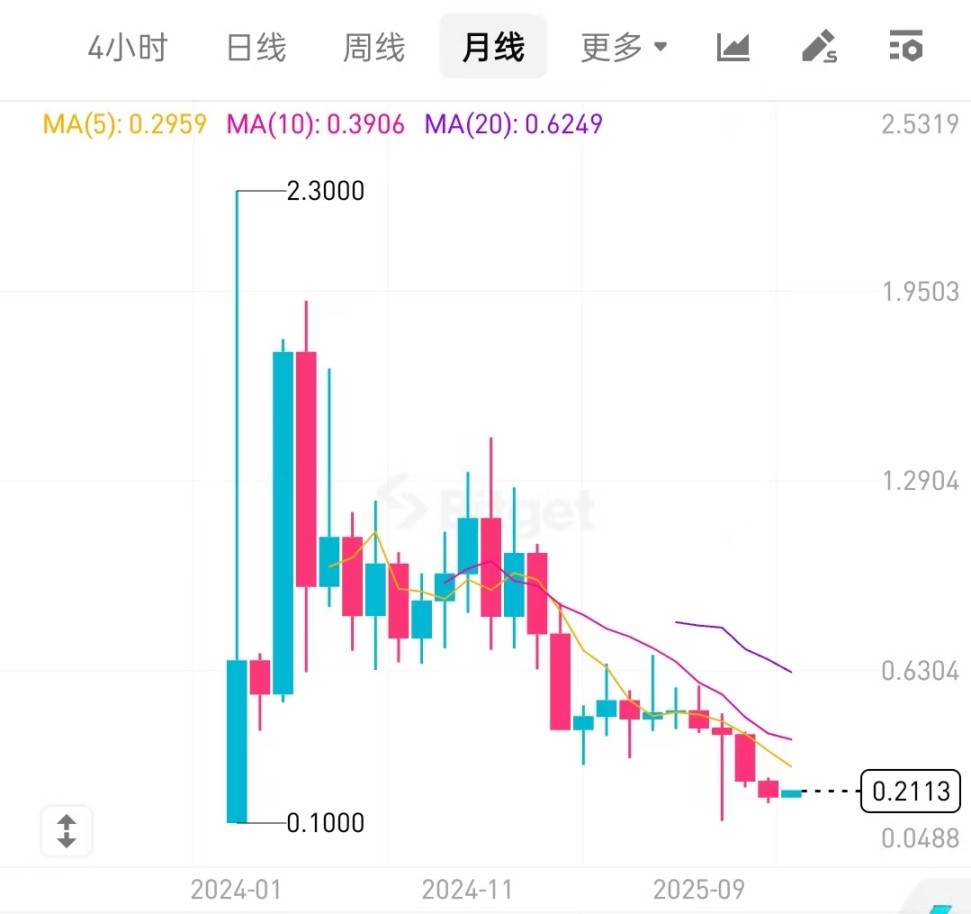
However, after Jupiter spent $70 million on repurchases over one year, the token price remained stagnant, now dropping significantly to $0.2 per token. This represents a 10-fold decrease from the $2 peak reached in 2024.
Despite Jupiter’s rigorous repurchase policies, the token price trends show that these efforts have had little effect.
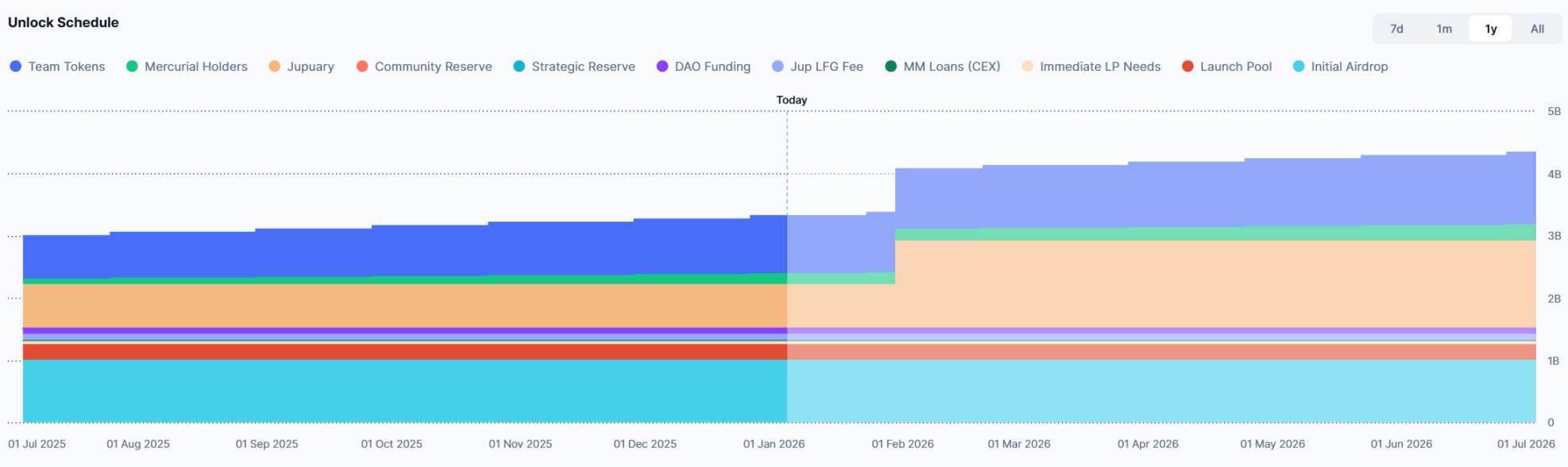
To make matters worse, on January 31 this year, Jupiter plans to unlock 700 million JUP tokens (representing 10% of its total supply), worth $147.88 million. With weak buying demand and strong selling pressure, the token price is likely to continue declining.
Should we continue with repurchases? Or should we intervene directly? Big names are debating this issue.
The actions taken by Helium’s co-founder and Jupiter’s co-founder regarding repurchases have sparked considerable discussion. Anatoly Yakovenko, co-founder of Solana, clearly opposes traditional repurchases. He believes that it takes several years rather than just quarters for long-term capital to be formed. Yakovenko suggests that projects should build balance sheets and lock in profits through pledge mechanisms, similar to equity dilution in traditional finance. This could motivate long-term holders rather than short-term speculators.
Toly’s views have been endorsed by Kyle, a partner at Multicoin Capital. He stated that cryptocurrency projects should ensure that long-term investors receive disproportionately high returns on their investments. However, the specific mechanisms still need to be improved.
Nevertheless, some people expressed opposition to this approach.
Brian Smith, CEO of Jito, said that stock buybacks can significantly increase the value of shares held by shareholders during periods of market downturns. He noted, “It is reasonable to question buybacks and growth-oriented investments. However, using poor prices as a reason for doing so is not valid. What does a low price mean without any buybacks? Most importantly, are you not investing enough in opportunities for positive return on investment due to limited funds? If so, then buybacks should definitely be avoided. But most cryptocurrency projects still have sufficient funds, and the funding arrangements of decentralized autonomous organizations (DAOs) are quite chaotic.”
Selini Capital partner Jordi shared his thoughts. He pointed out that the most successful projects during this cycle actually had their price charts disrupted by automated token repurchases, which caused inconvenience for users. Projects like HYPE, ENA, and JUP, which were highly sought after in the past, spent millions of dollars on repurchases at prices that seemed absurd compared to the fair multiples offered. This led many individual investors to buy at high prices due to FOMO, resulting in significant losses. The founders of these projects became overly obsessed with this self-reinforcing mindset, believing that high multiples were justified. After months of decline and without a clear path back to previous high prices, some began to criticize the repurchase mechanism, claiming it was ineffective. However, this is also completely wrong. For centuries, financial markets have constantly reminded us of fundamental economic truths. How many more times will this happen?
Jordi said that if there isn’t enough money to pay developers for project development, then don’t use limited funds for token repurchases. But once a project succeeds and has sustained income—as holders, what’s the point of holding tokens if there are no dividends, no repurchases, or at least no clear financial benefits?
He also proposed specific solutions. One of them is to determine the repurchase amount based on the price. When the price is low, a larger amount should be repurchased; when the market is overheated, the repurchase rate should be slowed down. Additionally, repurchases can be triggered based on the price-earnings ratio. For example, if the ratio is below 4, 100% of the shares should be repurchased; between 4 and 6, 75% of the shares should be repurchased.