Exchange Ranking
 Top Exchanges
 24h Volume Ranking
 Popularity Ranking
 Exchange BTC Balance
 Proof of Reserves
 Decentralized Exchanges
 Funding Rate
 Funding Heatmap
 Liquidation Data
 Max Pain
 Long/Short Ratio
 Whale L/S Ratio
 Binance/Okex/Huobi L/S
 Bitfinex Margin L/S
 ETF Tracker
 Solana ETF
 XRP ETF
 Hong Kong ETF
 Bitcoin Treasuries
 Crypto Reversal
 Ethereum Reserves
 HyperLiquid Wallet Analysis
 Hyperliquid Whale Watch
 Large Transactions
 On-chain Movement
 Bitcoin ROI
 Stablecoin Market Cap
 Options Analysis
 News
 Articles
 Economic Calendar
 Features
 Wallet
 Contract Calculator


 Security
 Collections
 Watchlist
 Following
 HFT
Hashflow 是一个创新的加密交易协议,旨在提供高效、安全的跨链交易体验。自上线以来,它不断完善自身功能,吸引了越来越多的用户和流动性提供者。近期,Hashflow的价格出现波动,这可能与市场情绪、交易量变化及生态发展动态密切相关。本文将全面解析Hashflow的核心机制、运行模式、历史进展,以及近期价格变动背后的潜在因素,为投资者提供清晰参考。
什么是Hashflow?
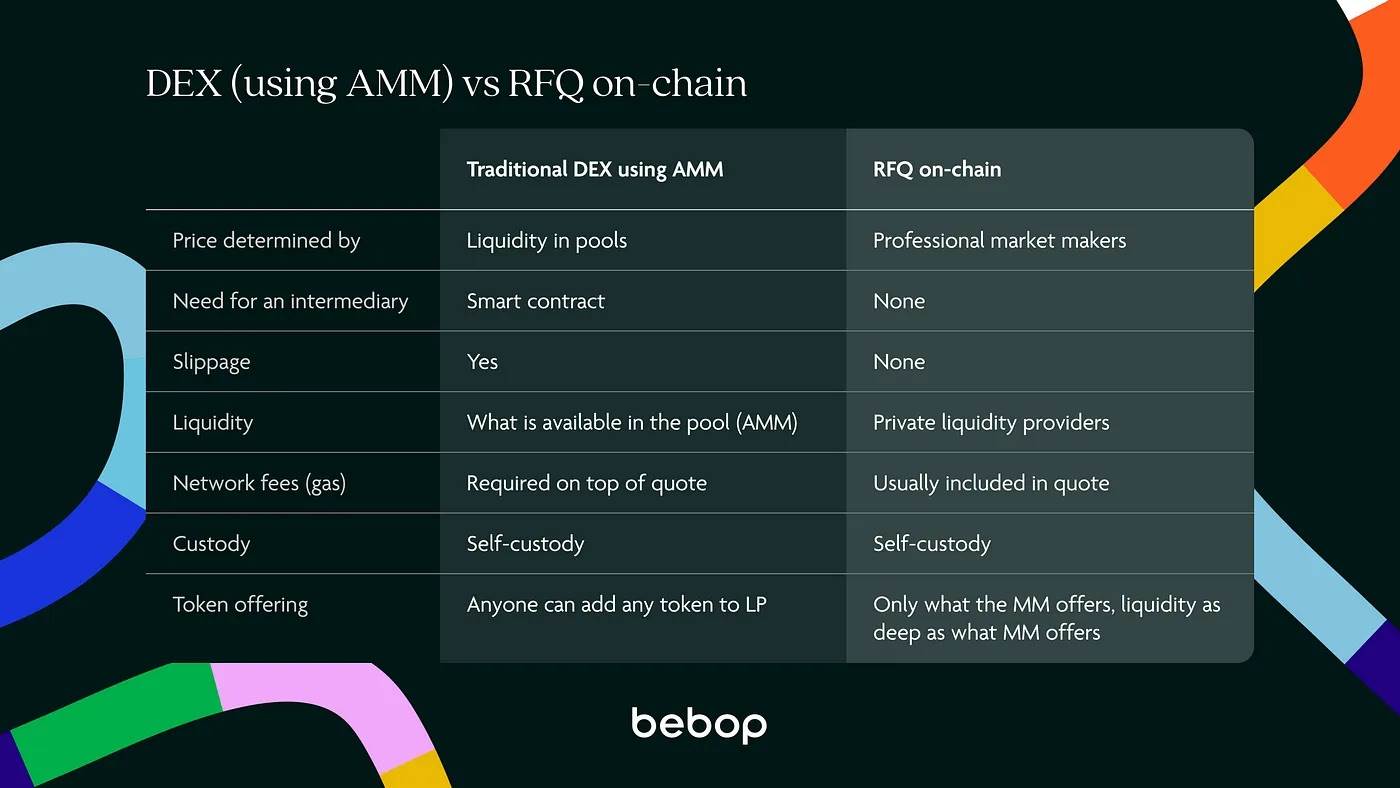
Hashflow是一款致力于为加密用户带来更快、更廉价、更安全多链兑换体验的去中心化交易协议。与依赖自动化做市商(AMM)的传统DEX不同,hashflow采用了RFQ(报价请求)模型,这一模式在传统金融领域广泛应用,但在DeFi链上方案中较为少见。RFQ方式确保交易者能够获得最优报价、零滑点以及强有力的MEV(最大可提取价值)攻击保护。
Hashflow的架构同样解锁了无桥接的无缝跨链兑换,用户可直接在主流区块链之间进行资产交换,无需依赖存在风险的代币桥或锚定资产。以安全为先、用户为中心的理念,使hashflow成为提高资本效率的多链交易首选方案,也极大推动了hashflow价格活跃度的提升。
Hashflow如何运作?解读RFQ与AMM的区别
The uniqueness of HashFlow lies in its on-chain RFQ protocol—a trading mechanism based on competitive bidding. In the standard RFQ process, buyers or sellers request specific quotes for a particular asset from top market makers. After all market makers submit their quotes, traders can simply choose the best price and execute the transaction at that rate. This quote-driven model has long been a core feature of traditional over-the-counter trading. Now, HashFlow makes this concept available to DeFi users for the first time.
With blockchain technology, the RFQ process can now be completed entirely on-chain. HashFlow’s cross-chain exchange process works as follows:
Traders initiate orders by selling assets on the source chain and buying assets on the target chain. These orders are first matched using HashFlow’s off-chain engine.
Asset pools managed by licensed market makers send encrypted quotes back to traders.
If traders accept the quotes, they submit transactions with signed quotes on the source chain.
The HashFlow smart contract verifies the quotes, transfers funds to the liquidity pool, and sends relevant information about the quotes.
The verifier reviews and signs the transaction to ensure its legitimacy, then the order is transferred to the target chain.
The intermediary completes the transaction, transferring assets to the user’s wallet on the target chain. The entire process is highly efficient, eliminating the risks associated with intermediaries or synthetic tokens.
Compared to the AMM model, where liquidity and prices are determined by algorithms, which can lead to slippage, Hashflow’s RFQ system virtually eliminates slippage and significantly reduces the risks associated with MEV strategies. This means that traders can always execute transactions at the best available prices, making Hashflow an ideal choice for large-scale transactions, cross-chain exchanges, and scenarios where price certainty is crucial.
Data from the Hashflow platform: Since its launch, the platform has seen significant growth.
Since its launch in August 2021, Hashflow has focused on providing value, efficiency, and transparency to users, continuously expanding its share of the DeFi market. The total trading volume on the platform has exceeded $11 billion, and the total locked value (TVL) currently exceeds $31 million. There are 10,283 liquidity providers supporting 31 crypto asset pools, and Hashflow’s liquidity network ranks among the strongest in the industry.
Impressive enough is the high level of activity on the Hashflow platform, with 2,467 active users daily. During periods of market turmoil, such as the FTX collapse, Hashflow remained stable, with monthly trading volumes reaching up to $800 million. The platform continues to grow. Data from the protocol’s blockchain shows high capital-efficiency trading capabilities, which is one of the reasons why more and more users pay attention to the latest price movements on Hashflow.
It is worth noting that despite the rapid development of the platform’s services, the functions of HFT tokens are currently limited to protocol governance and DAO participation. Hashflow does not charge users for transaction fees, so HFT tokens have not yet generated direct value capture. Nevertheless, the DAO treasury has received 1% of the initial supply of HFT tokens. Whether protocol fees will be introduced in the future will be determined by community voting. This possibility has sparked lively discussions in the market regarding Hashflow’s price and incentives for holders of HFT tokens.
Hashflow’s native tokens: HFT and its role
HFT tokens are at the core of the Hashflow ecosystem. These tokens are issued under ERC-20 standards, with an initial total of 1 billion units. They are primarily used for governance and community incentives. Holders of HFT tokens can participate in the Hashflow DAO, directly influencing protocol upgrades, incentive programs, as well as the formulation of protocol fees and ecological policies in the future.
Currently, HFT tokens are not used for sharing protocol fees—since Hashflow is a zero-fee DEX. Rewards and incentives come mainly from programs led by the DAO. A token inflation rate of 4% will begin four years after the initial issuance, ensuring long-term balance between governance weight and sustainability.
Although HFT tokens do not directly capture fee revenue, there is still potential for community-driven fee collection in the future. This means that as the ecosystem matures and more users adopt HFT tokens, their value has the potential to increase. Therefore, HFT tokens can be seen as both a key to governance and a long-term stake in the network’s future transformation and monetization.
Recent increases in Hashflow’s price: reasons and analysis
In recent months, the price of Hashflow has experienced a significant increase, attracting the attention of many traders and market analysts. HFT trading volumes doubled in late June and early July, with trading volume reaching $618 million in just 24 hours—approximately 25 times the previous average. Technical indicators such as RSI and MACD show strong bullish signals, indicating that the market continues to have high expectations for the token’s functionality and potential. This rise is also driven by several fundamental factors: the upgrade to Hashflow 2.0, along with its integration into mainstream networks like Solana and Binance, further expanding the platform’s user base and liquidity. Additionally, the platform’s ability to expand its ecosystem and improve smart order routing capabilities makes Hashflow one of the most adaptable DEXs today.
Market participants generally believe that increasing concern about the future fee structure governed by DAO mechanisms, coupled with the platform’s risk management capabilities and growth prospects, are driving retail investors and institutional investors to take action, thereby further boosting the price of Hashflow.