Exchange Ranking
 Top Exchanges
 24h Volume Ranking
 Popularity Ranking
 Exchange BTC Balance
 Proof of Reserves
 Decentralized Exchanges
 Funding Rate
 Funding Heatmap
 Liquidation Data
 Max Pain
 Long/Short Ratio
 Whale L/S Ratio
 Binance/Okex/Huobi L/S
 Bitfinex Margin L/S
 ETF Tracker
 Solana ETF
 XRP ETF
 Hong Kong ETF
 Bitcoin Treasuries
 Crypto Reversal
 Ethereum Reserves
 HyperLiquid Wallet Analysis
 Hyperliquid Whale Watch
 Large Transactions
 On-chain Movement
 Bitcoin ROI
 Stablecoin Market Cap
 Options Analysis
 News
 Articles
 Economic Calendar
 Features
 Wallet
 Contract Calculator


 Security
 Collections
 Watchlist
 Following
 BTC
BitMEX联合创始人Arthur Hayes认为,比特币的价格波动更多受整体货币政策影响,而不是简单的市场时机。他指出,这一轮比特币周期与以往大不相同,提示投资者需要从宏观经济和政策角度重新审视市场走势。

BitMEX联合创始人Arthur Hayes同意四年加密货币周期已经结束的观点,但原因并非大多数人所认为的那样。
海耶斯周四在一篇博客文章中表示:“随着第四个周期四周年的到来,交易员希望运用历史模式预测本轮牛市的结束。”
他补充说,虽然四年模式在过去有效,但现在已经不再适用,“这次将会失败”。
海耶斯认为比特币价格周期是由货币的供应和数量驱动的,主要是美元和人民币,而不是与减半事件相关的任意四年模式,也不是机构对加密货币的兴趣的直接结果。
海耶斯表示,过去的周期是在货币条件收紧时结束的,而不是因为时机。
当前周期有所不同
海耶斯认为,这一周期的不同之处有几个原因,其中包括美国财政部通过发行更多国库券,将美联储逆回购计划中的2.5万亿美元注入市场,以及特朗普总统希望通过更宽松的货币政策来“刺激经济”,以摆脱债务。
In addition, there are plans to relax regulations on banks in order to increase lending opportunities.
Moreover, despite the inflation rate being higher than target, the Federal Reserve has decided to resume interest rate cuts. The CME futures market predicts that the Federal Reserve will cut interest rates twice this year, with a 94% probability of a cut in October, and an 80% probability of another cut in December.
All of this is related to the money printing activities of China and the United States.
The first bull market for Bitcoin coincided with quantitative easing measures by the Federal Reserve and credit expansion in China. This bull market ended at the end of 2013, as both the Federal Reserve and the Chinese central bank slowed down their money printing efforts.
The second “ICO cycle” was driven primarily by the explosive growth of credit in China and currency depreciation, rather than the US dollar. He said that the bull market collapsed as China’s credit growth slowed down and the US dollar environment became more restrictive.
During the third “COVID-19 cycle,” Bitcoin prices soared thanks to US dollar liquidity, while China remained relatively cautious. Hayes explained that this cycle ended when the Federal Reserve began to tighten monetary policy at the end of 2021.
This time, China won’t break this cycle.
Hayes believes that although China won’t play a significant role in driving this rebound, policymakers are taking action to “end deflation” rather than continue to drain liquidity.
He said that this shift from deflationary pressures to at least neutral or mildly supportive monetary policies has removed the main obstacles that might have hindered this cycle. This has allowed US monetary expansion to drive up the price of Bitcoin, without being counterbalanced by China’s deflationary measures.
Let’s see what the monetary experts in Washington and Beijing have to say. They clearly stated that money should be cheaper and more abundant. Therefore, Bitcoin continues to rise, given the expectation that this trend is likely to continue in the future. The king is dead! Long live the king!
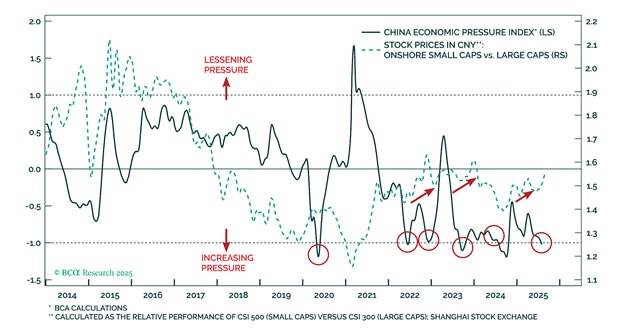
Arthur Hayes said that when economic pressures become too intense, Chinese policymakers will start printing more money.
Many people still believe in this four-year cycle.
Glassnode, a blockchain analysis company, said in August that “from a cyclical perspective, Bitcoin’s price movements also follow previous patterns.”
Saad Ahmed, the head of Gemini’s Asia-Pacific region, told Cointelegraph earlier this month: “I think that, in terms of the four-year cycle, it’s realistic to expect that we will continue to see some form of cycle.”