Exchange Ranking
 Top Exchanges
 24h Volume Ranking
 Popularity Ranking
 Exchange BTC Balance
 Proof of Reserves
 Decentralized Exchanges
 Funding Rate
 Funding Heatmap
 Liquidation Data
 Max Pain
 Long/Short Ratio
 Whale L/S Ratio
 Binance/Okex/Huobi L/S
 Bitfinex Margin L/S
 ETF Tracker
 Solana ETF
 XRP ETF
 Hong Kong ETF
 Bitcoin Treasuries
 Crypto Reversal
 Ethereum Reserves
 HyperLiquid Wallet Analysis
 Hyperliquid Whale Watch
 Large Transactions
 On-chain Movement
 Bitcoin ROI
 Stablecoin Market Cap
 Options Analysis
 News
 Articles
 Economic Calendar
 Features
 Wallet
 Contract Calculator


 Security
 Collections
 Watchlist
 Following
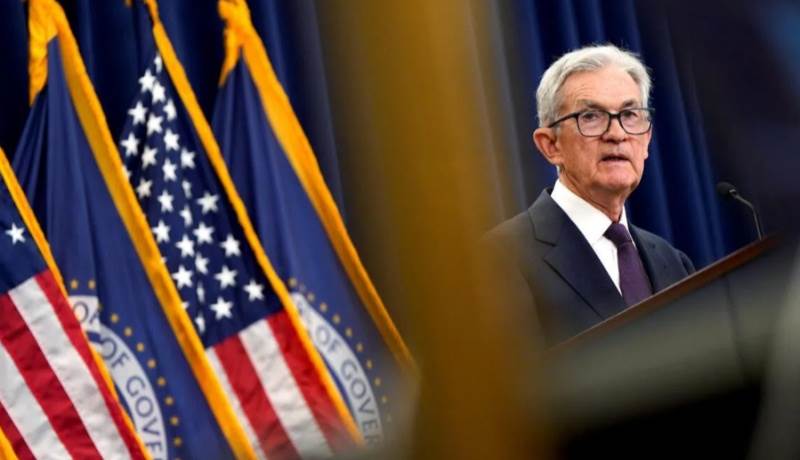
On December 11th, the Federal Reserve implemented its third interest rate cut this year, down by 25 basis points, marking the end of the year. The benchmark interest rate was lowered to the range of 3.50%–3.75%. In total, there has been a reduction of 75 basis points this year. Although this move was in line with market expectations, there were significant disagreements among the members of the FOMC, indicating that the pace of policy changes next year may slow down, and further cuts are unlikely in the short term. Subsequently, Powell gave a more dovish stance during his press conference than expected by the market. With the decision finalized, global markets reacted differently: U.S. stocks, short-term U.S. bonds, and gold prices all rose, while the dollar weakened. Bitcoin, however, jumped to $94,500 after the announcement, but quickly lost part of its gains. This “interest rate cut night” not only set a new risk tone for global assets but also brought about high volatility in the crypto market.
The Federal Reserve concluded the year with a 25-point cut in interest rates, but why are internal disagreements still increasing? What are the reasons behind the different opinions expressed by Powell during his press conference, and how should we interpret them? Where will the market go in the future?
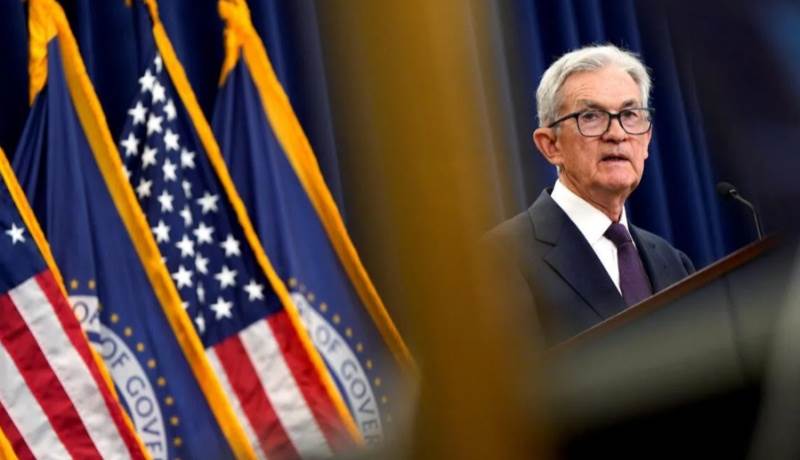
First, it’s uncertain whether the Federal Reserve will continue with these interest rate cuts next year.
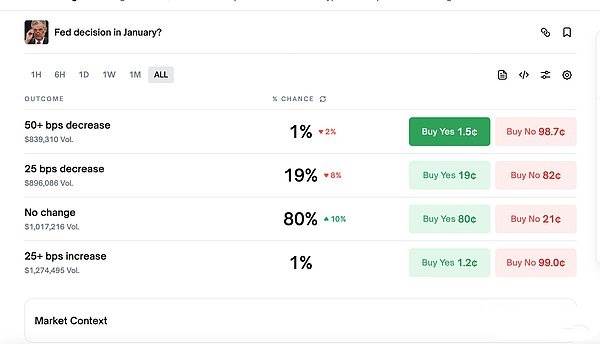
Early today, the Federal Reserve announced its final interest rate decision of the year. The federal benchmark rate was lowered by 25 basis points to 3.50%-3.75%. This is the third consecutive time the Fed has reduced rates, in line with market expectations. So far this year, rates have been cut by a total of 75 basis points. The FOMC statement also indicated that this is the first time since 2019 that three members opposed the decision, highlighting the biggest disagreement among the voting members over the past six years. This suggests that the Fed may slow down its rate cuts next year, or possibly refrain from taking any action at all. US interest rate futures show that there is a 78% chance that the Fed will pause rate cuts at its January meeting next year, compared to 70% before the FOMC decision. The latest CME “Federal Reserve Watch” survey shows that there is a 22.1% chance that the Fed will cut rates by 25 basis points in January next year, while the probability of keeping rates unchanged is 77.9%. By March next year, there is a 40.7% chance that rates will be cut by 25 basis points, 52% chance of keeping rates unchanged, and 7.4% chance of a total cut of 50 basis points. Polymarket’s forecast data shows that market participants are betting on the Fed’s rate decision in January next year. After the decision was announced, the probability of keeping rates unchanged in January increased to 80%, while the probability of a 25-basis-point cut decreased to 19%.
After the interest rate decision was announced, the responses from major asset markets around the world were varied. The stock market in the United States reached a new daily high during the session, and nearing the end of Powell’s press conference, the S&P index’s increase narrowed from 1.2% to 0.7%. The yield on two-year U.S. bonds dropped by 7.5 basis points within a day. Gold prices rose by 0.6%, reaching a new daily high and approaching $4,239 per ounce. The dollar experienced its worst performance in nearly three months. The US Dollar Index closed down by 0.4%, marking the largest decline since September 16. Bitcoin briefly reached $94,500, setting a new daily high, but then it experienced significant fluctuations and briefly fell below $90,000.
The Federal Reserve’s last interest rate decision of the year was expected to see a 25-basis-point cut. However, subsequent FOMC statements and point forecasts revealed growing divisions within the Fed, causing concerns about the Fed’s future policy direction. There were also doubts about whether further cuts would be possible next year.
Second, the FOMC statement highlighted increasing divisions among members, and the point forecasts were more dovish than expected.
The Fed’s FOMC statement announced that it will begin purchasing Treasury bonds on December 12th. Over the next 30 days, the Fed plans to buy $40 billion in Treasury bonds. The FOMC also stated that it will conduct reverse repurchase agreements at an interest rate of 3.75%, and open-term repurchase agreements at an interest rate of 3.50%. A daily limit of $160 billion per counterparty will be established for these transactions. By purchasing Treasury bonds and, if necessary, other U.S. government bonds with maturities of up to three years, the Fed aims to increase its holdings of securities in the monetary policy framework, thereby maintaining sufficient reserves. The statement indicates that inflation has increased since the beginning of the year, but remains at a relatively high level. Uncertainty around economic prospects remains high, and there is a growing risk of a decline in employment levels in the coming months. When evaluating the extent and timing of further adjustments to the federal funds rate target range, the Fed will carefully consider latest data, changing economic conditions, and risk balances. After the Fed meeting, a point chart showed that among the 19 officials present, seven believed that there should be no cuts to the federal funds rate by 2026. Four officials believed that a total of 25 basis points of cuts would be appropriate. Four officials thought that 50 basis points of cuts would be sufficient. Two officials suggested 75 basis points of cuts, while one official recommended 100 basis points of cuts, and one more suggested 150 basis points of cuts.The FOMC statement indicates that this rate decision by the Federal Reserve faced three votes against it for the first time since 2019. Federal Reserve Board member Stephen I. Miran continued to recommend a 50-basis-point reduction of the federal funds rate target range. Kansas City Fed Chairman Jeffrey Schmid and Chicago Fed Chairman Austin Goolsbee advocated keeping the federal funds rate target range unchanged. All other members of the FOMC voted in favor of the current rate decision. This decision highlights the largest disagreement among the policymakers over the past six years, suggesting that actions may slow down next year, which increases market concerns about the future policy direction of the Federal Reserve.
Additionally, Powell’s announcement was more dovish than expected, indicating his intention to play a decisive role in shaping future policies.
Federal Reserve Chairman Jerome Powell explained the rate cut decision and the economic situation during his press conference, and answered questions from reporters. Powell stated that current data shows no changes in the outlook. The labor market seems to be cooling down, while inflation remains high. Consumer spending remains strong, and data indicates that the economy is expanding at a moderate pace. Most long-term inflation expectations are consistent with the 2% target. If tariffs are eliminated, inflation will remain below 2%. The Federal Reserve is committed to achieving an inflation target of 2%, but the labor market also faces challenges. Powell said that raising the growth forecast for 2026 reflects the end of the government shutdown. Many data points will be available between now and the FOMC meeting in January. The baseline expectation is that the economy will grow steadily next year.鲍威尔认为,目前加息并非任何人的基准预期情形,当前政策分歧在于维持利率不变还是降息。
鲍威尔还表示,政策没有零风险的路径,近几个月来,风险平衡发生了变化。美联储一直在朝着中性利率方向调整,目前已处于中性利率区间的高位,目前尚未就一月事宜做出决定。他强调,美联储将逐次会议做出决定,货币政策并不存在预定的路径;国债购买规模或将在未来数月维持高位。在提问环节,鲍威尔表示,他想把这份工作交给下一任主席时,让经济处在一个非常良好的状态,希望通胀得到控制,回落到2%,希望劳动力市场保持强劲。关于个人前途,鲍威尔表示,对美联储主席任期届满之后没有任何新的打算。
在最后几个月的美联储主席任期内,鲍威尔试图平稳落地。特朗普即将公布继任者之际,“影子”美联储主席影响力日益增加,此次新闻发布会鲍威尔的表态既是预料之中,也是一种无奈之举。
四、如何解读美联储本次决议
Regarding the Fed's final interest rate decision for this year, Nick Timiraos, a reporter from the Wall Street Journal and a trusted voice within the Federal Reserve, wrote that the Fed officials have cut rates for the third consecutive meeting. However, there are greater concerns regarding inflation and the job market. There are unusual differences of opinion among the Fed officials, which suggests that they are not very willing to continue cutting rates. Recent comments by Fed officials indicate that there is significant disagreement within the committee, and the final decision may depend on how Chairman Powell wants to proceed. Powell's term expires in May next year, meaning he will only preside over three more interest rate meetings. The pressure on prices remains high, while the labor market is cooling down, presenting a difficult choice for the Fed—a situation that has never been faced before in decades. During the so-called “stagflation” period in the 1970s, when officials faced similar challenges, the Fed's inconsistent responses allowed high inflation to become entrenched.
Marvin Loh, an analyst at TD Securities, said that the Fed's rate cuts were as expected, but they can only be interpreted as hawkish actions, since the officials have not changed their predictions for the next two years. He pointed out, “This will cause rates to slowly move towards the theoretical neutral rate of 3%. Given that the GDP forecast in the Economic Prospects Summary (SEP) has been significantly raised, the use of the word ‘degree’ in the statement to describe additional policy adjustments suggests that some members of the Federal Open Market Committee are considering the actual necessity of reaching the current long-term target of 3%.”
● 嘉信理财分析师Richard Flynn表示,通过采取先发制人的行动,美联储正在不断上升的下行风险面前发出谨慎信号,特别是在全球增长保持低迷且政策不确定性持续存在的情况下。对于投资者而言,这是一次有分寸的调整,而非戏剧性的转向。虽然这次降息可能为风险资产提供短期支撑,并有可能推动季节性的‘圣诞老人行情’,但由于市场需要评估其对未来政策和更广泛经济前景的影响,波动性仍可能保持高位。
● 高盛分析师Kay Haigh表示,美联储已经走到了“预防性降息”的终点。她认为:“接下来的责任在于劳动力市场数据必须进一步走弱,才能证明额外的近期宽松政策是合理的。投票委员的‘硬异议’以及‘点阵图’中出现的‘软异议’突显了美联储的鹰派阵营,而声明中重新加入关于未来政策决定的‘程度和时机’措辞,很可能是为了安抚他们。虽然这为未来降息留下了可能性,但劳动力市场的疲软必须达到较高的门槛。”
● Informa Global Markets对鲍威尔最新讲话点评道:所谓的“鹰派降息”也就如此而已。鲍威尔指出,美联储的双重使命之间存在紧张关系,但也承认自上次会议以来没有太大变化。他的表态总体上与此前类似。这场记者会最令人记住的一句话是:“现在的经济并不像一个引发劳动力驱动型通胀的过热经济。”
● 纽约MAI资本管理公司首席市场策略师Chris Grisanti评美联储利率决议:“最初的反应是没有意外,利率如预期般被下调。但当你往后看,会发现存在很多不确定性。当我们从今天的降息走向2026年时,降息带来的顺风效应将不再那么可靠。这可能会成为一个问题。进一步推演一下——随着美联储修订后的措辞强调未来降息的‘幅度和时机’存在不确定性,美联储实际上是在向市场传递一个信号:不要把降息视为理所当然。在我看来,这意味着我们只有在经济显著放缓的情况下才会看到更多降息。作为一名股票投资者,我希望2026年不会出现降息,因为那将意味着经济正在走弱。我宁愿拥有一个稳健的经济,而不是更多的降息。”
● 分析师Anna Wong表示:“My assessment is that the overall tone of the policy statement and the updated forecasts tends to be dovish—although there is also some hawkish potential information available. On the dovish side, the committee has significantly raised its growth projections, while also lowering its inflation expectations, and keeping the ‘dot plot’ unchanged. The Federal Open Market Committee has also announced plans to begin purchasing reserve funds. On the other hand, one of the statements indicates that the committee favors a long-term pause in interest rate cuts.” She continued, “Although the ‘dot plot’ shows only one interest rate cut in 2026—compared to market expectations of two cuts—we believe the Fed will ultimately cut rates by 100 basis points next year. This is because we expect weak employment growth, and there are no signs of inflation picking up in the first half of 2026.”
Michael Rosen, Chief Investment Officer at Angeles Investments, said, “ This interest rate cut was expected, so it wasn’t surprising. The vote of 9 to 3 in favor of a 25-point cut was also expected. Schmid and Goolsbee supported not cutting rates at all, while Milan wanted a 50-point cut. Again, there were no surprises. The statement emphasized the weakness in the labor market, which is the main reason for the 25-point cut. This detail was captured by the market, suggesting that the Fed may continue to ease policies. Although the expectation of a 25-point cut next year remains unchanged.”
In addition, the Federal Reserve’s decision to cut interest rates by 25 basis points seems insufficient for Trump. On Wednesday afternoon, Trump stated during a event at the White House that a 25-basis-point reduction was “a relatively small amount; it could have been doubled—at least doubled.” He also mentioned his long-standing criticism of Federal Reserve Chairman Powell.
What will happen to the markets in the future? After the Fed’s decision was announced, what will happen to major asset markets, including cryptocurrencies? Let’s take a look at some analysis and interpretations.
1. Axel, an analyst at CryptoQuant, posted on social media that Bitcoin has regained its bullish trend after correcting below $80,000. This trend is driven by the fact that markets have almost fully priced in the Fed’s third consecutive rate cut. This move will improve financial conditions, and given that Powell has not issued any unexpected hawkish signals, it opens up room for further price increases. Since correcting from its October peak to around $80,000, prices have been steadily rising over the past 14 days.
2. Fidelity Digital Assets, a subsidiary of Fidelity, stated in a report that Bitcoin has regained momentum due to changes in macroeconomic expectations. Currently, prices are fluctuating around $90,000. Trading data shows that there were approximately 430,000 buys of Bitcoin at around $85,500 (a decrease of about 32% from the historical high). This price level is likely to become an important support level. Currently, market volatility has stabilized, and Fidelity will keep a close eye on how the market responds to today’s Fed meeting.
3. Matrixport released chart analysis stating The implied volatility of Bitcoin continues to decline, thereby reducing the likelihood of a significant upward breakout at the end of the year. Today’s Federal Open Market Committee meeting is the last major catalyst. However, once the meeting concludes, volatility is likely to continue declining until the holiday season. Without new inflows of funds into Bitcoin ETFs to drive directional momentum, the market may revert to a range-bound state. This outcome is usually associated with further decreases in volatility. In fact, this adjustment process is already underway: implied volatility is continuously decreasing, and the market is gradually reducing its expectation of an unexpected upward move at the end of December.
4. XWIN Research Japan’s research shows that institutional investors are actively adjusting their positions. Chain-level data indicates that BTC balances on major exchanges have decreased, while USDT and USDC reserves have increased, suggesting that institutions are reducing their risk exposure and accumulating stablecoins. The research indicates that this pattern is similar to that during August–October 2025: before the FOMC meeting, funding rates soared, then dropped sharply after announcements, along with a decline in Bitcoin prices. The current state of CME futures open positions remains stable, and large-scale physical holdings are also stable, further indicating that professional investors are preparing for volatility. Analysts advise investors not to blindly chase any potential rebounds before the meeting, but instead to manage risks carefully, as market volatility tends to increase significantly around FOMC meetings.
5. Zhao Changpeng, founder of Binance, stated at the Bitcoin Middle East conference The “four-year cycle” of Bitcoin may no longer be applicable. It is suggested that as institutional participation increases, the market could enter a “supercycle.” A supercycle refers to the influence of institutional and regulatory capital flows on the market, which is greater than the price cycles centered around traditional halving events. Zhao Changpeng also mentioned that discussions regarding Bitcoin reserves at the national level could expand. He pointed out that if the United States actually begins discussions about strategic reserves, other countries may follow suit.
6. Cathie Wood, founder of ARK Invest, stated that the four-year cycle of Bitcoin will be broken, and we may have already reached the lowest point of this cycle.
7. Yi Lihua, founder of Liquid Capital, wrote in his article that for long-term spot investments, a few hundred dollars doesn’t make any difference. The reason why ETH is currently undervalued is due to expectations of interest rate cuts and monetary easing, along with continuous crypto-friendly policies. From an industry perspective, stablecoins show strong long-term growth, and there is a trend towards financial integration into the blockchain. The fundamentals of ETH have changed completely, and these factors are also why there are heavy positions in WLFI/USD1. After buying in full, it’s up to time to determine further movements. In the short term, there won’t be any significant fluctuations. Finally, I want to reiterate that spot price fluctuations are quite large. It’s best to avoid trading contracts. First, most people lack the necessary technical and psychological skills. Second, contracts are like a game where nine times out of ten things go wrong, which drains people’s energy. It’s better to use that energy to develop off-exchange businesses.