Exchange Ranking
 Top Exchanges
 24h Volume Ranking
 Popularity Ranking
 Exchange BTC Balance
 Proof of Reserves
 Decentralized Exchanges
 Funding Rate
 Funding Heatmap
 Liquidation Data
 Max Pain
 Long/Short Ratio
 Whale L/S Ratio
 Binance/Okex/Huobi L/S
 Bitfinex Margin L/S
 ETF Tracker
 Solana ETF
 XRP ETF
 Hong Kong ETF
 Bitcoin Treasuries
 Crypto Reversal
 Ethereum Reserves
 HyperLiquid Wallet Analysis
 Hyperliquid Whale Watch
 Large Transactions
 On-chain Movement
 Bitcoin ROI
 Stablecoin Market Cap
 Options Analysis
 News
 Articles
 Economic Calendar
 Features
 Wallet
 Contract Calculator


 Security
 Collections
 Watchlist
 Following
 BCH
加密圈的“老戏码”似乎又要上演——比特现金(BCH) 这条从比特币分出来的分叉链,如今自己也陷入了新的分裂争议。近期,社区内部围绕区块大小、节点规则和网络治理方向再度爆发激烈讨论,一时间“是否再次分叉”的声音此起彼伏。
有人认为这是技术升级的必经之路,也有人担心重演昔日“分叉成瘾”的乱象。更复杂的是,在比特币生态复苏、Layer2 热度攀升的背景下,BCH 的定位正变得越来越模糊。它到底会迎来重生,还是被时代进一步边缘化?这场区块之争,或许决定着它能否在新一轮加密浪潮中保住最后的存在感。

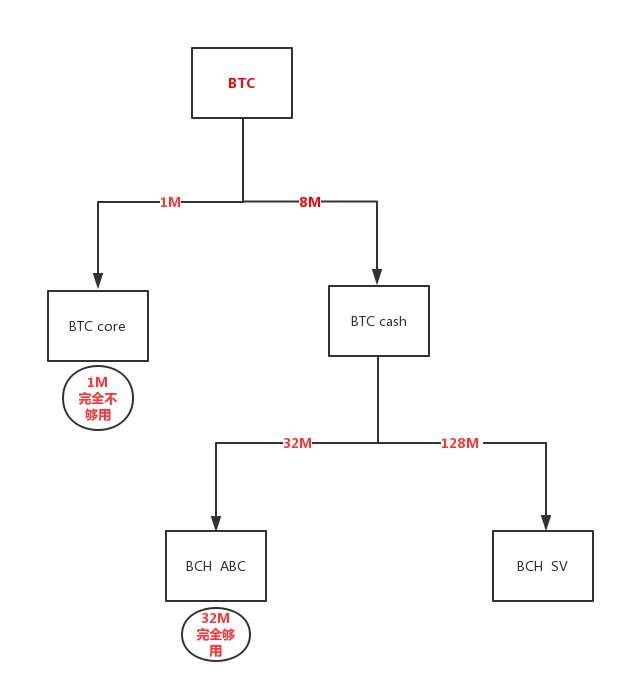
因为区块之争,2017年8月1日,比特现金从比特币分裂出来;因为区块之争,2018年11月15日,比特现金再次分裂。那么,区块对于比特币意味着什么?比特现金围绕区块这次有何争论?
区块对于比特币的意义
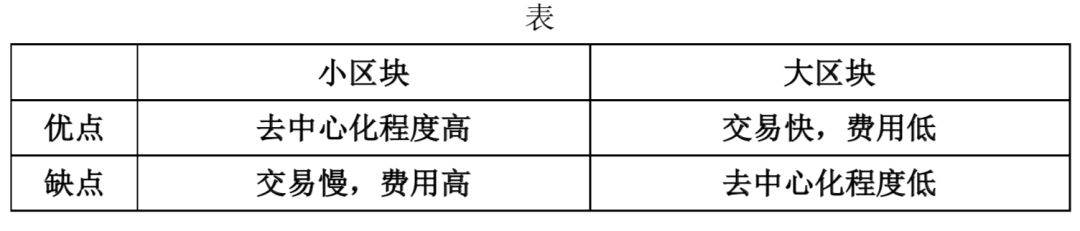
比特币采用POW共识机制,区块大小直接决定节点参与链上交易确认的难度,即整个比特币网络去中心化的程度;同时,区块大小也决定出块速度,影响到交易时间和手续费。所以,安全和效率不可能同时达到最优,只有根据需求进行不断调整。
比特现金诞生
Satoshi Nakamoto designed Bitcoin without any restrictions on the size of blocks. Initially, since there were very few transactions on the chain, a block size of 1MB was chosen for security reasons. However, as Bitcoin became more popular and the number of transactions increased significantly, the limitation of 1MB blocks severely affected Bitcoin’s block generation speed. This led to longer transaction times and higher fees, thereby hindering Bitcoin’s ability to function as a “peer-to-peer electronic cash system”. The debate over whether to expand Bitcoin’s block size continued for two years. Those in favor of expansion believed that the 1MB block limit should not be locked in place, but rather adjusted according to demand. On the other hand, those opposed to expansion argued that the 1MB block limit should be maintained, and that issues related to transaction times and fees could be resolved by developing a Lightning Network. In the end, no compromise was reached, and Bitcoin Cash was created as a result of this conflict.
The debate over block size continues again.
Due to dissatisfaction with the core development team’s restrictions on block size, miners led by Wei Dai attempted to create a hard fork of Bitcoin, resulting in the creation of Bitcoin Cash. This move received support from many members of the original Bitcoin community, including influential figures such as CSW, Roger Ver, Gavin Andresen, and Justin Sun.
Although Bitcoin Cash has been upgraded from 8M blocks to 32M blocks, which fully meets the current transaction needs, there are again rumors of division within the Bitcoin Cash community. CSW believes that Bitcoin should be upgraded to 128M blocks, and he has received support from Gavin Andresen, Roger Ver, and the Bitcoin Cash mining pool CoinGeek. Additionally, CSW opposes some of the recent upgrades made by the Bitcoin ABC development team, and he has announced that he will release a new BCH client on November 15th, which will not be compatible with the upgrades proposed by the Bitcoin ABC development team. This essentially constitutes a hard fork of BCH.
The “civil war” has ended.
In its first year as an independent entity, Bitcoin Cash has developed rapidly, with its features continuously improving. It now offers 19 different services, including Bitpay, Coingate, and Coinpay. It has also participated in 14 different projects, such as Openbazaar, Joystream, and Counterparty.
On August 20th, the Bitcoin ABC development team announced that they had completed the development of a new client for the November 15th upgrade. As members of the ecosystem, developers, mining pools, and miners are all preparing for this update. The changes include:
1. A new operation code, OP_CHECKDATASIG, which can optimize the BCH scripting language and allow verification of information from outside the blockchain. This is useful for the use of smart contracts and cross-chain transactions.
2. Standardized transaction ordering, which will serve as the technical foundation for future large-scale expansion.
3. Other technical fixes and improvements.
However, another development team behind BCH, nchain and CSW, believe that this update goes against Satoshi Nakamoto’s vision. They plan to create a new client software, lock in the underlying protocol of BCH, and increase the block size to 128MB. Additionally, they intend not to support any updates to Bitcoin ABC.
Initially, the entire community wasn’t very concerned about this situation, as since Bitcoin split apart, mining power has become the ultimate authority. The Bitcoin ABC development team supported by Bitmain seems to have the upper hand. But later, CoinGeek, one of BCH’s largest mining pools, also expressed support for CSW. This led to a sense of crisis among the community.
What do the experts think?
The main players behind this split are CSW and Wei Dai. There are also some neutral parties and outsiders involved.
Wei Dai led the fork of BCH and invested resources and support to help BCH grow. He can be considered the most influential person in the community. He fully supports Bitcoin ABC, believing that BCH needs more flexibility, should adapt to market demands, evolve quickly, improve user experience, and increase capacity as needed.
CSW, on the other hand, adheres to Bitcoin’s original principles. He believes that Bitcoin Cash should stabilize its underlying protocol as soon as possible and expand its capacity to attract larger banks and enterprises.
Jiang Zhuor believes that the likelihood of a split is low. Even if a split occurs, there will be no clear winner or loser. He also pointed out that expanding the block size to 128MB at this stage is not necessary. The current 32MB capacity is sufficient for the development of BCH. Changing the block size to 128MB would pose significant challenges for miners and increase the risk of attacks on BCH. The decision regarding the final block size should be left to the miners, as they understand market needs best.
outsiders like V神认为将BCH的区块容量上限扩大到128MB would be catastrophic. This would be an excellent opportunity to drive CSW out of the BCH community, and we shouldn’t compromise with him. V神 also doubts CSW’s claim that he is Satoshi Nakamoto.
In the world of Bitcoin Cash, computing power is absolutely crucial. Jiang Zhuor said on Weibo that anyone can pay to buy computing power in order to gain more power, so it’s fair and efficient to prioritize computing power.
If only CSW wants to split BCH, it wouldn’t cause much concern among the community. But CoinGeek fully supports CSW, and CoinGeek is one of the largest mining pools in Bitcoin Cash. According to the latest computing power distribution, CoinGeek holds nearly 30% of all BCH computing power. CSW also revealed that he accounts for 20%-22% of the anonymous computing power.
However, others don’t think so. Analysts say that Bitmain directly and indirectly owns half of the computing power in the Bitcoin network. If CSW were to transfer some of his computing power to Bitcoin Cash, he would have little chance of winning. Additionally, Jiang Zhuor said that the total computing power of BCH isn’t even comparable to that of their company. Even if CSW owns 60% of the BCH computing power, it still doesn’t make much sense.
开发者和矿工之间一直存在矛盾,这也是上次扩容之争失败的原因之一。CSW声称,要帮矿工夺回控制权,提倡锁死底层协议,让矿工雇佣开发者,开发者为矿工服务,矿工之间用算力公平竞争,“矿工是逐利的,他们会确保比特币网络的安全性。用户很容易能设置出假的服务器,可是矿工不能,矿工还能照顾用户的利益,照顾得好,币的价格就会上升。”
因为双方都有较大的算力支持,所以分裂一直笼罩着BCH社区。比特大陆一直被外界称呼为矿霸,对于算力集中问题,BCH社区同样担心,毕竟谁都无法保证矿工不会做恶。
何去何从?
上一次扩容之争谈判失败导致比特币分裂,这次扩容之争谈判是否会再次失败导致比特现金分裂还不得而知。比特币崇尚自由,比特现金也崇尚自由,所以分裂不是问题,重要的是正确的一方不断向前。