Exchange Ranking
 Top Exchanges
 24h Volume Ranking
 Popularity Ranking
 Exchange BTC Balance
 Proof of Reserves
 Decentralized Exchanges
 Funding Rate
 Funding Heatmap
 Liquidation Data
 Max Pain
 Long/Short Ratio
 Whale L/S Ratio
 Binance/Okex/Huobi L/S
 Bitfinex Margin L/S
 ETF Tracker
 Solana ETF
 XRP ETF
 Hong Kong ETF
 Bitcoin Treasuries
 Crypto Reversal
 Ethereum Reserves
 HyperLiquid Wallet Analysis
 Hyperliquid Whale Watch
 Large Transactions
 On-chain Movement
 Bitcoin ROI
 Stablecoin Market Cap
 Options Analysis
 News
 Articles
 Economic Calendar
 Features
 Wallet
 Contract Calculator


 Security
 Collections
 Watchlist
 Following
 BTC
Nowadays, most people buy Bitcoin, but they never actually use it. They hold onto Bitcoin, referring to it as “digital gold,” and proudly claiming that they are making long-term investments. There’s nothing wrong with that, after all, Bitcoin has earned such a reputation.
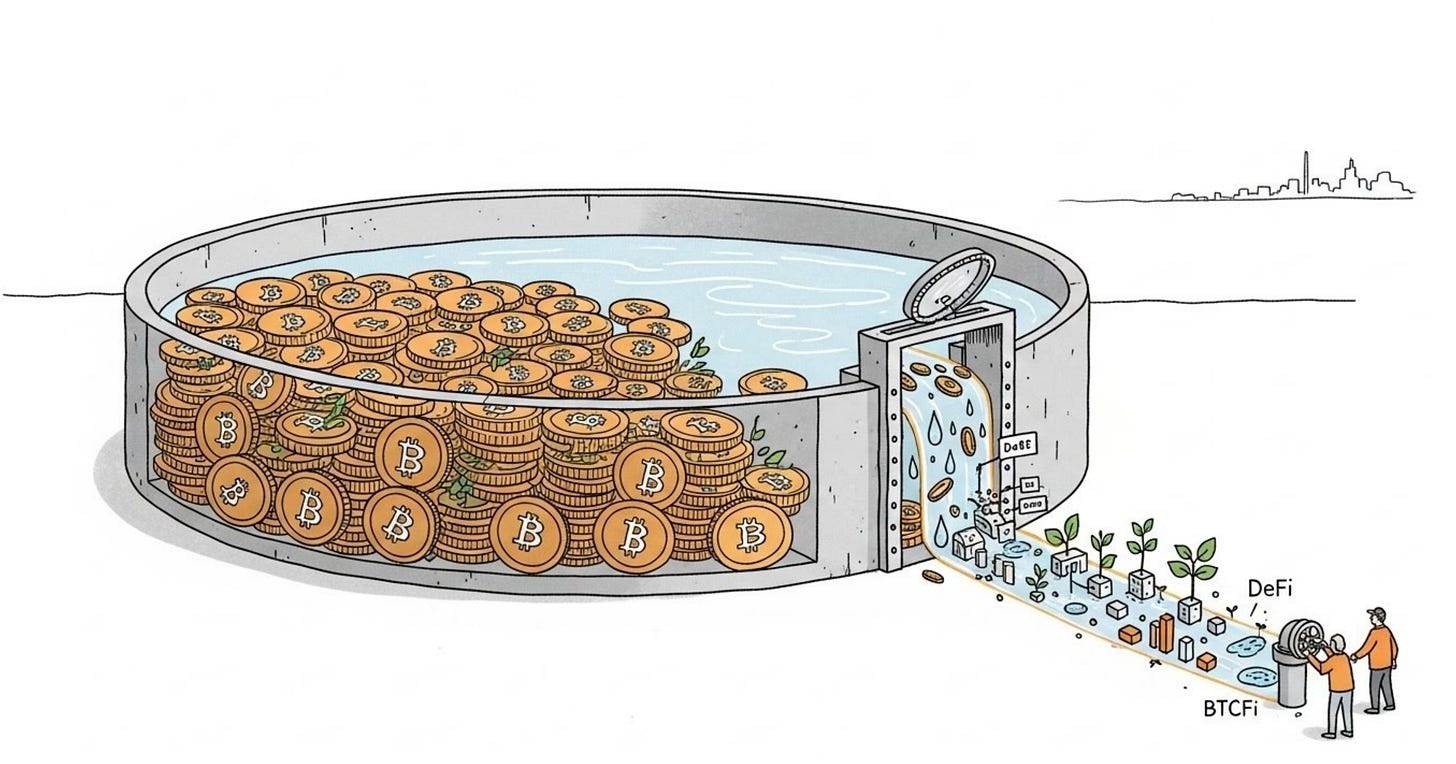
However, such large holdings create one of the largest idle funds pools in today’s cryptocurrency ecosystem. Approximately 61% of Bitcoin has not been transferred for over a year, and nearly 14% of Bitcoin has not been transferred at all for more than ten years. Despite Bitcoin’s market value exceeding $2 trillion, only 0.8% of Bitcoin is involved in any form of decentralized finance (DeFi) activities.
In other words, Bitcoin is the most valuable asset among cryptocurrencies, but it’s also the least used asset.
Now, let’s compare this with everything else in the world of cryptocurrencies:
– Stablecoins can be used for large-scale payment transactions worldwide.
– ETH provides support for smart contracts, DAO’s, wallets, and the entire economic layer.
– L2 providers operate ecosystems that include lending, trading, gaming, and thousands of applications.
At the same time, Bitcoin, as the largest, safest, and most widely held asset, cannot achieve all these things.
In comparison, Bitcoin has trillions of dollars worth of idle value. It neither generates income nor creates liquidity. Apart from being safe and appreciating in value, it doesn’t contribute anything to the broader economy.
人们试图解决这个问题时,各种方案又带来了新的问题。封装比特币(Wrapped BTC)虽然流行起来,但需要信任托管机构。区块链允许你将比特币转移到另一条链上,但这也带来了安全风险。比特币持有者想要使用他们的比特币,但基础设施从未提供过安全且原生的方式来实现这一点。
但这种情况终于发生了改变,在过去的几年里,一个全新的生态系统围绕比特币正在形成,它试图释放所有这些“沉睡的资本”,而无需强迫人们包装他们的比特币、信任中间人或将其转移到其他人的保管之下。让我们一起探索吧!
Polymarket:你的预测在这里举足轻重
通过交易各种结果、选举、体育赛事、市场等股票,押注未来。Polymarket将集体智慧转化为实时概率。
现在已与X合并,预测结果与Grok和X帖子中的实时社交洞察相结合。

你觉得自己知道接下来会发生什么吗?那就证明给我看。
比特币为何最终出现在这里
Bitcoin becoming a passive asset is not a coincidence. Its entire architecture has been developed in this direction. Even before the emergence of decentralized finance (DeFi), Bitcoin made a clear choice: to prioritize security above all else. This decision shaped its culture, developer environment, and ultimately influenced the types of economic activities that flourished around it.
As a result, a highly immutable blockchain was created. While this indeed facilitated fund transfers, it also severely hindered innovation. Most people only see the surface symptoms: low liquidity, high dormant addresses, and the monopolistic nature of Bitcoin. But the real problems lie much deeper than that.
The first limitation is Bitcoin’s scripting model. It deliberately avoids complexity, thus keeping the underlying structure predictable and difficult to exploit. This means there are no general-purpose computations, no native financial logic, and no automation on the chain. Ethereum, Solana, and all modern L1 libraries are built based on the assumption that developers will develop applications. Bitcoin, on the other hand, is built on the assumption that developers should not develop anything.
The second constraint is Bitcoin’s upgrade path. 任何改动,哪怕是微小的功能变更,都需要整个生态系统的协调一致。硬分叉在社会层面上几乎不可能实现,而软分叉则需要数年时间。因此,当其他加密货币迭代更新整个设计范式(例如自动做市商、账户抽象、二级缓存、模块化区块链)时,比特币却几乎停滞不前。它成为了结算层,却从未真正成为执行层。
第三个细微差别在于文化层面。比特币的开发者生态系统本质上是保守的。这种保守性保护了网络,但也抑制了实验精神。任何引入复杂性的提案都会受到质疑。这种心态有利于保护底层,但也确保了新的金融基础架构无法像在其他地方那样在比特币上涌现。
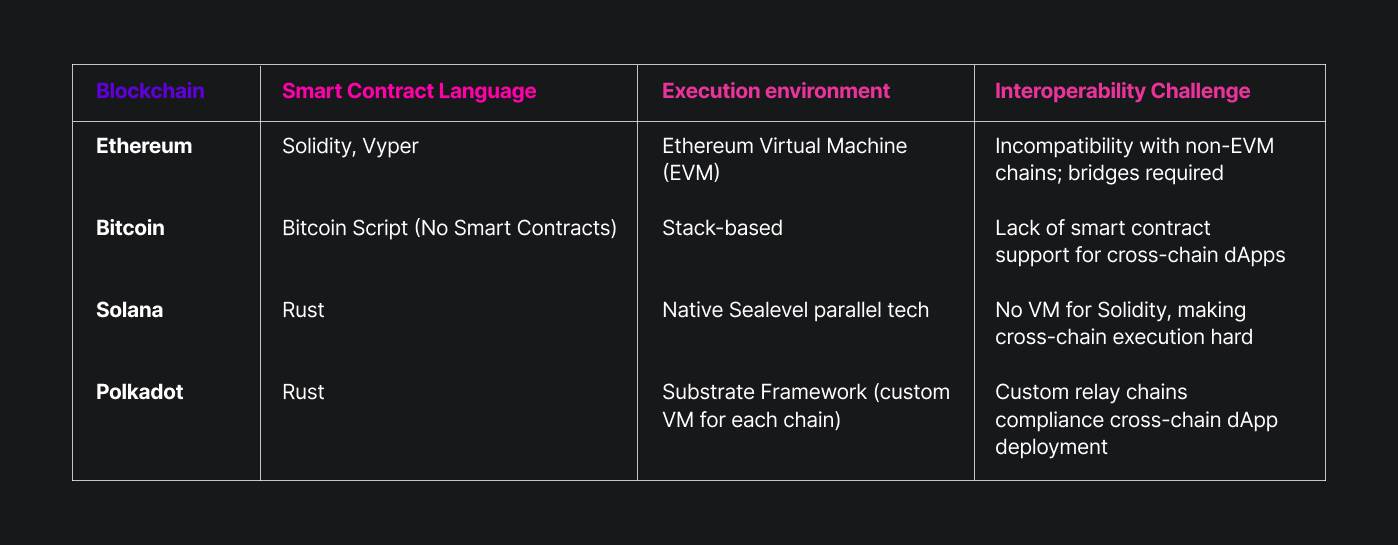
此外,还有一个结构性的问题:比特币的价值增长速度超过了其周边基础设施的增长速度。以太坊从一开始就拥有智能合约;Solana从一开始就采用了高吞吐量设计。比特币的价值在其“可用表面积”扩展之前很久就膨胀成了一种资产类别。因此,整个生态系统最终出现了一个悖论:你拥有数万亿美元的资本,但几乎没有可以部署这些资本的可用空间。
最后一个细微差别在于互操作性。Bitcoin features a unique level of isolation; it cannot be interoperable with other blockchains, nor is there any native mechanism for bridging between different blockchains. Until recently, there was no way to connect Bitcoin to external execution environments while minimizing trust requirements. Therefore, any attempt to make Bitcoin usable required abandoning parts of its security model—such as encapsulation, bridging,托管铸造、多重签名机制,以及联盟式结构。 For an asset that relies on trust in intermediary entities, such approaches simply cannot scale.
The first alternative solutions include wrappers, side chains, and bridges.
When it became clear that Bitcoin’s underlying framework couldn’t support meaningful applications, the industry quickly developed various alternatives. At first, these solutions seemed promising, allowing Bitcoin to be utilized in areas where DeFi activities were gaining popularity. But upon closer examination, these solutions all had one common flaw: they required abandoning parts of Bitcoin’s trust model.
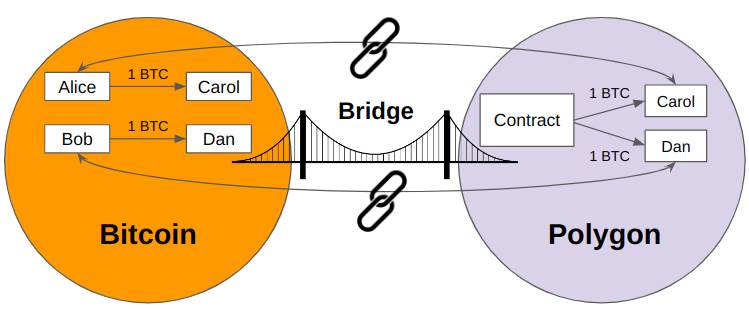
The most notable example is the use of “Wrapper Bitcoin”. For a period of time, it served as the default intermediary between Bitcoin and Ethereum. It effectively managed to create liquidity, allowing Bitcoin to be used as collateral, traded through automated market makers, used for mortgages, and for re-collateralization—basically, it enabled all the functions that Bitcoin alone couldn’t perform. However, this came at a cost: Wrapper Bitcoin required real Bitcoin to be held by someone else. This meant reliance on third-party custody services, dependence on external institutions, operational risks, and a guarantee system that wasn’t tied to Bitcoin’s underlying security mechanisms. The Federal System tried to reduce this trust burden by distributing control over multiple entities. Instead of relying on a single custodian, the wrapped assets were held by a group of entities. This was a improvement, but it still didn’t completely eliminate trust issues. Users still relied on a group of coordinated operators, and the strength of the anchoring effect depended solely on their incentives and integrity. For communities that prefer systems without the need for trust, this isn’t a perfect solution.
● Bridging technologies This has led to a series of new problems. Users no longer rely on managed systems, but instead on external validators. However, the security measures of these validators are typically weaker than those of the chains on which users operate. Bridging technologies have made cross-chain transfers of Bitcoin possible, but they have also become one of the biggest security vulnerabilities in the cryptocurrency realm. Numerous analyses have identified bridging vulnerabilities as one of the main sources of financial losses in the cryptocurrency industry.
The emergence of sidechains has further complicated matters. They are chains that are independent of Bitcoin and are connected through various anchoring mechanisms. Some sidechains use multi-signature methods for control, while others rely on Special Purpose Vehicles (SPVs) for verification. But none of them inherit Bitcoin’s security features. They operate their own consensus mechanisms, validator sets, and risk assessment systems. The term “Bitcoin layer” is often more of a marketing gimmick rather than a factual description. Liquidity can flow, but security measures remain unchanged.
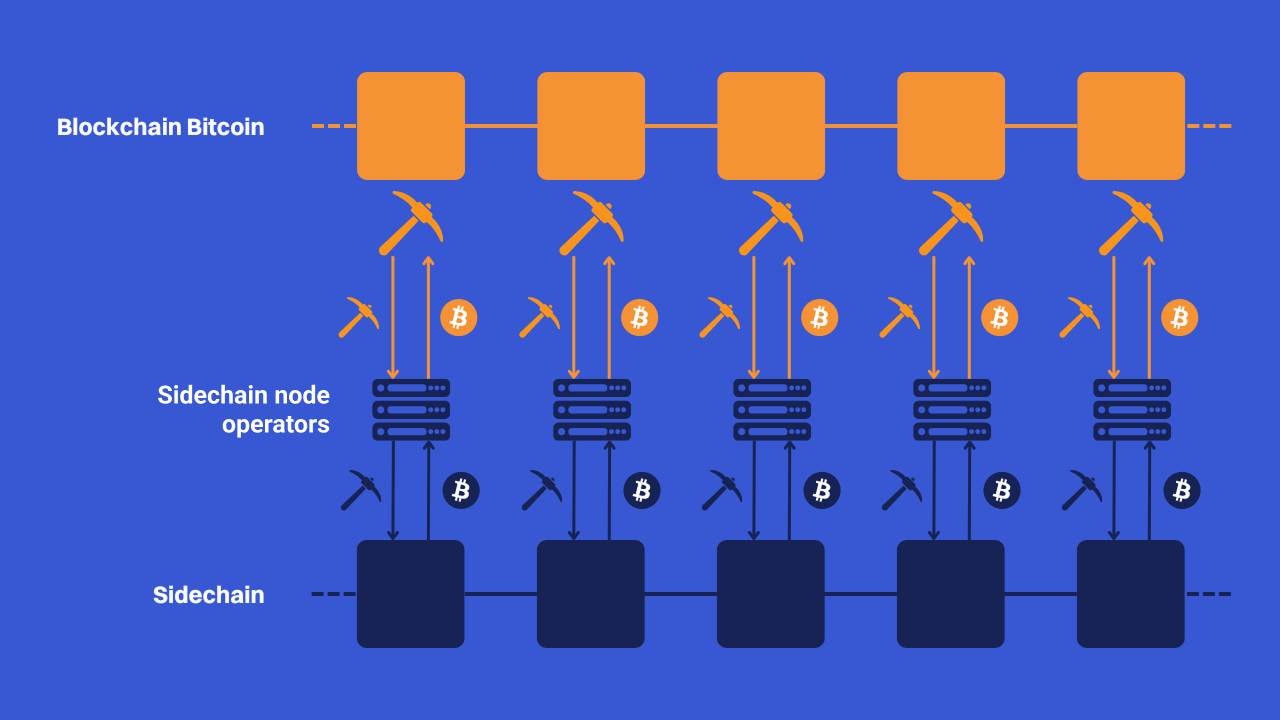
All of these approaches have one thing in common: they move Bitcoin away from its underlying framework, into an environment where rules are enforced by others. This solves the problem of availability in the short term, but it also creates bigger problems: Bitcoin suddenly starts to operate under a trust model that it was intended to avoid.
The disadvantages are obvious:
The success of Bitcoin as a decentralized system is due solely to people’s willingness to accept managed institutions as temporary solutions.
- Although sidechains exist, they do not inherit the security features of Bitcoin. Therefore, they remain a niche technology.
Bridgelets connect Bitcoin to other blockchains, but they also introduce new avenues for attacks.
Every solution to a problem comes with another issue.
A breakthrough: Bitcoin has finally gained new primitives.
For a long time, the limitations of Bitcoin were considered irreversible. The underlying architecture would not change, and any attempts to improve its functionality were dismissed as unnecessary risks.
But in recent years, this assumption is beginning to shift.
First, Bitcoin has found a way to verify that it does not have to perform certain operations itself. The most important breakthrough is the emergence of a new type of verification model, allowing Bitcoin to check the results of computations performed elsewhere, without having to perform those computations itself.
This breakthrough makes BitVM, and similar systems, possible. These systems do not change the functionality of Bitcoin; instead, they utilize Bitcoin’s ability to enforce results through anti-fraud proofs.
This means that we can build logic, applications, and even complete execution environments outside of Bitcoin, while Bitcoin can still ensure their correctness. This is completely different from Ethereum’s concept of “everything being executed at the L1 layer.” Now, Bitcoin can finally make decisions. This is why the door to the following possibilities has finally opened.
● Summary of Bitcoin-based solutions ,
,, ● Trust-minimization approaches ,
,, ● Programmable Bitcoin wallets ,
,, ● Off-chain computations now can be verified on the chain ,
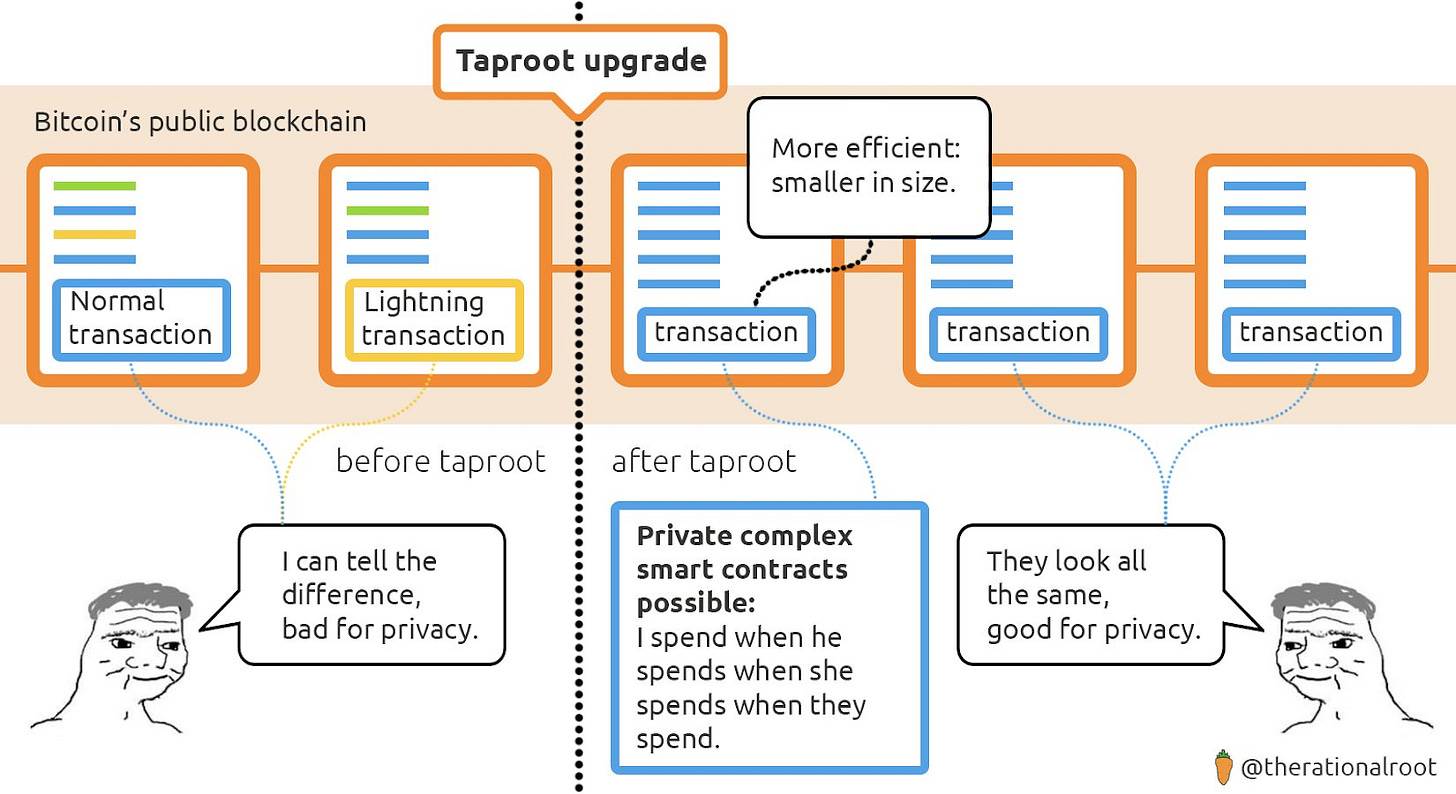
,, 2. Updates like Taproot have quietly expanded the applications of Bitcoin: Taproot wasn’t originally designed as an DeFi upgrade, but it provides the necessary cryptographic foundations for BTC-Fi: lower-cost multi-signature methods, more flexible key management, and better privacy protections. More importantly, it makes it possible to create assets like Taproot Assets (used for stablecoins) and more advanced wallet systems.
,,  ,
, 3. The emergence of native Bitcoin assets: With the introduction of Taproot and newer proof-of-stake systems, projects can now create assets that are based on Bitcoin or gain security from Bitcoin, without the need for BTC to be encapsulated.
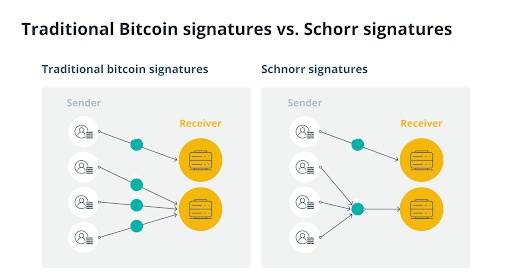
,Combining Taproot, Schnorr signatures, and new off-chain verification technologies, developers can now build assets directly on top of Bitcoin, or inherit Bitcoin’s security features.
,,  ,
, This includes: ,
,, ● Taproot Assets (Tether creates USDT directly on the Bitcoin/Lightning network stack) ,
,, ● Native Bitcoin stablecoins that don’t rely on Ethereum, Solana, or Cosmos ,
,, ● Synthetic assets that rely on Bitcoin’s security without needing a custody provider ,
,● 以前无法实现的可编程保险库和多重签名结构
比特币发行的资产首次无需离开比特币即可使用。而且,以比特币发行的资产也无需比特币离开持有者自身。
4、比特币收益成为可能:比特币本身从未有过收益。历史上,比特币“赚取”收益的唯一途径是将其打包、发送给托管机构、在中心化平台上借出,或将其桥接到其他区块链。而所有这些方式都存在风险,完全超出了比特币的安全模型。
BTCFi引入了一种全新的比特币收益方式。它是如何实现的呢?通过创建让比特币为网络安全做出贡献的系统。由此衍生出三种类型:
● 比特币质押(用于其他网络):BTC现在可以保护PoS网络或应用链,而无需离开比特币链。
● 比特币重新质押:类似于以太坊可以通过共享安全机制保护多个协议,比特币现在可以用作抵押品来支持外部链、预言机、DA层等。
● 基于闪电网络的收益系统:像Stroom这样的协议允许在闪电网络通道中使用的BTC通过提供流动性来赚取收益,同样无需封装或依赖托管桥。
在BTCFi出现之前,这一切都不可能实现。
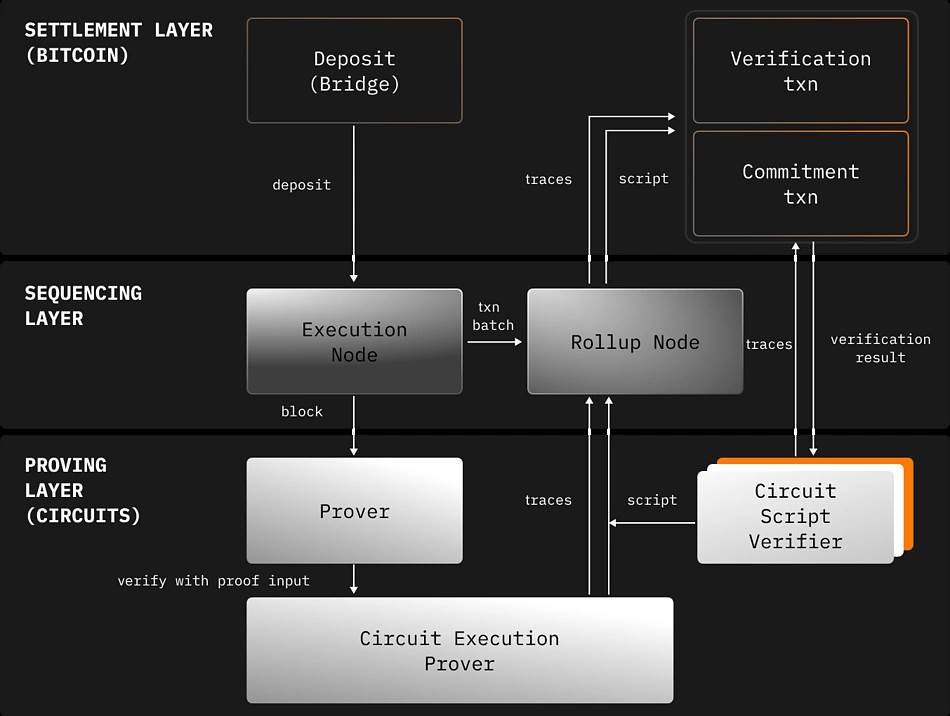
5. Bitcoin finally has an execution layer in place. The latest progress in off-chain verification allows Bitcoin to enforce computational results that it itself does not execute. This enables developers to build Rollup, bridge, and contract systems based on Bitcoin, systems that rely on Bitcoin for verification rather than computation. The underlying layer remains unchanged, but the external layer can now execute logic and prove its correctness to Bitcoin when necessary.
This gives Bitcoin unprecedented capabilities: applications, contracts-like entities, and new financial functions can be supported without requiring Bitcoin to be transferred to a hosting system or the protocol to be rewritten. This isn’t “smart contracts on Bitcoin” – it’s a verification model that maintains Bitcoin’s simplicity while allowing for more complex systems around it to exist.
Overview of BTCFi: What is actually being built
As underlying verification and portable tools become more mature, the Bitcoin ecosystem is finally beginning to expand without relying on hosting institutions or encapsulated assets. What emerges today isn’t a single product or category, but a series of interconnected layers. These layers bring Bitcoin a fully functional economic system for the first time. The simplest way to understand this is by observing how these components complement each other.
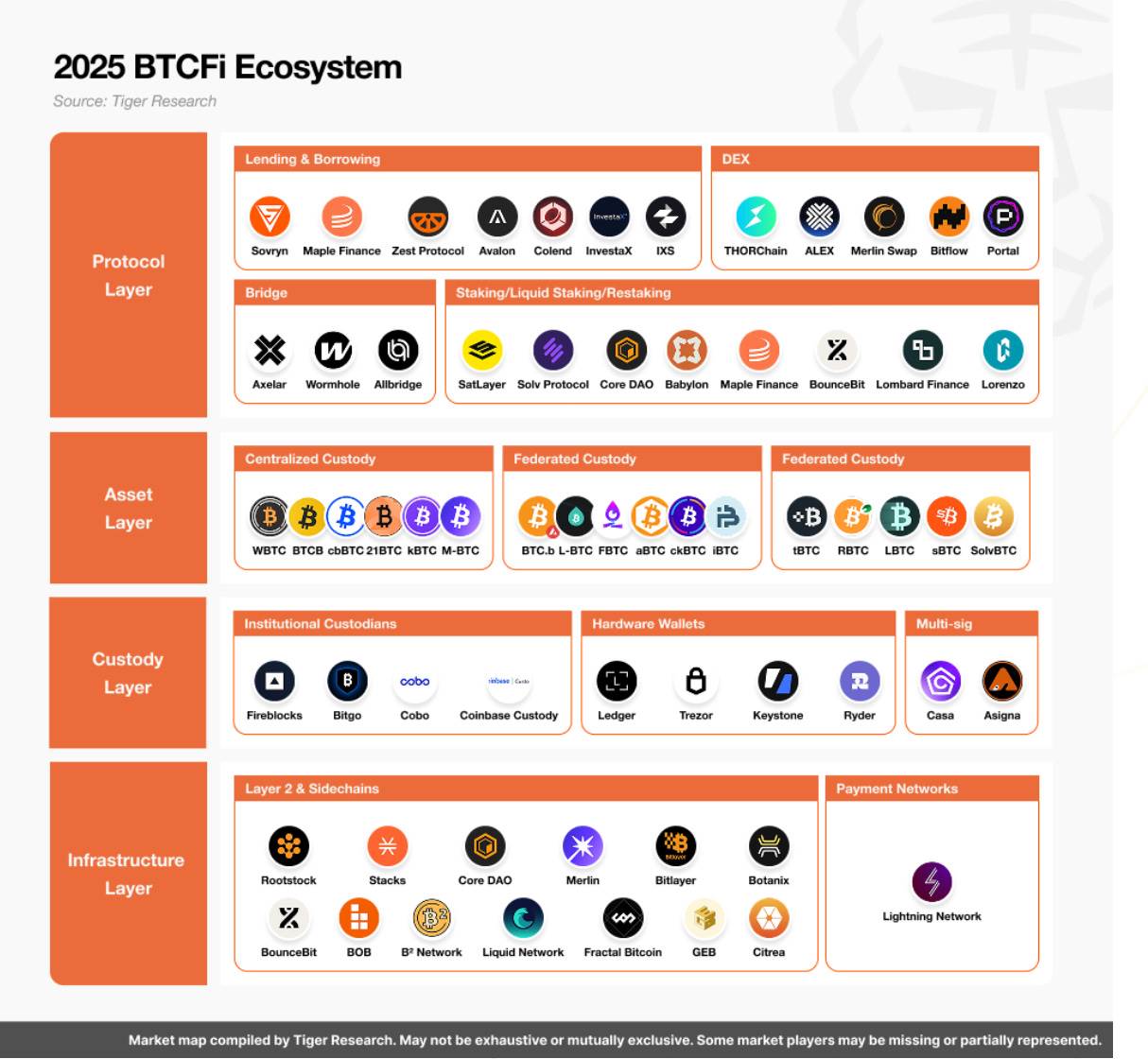
● Infrastructure layer: 首先显著的变化是比特币安全执行环境的出现。这些环境并非L1级别的竞争对手,也不是试图将比特币变成智能合约平台。它们是处理计算的外部系统,仅依赖比特币进行验证。这种分离至关重要。它创造了一个空间,在这个空间里,借贷、交易、抵押品管理,甚至更复杂的底层功能都可以存在,而无需对比特币的基础层进行任何更改。它也避免了旧模式的缺陷,在旧模式下,使用比特币意味着将其交给托管人或信任多重签名。而现在,比特币本身保持不变;计算则围绕它进行。
● 资产与托管层:与此同时,新一代的比特币桥开始形成,它们不再是上一周期中基于托管机构、高度依赖信任的桥,而是围绕可验证结果构建的桥。这些系统不再要求用户信任一组运营商,而是采用挑战机制和欺诈证明,自动拒绝错误的状态转换。其结果是,用户无需依赖之前设计中那些脆弱的信任假设,就能更安全地将比特币转移到外部环境。更重要的是,这种桥与比特币持有者对安全性的固有认知相契合:最小的信任,最小的依赖。
● 协议层:随着移动性变得更加安全,下一阶段的创新重点在于比特币在这些环境中能够发挥怎样的作用。收益市场和安全市场正是在此背景下应运而生。在比特币的大部分历史中,想要通过比特币赚取任何收益,都必须将其交给交易所或封装到其他区块链中。如今,质押和再质押模型使得比特币能够在不脱离自身控制的情况下,为外部网络安全做出贡献。收益并非来自信用风险或再抵押,而是源于维护共识或验证计算结果的经济价值。
与此同时,比特币原生资产开始涌现。开发者们不再将比特币封装或迁移到以太坊,而是开始使用Taproot、Schnorr签名和链下验证等技术,在比特币上发行资产或将资产锚定在比特币的安全机制之上。这包括直接在比特币基础设施上铸造的稳定币、不依赖托管机构的合成资产,以及允许更灵活支出条件的金库结构。所有这些都扩展了比特币的实用性,而无需将其引入不同的信任模型。
Each of these advancements is interesting in its own right. But when combined, they represent the emergence of the first coherent Bitcoin-based financial system. Computing can take place off-chain, and all transactions are enforced on Bitcoin itself. Bitcoin allows for secure transfers without the need for any kind of hosting. Assets can exist natively within the Bitcoin ecosystem, without relying on any external ecosystems for protection. Each advancement addresses different aspects of the liquidity problem that has plagued Bitcoin for over a decade.
What’s my thought?
I believe the simplest way to view BTCFi is as Bitcoin finally having an ecosystem that matches its scale. For years, people have tried using tools that were not designed to handle trillions of dollars in transactions. Any serious Bitcoin holder would never invest their coins in托管式桥接方案、未经验证的跨链技术,或者临时搭建的侧链结构——事实上,他们也没有这么做。
This new wave of developments is different from previous ones, as it addresses challenges in a way that’s unique to Bitcoin. The security model remains unchanged, and the systems surrounding Bitcoin are finally strong enough to handle significant capital flows. Even if only a small portion of Bitcoin starts to flow again once the infrastructure is finally mature, the impact will still be significant.