Exchange Ranking
 Top Exchanges
 24h Volume Ranking
 Popularity Ranking
 Exchange BTC Balance
 Proof of Reserves
 Decentralized Exchanges
 Funding Rate
 Funding Heatmap
 Liquidation Data
 Max Pain
 Long/Short Ratio
 Whale L/S Ratio
 Binance/Okex/Huobi L/S
 Bitfinex Margin L/S
 ETF Tracker
 Solana ETF
 XRP ETF
 Hong Kong ETF
 Bitcoin Treasuries
 Crypto Reversal
 Ethereum Reserves
 HyperLiquid Wallet Analysis
 Hyperliquid Whale Watch
 Large Transactions
 On-chain Movement
 Bitcoin ROI
 Stablecoin Market Cap
 Options Analysis
 News
 Articles
 Economic Calendar
 Features
 Wallet
 Contract Calculator


 Security
 Collections
 Watchlist
 Following
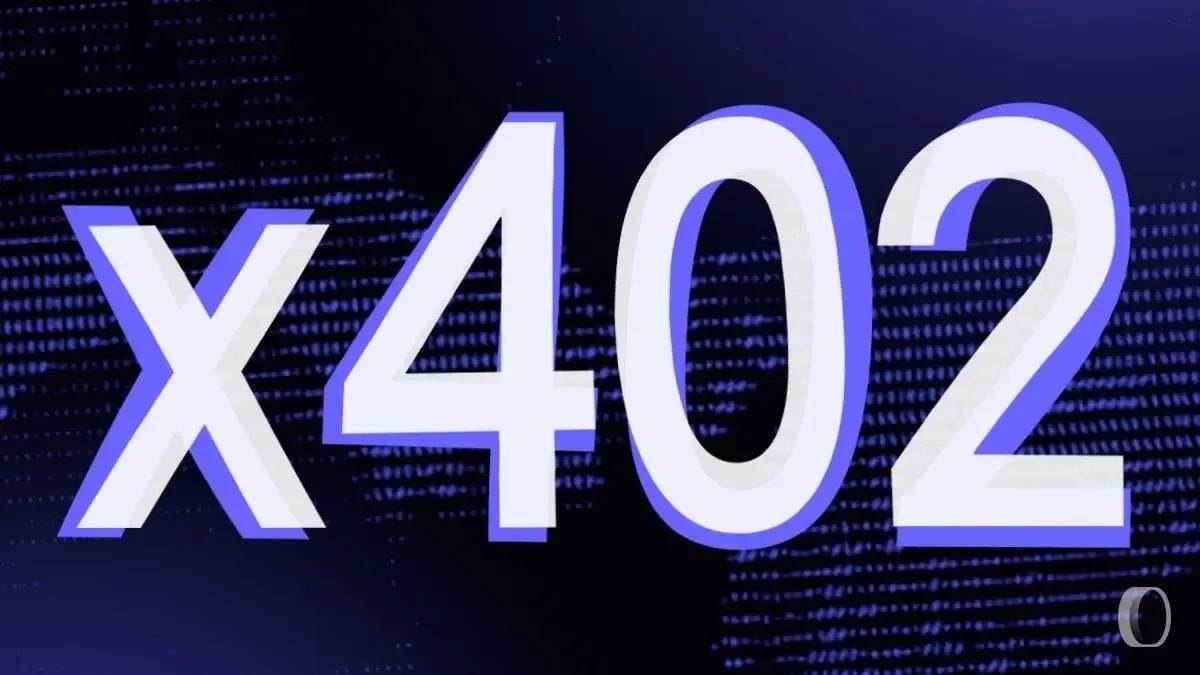
In 2025, a year marked by the rapid expansion of AI devices, automated robots, and IoT networks, the concept of the “machine economy” will experience a period of explosive growth. The x402 protocol becomes particularly important due to its ability to handle real-time, micro-payment transactions between machines. As the number of smart devices exceeds 20 billion, and the cost of invoking AI models decreases significantly, machines require more frequent, automated, and cross-border payment processes. However, traditional payment systems struggle to meet the demands for low fees, high concurrency, and round-the-clock settlement. The emergence of x402 is seen as the “payment foundation” of the machine economy era. But along with this innovation comes new challenges related to financial compliance, cross-border regulations, and anti-money laundering frameworks. Finding a balance between innovation and regulation will determine how far this payment revolution can go.
Introduction: From HTTP 402 to the dawn of the machine economy
In 1996, the designers of the HTTP protocol created the “402 Payment Required” status code. However, due to the lack of corresponding payment infrastructure, this code became a “phantom code” of the internet era.
Thirty years later, Coinbase’s initiative behind the x402 protocol has awakened this dormant status code, turning it into a “digital cashier” for autonomous machine transactions. When weather-sensing robots automatically purchase global weather data, and self-driving cars pay for road traffic rights in real time, the traditional payment logic of “account creation – authentication – authorization” is being dismantled. Through the closed loop of “HTTP request – 402 response – on-chain payment – service delivery,” x402 enables atomic transactions between machines without human intervention.

Behind this transformation lies the rise of the “machine economy”. Similar to the historical patterns that led to the development of insurance during the Age of Exploration and commercial banks during the Industrial Revolution, the explosive growth of AI agents is driving the need for upgrades in financial infrastructure. The features promised by the x402 protocol—immediate settlement, near-zero costs, and cross-chain flexibility—represent a breakthrough in terms of payment efficiency. At the same time, these features also push automated transactions into areas where legal and regulatory frameworks are unclear.
Let’s explore how x402 enables machines to complete a “single scan payment” independently.
The operation of x402 can be compared to a “smart store” in the digital world.
● AI initiates requests: If an AI needs to call a database API, it sends a resource request directly to the server.
● Payment confirmation: The server returns an HTTP 402 response, along with payment information such as the amount in USDC, recipient address, and chain-based verification rules.
● Chain-based signature payment: The AI generates a transaction signature using a Web3 wallet, without needing passwords or verification codes. The payment instructions are directly embedded in the HTTP request header.
● Blockchain settlement: After verifying the signature, the server broadcasts the transaction. Once confirmed on the blockchain (usually within 3-5 seconds), the payment is completed, and access to the data is granted to the AI.
This “request-to-pay” model compresses the traditional three-step process of shopping cart, payment page, and final payment into milliseconds of interaction between machines.
Its revolutionary nature lies in… AI首次具备了经济行为能力——不再是被动执行指令的工具,而成为能独立发起交易、履行合同的「数字经济主体」。
典型场景包括:AI代理自主购买云算力、数据查询、付费内容访问权限、第三方AI模型调用等。但在推进这样的自动化agentic commerce的同时,也面临着相关法律风险。
风险图谱:当代码逻辑撞上法律条文
1、AI决策的「灵魂拷问」:谁为机器的错误买单?
在x402流程中,AI代理负责发起支付请求并执行签名交易,这涉及算法决策和执行自动化交易指令的过程。当前法律框架下,AI自身并非法人,不具备独立主体资格,其行为责任通常由背后人类开发者或运营者承担,系统「去中心化」并不免除相关责任。
若AI的决策过程或结果侵犯第三方权益或违法,相关责任一般落在设计、部署或拥有该AI系统的组织或个人。同时,自动决策本身也涉及大量数据,包括用户API调用记录、支付历史和可能的用户身份信息,受到隐私和算法监管的约束。
2、钱包模式的合规分水岭
x402的支付安全依赖钱包选择,却可能触发完全不同的监管后果:
Unmanaged wallets: If AI uses services like MetaMask or hardware wallets that store private keys locally, users generally do not need to undergo KYC procedures. However, they must be responsible for protecting their private keys from loss and managing the security of their assets.
Managed wallets: If funds are signed or held through third-party managed wallets or cryptocurrency services (such as exchanges or custodian institutions), those service providers will be considered intermediaries in currency transfer transactions. They must obtain the necessary licenses according to local regulations and meet compliance requirements such as KYC/AML and FATF travel rules. Otherwise, they may face administrative penalties or criminal liability.
3. On-chain interactions and payment challenges
Payment tools: Stablecoins like USDC, which are currently used as examples by x402, are under global regulatory scrutiny. Different jurisdictions have varying interpretations of stablecoins. In the United States, sending or receiving assets including Bitcoin, Ether, USDC, and USDT may be considered “currency transmission” activities, subject to FinCEN regulations. Similarly, MICA categorizes stablecoins as “electronic currency tokens,” requiring licensing, reserve management, and strict oversight.
Payment settlement and irreversibility: Once a blockchain payment is confirmed, it cannot be revoked. The design of the x402 protocol aims to simplify automated payments involving small amounts and frequent transactions. However, it lacks proper refund, dispute resolution, or risk control mechanisms, which poses challenges for user protection. Many jurisdictions do not have consumer protection laws for cryptocurrency payments, leaving users responsible for any consequences of transactions. For example, if an AI agent mistakenly transfers funds due to an attack, it is usually impossible to recover those funds.
4. Security challenges associated with centralization
x402协议本身通过轻量级中间件集成到提供商服务器,其本身非独立的链上智能合约,也就是说现在很多x402项目实际上是在官方平台部署一个服务,这个服务会将链上交互转发到项目方服务器,然后项目方再与链上交互实现代币发放。
这意味着,当用户与项目方订立链上合约后,项目方需要将管理员私钥存储在服务器中,才能实现调用智能合约方法,这样的步骤会暴露管理员权限,如果私钥泄露,会直接导致用户资产受损。
在今年10月末, 402bridge就遭遇了因管理员私钥泄露导致的安全事件,超过200名用户损失了价值约17,693美元的USDC稳定币。

402bridge的安全事件
因此,当引入智能合约来托管支付或执行交易时,会存在单点故障或错误执行的风险。
合规探寻:创新与监管
企业部署x402的,需构建多维合规体系:
1、跨境合规「导航系统」:
动态监管映射:根据交易对手方所在国切换合规策略——在明确目标市场后,应迅速完成合规定位与牌照布局。同时,建立常态化监管跟踪机制,及时把握国内外在自动化支付、数字资产等领域的立法与执法动向。
Strict AML/KYC regulations: In accordance with FATF guidelines and regulatory requirements of various countries, a comprehensive system for customer identity verification and transaction monitoring is implemented. Identity information and transaction purposes of both parties involved in payments must be verified, and sufficient records of sources and purposes should be kept. Risk control measures are also taken for transactions on the blockchain, such as using blockchain analysis tools to identify addresses related to terrorism or sanctions, thereby preventing money laundering.
2. Division of responsibilities:
AI compliance and privacy protection: AI models and decision-making processes must be evaluated to ensure compliance with principles of transparency and non-discrimination. Explanatory mechanisms should be provided when personal decisions are made, and users should have the option to appeal or seek manual intervention.
Legal framework and agreement terms: The legal relationships outlined in the agreements must be clear, including definitions of AI agents, legal attributes of tokens/stablecoins, and functions of related contracts. Clear service agreements should be signed with users and service providers, specifying rights and obligations, dispute resolution mechanisms, and applicable laws.
Risk diversification measures: Given the irreversibility of digital payments and the risks associated with smart contracts, diversified measures can be considered. For example, daily or individual limits can be set for AI agent accounts to avoid large-scale payments. Independent security audits should be conducted on smart contracts, and an emergency “pause” mechanism should be established. Especially when managing custodial contracts, operators should separate management of operational funds from customer funds.
End-users who use x402 type automated payment services must take protective measures to reduce legal and operational risks:
● Emphasis on security protection:Before using the platform, ensure that it has the necessary financial licenses and compliance registration information. Do not easily click on unfamiliar links to initiate X402 payments, as this can lead to transactions with unlicensed entities. Instead, prioritize using mainstream stablecoins that are properly registered and compliant as payment methods. If you use a custodial wallet, be sure to store your private keys in a secure manner, such as a hardware wallet, and never store them directly on online servers.
● Managing authorization levels: Set strict transaction limits and authorization policies for AI payment agents. Approve “unlimited authorization” only after careful consideration, and regularly review and update authorization settings.
● Keeping transaction records: Keep complete records of all transactions, including transaction hashes, service agreements, and payment receipts. This ensures that you have sufficient evidence in case of disputes.
● Monitoring regulatory developments: Stay informed about the latest regulations regarding encrypted payments and AI decision-making in your jurisdiction. Ensure that your activities remain compliant.
Conclusion: The harmonious coexistence of code and law
The emergence of the X402 protocol is akin to the challenge posed by promissory notes in the 17th century against the gold and silver standard—new economic forms often emerge before rules can be established. However, security incidents like those involving 402bridge serve as a warning that the stability of technical infrastructure and the maturity of institutional frameworks are equally important.
When the EU’s MiCA regulations require monthly audits of stablecoin reserves, or when the US SEC incorporates AI decision-making into the Algorithmic Accountability Act, these seemingly restrictive regulations actually serve to create “guardrails” for the machine economy.
Therefore, the competition in the future will be one of compliance capabilities. After all, true innovation never involves subverting existing rules; instead, it involves filling in the gaps within those rules, thereby creating new paradigms for the future economy.