Exchange Ranking
 Top Exchanges
 24h Volume Ranking
 Popularity Ranking
 Exchange BTC Balance
 Proof of Reserves
 Decentralized Exchanges
 Funding Rate
 Funding Heatmap
 Liquidation Data
 Max Pain
 Long/Short Ratio
 Whale L/S Ratio
 Binance/Okex/Huobi L/S
 Bitfinex Margin L/S
 ETF Tracker
 Solana ETF
 XRP ETF
 Hong Kong ETF
 Bitcoin Treasuries
 Crypto Reversal
 Ethereum Reserves
 HyperLiquid Wallet Analysis
 Hyperliquid Whale Watch
 Large Transactions
 On-chain Movement
 Bitcoin ROI
 Stablecoin Market Cap
 Options Analysis
 News
 Articles
 Economic Calendar
 Features
 Wallet
 Contract Calculator


 Security
 Collections
 Watchlist
 Following
 BTC
As we move into the fourth quarter of 2025, market confidence in Bitcoin has significantly increased. Many institutions have raised their target prices for BTC, with latest predictions suggesting that the price of Bitcoin could reach $200,000 within the year. This optimistic outlook is driven not only by changes in US monetary policy and continuous inflows of ETF funds, but also by the high levels of institutional holdings. Analysts generally believe that as the halving effect continues to take effect and network activity increases, Bitcoin is entering a new phase characterized by “extremely tight supply” and “strong demand recovery.” This could be the starting point for another significant bull market.
Key points:
● Institutional investors continue to increase their holdings despite fluctuations. – In the third quarter, net inflows of ETFs remained stable. MSTR increased its holdings by 388 Bitcoins in one month, demonstrating its commitment to long-term investment;
● Overheating but not extreme. – The MVRV-Z index is at 2.31, indicating that valuations are high but not at an extreme level. Leverage-driven funds have been cleared out by short-term traders, creating room for further increases;
● The global liquidity environment continues to improve. – The broad money supply (M2) exceeded $96 trillion, reaching a record high. Expectations of interest rate cuts by the Federal Reserve are rising, with more cuts expected this year.
Institutional investors have made purchases amidst uncertainties in Sino-US trade relations.
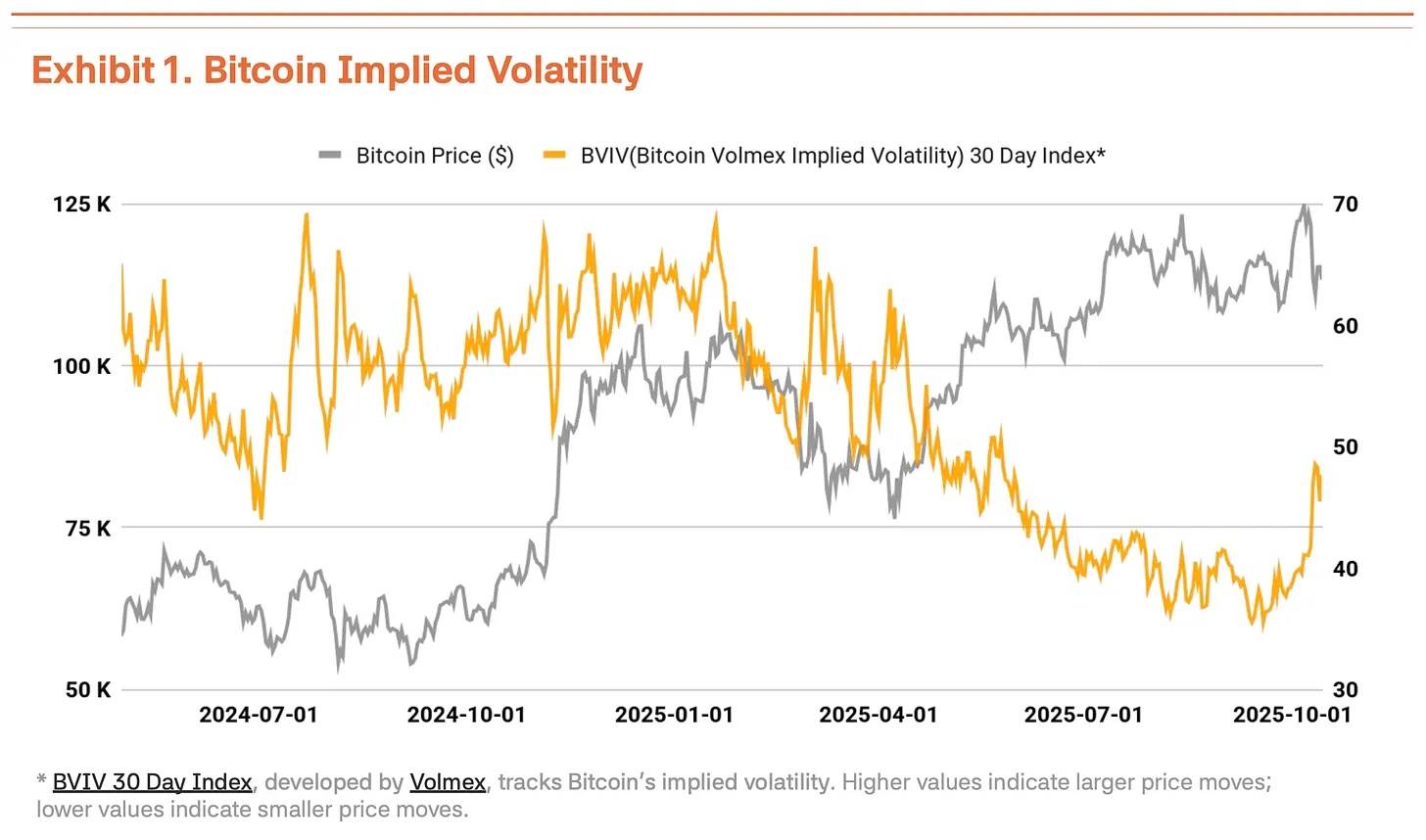
In the third quarter of 2025, the Bitcoin market slowed down from its strong growth in the second quarter (a 28% increase compared to the previous quarter), entering a phase of volatility (a 1% increase compared to the previous quarter).
On October 6th, the price of Bitcoin reached a record high of $126,210. However, the Trump administration once again imposed trade pressures on China, causing the price of Bitcoin to drop by 18%, reaching $104,000. Volatility increased significantly. According to the Volmex Finance Bitcoin Volatility Index (BVIV), as institutional investors continued to increase their holdings, volatility decreased from March to September. But after September, volatility soared by 41%, increasing market uncertainty (Chart 1).
This temporary decline in prices seems to be due to renewed Sino-US trade tensions and Trump’s tough statements. In fact, institutional investors are continuing to increase their holdings. The macro environment also plays a role in driving this trend. The global money supply (M2) exceeded $96 trillion, setting a new record. On September 17th, the Federal Reserve lowered interest rates by 25 basis points, to 4.00%-4.25%. The Fed indicated that it would further cut interest rates by 1-2 times this year. A stable labor market and economic recovery create favorable conditions for risk assets.
机构资金流入保持强劲。第三季度比特币现货ETF净流入达到78亿美元。尽管低于第二季度的124亿美元,但整个第三季度保持净流入证实了机构投资者的稳定买入。这一势头延续到了第四季度——仅10月第一周就录得32亿美元,创下2025年单周流入量新高。这表明机构投资者将价格回调视为战略入场机会。Strategy在市场回调期间仍持续买入,10月13日购入220枚比特币,10月20日购入168枚比特币,一周内累计购入388枚比特币。这表明,无论短期波动如何,机构投资者都坚定地相信比特币的长期价值。
链上数据信号过热,基本面不变
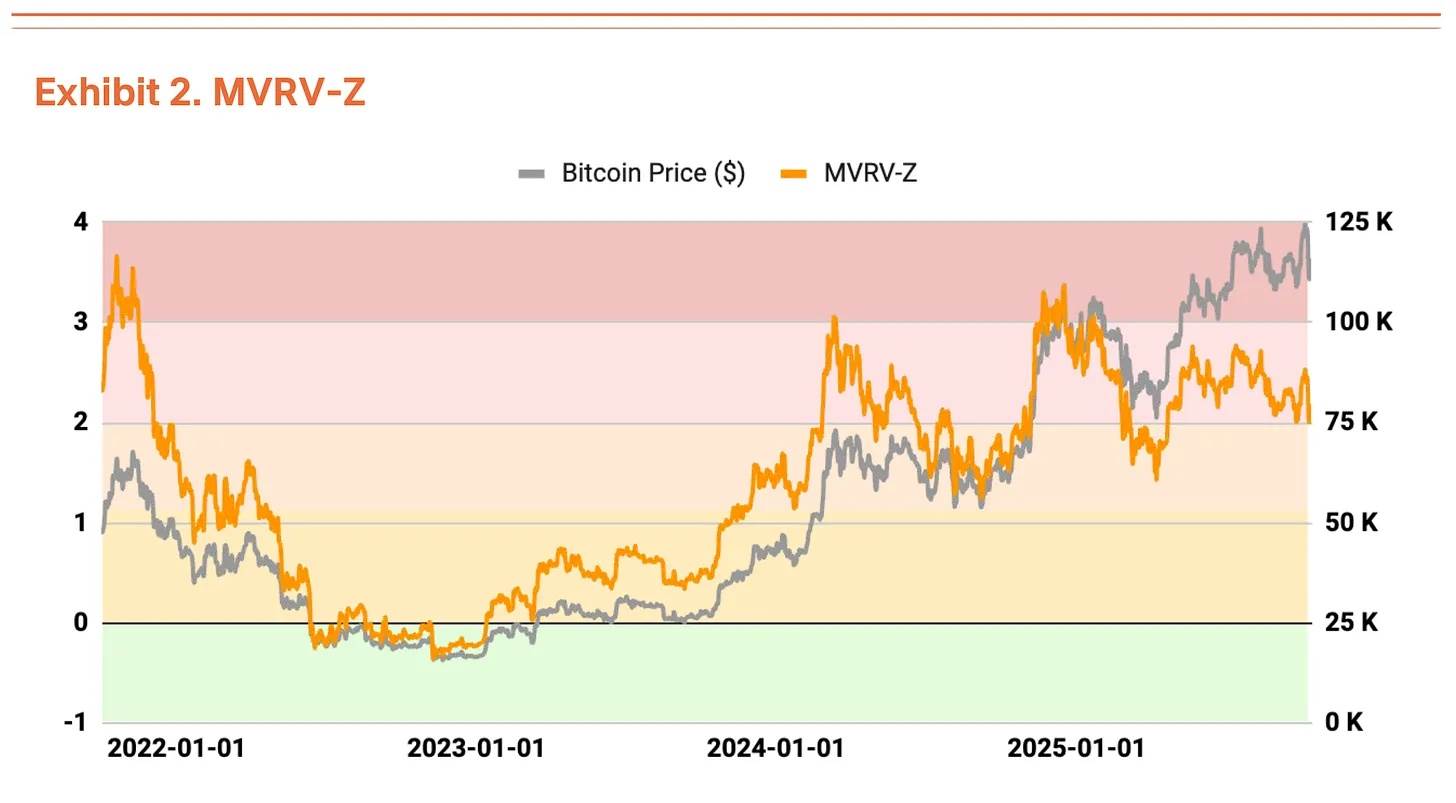
链上分析揭示了一些过热迹象,不过估值尚不令人担忧。MVRV-Z 指标(市值与已实现价值之比)目前处于过热区域,为 2.31,但相对于 7-8 月接近的极端估值区间,已趋于稳定(图表2)。
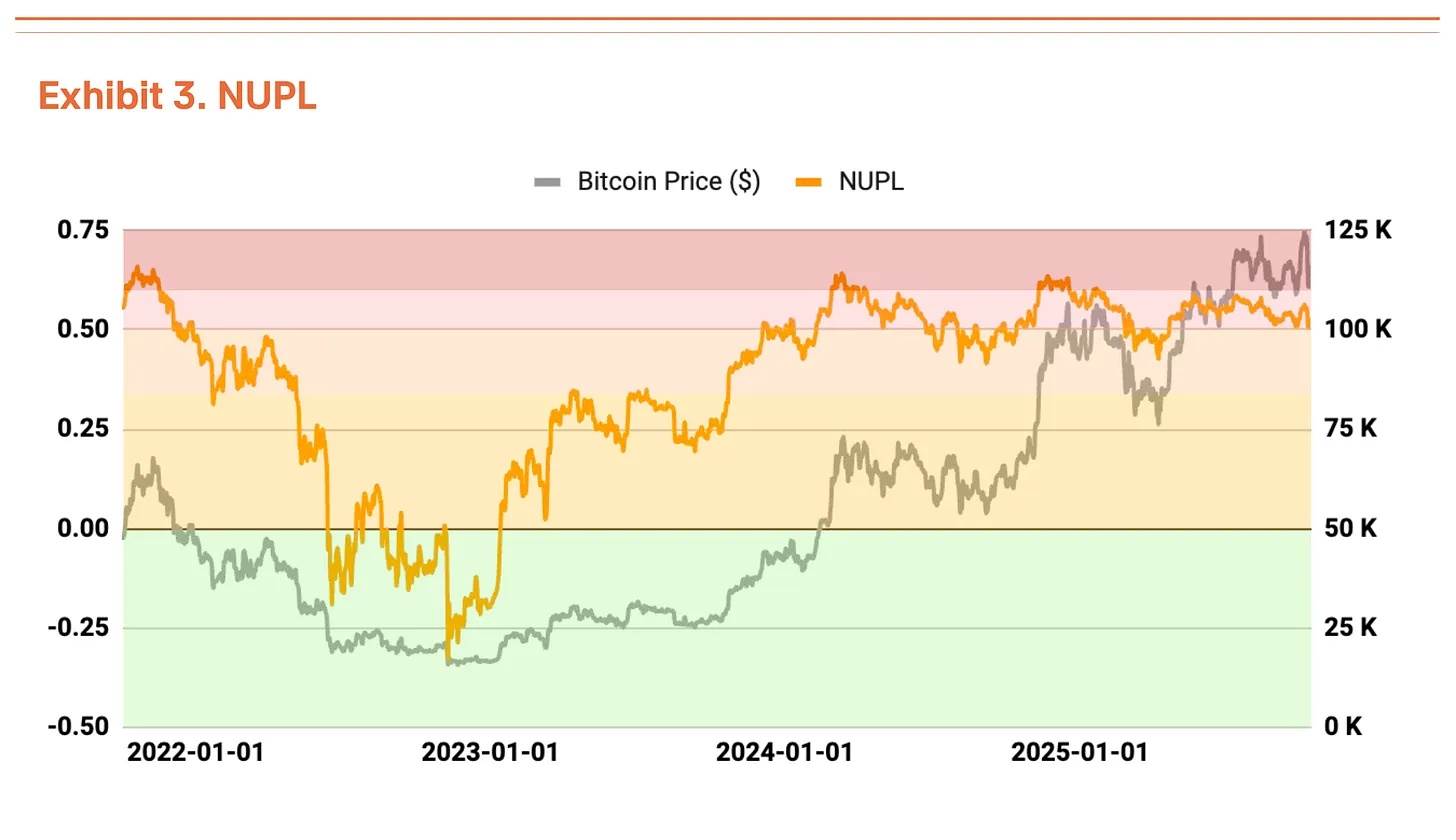
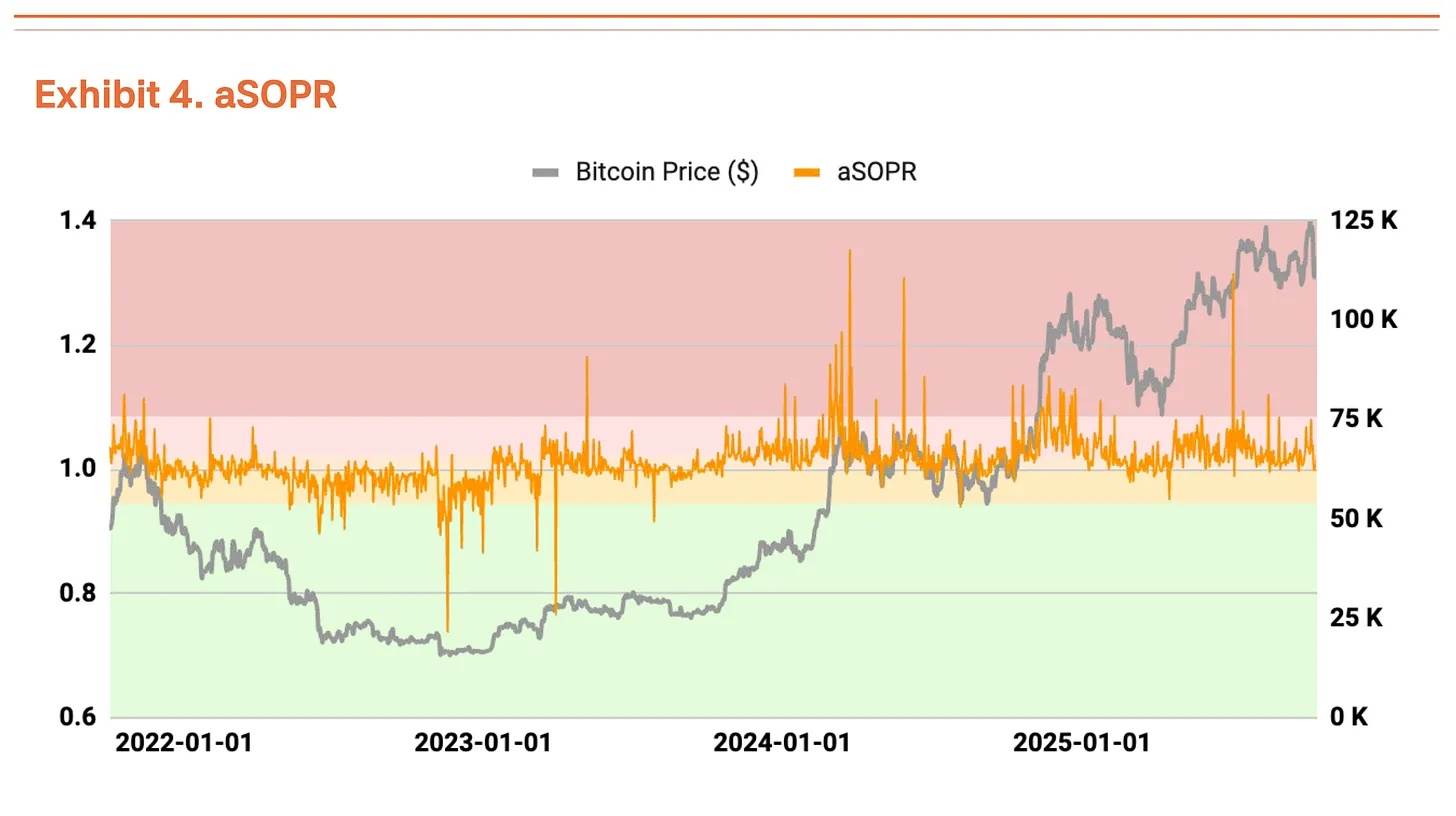
净未实现盈亏比 (NUPL) 也显示出过热区域,但较第二季度的高未实现利润状况已有所缓和(图表3)。调整后的支出产出利润率 (aSOPR) 反映了投资者的已实现盈亏,该比率非常接近均衡值1.03,表明无需担忧(图表4)。
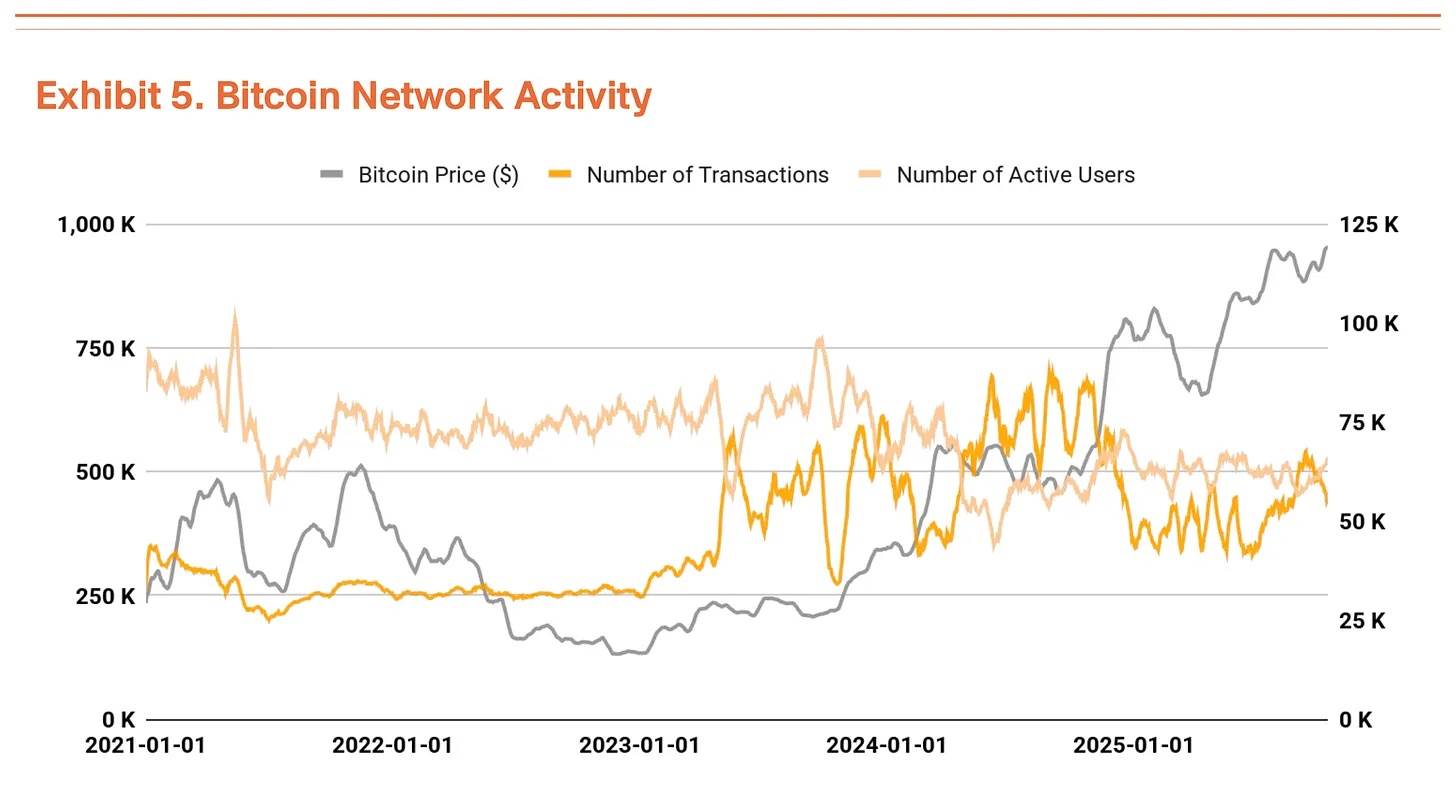
The number of transactions and the number of active users in the Bitcoin market remain at similar levels compared to the previous quarter, indicating that the network’s growth has temporarily slowed down (Chart 5). At the same time, the total volume of transactions is on the rise. The decrease in the number of transactions, combined with an increase in the amount of money transferred per transaction, suggests that larger amounts of capital are being moved across fewer transactions. This indicates an increase in large-scale capital flows.
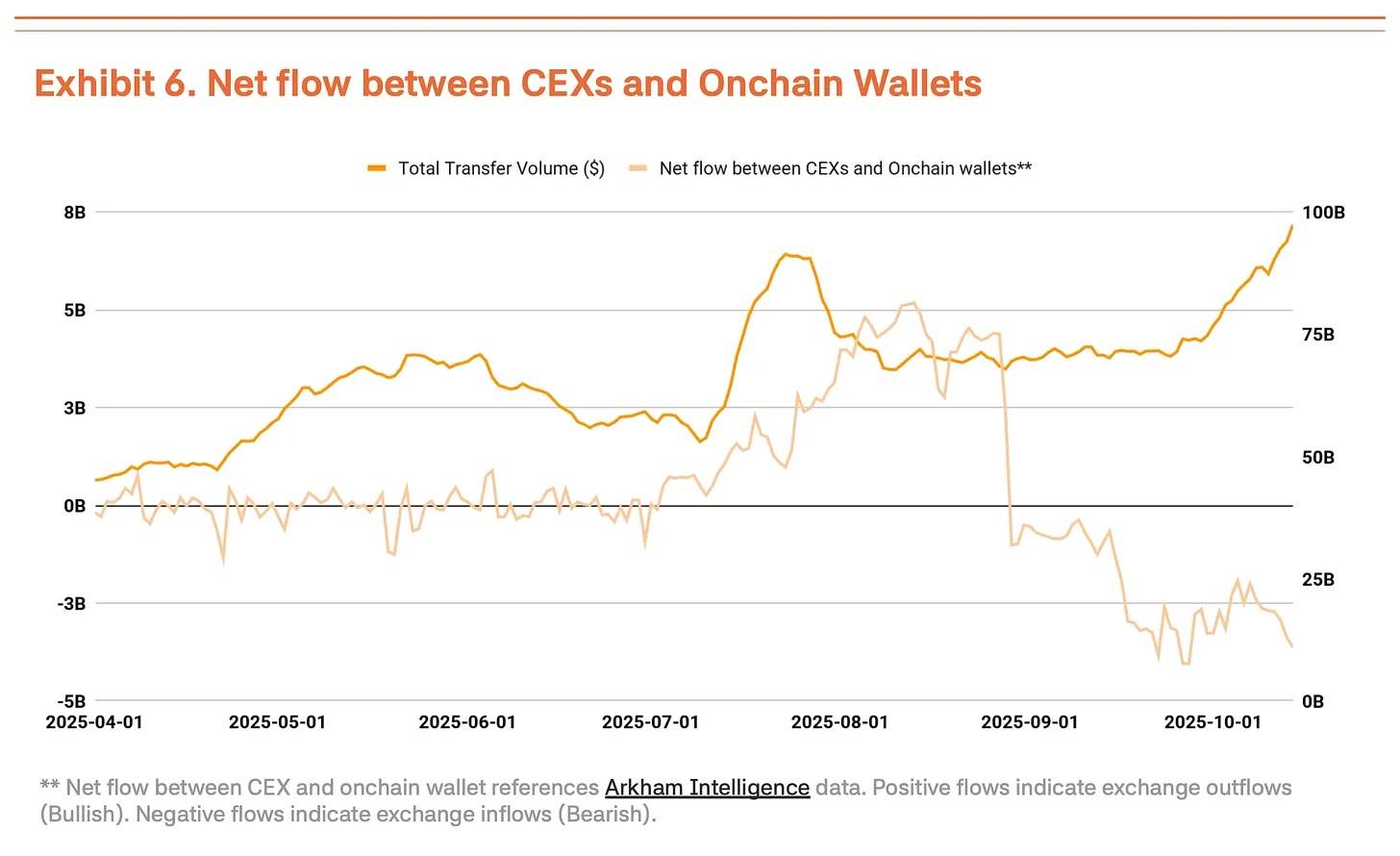
However, we cannot simply consider this increase in transaction volume as a positive sign. The recent increase in funds flowing into centralized exchanges suggests that holders are ready to sell their assets (Chart 6). With no improvement in fundamental indicators such as the number of transactions and the number of active users, the increase in transaction volume is more likely due to short-term capital flow patterns and selling pressure in a highly volatile environment, rather than a true increase in demand.
The collapse on October 11th proves that the market has shifted towards institutional dominance
. The collapse of centralized exchanges on October 11th (a decline of 14%) indicates that the Bitcoin market has shifted from being dominated by retail investors to being dominated by institutions.
The key point is that the market response is completely different from previous situations. In late 2021, a similar situation led to panic among retail investors, resulting in a collapse. This time, the correction was limited. After large-scale liquidations, institutional investors continued to buy, indicating that they are willing to defend the market against further declines. Additionally, institutions seem to see this as a healthy consolidation, which helps to reduce excessive speculative demand.
In the short term, continuous selling by individual investors will lower the average purchase price for retail investors, thereby increasing psychological pressure. This could lead to further market volatility due to weakened market sentiment. However, if institutional investors continue to enter the market during this period of consolidation, this pullback might serve as a foundation for a next round of increases in prices.
The target price has been raised to $200,000.
Using our TVM analysis method, we determined that the neutral base price is $154,000, which represents a 14% increase from the $135,000 in the second quarter. Based on this, we applied a -2% adjustment for fundamental factors and a +35% adjustment for macroeconomic factors, resulting in a target price of $200,000.
The -2% adjustment for fundamental factors reflects a temporary slowdown in online activity, along with an increase in deposits at centralized exchanges, indicating short-term weakness. The macroeconomic adjustment remains at 35%. Continuous expansion of global liquidity and inflows of institutional funds, along with the Federal Reserve’s stance on interest rate cuts, provide strong catalysts for further increases in prices during the fourth quarter.
The short-term pullback may be due to signs of overheating, but this is a healthy level of consolidation, not a change in trend or market perception. The continuous rise in the base price indicates that the intrinsic value of Bitcoin is steadily increasing. Although there is temporary weakness, the long-term outlook for increases in prices remains solid.