Exchange Ranking
 Top Exchanges
 24h Volume Ranking
 Popularity Ranking
 Exchange BTC Balance
 Proof of Reserves
 Decentralized Exchanges
 Funding Rate
 Funding Heatmap
 Liquidation Data
 Max Pain
 Long/Short Ratio
 Whale L/S Ratio
 Binance/Okex/Huobi L/S
 Bitfinex Margin L/S
 ETF Tracker
 Solana ETF
 XRP ETF
 Hong Kong ETF
 Bitcoin Treasuries
 Crypto Reversal
 Ethereum Reserves
 HyperLiquid Wallet Analysis
 Hyperliquid Whale Watch
 Large Transactions
 On-chain Movement
 Bitcoin ROI
 Stablecoin Market Cap
 Options Analysis
 News
News Articles
 Economic Calendar
 Features
 Wallet
 Contract Calculator


 Security
 Collections
 Watchlist
 Following
 BTC
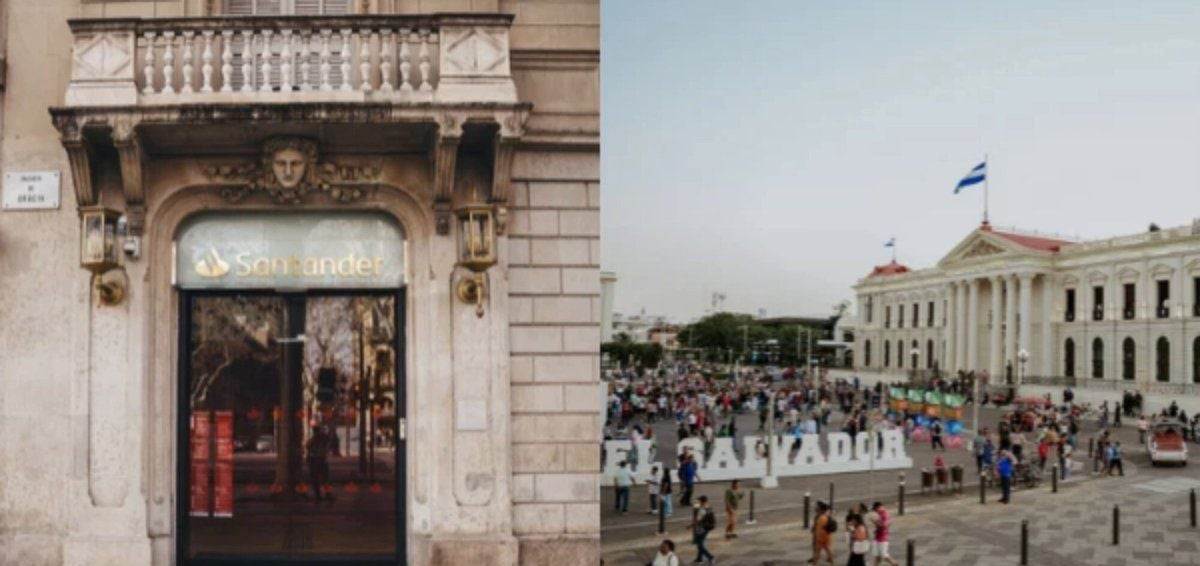
BTC Bank of Santander: Salvador's trustworthy path to investment-grade credit
Santander's U.S. capital markets arm outlines a credible path for Salvador to achieve an investment-grade credit rating. The bank pointed to the country's renewed International Monetary Fund program, fiscal performance that exceeded first-half targets, and a continued structural reform agenda as the main drivers of the process.
IMF plans to get back on track
Analysts at the Spanish bank predict that Salvador's sovereign credit rating is expected to move towards BB over the next four to five years. This is a significant leap for sovereign states that have long been regarded as high-yielding credit, and the current macro background has improved significantly.
After a year-long delay, Salvador's $1.4 billion IMF program is finally back on track, giving renewed impetus to the rebound in the country's bond market. IMF staff and the Salvada authorities reached a staff-level agreement on the second and third joint reviews of extended financing arrangements. If approved by the executive board, the move will unlock approximately US$140 million in financial support.
Currently, economic activity is performing beyond expectations, fiscal and external imbalances are being addressed in accordance with plan commitments, and the structural reform agenda is steadily advancing. Real GDP growth will exceed expectations in 2025 and is expected to reach 4.5% in 2026, thanks to strong investment, private consumption, and solid remittances, tourism and capital inflows.
Santander's own analysis points out that with the repair of IMF relations and subsequent rating upgrades, market sensitivity may decrease to support the current tight interest rate spread, and may also push the interest rate spread on the euro bond curve to further narrow. Given the strong carry and upside potential created by a flattening curve, the bank recommends preferring medium-term bonds when exposing positions.
Bitcoin reserve clause clarifies
The Bitcoin issue, which has long been the focus of IMF negotiations in Salvador, has been resolved in the same staff-level agreement. In its latest review of the country's loan program, the IMF said documents provided by Salvada showed that the bitcoins accumulated since the last review reflected private donations. The IMF added that "no further Bitcoin accumulation beyond recorded donations is expected" and said the two sides agreed on the legislative, regulatory and supervisory framework for modernizing digital assets.
Currently, Salvada's Bitcoin reserves are 7,771, worth approximately US$599.5 million. No public resources have been used for Bitcoin accumulation, and ownership and operational control of government e-wallets have been transferred to private operators, meeting a key IMF condition.
Pension reform remains the main risk
Despite progress, pension reform remains the main outstanding risk. The country still faces a structural pension deficit and faces a critical test in 2027 as a four-year moratorium on interest payments to private pension funds comes to an end. Investors generally accept the delay given the election calendar, but it will be a top priority for close attention as Salvada moves towards a higher credit rating.