Exchange Ranking
 Top Exchanges
 24h Volume Ranking
 Popularity Ranking
 Exchange BTC Balance
 Proof of Reserves
 Decentralized Exchanges
 Funding Rate
 Funding Heatmap
 Liquidation Data
 Max Pain
 Long/Short Ratio
 Whale L/S Ratio
 Binance/Okex/Huobi L/S
 Bitfinex Margin L/S
 ETF Tracker
 Solana ETF
 XRP ETF
 Hong Kong ETF
 Bitcoin Treasuries
 Crypto Reversal
 Ethereum Reserves
 HyperLiquid Wallet Analysis
 Hyperliquid Whale Watch
 Large Transactions
 On-chain Movement
 Bitcoin ROI
 Stablecoin Market Cap
 Options Analysis
 News
News Articles
 Economic Calendar
 Features
 Wallet
 Contract Calculator


 Security
 Collections
 Watchlist
 Following
 XRP
XRP Former Ripple Chief Technology Officer Schwartz questioned the bank's position: Behind the obstruction of the CLARITY bill
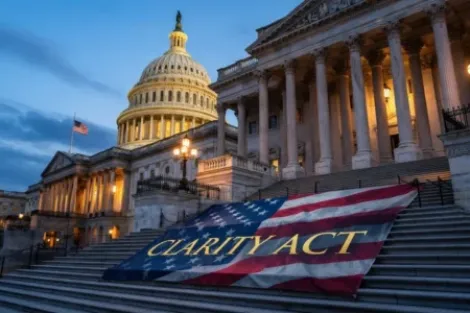
David Schwartz, former Chief Technology Officer (CTO) of Ripple, attributed the CLARITY bill's setback in the Senate to pressure from the traditional banking industry. The Senate ended its vote on the bill 49 - 50, failing to meet the 60-vote threshold needed to move the bill forward.
Senator Josh Hawley cited concerns that stablecoins that support yields could draw deposits from small banks. However, Schwartz argued that the bill would not materially reduce banks 'ability to provide loans.
Schwartz refutes "bank profit protection theory"
David Schwartz points out that lawmakers use concerns about local borrowing to defend bank profits rather than truly care about consumer interests. On September 15, 2026, the Senate voted 49 - 50 to reject the indictment against H.R. Motion for closing debate on Bill 3633. Because the measure required 60 votes to open debate, the broader digital asset framework has stalled.
Schwartz responded after Senator Josh Hawley defended his vote against advancing the bill. Hawley claimed that stablecoins supporting yields could withdraw deposits from Missouri banks and reduce credit support for farmers and small businesses. Schwartz questioned this reason, arguing that the bill would not materially reduce banks 'ability to lend, and pointed out that if funds flow to high-yield products, other lenders can still provide services to borrowers.
Schwartz bluntly pointed out that the real intention behind this is to protect bank profits.
Senators Susan Collins, Josh Hawley, Jerry Moran and Tom Tillis joined by Democrats and independents in voting against ending the debate. Tillis changed the vote to "No" in order to later seek reconsideration of the motion.
Banking groups have been urging Congress to limit interest-like stablecoin rewards. They argue that deposit transfers could weaken community banks 'funding base, while cryptocurrency supporters argue that the restrictions are designed to protect banks from new competitors.
A White House Council of Economic Advisers document released this week estimated that banning stablecoin gains would increase total bank lending by only 0.02%, although banking groups disputed this conclusion.
XRP-related ETF filing date extended to October
Regulatory uncertainty also hangs over a planned reverse XRP fund. A September 11 Securities and Exchange Commission (SEC) document moved the effective date of the Teucrium 2 times daily short XRP ETF to October 11, 2026. The document states that the amendment only changes the effective date, does not cite the CLARITY Act, and does not give policy reasons for the delay, so a direct link between the two lacks support.
After the Senate vote, XRP traded around $1.29 as selling pressure spread throughout the broader crypto market.
据Blockonomi本周报道,XRP价格跌至1.30美元以下,并在十大加密货币中录得了最陡峭的24小时跌幅。随着立法者就稳定币规则和市場结构展开辩论,Ripple前首席技术官施瓦茨继续就美国加密政策发表评论。Ripple方面另外表示,此次投票失败并未改变XRP在美国现有的法律地位。