Exchange Ranking
 Top Exchanges
 24h Volume Ranking
 Popularity Ranking
 Exchange BTC Balance
 Proof of Reserves
 Decentralized Exchanges
 Funding Rate
 Funding Heatmap
 Liquidation Data
 Max Pain
 Long/Short Ratio
 Whale L/S Ratio
 Binance/Okex/Huobi L/S
 Bitfinex Margin L/S
 ETF Tracker
 Solana ETF
 XRP ETF
 Hong Kong ETF
 Bitcoin Treasuries
 Crypto Reversal
 Ethereum Reserves
 HyperLiquid Wallet Analysis
 Hyperliquid Whale Watch
 Large Transactions
 On-chain Movement
 Bitcoin ROI
 Stablecoin Market Cap
 Options Analysis
 News
News Articles
 Economic Calendar
 Features
 Wallet
 Contract Calculator


 Security
 Collections
 Watchlist
 Following
 HBAR
HBAR Board members have all voting rights
In most crypto networks, holding native tokens means having a say in the direction of the agreement. But this is not the case with Hedera.
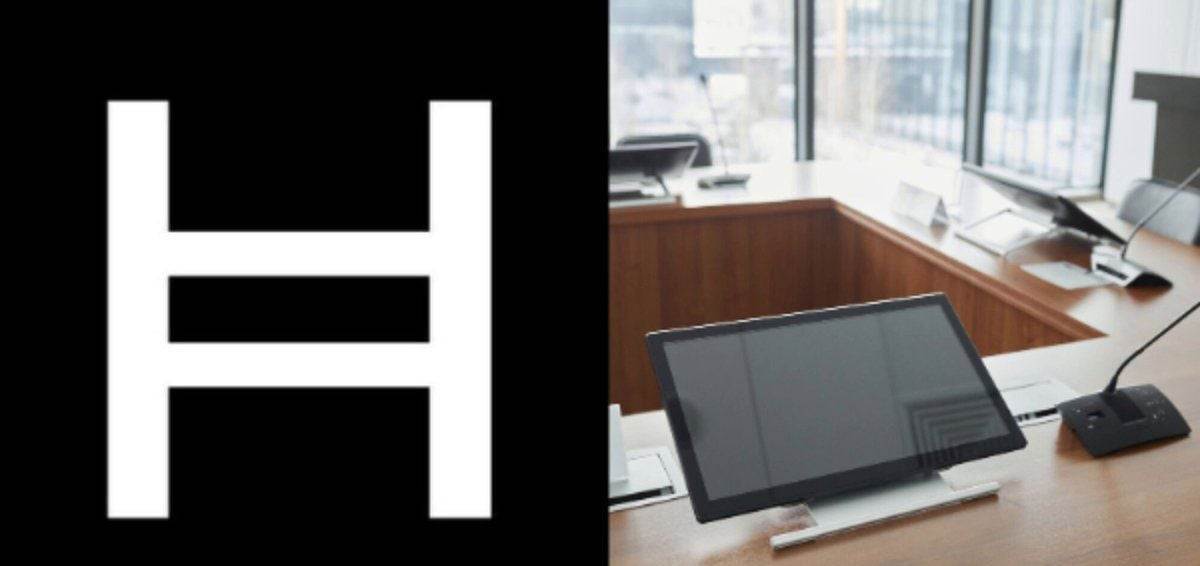
The Governance Board is responsible for developing member policies, managing the HBAR vault, approving changes to platform code, and maintaining the infrastructure and operations of the consensus node.$ HBAR holders do not have any direct vote on these decisions.
Consensus nodes are operated by a decentralized network of up to 39 governance board members. The Council is made up of large global organizations, including well-known companies such as Google, IBM and Boeing, which run nodes and participate in voting on network decisions. Each member has one equal vote, whether it is a Fortune 500 company or a university, and regular decisions are made by a simple majority.
The Board operates through a limited liability company agreement, which defines voting thresholds for different decision-making types. Major decisions require different levels of member consent based on the degree of impact, while daily operational matters can be advanced with simple majority approval. Major changes to network parameters or treasury policies usually require absolute majority consent. Changes to the HBAR supply limit of 50 billion pieces require the unanimous consent of all members of the Council.
Board members will be elected for a maximum of two terms under the limited liability company agreement, each term of three years, and meeting minutes will be publicly released to maintain transparency.
How community opinions actually work
This does not mean that ordinary participants are completely excluded.
Hedera's change process revolves around Hedera's improvement proposals, which are publicly tracked on GitHub. Anyone can write or discuss a HIP, but substantive changes require board-level review and voting to be accepted. HIP is designed to be the primary mechanism for proposing new features, gathering community input, and recording design decisions in the codebase. The goal is to provide a transparent and collaborative platform where new feature proposals, community comment collection, proposal and justification recording can be centralized, and each modification will be retained in GitHub's version history.
The difference is important: the HIP process gives the community a say, but does not give token holders binding voting rights. The ultimate power to decide what content to build and deploy lies with Hedera's board of directors, not $HBAR holders.
Hedera's board model cannot satisfy blockchain purists who view any licensing mechanism as a fundamental compromise. However, for companies that are evaluating distributed ledger adoption, this governance structure provides just the accountability mechanisms and stability required by their risk framework.