Exchange Ranking
 Top Exchanges
 24h Volume Ranking
 Popularity Ranking
 Exchange BTC Balance
 Proof of Reserves
 Decentralized Exchanges
 Funding Rate
 Funding Heatmap
 Liquidation Data
 Max Pain
 Long/Short Ratio
 Whale L/S Ratio
 Binance/Okex/Huobi L/S
 Bitfinex Margin L/S
 ETF Tracker
 Solana ETF
 XRP ETF
 Hong Kong ETF
 Bitcoin Treasuries
 Crypto Reversal
 Ethereum Reserves
 HyperLiquid Wallet Analysis
 Hyperliquid Whale Watch
 Large Transactions
 On-chain Movement
 Bitcoin ROI
 Stablecoin Market Cap
 Options Analysis
 News
 Articles
 Economic Calendar
 Features
 Wallet
 Contract Calculator


 Security
 Collections
 Watchlist
 Following
 SOL
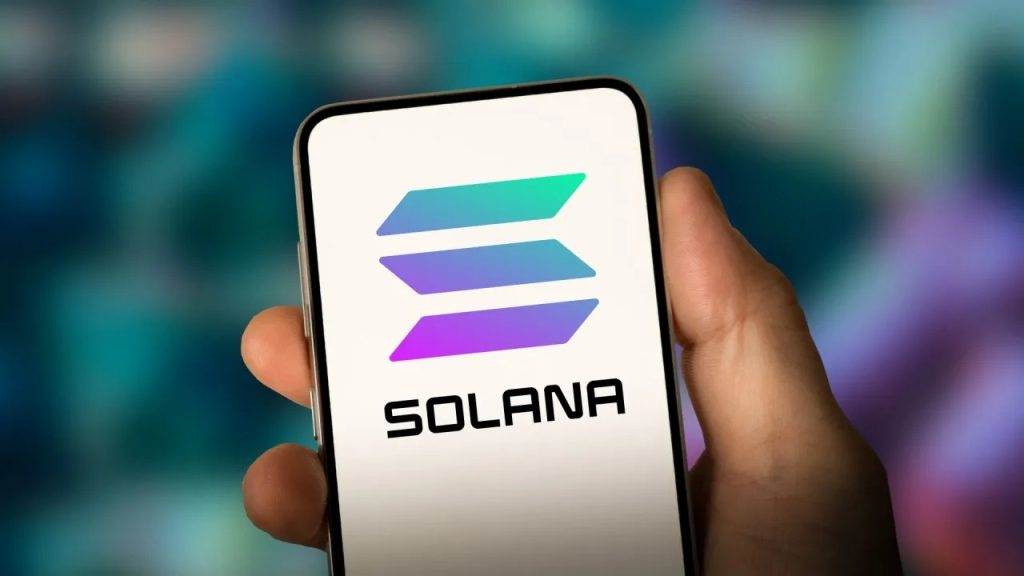
The Solana Foundation has launched an atomic-level settlement mechanism to achieve second-level DvP
The Delivery-versus-Payment (DvP) initiative aimed at simultaneously settling assets and cash legs is being advanced on Solana. The Solana Foundation has announced an atomic-level settlement plan for its blockchain. This mechanism binds the transfer of assets and their corresponding payments into an inseparable transaction. If any of these links fails, the entire transaction will automatically roll back, ensuring that no party holds partial or mismatched positions.
From traditional finance to blockchain-native security guarantees
"Bond payment" is a mature concept in traditional finance that aims to eliminate the risk that one party delivers assets while the other party fails to pay, or vice versa. In legacy markets, this protection often relies on clearing houses, custodians and multi-day settlement cycles. Solana's version attempts to use the finality of blockchain rather than intermediaries to replicate this security guarantee natively.
It is reported that the Solana Foundation has positioned the initiative as a settlement in seconds. This timeline is in sharp contrast to the T+1 or T+2 cycles common in equity and other regulated securities markets. Faster settlements reduce the window of time for counterparty risk to manifest, while also freeing up capital that would otherwise have been occupied during settlement.
Coherence points and challenges in institutional finance
The initiative is in line with a broader model of blockchain networks attracting institutional finance. Tokenized securities, tokenized treasury bonds and on-chain fund products have all developed significantly in the past two years. These use cases all rely on a reliable settlement infrastructure. Without atomic settlement, tokenized markets may reproduce the operational vulnerabilities found in traditional back-office systems.
Solana positions itself as a high-throughput network suitable for this type of financial infrastructure work. Its architecture emphasizes fast block times and low transaction costs. These characteristics are critical to settlement mechanisms because atomic-level settlement relies on the rapid and predictable confirmation of transactions. Networks with slow or inconsistent finality will undermine the core promise of instant "coupon payback."
The move also shows that blockchain foundations are increasingly building clear market structure tools rather than just general infrastructure. The "coupon deal" is not a consumer-oriented product, but an underlying facility designed for exchanges, custodians and asset issuers so that they can obtain settlement protection before pouring large amounts of trading volume into the chain. Institutional adoption of tokenized assets has repeatedly pointed to settlement risks and operational uncertainties as major obstacles.
Market Impact and Future Outlook
If atomic clearing works as described, it will strengthen the case for tokenized securities and other regulated assets to be settled directly on Solana. Reducing counterparty risk and accelerating capital turnover are attractive to institutional trading desks, custodians and clearing entities assessing the trajectory of blockchain. This puts Solana in a competitive position with other networks competing for tokenized asset infrastructure businesses.
Announcement itself does not guarantee adoption. Institutions often need regulatory clarity, audited infrastructure and proven uptime before routing meaningful settlement volumes through new systems. The "voucher response" initiative should be seen as a step towards this goal rather than evidence of an immediate institutional relocation. The "Bond Payment Response" initiative reflects continued efforts to introduce traditional market structure safeguards into the chain. The actual impact will depend on adoption by exchanges, custodians and asset issuers over time.
FAQs
In this context, what does "coupon payment"(DvP) mean?
DvP binds asset transfers to their payments in one transaction. Settlement on both legs at the same time, otherwise the transaction rolls back completely, eliminating the risk of unilateral failure.
Why is atomic settlement important to the blockchain market?
Atomic settlement eliminates the gap where one party can deliver value but does not receive a matching payment. This is the main source of counterparty risk in traditional finance.
How does this compare to traditional settlement timelines?
Many securities markets still settle within one to two days after a trade is executed. The goal of the Solana Foundation's initiative is to complete the settlement in seconds.
Has the DvP mechanism been deployed with institutional partners?
The report described the Solana Foundation's stated goals and launch of initiatives without elaborating on specific institutional partners or confirmed production schedules.
Update
October 6, 2026 09:25 UTC ·Added by CryptoNewsZJ: CryptoNewsZ reported that JPMorgan Chase was involved in the input of institutional securities clearing practices as a design partner and noted that the Solana Foundation is seeking additional design partners for the open source standard.