Exchange Ranking
 Top Exchanges
 24h Volume Ranking
 Popularity Ranking
 Exchange BTC Balance
 Proof of Reserves
 Decentralized Exchanges
 Funding Rate
 Funding Heatmap
 Liquidation Data
 Max Pain
 Long/Short Ratio
 Whale L/S Ratio
 Binance/Okex/Huobi L/S
 Bitfinex Margin L/S
 ETF Tracker
 Solana ETF
 XRP ETF
 Hong Kong ETF
 Bitcoin Treasuries
 Crypto Reversal
 Ethereum Reserves
 HyperLiquid Wallet Analysis
 Hyperliquid Whale Watch
 Large Transactions
 On-chain Movement
 Bitcoin ROI
 Stablecoin Market Cap
 Options Analysis
 News
 Articles
 Economic Calendar
 Features
 Wallet
 Contract Calculator


 Security
 Collections
 Watchlist
 Following
Key Facts
Kraken's parent company Payward announced on September 16 that it plans to offer Hyperliquid HIP-3 perpetual contracts to U.S. customers through regulated brokerage accounts without having received regulatory approval and a specific launch date.
Under the plan, Bitnomial, the U.S. Commodity Futures Trading Commission (CFTC) regulated exchange purchased by Payward in May 2026, will deploy, clear and settle these contracts, while NinjaTrader Clearing will carry customer accounts after two whitelists.
As of now, Payward has not disclosed the trading market, collateral, fees, funding rates, leverage ratios or position visibility for these contracts. As of September 28, no relevant terms were listed in Bitnomial's public filing.
How does Payward's Hyperliquid program work?
U.S. customers will open futures accounts with Payward's brokers. The official press release never mentioned the use of wallets. Two companies-Bitnomial and NinjaTrader Clearing-will be located behind the account.
Excerpts from the press release. Source: Payward
Bitnomial is a CFTC regulated exchange acquired by Payward in May 2026. It will serve as a deployer-that is, a builder of creating and operating markets. It will also be responsible for clearing and settlement of contracts and use the same clearing house that supports Kraken's current U.S. perpetual contracts.
NinjaTrader Clearing is a futures broker registered with the CFTC and is responsible for hosting client accounts.
Clearing mechanisms change the risk structure. Clearing houses intervene between traders, each party relying on its own credit rather than the other party's credit. Currently, Hyperliquid settles transactions online and has no traditional clearing house.
Access methods will also change. Only accounts entered through NinjaTrader and whitelisted by the two companies can be traded. The plan does not open Hyperliquid's current perpetual contract market to U.S. customers.
Instead, the plan created a new market. Hyperliquid's role is an order book that matches and records transactions. Payward has not named any trading markets for these contracts. Earlier reports have described the range of options for cryptocurrency perpetual contracts, but the announcement only mentions "new" contracts, so it is unclear which markets users can trade.
Are your positions still visible on the chain?
Currently on Hyperliquid, anyone can view open positions and margins in a wallet by using the wallet address. Payward's plan only states that the order book will match and record transactions, and does not say whether client positions will be visible or how brokerage accounts will map to wallet addresses.
In this context,"on-chain" may mean two different situations: one is that transactions are recorded on the blockchain, and the other is that traders check their positions and margins. The announcement only supports the first case. If a brokerage account is not tied to a specific address, transactions may still be recorded, but your margins and forced prices will not appear in public records. Payward has not clearly stated which situation applies.
What kind of collateral do you need to pay and who holds it?
Co-CEO Arjun Sethi said there are currently no markets deployed on Hyperliquid on any US-registered exchange or clearing house. He said Payward intended to be the first to "master the key and assume regulatory obligations." However, the press release did not clarify the specific meaning of "mastering the key".
USDC is used as collateral in Hyperliquid's main markets. In Payward's plan, three details are unclear:
In addition, Hyperliquid's documentation describes a testnet-only version of HIP-3*, where deployers can transfer users 'collateral to other accounts in the same venue. Although the press release uses the HIP-3* label, it is unclear whether its market uses these powers.
Who sets the leverage ratio and funding rates?
According to Hyperliquid's documentation, HIP-3 deployers set oracle prices and leverage limits. It can also set funding fee multipliers and open interest ceilings. As a deployer, Bitnomial will set these terms based on documentation.
Hyperliquid's standard perpetual contract differs from Kraken's current U.S. perpetual contract in terms of how funding rates and fees are treated:
The Hyperliquid terms mentioned above may not be used directly. HIP-3's funding rates use different premium formulas, and deployers can also add a fee share. Payward's announcement did not mention what terms would apply, and the company did not disclose a fee schedule. The leverage ratio was also not announced. On Hyperliquid, the maximum leverage ratio varies by asset.
As of September 28, the terms of these contracts were not listed in Bitnomial's public filing, and its September 18 filing covered individual stock perpetual contracts.
Payward's confirmed and unexplained content
Payward said its goal is to make DeFi products more accessible within existing rules. It added that Hyperliquid is the first protocol it plans to use and that more products will follow in the future.
Calvin Leyon, head of Kraken's on-chain business, said Payward believes the framework can be replicated across different products and markets. If most trading experiences become similar to brokerage services, Hyperliquid will become a back-end system with which users have little direct access.
The product may still have an on-chain feel or operate primarily as a broker access function. Bitnomial's rules and disclosures may answer the five questions above and display specific content.
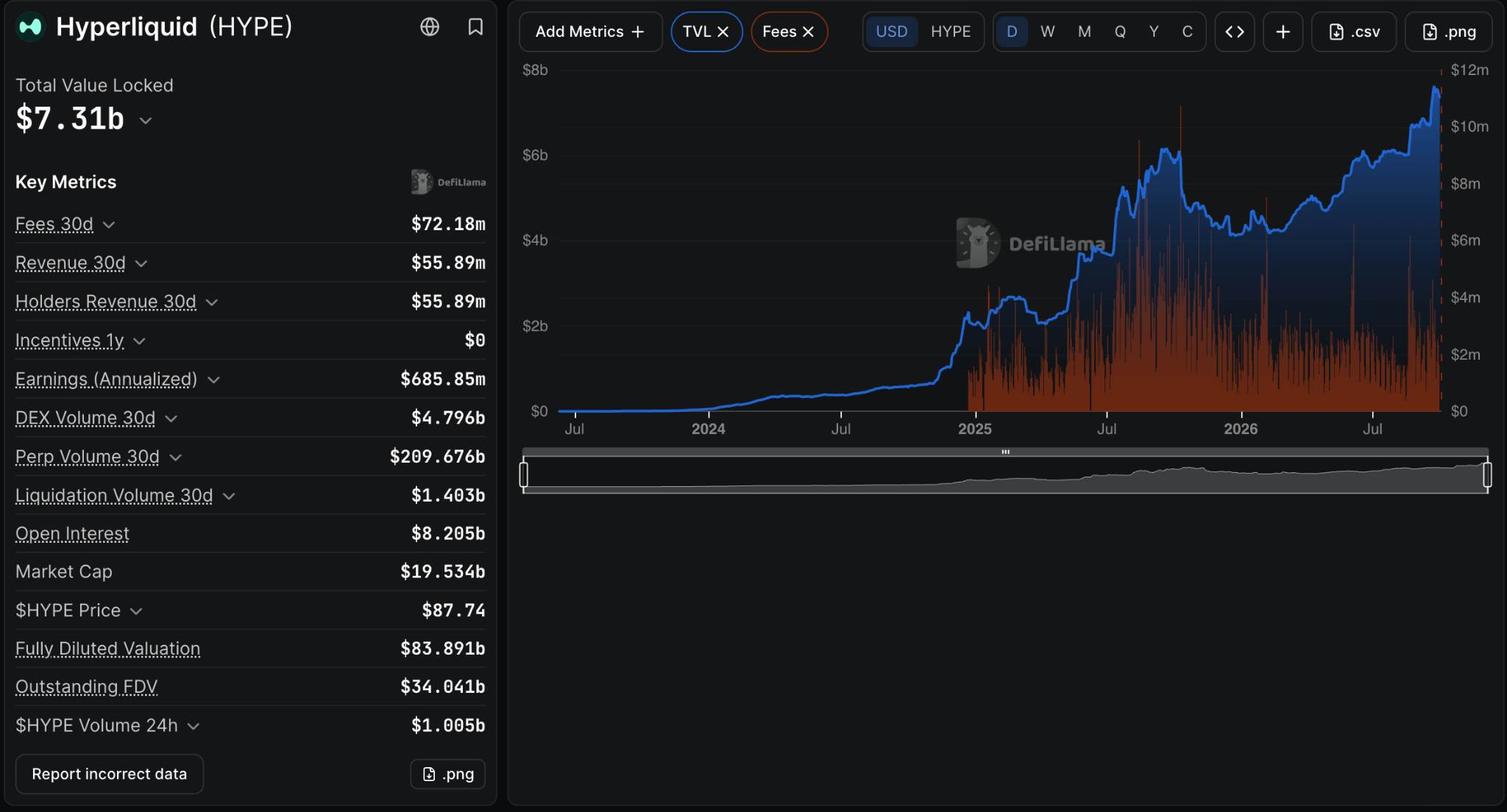
This article explores five issues surrounding the Payward program: position visibility, collateral, fees, funding rates, and leverage. For each issue, the article distinguishes between what Payward has confirmed and what has not yet been mentioned.