Exchange Ranking
 Top Exchanges
 24h Volume Ranking
 Popularity Ranking
 Exchange BTC Balance
 Proof of Reserves
 Decentralized Exchanges
 Funding Rate
 Funding Heatmap
 Liquidation Data
 Max Pain
 Long/Short Ratio
 Whale L/S Ratio
 Binance/Okex/Huobi L/S
 Bitfinex Margin L/S
 ETF Tracker
 Solana ETF
 XRP ETF
 Hong Kong ETF
 Bitcoin Treasuries
 Crypto Reversal
 Ethereum Reserves
 HyperLiquid Wallet Analysis
 Hyperliquid Whale Watch
 Large Transactions
 On-chain Movement
 Bitcoin ROI
 Stablecoin Market Cap
 Options Analysis
 News
 Articles
 Economic Calendar
 Features
 Wallet
 Contract Calculator


 Security
 Collections
 Watchlist
 Following
 BTC
 ETH
Binance co-founder Zhao Changpeng calls for a "quarantine period" for new hardware wallets in response to the theft of $86 million
Binance co-founder Zhao Changpeng (CZ) calls on cryptocurrency investors to implement a mandatory "quarantine" observation period for newly purchased hardware wallets. The recommendation comes after a major security breach in Southeast Asia that caused investors to lose more than $86 million. The incident highlights a shift in hackers 'modus operandi: they are no longer just looking for digital vulnerabilities, but are turning their targets to the physical supply chain.
Calls for caution after hardware wallet attacks in Southeast Asia
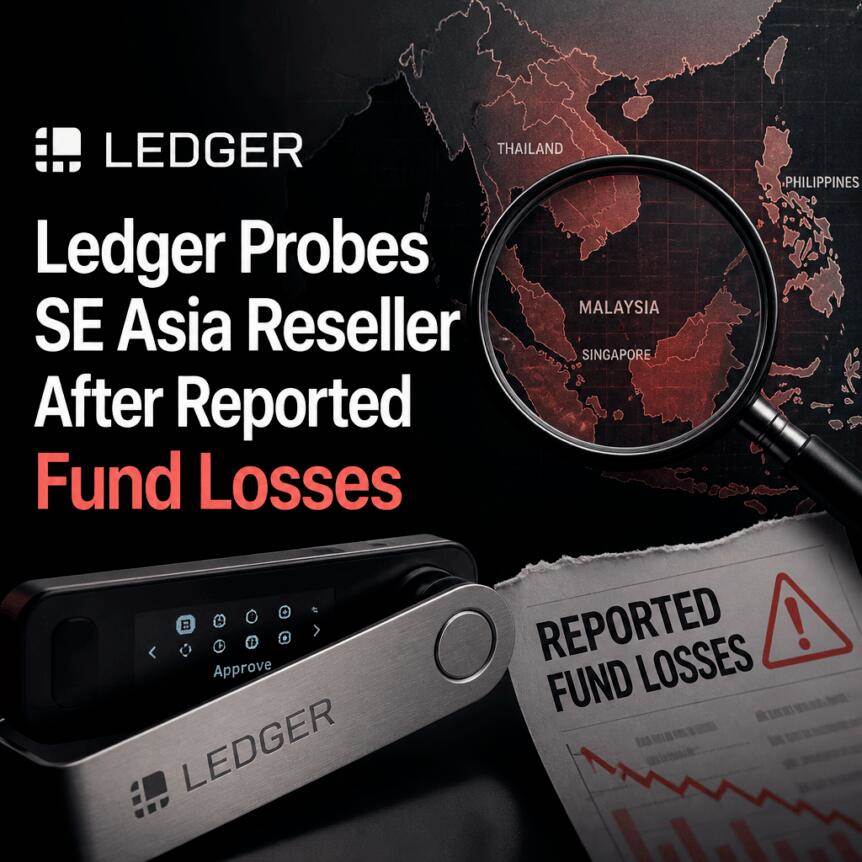
In Malaysia, Indonesia and the Philippines, tampering with physical equipment has become a focus of attention as affected local distributors caused security problems with Ledger wallets, triggering widespread financial losses. On-chain researchers tracked a total of $86.9 million in funds flowing out of hundreds of affected wallets through the Bitcoin, Ethereum and Tron networks.
As a leading hardware wallet provider, Ledger has suspended sales through its distributor CryptoBilis. The company explained that the attacker intercepted the device in a transit warehouse and replaced the original document with tampered mnemonics. At the same time, LG emphasized that its production facilities, firmware and the Ledger Live application itself are safe.
LG instructs recent buyers (especially those purchased within the past 90 days) not to activate the device; if it is suspected that the device has been tampered with, assets should be quickly transferred to a new address. LG clarified that only CryptoBilis logistics chain was affected, not the entire supply chain.
Industry surge in delivery link threats
Rogin's attack is not an isolated incident. In August, Coldcard hardware wallet maker Coinkite reported that a third-party distributor had been compromised, resulting in compromised device security. The following month, leading hardware wallet maker Trezor disclosed a serious data breach caused by its logistics contractor ShipMonk that affected 80,000 U.S. customers. The leak exposed confidential personal information, including real names, phone numbers and home addresses, raising privacy concerns in the user community.
As scrutiny of risks associated with local markets and third-party distributors intensifies, major market participants have begun to change strategies. Large cryptocurrency holders are increasingly inclined to order wallets directly from manufacturers, use neutral delivery locations such as post office boxes, and adopt "quarantine" protocols similar to those recommended by Zhao Changpeng.
Zhao Changpeng explains the logic behind the "isolation" strategy
Zhao Changpeng pointed out that cryptocurrency investors should avoid immediately transferring funds to a new address after purchasing a hardware wallet or downloading wallet software. He recommends leaving the equipment idle for at least two weeks and staying vigilant during that time to pay attention to any safety alerts. According to Zhao Changpeng, this window period allows on-chain analysts time to detect theft related to potentially damaged shipments. If a large-scale hack occurs, delayed operations increase the likelihood of identifying the affected device and issuing a public warning, preventing further damage.
Zhao Changpeng emphasized the importance of hardware wallet users in risk management, saying that self-hosting comes with additional responsibilities and risks of attacks on physical devices and online platforms. He added that thorough monitoring helps prevent large-scale losses when delivery link attacks occur.
Major hardware wallet providers, including LG, Trezor and Coinkite, encourage customers to strengthen device security practices and avoid purchasing through unofficial or local channels. The increase in delivery-related attacks has prompted a renewed effort by the hardware wallet industry to strengthen packaging, improve distributor review processes, and educate users about security initial setup procedures.
Experts generally believe that the introduction of isolation periods is intended to complement other best practices for digital asset storage and self-custody.
Term analysis
Ledger: A French company that specializes in manufacturing hardware wallets for securely storing cryptocurrencies offline. A hardware wallet is a physical device that often looks like a USB flash drive and is designed to keep private keys and digital assets away from online attacks.