Exchange Ranking
 Top Exchanges
 24h Volume Ranking
 Popularity Ranking
 Exchange BTC Balance
 Proof of Reserves
 Decentralized Exchanges
 Funding Rate
 Funding Heatmap
 Liquidation Data
 Max Pain
 Long/Short Ratio
 Whale L/S Ratio
 Binance/Okex/Huobi L/S
 Bitfinex Margin L/S
 ETF Tracker
 Solana ETF
 XRP ETF
 Hong Kong ETF
 Bitcoin Treasuries
 Crypto Reversal
 Ethereum Reserves
 HyperLiquid Wallet Analysis
 Hyperliquid Whale Watch
 Large Transactions
 On-chain Movement
 Bitcoin ROI
 Stablecoin Market Cap
 Options Analysis
 News
 Articles
 Economic Calendar
 Features
 Wallet
 Contract Calculator


 Security
 Collections
 Watchlist
 Following
 ETH
Ethereum co-founder warns that AI may undermine the security of cryptocurrencies and calls for prudent wallet migration.
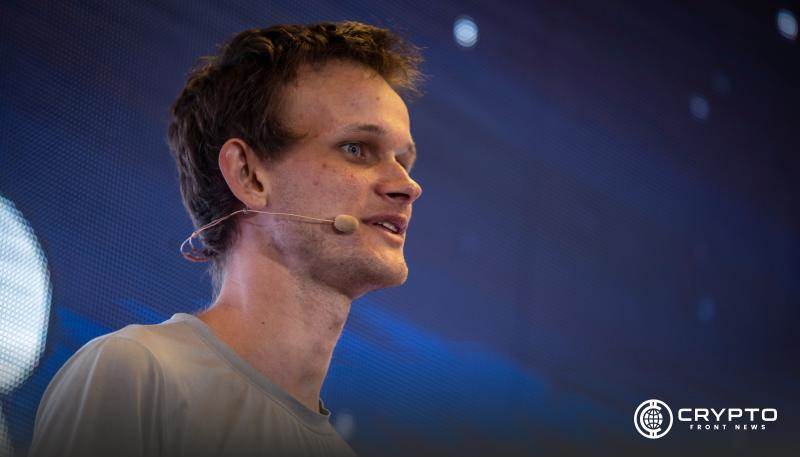
Ethereum co-founder Vitalik Buterin warns cryptocurrency holders not to rush wallet migration. As advances in artificial intelligence in the field of mathematics pose a threat to existing cryptographic systems, asset security is facing severe challenges.
Ethereum researcher Justin Drake pointed out potential pitfalls of the Elliptic Curve Digital Signature Algorithm (ECDSA), while Buterin used local AI, zkAPI and Tor networks to test privacy protection mechanisms to get health advice. Butrin recommended stronger trellis cryptography parameters, hash-based cryptography and off-chain privacy measures, while emphasizing the need for careful planning to prevent asset losses due to operational errors.
AI mathematical breakthroughs raise concerns about ECDSA security
According to a post posted by Buterin on the X platform, improperly executed migration can lead to huge financial losses, and the risks may even outweigh the harm caused by hacking attacks. He acknowledged that unused wallet addresses provide more protection, but urged holders to avoid rushing funds to avoid endangering the safety of assets. The warning follows concerns from Ethereum Foundation researcher Justin Drake about potential weaknesses in existing cryptographic systems.
Drake warned that artificial intelligence could help crack the Elliptic Curve Digital Signature Algorithm (ECDSA) even before the advent of powerful quantum computers. According to Drake, in the worst-case scenario, mathematical breakthroughs could compromise the security of ECDSA within months, threatening the security of cryptocurrency transactions. He recommended careful transfer of funds to unused addresses where public keys are hidden and opposed emergency transfers. At the same time, Butrin pointed out that AI-assisted mathematical research could pose a potential threat to lattice-based cryptographic systems that were previously considered secure.
He highlighted machine learning digital signature algorithms (ML-DSA) and fully homomorphic encryption, warning that mathematical advances could weaken the security of these technologies within two years. These concerns emerged after OpenAI released hundreds of mathematical manuscripts generated from internal models, highlighting the latest advances in automation research.
Butrin tests privacy protection AI systems based on zkAPI and Tor
In addition to cryptographic security issues, Butrin also attempted to design AI systems designed to protect sensitive personal information. His experiments combined local AI, zkAPI, and Tor networks to generate personalized health advice while restricting information disclosure. When processing health and travel information, the system consults powerful remote models to gain more knowledge and reasoning capabilities. Dedicated skills files guide external requests, allowing local models to limit the sharing of sensitive information during the consultation process.
Butrin recommends stronger cryptographic protection measures
Butrin recommends strengthening the security parameters of lattice-based cryptography, while encouraging developers to prioritize hash-based constructs whenever possible. In addition, he advised privacy protocol developers not to directly store encrypted notes on the chain, but instead recommended offline transmission through third parties. He emphasized that hasty security upgrades could introduce expensive configuration errors, further confirming his warning to avoid migrating wallets immediately.
Butrin's recommendation emphasizes the importance of carefully managing wallets, strengthening cryptographic protection, and developing privacy-conscious AI in the context of growing concerns about mathematical security vulnerabilities.