Exchange Ranking
 Top Exchanges
 24h Volume Ranking
 Popularity Ranking
 Exchange BTC Balance
 Proof of Reserves
 Decentralized Exchanges
 Funding Rate
 Funding Heatmap
 Liquidation Data
 Max Pain
 Long/Short Ratio
 Whale L/S Ratio
 Binance/Okex/Huobi L/S
 Bitfinex Margin L/S
 ETF Tracker
 Solana ETF
 XRP ETF
 Hong Kong ETF
 Bitcoin Treasuries
 Crypto Reversal
 Ethereum Reserves
 HyperLiquid Wallet Analysis
 Hyperliquid Whale Watch
 Large Transactions
 On-chain Movement
 Bitcoin ROI
 Stablecoin Market Cap
 Options Analysis
 News
 Articles
 Economic Calendar
 Features
 Wallet
 Contract Calculator


 Security
 Collections
 Watchlist
 Following
 BTC
Hardware wallets: Security lies in the keys, not the device itself.
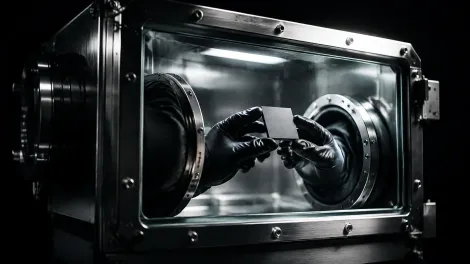
A hardware wallet is a small device used for generating and storing private keys for cryptocurrencies, with the keys never being released. It resembles a USB drive or chip card, and usually comes with a small display screen. It is only connected to a computer or mobile device when it’s necessary to sign transactions. The following explanation clarifies why this design is so important.
The current real-world challenges include reports of devices being tampered with, fake manufacturer websites, and wallets being stolen. To determine how well a device can protect against attacks, it’s necessary to understand its internal workings. What a hardware wallet holds are keys, not coins.
Contrary to what the name might suggest, a wallet doesn’t contain any actual money. Bitcoin and all other cryptocurrencies are simply entries on a blockchain. The blockchain is a ledger maintained by thousands of machines. These entries cannot be moved or inserted into any device.
What a wallet holds are private keys. These keys represent a “digital signature” that proves you have the right to control certain entries. Anyone who owns these keys can spend the corresponding cryptocurrencies. Those who lose their keys will no longer be able to access them, and no one can reset them. There’s no bank that can generate a new password for someone who forgot their old one.
This sets the entire engineering challenge for such devices: the keys must be accessible, but they must remain hidden.
Private keys should never leave the device.
Hardware wallets solve this problem by generating keys within the device itself and keeping them stored locally. Manufacturers like Trezor describe this process in their documentation: The private key never leaves the hardware wallet, and it never comes into direct contact with devices connected to the internet. Therefore, even if there is malware running on the computer, the computer used to connect to the wallet will not be able to access the private key. All that can be retrieved is a complete signature. Historically, this solution addressed a specific issue. In the past, private keys were stored in encrypted files on ordinary computers, and it was common for malware to corrupt entire wallets. The first hardware wallet, the Trezor Model One, was developed in 2014 at SatoshiLabs in Prague, as a means of countermeasures. The actual process of signing transactions involves four steps, which explains why infected computers aren’t as dangerous as they seem:
- Processing the transaction: First, transfer information such as the recipient’s address, amount, and fees is entered into the application on your computer or smartphone. This information is then sent to the hardware wallet.
- Independent display: The hardware wallet’s screen displays these details independently of the computer.
- Confirmation: You need to press a button on your device to confirm the transaction.
- Calculating the signature: Then, the chip calculates the signature and sends it back. The application then broadcasts the signed transaction to the network.
The third step is crucial. Since the display screen is a device, not a computer, malicious software may suggest a wrong payment address. However, it cannot prevent the actual address from appearing on that small screen. By reading and verifying that information, one can detect any attempts to manipulate the transaction. If users blindly press the buttons without checking the details, they won’t notice anything amiss. The device shifts security responsibilities to areas beyond the attacker’s reach, forcing users to look at the screen for confirmation.
Signing and stamping: Without handing over the key, the device signs the transaction automatically.
Secure element and PIN code: There are two layers of protection within the device, both of which work together to prevent direct access to the device. These two layers operate differently:
The first layer is the PIN code . Without this code, the device cannot be operated. After reaching the number of failed attempts set by the manufacturer, the device will erase its memory. Thus, a stolen device has no value whatsoever to thieves at first.
The second layer is the Secure Element . This is a specialized chip that’s also used in bank cards and passports. Its design ensures that it remains secure even when the chip is damaged, its power consumption is measured, or it’s disrupted by directed voltage spikes. Not all devices on the market come equipped with this feature. Some manufacturers rely on open-source components, prioritizing verifiability over resistance to tampering. There’s ongoing debate in the industry about which approach is better. The answer depends on the type of attacks you want to prevent.
Both of these layers have one common limitation: they protect the device itself, but the recovery phrase lies outside their scope of protection.
恢复短语:BIP-39标准下的12或24个单词
在初始设置期间,设备会显示一系列单词,通常为十二或二十四个。这个恢复短语,常被称为种子短语,是以人类可读形式呈现的密钥。随时可以在任何设备上重建整套密钥,包括来自不同制造商的设备。
该程序背后是一个名为BIP-39的开放标准,发布于2013年并沿用至今。它定义了随机数如何变为单词序列,以及单词如何再次变回密钥。正因为如此,没有任何制造商能锁定你:如果设备损坏,你可以使用相同的短语将资产恢复到新设备上。
该标准也明确说明了它的用途限制。它的存在是为了使设备生成的随机数变得可读,而不是为了将自创的句子变成密钥。发明短语而不是生成短语会破坏整个保护机制。
2048个单词,每个单词11位:短语的力量来源
这里的一个简短计算很有价值,因为它清楚地表明猜测是不可能的:
标准的词列表包含恰好2,048个条目。2,048是2的11次方,因此每个单词携带精确的11位信息。12个单词给出132位,其中128位是实际的随机数,4位构成校验和;24个单词给出264位,其中256位是随机的,8位是校验和。这就是为什么设备通常能立即发现拼写错误的短语的原因。
128-bit randomness means there are approximately 3.4×10³⁸ possible combinations of words. This is a number with 39 digits. If we consider 256-bit keys, then the number of possible combinations becomes 78 digits. As a comparison, it’s estimated that there are around 10⁸⁰ atoms in the universe. cracking combinations of 24 words requires far more computational power than can be imagined; these limitations are set by physics.
The real consequence of this is that it’s uncomfortable. Since no one can guess the combinations, every successful attack involves human intervention: capturing phrases, creating fake websites, or manipulating devices. Losses occur precisely because of these limitations.
There’s a huge gap between computers and keys that malware simply cannot cross.
What’s the difference between hot wallets, software wallets, and hardware wallets?
These three terms are often confused, but the key difference lies in one thing: where does the private key reside?
- Exchange wallets: The private key is held by the provider. You have an account and password, but not the private key itself. If the exchange goes bankrupt or is attacked, you become merely a creditor. In return, you can still trade there, and forgetting your password allows for easy reset.
- Software wallets (hot wallets): The private key is stored on your computer or phone, encrypted, but still accessible via internet-connected devices. You have control over it, but it’s also shared with other applications running on that device.
- Hardware wallets: The private key is stored on a device that doesn’t perform any other functions and remains disconnected for most of the time. In technical terms, this is referred to as “cold storage” – where the data is stored without any network connection. There’s also the concept of an “air gap” – a space between the device and the rest of the network.
In practice, this doesn’t mean that one of these methods is correct and the others are incorrect. A common approach is to split the assets: the funds involved in transactions are kept in exchanges or software wallets, while assets intended for long-term holding are stored on the device. It’s up to each person to decide when their efforts are worth it. The cost of such devices ranges from 50 to 200 euros, depending on the model.
Blind signing: The device has no way to verify the authenticity of the information.
One of the weaknesses lies in the steps that should be secure. For simple transfers, the screen displays the address and amount in plain text. For more complex operations, such as approving procedures on Ethereum, the device’s space is insufficient, or its translation capabilities are limited, resulting in only unreadable data being displayed. After confirmation, you’re actually signing something you haven’t read. This is known as Blind Signing.
In recent months, several manufacturers have improved this mechanism, allowing for more operations to be displayed in plain text.
Supply chains and fake websites: Realistic attack vectors in 2026.
This year’s attacks target both the path the device takes to reach the buyer, as well as the buyer themselves, without touching on mathematical principles.
2026年10月,Ledger确认在不该存在的设备内部发现了额外组件;相关报告也传到了欧洲。据受影响者称,在此之前不久,8600万美元从钱包中消失,该案源于篡改设备而非加密破解。与此同时,一个假冒的制造商网站占据Google搜索结果首位,并要求访问者提供恢复短语。
早期的案例指出了同样的教训:一个故障的随机数生成器使得密钥可计算,导致1.3亿美元损失:设备的价值仅与其来源一样高。从制造商或指定经销商处购买,绝不购买二手货,并自行设置。如果收到的设备已经印有恢复短语,那永远是欺诈企图;没有任何制造商会邮寄短语。
硬件钱包不能做什么
有四件事即使是最好的设备也无法做到,这在回答标题中的问题时应当诚实说明:
- 它不提供 against 价格下跌的保护,因为它存储价值而不加以评判。
- 它不提供 against 向错误地址转账的保护,因为已确认的交易无法撤回。
- 它不提供 against 他人看到短语的保护,无论是在云存储中、照片中还是抽屉里的纸条上。
- 它不提供 against 你自己的遗忘:如果没有短语且没有PIN码,一旦设备失效,资产就消失了。
Tax implications and holding periods: The changes that occur when transferring assets to a personal wallet are harmless from a tax perspective for German investors. Transfers between wallets are not considered sales, thus not triggering any taxable events. Article 23 of Germany’s income tax law still applies, requiring a one-year holding period without any need for重新计算.
There are two things to keep in mind. First, the date of acquisition must be clearly documented, as gains after one year are tax-free, and the burden of proof lies with you. It’s important to keep copies of exchange statements showing the dates and amounts of assets held. Second, if assets are spread across multiple wallets, it remains your responsibility to manage those holdings properly.
Our assessment: Hardware wallets represent half of the solution
. From a newsroom perspective, hardware wallets make sense for positions that are held for long periods without frequent transfers. The reasons are different from those mentioned in advertisements.
This year’s evidence supports this view. None of the major losses were attributed to encryption breaches. The causes were device tampering, fake websites in search results, and faulty random number generators. In these cases, the mathematical protections provided by devices remained intact.
There is nothing against the use of hardware wallets themselves, but there are many concerns regarding what can be expected from them. Buying a hardware wallet and storing passwords on paper or metal isn’t very effective. Security comes only from combining several elements: devices from trusted sources, settings configured by you, passwords stored securely, and regular checks on the screen during each transaction. Without any of these elements, the rest of the measures become meaningless.
The conclusions drawn from this are not recommendations for a specific model of device. No matter how well the storage is managed, there remains a possibility of losing cryptocurrency entirely.
Hardware wallets: The phrase “determines everything,” not the device itself.
If you decide to take this step, simply follow these three steps in order:
- Choose a device and purchase it directly from the manufacturer. Purchase from the manufacturer or authorized dealers; never buy second-hand devices, nor do business with third-party sellers.
- Set up the device yourself and write down the relevant phrases by hand. Use paper or metal plates to store these phrases in two different locations. Do not take photos, store them online, or enter them into any computers. For managing small amounts of money that need to be kept liquid, software wallets can still be used in conjunction with hardware wallets.
- Transfer a small amount of money first. Before transferring the rest of the funds, transfer back a portion of the money originally transferred, and keep copies of the transaction records for future reference.
(As of October 14, 2026. This article does not constitute investment advice. Prices and fees may change; please verify the terms with the provider before purchasing.)