Exchange Ranking
 Top Exchanges
 24h Volume Ranking
 Popularity Ranking
 Exchange BTC Balance
 Proof of Reserves
 Decentralized Exchanges
 Funding Rate
 Funding Heatmap
 Liquidation Data
 Max Pain
 Long/Short Ratio
 Whale L/S Ratio
 Binance/Okex/Huobi L/S
 Bitfinex Margin L/S
 ETF Tracker
 Solana ETF
 XRP ETF
 Hong Kong ETF
 Bitcoin Treasuries
 Crypto Reversal
 Ethereum Reserves
 HyperLiquid Wallet Analysis
 Hyperliquid Whale Watch
 Large Transactions
 On-chain Movement
 Bitcoin ROI
 Stablecoin Market Cap
 Options Analysis
 News
 Articles
 Economic Calendar
 Features
 Wallet
 Contract Calculator


 Security
 Collections
 Watchlist
 Following
TLDR
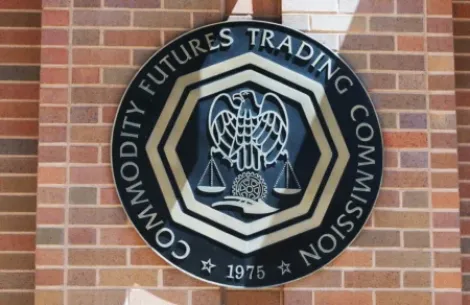
CFTC Proposal Coverage: The U.S. Commodity Futures Trading Commission (CFTC) issued advance notice of proposed rules on leveraged and margin retail cryptocurrency trading on October 5. Eligible exchanges have the option to join a new category called "Crypto-Asset Markets" and be subject to federal regulation. Expected requirements include proof of reserves, anti-manipulation measures and customer protection mechanisms. The move follows the Senate's 49-50 veto of the CLARITY Act in September.
Critics question the CFTC's regulatory capabilities: Advocacy group Better Markets believes the CFTC is the "wrong institution" to regulate retail cryptocurrencies.
Specific content of the CFTC proposal
The U.S. Commodity Futures Trading Commission (CFTC) has begun to develop relevant federal regulations for some cryptocurrency trading platforms. The move comes after Congress failed to pass legislation on broader cryptocurrency market structure. On October 5, the agency issued its Advance Notice of Proposed Rules (ANPRM).
The notice covers leverage, margin and financing retail cryptocurrency transactions in accordance with the Commodity Exchange Law. The CFTC said it hopes to establish a system of rules specifically for the cryptocurrency market and plans to use its existing powers under existing laws.
It is worth noting that the proposal does not bring the entire U.S. spot cryptocurrency market under CFTC regulation. It focuses mainly on retail transactions covered by Section 2(c)(2)(D) of the Commodity Exchange Act, what the agency calls "crypto-asset transactions." The CFTC plans to create a new platform category called "Crypto-Asset Markets." Exchanges that meet the requirements can choose to join the federal regulatory system rather than relying solely on decentralized licenses from states.
Participating platforms may face constraints such as market manipulation controls, reserve certification requirements, and customer protection rules. Registered futures commission merchants will be responsible for processing customer transactions. Regulators have not set a uniform leverage cap, and each leverage arrangement requires CFTC approval so that regulators can review leverage levels by product or market type.
Currently, details about reserves remain to be clarified, including issues such as which assets are included in reserves, how customer liabilities are calculated, and whether the data has been independently verified.
Previously, the CLARITY Act failed to advance in a Senate procedural vote in September by a margin of 49-50 votes. The bill aims to give the CFTC broader regulatory powers over spot digital commodity trading. CFTC Chairman Michael Selig said that the CFTC and the U.S. Securities and Exchange Commission (SEC) already have enough power to build part of the federal cryptocurrency framework.
At the same time, the SEC is also actively promoting relevant measures. On Thursday, the SEC proposed relaxing some custody rules for investment advisers, allowing limited tokenized U.S. stock trading, and issuing new guidance on how securities laws apply to cryptocurrencies.
It is important to note that rules made by regulators may be challenged in federal courts and may be amended or revoked by future governments.
Critics question CFTC's regulatory authority
Better Markets, a nonprofit financial reform group, criticized the plan on October 6. Benjamin Schiffrin, its director of securities policy, pointed out that the CFTC lacks a statutory duty to protect investors.
Schiffrin stated: "Because CFTC rules lack protections that apply when investors trade SEC regulated securities, the CFTC is not the appropriate body to regulate retail client crypto asset trading."
He argued that the legal basis cited by the CFTC was originally in response to fraud in leveraged precious metals trading. He also pointed out that the framework could lead to correlations between market participants similar to the one that led to the collapse of FTX.
Schiffrin questioned Selig's goal of "making the United States the world's crypto capital." He believed that cryptocurrencies still lacked practical application scenarios.
Nate Geraci, President of NovaDius Wealth Management, refuted this. He said the industry craves clear rules, and if Congress fails to provide them, the CFTC and the SEC may need to shoulder that responsibility.
This notice is not final. After being published in the Federal Register, it will open for a 60-day public comment period. The CFTC will then decide whether to issue formal proposed rules. The proposed rule may undergo another round of public comment before final rules are adopted.