Exchange Ranking
 Top Exchanges
 24h Volume Ranking
 Popularity Ranking
 Exchange BTC Balance
 Proof of Reserves
 Decentralized Exchanges
 Funding Rate
 Funding Heatmap
 Liquidation Data
 Max Pain
 Long/Short Ratio
 Whale L/S Ratio
 Binance/Okex/Huobi L/S
 Bitfinex Margin L/S
 ETF Tracker
 Solana ETF
 XRP ETF
 Hong Kong ETF
 Bitcoin Treasuries
 Crypto Reversal
 Ethereum Reserves
 HyperLiquid Wallet Analysis
 Hyperliquid Whale Watch
 Large Transactions
 On-chain Movement
 Bitcoin ROI
 Stablecoin Market Cap
 Options Analysis
 News
News Articles
 Economic Calendar
 Features
 Wallet
 Contract Calculator


 Security
 Collections
 Watchlist
 Following
 LINK
LINK How Chainlink connects smart contracts to real-world data
Smart contracts are powerful, but they cannot perceive the world outside their own blockchain. This is exactly the gap Chainlink is committed to filling. Simply put, Chainlink is a network of prophets that inputs real-world data such as asset prices into the blockchain, allowing smart contracts to act based on accurate information.
This is critical because most major decentralized financial (DeFi) lending platforms today rely on such data to price loans, trigger clearing and settle transactions. Wrong or missing data puts the entire agreement at risk.
This article will take an in-depth look at Chainlink's functions, the role of LINK tokens, token economics analysis, and key points to pay attention to before assuming that any oracle project is risk-free.
What is Chainlink and how does its network work?
blockchain is a closed system. Smart contracts on Ethereum have no built-in mechanism to know the current price of gold or information about newly dug blocks on another chain.
Chainlink solves this problem with what it calls the "industry-standard decentralized oracle network," which powers most DeFi.
The basic process for its Data Feeds product is as follows:
- Quality data providers extract raw price data from multiple exchanges.
- Independent Chainlink node Capture and aggregate this data.
- Node consolidates the results into a tamper-proof report offline and publishes it online for use by smart contracts.
No single provider or node controls the final answer, eliminating the risk of a single point of failure of data that controls billions of dollars in value along the chain.
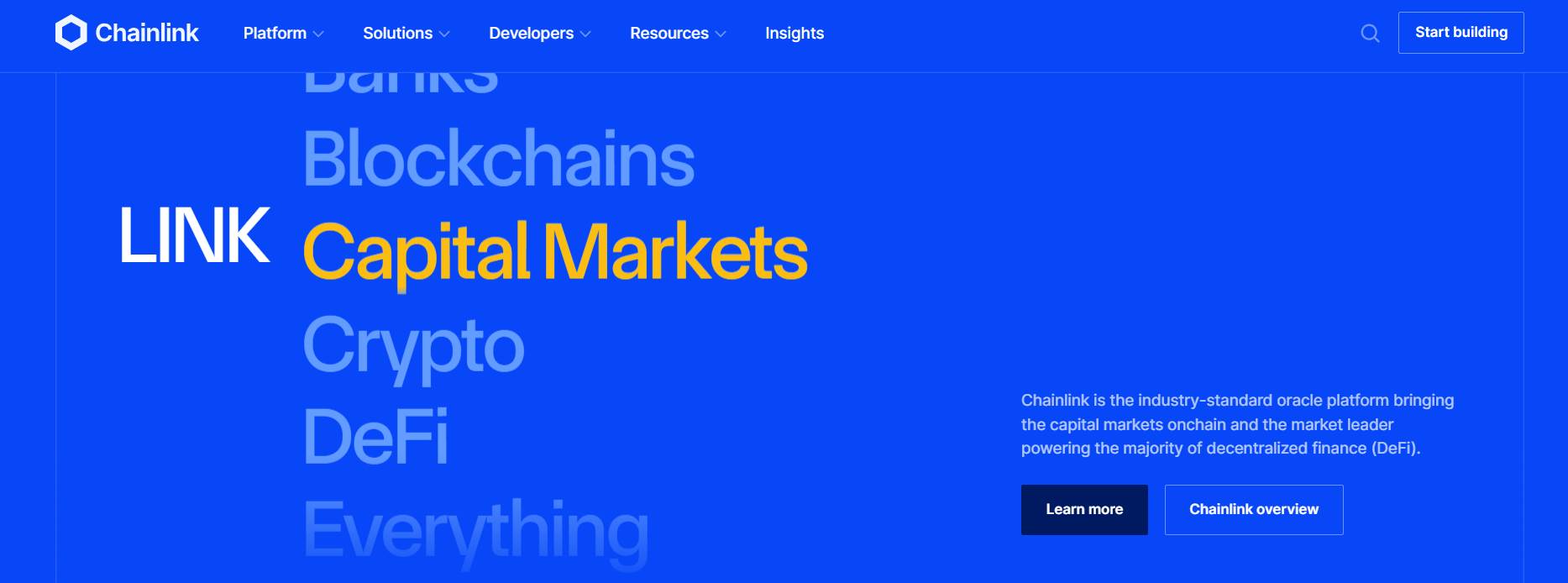 In addition to price feeds, Chainlink's product portfolio also includes: Cross-Chain Interoperability Protocol (CCIP) for moving data and value between different blockchains;Chainlink Runtime Environment (CRE) for orchestrating on-chain and off-chain systems;Proof of Reserve , used to verify collateral; and a new tool built specifically for AI agents.
Why is Chainlink so important to DeFi?
DeFi runs on top of code, and the code only knows the data it is assigned.
Take loan agreements such as Aave or Compound as an example. Someone deposits ETH and uses it as collateral to lend stablecoins. Without an accurate ETH price, borrowers may suffer unfair liquidation or owe debt beyond the coverage of their collateral. Several past DeFi breaches have originated from this: manipulated or illiquid price feeds.
Derivatives also require this accuracy to settle transactions. Asset-backed stablecoins need to prove the existence of collateral. Cross-chain bridges need to confirm what is happening before moving on another chain. This is why most of the total value locked in DeFi relies on oracle infrastructure that users have never seen directly.
What is the purpose of the LINK token?
LINK is the network's native token . Chainlink's economics page describes it as an asset that pays for services, protects networks and rewards good performance.
In practice, this is reflected in three functions:
- Payment: Node operators and data providers earn LINK for their services.
- Pledge: Holders and node operators lock out LINK to help protect network security. The pledge shares of nodes that perform poorly may be reduced (Slashing).
- Value capture: Through Payment Abstract , fees paid on other assets are automatically converted to LINK through a decentralized exchange, as described on the Chainlink Economics page.
This is a statement about mechanism design, not a guarantee of price performance. How much real revenue actually flows through the system is worth tracking independently.
Chainlink Token Economics: Supply, Circulation and Reserves
Chainlink's total supply is fixed. According to the project's own economics page (Verification as of September 2026), the data are as follows:
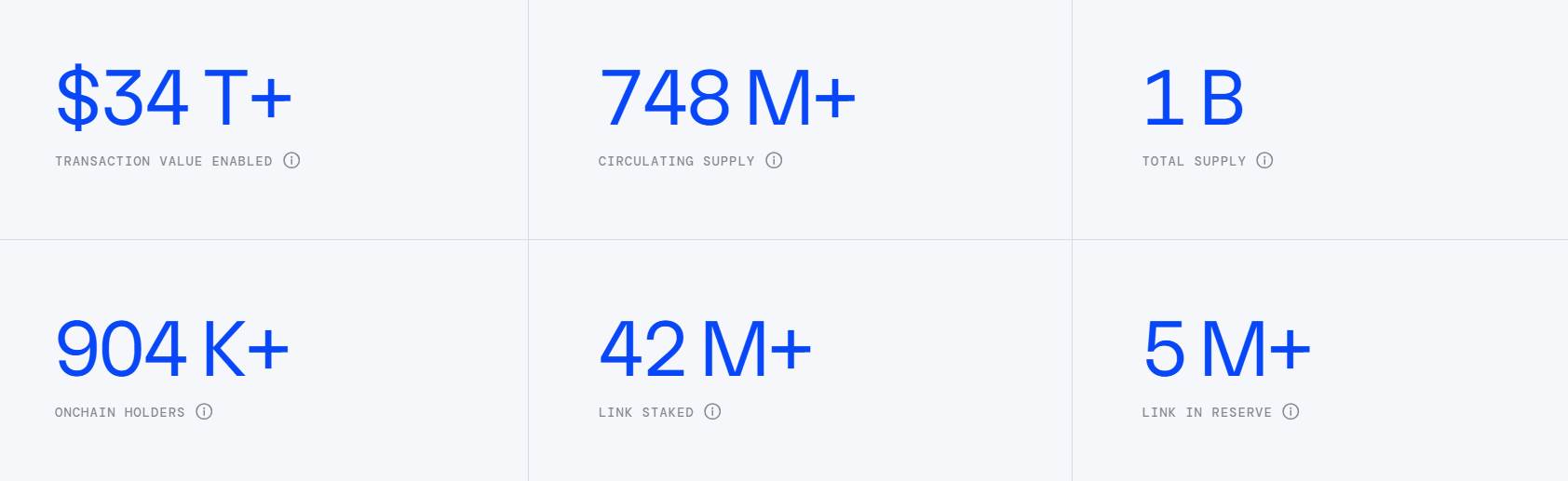
Indicator reported values imply a total supply of 1,000,000,000 LINK (capped). After exceeding this cap, no new LINK circulation supply of 748 million yuan + current token chain holders on the LINK market 904, 000+ addresses hold LINK's address on Ethereum is pledged 42 million + LINK is pledged by community members and node operators. LINK 5 million in the reserve is placed in Chainlink-Reserve to ensure continued development. A fixed supply means that Chainlink cannot dilute LINK through new issuance, like certain Proof of Stake (PoS) tokens. This is a structural fact rather than a commitment to future needs.
 Chainlink Reserve deserves a separate mention. It is a strategic on-chain reserve that is abstractly capitalized through payments and is intended as a treasury rather than a revenue product. Its size will change with network revenue and market conditions.
How does Chainlink attempt to maintain its economic model?
In addition to pledges and reserves, there are several other mechanisms worthy of attention:
- Smart Value Capture (SVR): allows the DeFi protocol to retract orator-related MEVs (maximum extractable value) that would otherwise have been leaked to third parties.
- Scale program: The blockchain ecosystem contributes resources to offset the cost of running Chainlink services and accelerate developer adoption.
- Transaction value enabled (TVE): The project's metrics page shows that as of September 2, 2026, this figure is approximately US$34 trillion, even the cumulative dollar value of transactions that have used the Chainlink oracle.
These US$34 trillion figures were reported by the project and were not independently audited. It measures data usage rather than currently locked up funds or Chainlink's market value. Confusing the two is a common mistake.
What distinguishes Chainlink from other oracle providers
The following points distinguish Chainlink from typical oracle providers:
- Institutional adoption: Partnerships with well-known institutions such as Swift, DTCC, Euroclear, and Mastercard, and integrations with DeFi protocols such as Aave, Compound, and Lido.
- Product breadth: In addition to price feeds, it also covers cross-chain messaging, compliance instrumentations, and tokenized real-world asset data.
- Security certification: SOC2 Type 2 and ISO 27001 certification, standards that are more common than encryption projects in enterprise-level infrastructure companies.
None of this guarantees that Chainlink will remain above cheaper alternatives. Competitive oracle networks continue to be rolled out, and today's partnerships do not guarantee tomorrow's usage.
Main risks to consider
- Data source risks: The quality of the oracle depends on the provider and node that provides it with the data.
- Smart contract risks: Like any on-chain system, Chainlink's contracts may still be vulnerable even after years of operation without error.
- Adoption risks: Corporate pilots and partnership announcements do not always translate into adoption rates that continue to generate revenue.
- Token supply dynamics: A large portion of the total supply of LINK 1 billion has not yet been circulated, and reserving or unlocking activities may affect future available supply.
- General market risk: The price of LINK, like any cryptocurrency asset, can fluctuate significantly regardless of the performance of the network itself.
The accuracy of Chainlink price feeds does not mean that LINK assets are a good investment. These are two independent issues.
Conclusion
Chainlink is a network of prophets that allows smart contracts to access real-world data that the blockchain cannot generate on its own, from asset prices to cross-chain messages. LINK pays for this infrastructure, secures it through pledges, and is designed to capture value as usage grows.
Published token economics shows that the total supply is fixed at 1 billion yuan, and as of September 2026, approximately 748 million LINK are in circulation. Institutional partnerships and product range are its real differentiating advantages, but they do not eliminate the ordinary risks of any cryptocurrency assets. Before reaching a conclusion, please verify the current data on the Chainlink official website.
Disclaimer : This article is for reference only and does not constitute financial advice. Cryptocurrency investment carries significant risks, and readers should conduct their own research before making any decisions.