Exchange Ranking
 Top Exchanges
 24h Volume Ranking
 Popularity Ranking
 Exchange BTC Balance
 Proof of Reserves
 Decentralized Exchanges
 Funding Rate
 Funding Heatmap
 Liquidation Data
 Max Pain
 Long/Short Ratio
 Whale L/S Ratio
 Binance/Okex/Huobi L/S
 Bitfinex Margin L/S
 ETF Tracker
 Solana ETF
 XRP ETF
 Hong Kong ETF
 Bitcoin Treasuries
 Crypto Reversal
 Ethereum Reserves
 HyperLiquid Wallet Analysis
 Hyperliquid Whale Watch
 Large Transactions
 On-chain Movement
 Bitcoin ROI
 Stablecoin Market Cap
 Options Analysis
 News
 Articles
 Economic Calendar
 Features
 Wallet
 Contract Calculator


 Security
 Collections
 Watchlist
 Following
 BTC
 ETH
The Korean KOSPI index fell more than 6% on Tuesday. AI-related stocks are showing signs of pressure, testing the ability of risk assets to withstand such fluctuations.
On Tuesday, the Korean KOSPI index declined by more than 6%, marking the fifth consecutive day of decline. The Philadelphia Semiconductor Index, which had risen by 68% in 2026, is now facing its sixth consecutive downward trend. The decline in AI-related stocks raises important questions: Will higher and more volatile capital costs lead to additional pressure on other risk assets, including Bitcoin and Ethereum?
Reuters notes that rising bond yields, concentrated positions, tight financing conditions, and overlapping investment portfolios could be potential factors driving broader risk-off movements.
 BlackRock has revised its outlook on U.S. stocks, citing concerns about market volatility in the AI sector. pic.twitter.com/sU6Gz5YrIt— Watcher.Guru (@WatcherGuru) October 13, 2026
 Crypto Expert Report: What Are the Top 10 Cryptocurrencies Likely to Experience Explosions in 2026? Stress in the stock and credit markets is affecting investors who closely monitor macroeconomic trends. The spillover effects of AI-related stocks are a credible risk scenario. Although Reuters reports that there is currently no evidence indicating that mass sell-offs in chip stocks have triggered a collapse in the crypto market, this possibility cannot be ignored.
Pressure is emerging in both the stock and credit markets.
此次损失具有广泛性。日本铠侠(Kioxia)股价下跌13%,美国交易中半导体指数下跌1.5%,美光科技(Micron,代码MU)今年虽已翻三倍,但股价仍下滑5%。上海科创板从7月高点下跌超过三分之一,KOSPI指数也较其7月高点回落约四分之一。
在经历如此强劲的上行行情后,AI股票中拥挤的持仓意味着,即使没有迹象显示AI需求崩溃,只要预期回报率或融资条件发生转变,就可能触发抛售行为。
信贷市场数据指向数据中心建设融资成本的上升。由英伟达支持的Firmus搁置了原计划的50亿美元澳大利亚IPO;CoreWeave(CRWV)于6月发行的票面利率为9.625%的债券,当前收益率已达15%,其股价较52周高点下跌49%。软银最近以高达9.75%的利率发行了45亿美元的高收益债务,而10年期美国国债收益率则维持在5.2%。
贝莱德的研究部门将美股评级下调至“中性”,理由是AI相关的市场波动,并转而看多短期国债。Wilson Asset Management的Damien Boey表示,债券收益率和波动性目前已全面影响资产定价。
因此,投资者对AI持仓集中的担忧,本质上是同一重定价问题的一部分:预期回报需要多久才能证明所投入资本的合理性?
AI股票与加密货币:高收益率是否会成为通往加密市场的传导路径?
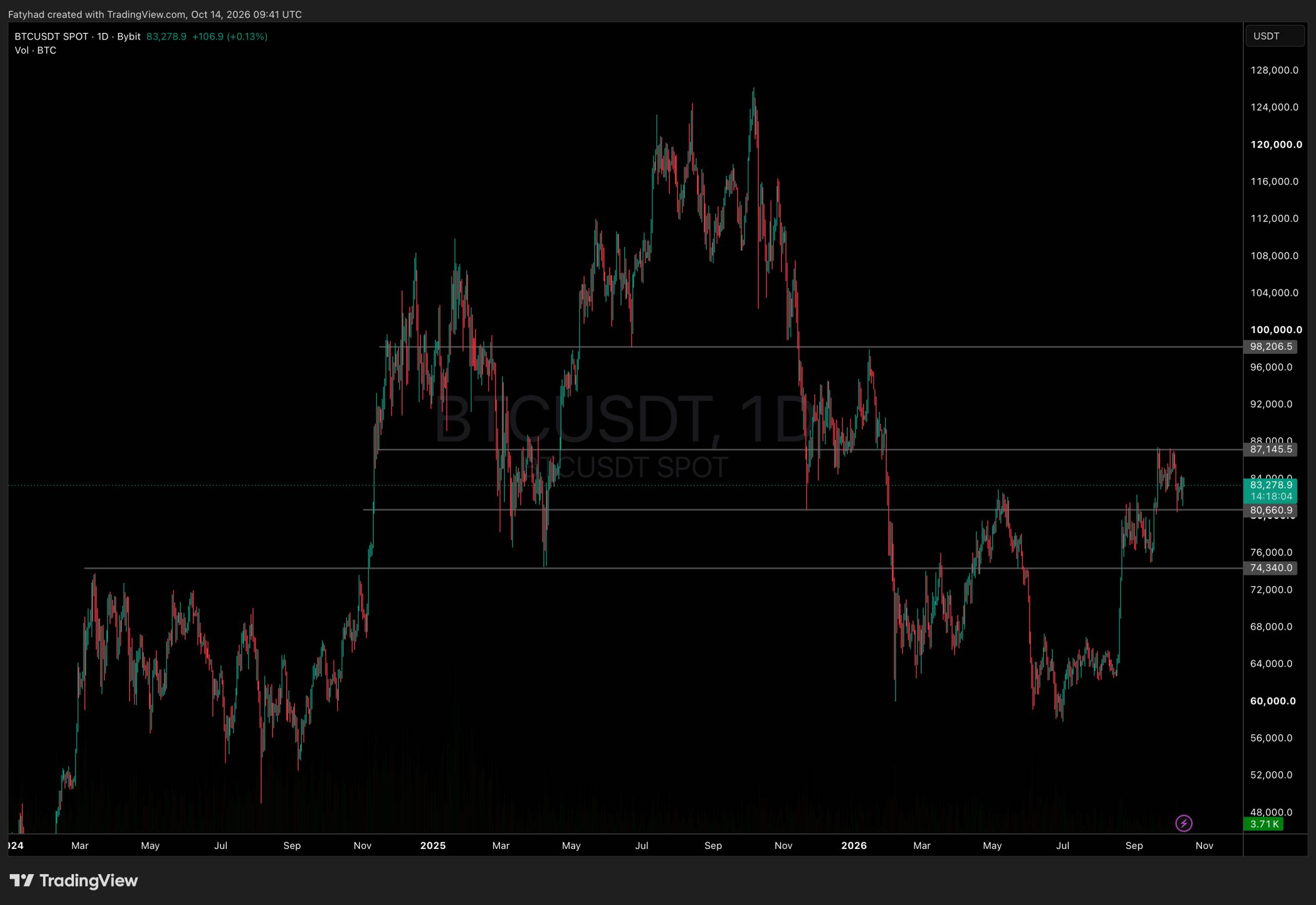
@BTCUSDT Chart 1D TradingView
The connection between BTC and cryptocurrencies isn’t based on the direct correlation between chip prices and token values. Instead, it’s due to the possibility of widespread corrections affecting various risky assets held by the same investors. Additionally, higher yields make it more difficult to maintain leveraged positions. In such cases, liquidity assets with high beta values like Bitcoin might be the first to be sold off.
This remains a risk, not an established fact. The International Monetary Fund warned Tuesday that corrections in the AI industry could have global consequences. Currently, there seems to be evidence of potential pressure from various sources, rather than mandatory sell-offs of cryptocurrencies. It’s important to note whether this pressure is limited to AI-related stocks and credit markets, or if it spreads to broader risk-off behaviors.
Previous analyses have discussed the relationship between BTC and government bond yields, but they didn’t establish that the decline in the semiconductor sector actually led to reactions in the cryptocurrency market.
Crypto Expert Report: Follow The Money – Which Presales Are Attracting Crypto Whales in 2026?