Exchange Ranking
 Top Exchanges
 24h Volume Ranking
 Popularity Ranking
 Exchange BTC Balance
 Proof of Reserves
 Decentralized Exchanges
 Funding Rate
 Funding Heatmap
 Liquidation Data
 Max Pain
 Long/Short Ratio
 Whale L/S Ratio
 Binance/Okex/Huobi L/S
 Bitfinex Margin L/S
 ETF Tracker
 Solana ETF
 XRP ETF
 Hong Kong ETF
 Bitcoin Treasuries
 Crypto Reversal
 Ethereum Reserves
 HyperLiquid Wallet Analysis
 Hyperliquid Whale Watch
 Large Transactions
 On-chain Movement
 Bitcoin ROI
 Stablecoin Market Cap
 Options Analysis
 News
 Articles
 Economic Calendar
 Features
 Wallet
 Contract Calculator


 Security
 Collections
 Watchlist
 Following
 LUNA
 WBTC
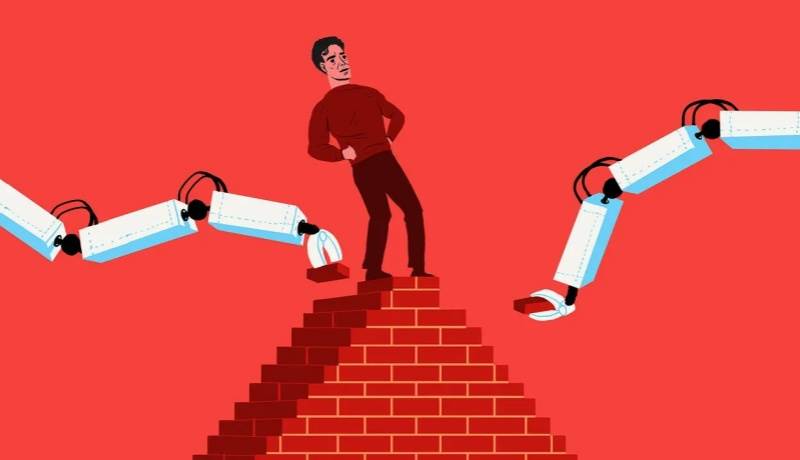
If we look at things from a distance, the risks in American society are gradually increasing, while the crypto market has managed to “fast-forward” this pressure. By 2025, amidst the lingering effects of high inflation and fluctuating layoffs, the crypto world has magnified uncertainties in a more direct manner: Trump’s mention of tariffs caused a simultaneous shock in macro assets, and the sudden collapse in October led to billions of dollars in leveraged positions being wiped out instantly. Numerous project failures and hacking incidents were reported throughout the year. In the real world, achieving “elimination thresholds” requires years of accumulation, but on the blockchain, it often only takes one price spike or one contract trigger. This year, what the market faces is not just a pursuit of speed, but a much more critical question: when elimination becomes possible within minutes, are we actively playing a role in the process, or are we simply being silently filtered out by the system?
First, who will hit the elimination threshold first?
Unlike the hidden, slow risk thresholds in traditional economies, the rules of the crypto market are transparent, immediate, and ruthless. Failure doesn’t occur later on, but happens the moment certain parameters are met.
1.1 Leverage Settlement: The Margin for Error Is Consumed Early
In the crypto derivatives market, high leverage is the most direct risk amplifier. For example, with a 10x leverage ratio, even a slight negative fluctuation of about 5%–10% in the underlying asset can trigger forced liquidations, resulting in the complete dissipation of funds in a short time.
This isn’t an extreme assumption; it’s a reality that has occurred repeatedly over the past few years.
● 2020年「黑色星期四」:比特币在数小时内暴跌50%以上,触发超过10亿美元清算。
● 2022年Terra/LUNA崩盘:UST脱锚后,LUNA供应量指数级膨胀,价格暴跌99.99%,引发数十亿美元损失。
● 2025年特朗普关税风暴:政策预期变化引发加密市场同步下跌,比特币在数小时内出现两位数跌幅,清算规模创历史纪录,创下193亿美元清算纪录。
杠杆交易的诱惑在于放大收益,而代价是提前消耗你的容错空间。当市场整体杠杆水平过高,价格波动不再是结果,而是清算机制本身的触发器。
1.2 算法「死亡螺旋」:散户成为系统缓冲垫
如果说杠杆清算是个人层面的「斩杀」,算法稳定币则是系统层面的自毁机制。
Terra的崩盘已经证明:当稳定机制高度依赖市场信心时,一旦信任断裂,算法并不会「稳定市场」,而是按照既定规则加速崩塌。2025年,多种高收益合成稳定币在极端行情中再次出现明显脱锚现象。尽管机制设计初衷是对冲波动,但在极端行情中,其稳定性仍暴露出明显脆弱性。
当市场信心动摇,算法为了「维稳」而不断增发对冲资产,反而加速崩塌,最终演变为不可逆的死亡螺旋。
Unlike the “last lender” in a sovereign currency system, the cryptocurrency system has no such “last buyer”. Once trust is broken, even the most sophisticated mechanisms can only remain mathematically correct.
When trust is lost, no matter how complex the mechanisms are, they can only remain technically valid.
1.3 Hackers and Asset Losses: The Cost of Trust Falls on Individuals
Compared to systemic fluctuations, even more destructive is the practice of “targeted killings” that doesn’t require a systemic collapse of the entire system.
In recent years, attacks on individuals have increased significantly, mainly occurring in three scenarios:
Wallet Theft: Through phishing, malware, or social engineering attacks, attackers can obtain private keys or authorization tokens.
● August 2025: 783 Bitcoins Stolen
A user lost 783 Bitcoins after being tricked into providing their recovery phrase by a fake customer service representative who pretended to be an hardware wallet.
● October 2025: Solana Wallet Phishing Attack
Hackers targeted highly active users in the Solana ecosystem, tricking them into clicking on fake “wallet upgrade” links, thereby stealing their private keys. According to public reports, this attack affected 26,500 victims, with total losses exceeding $100 million.
● Late 2024: Chain of “Swindle” Attacks on the Tron Chain
In Telegram groups, fake investment advisors used emotional manipulation to convince elderly users to transfer their ETH to the Tron bridge for “high-yield staking”. In reality, these users were given unlimited withdrawal rights. More than 1,000 victims suffered total losses of over $50 million.
Project Collapse: A Sudden Loss of Community Trust
If the theft of wallets represents a direct attack on individual investors, then the collapse of projects completely undermines the trust in the entire community. Developers exploit the enthusiasm of the market to attract funds, but then withdraw those funds at critical moments, causing investors’ assets to be lost instantly.
● February 2025: MetaYield Farm
The DeFi project MetaYield Farm promised high yields from staking, but later the developers emptied their fund pool, resulting in losses for over 14,000 participants, totaling $290 million.
● September 2025: Hypervault Finance
The DeFi project Hypervault Finance, which utilized the HyperEVM blockchain’s profit optimization algorithm, had its developers withdraw $3.6 million from the Tornado Cash liquidity pool through suspicious means. They also deleted all social channels and websites. Hundreds of users were affected, and the promised high yields became nothing more than a fraud.
● Early 2025: Mantra(OM)
Seventeen wallets sold 43.6 million OM tokens within a short period, worth $227 million. This led to a loss of $5.52 billion in the token’s market value. This was widely regarded as one of the biggest rogue sales incidents of 2025. Although the project denied any internal sales, the concentrated selling behavior still caused significant controversy.
Address poisoning attacks: transfers with zero values and visual deception
Hackers used addresses that looked similar to each other, sending tiny “dust” transactions to contaminate the transaction history or address book, thereby tricking users into using incorrect recipient addresses in future transactions.
● May 2025: $2.6 million in losses due to USDT
A crypto trader suffered losses of $2.6 million due to two consecutive address poisoning attacks. Hackers used the technique of “zero-value transfers” to create fake addresses, tricking victims into transferring money to those addresses.
● March 2025: EOS blockchain addresses were poisoned. After the EOS blockchain was renamed Vaulta, hackers used addresses similar to those of mainstream exchanges like Binance and OKX to send small amounts of EOS, tricking users into transferring money to these fake addresses.
● May 2024: Traders lost $68 million due to WBTC poisoning attacks.
A trader lost 1,155 WBTCs (worth $68 million) due to address poisoning attacks. The attackers created fake addresses that closely resembled legitimate ones, successfully tricking victims into transferring money, resulting in a loss of over 97% of their assets.
The common feature of these incidents is that the losses are irreversible, and it’s difficult to trace the responsible parties. The impact on individuals’ confidence is much greater than the effects of price fluctuations alone.
If we consider the “cut-off line” as an automated process, then individual traders are simply objects that are “processed” at the very beginning of this process. It doesn’t stop there—the entire system continues along the same path.
Second, it’s not just individual traders who suffer losses.
Discussions about risks in the crypto market often assume that inexperienced traders are easily taken down by high leverage, information asymmetry, and emotional fluctuations. But while this narrative is true, it’s incomplete.
事实上,在一个高度自动化、流动性同质化的市场中,被系统淘汰的,并不只是不理性的参与者。当「斩杀线」被写入代码,它对所有角色一视同仁——包括那些看似更专业、更理性的玩家。
做市商:从风险中介到被动承压者
在传统金融市场中,做市商的角色是吸收波动、提供流动性,并从价差中获利。但在加密市场,尤其是在高杠杆衍生品与永续合约主导的环境下,这一角色正在发生微妙变化。
当市场进入极端行情时,做市商并非主动定价者,而是被迫在清算瀑布中不断调整头寸的风险承接方。算法驱动的爆仓机制会在短时间内释放大量单向订单,迫使做市系统以越来越不利的价格对冲风险。
在这种环境下,流动性并不是缓冲器,而是传导器。对做市商而言,真正的风险并非方向判断错误,而是在全球同步触发的清算中,根本来不及退出。
量化基金:模型在同步世界中的失效
加密市场长期被视为量化策略的理想试验场:高波动、全天候交易、数据透明。然而,这一优势在高度同步的全球联动中,反而变成了脆弱点。
当大多数量化模型依赖相似的信号源——价格动量、资金费率、波动率突破——它们在极端事件中往往会做出相同反应。这并不是模型设计的失败,而是模型之间高度相关性的结果。在行情剧烈波动时,模型并不会「理性等待」,而是按照既定规则同时撤出流动性、同时平仓、同时止损。结果是:原本用于控制风险的机制,反而加速了价格坠落。
在这种结构下,量化基金并非在与市场博弈,而是在与其他使用相似模型的系统进行一场集体竞速。
项目方:被自己设计的规则反噬
更具讽刺意味的是,部分「斩杀」并非来自市场,而是来自项目方自身。
智能合约一旦部署,调整空间极其有限。当市场环境发生变化,任何人为干预都会被视为对去中心化原则的背离,反而加剧信任危机。在这样的结构下,专业程度并不能提供真正的安全边际,只能推迟失败的到来。
一个更冷的结论
在一个由代码执行、杠杆放大、全球同步的系统中,所谓的「专业程度」并不能提供真正的安全边际。
散户、做市商、量化基金和项目方,所处的位置不同,但面对的是同一条斩杀线。区别只在于:
● 散户更早触线
● 机构触线时,波及范围更广
这也揭示了一个更反直觉的事实:
加密市场的残酷,并不在于它惩罚了不理性,而在于它同样惩罚了那些自以为已经将风险模型化的人。在一个不提供缓冲、不允许解释的系统里,经验和规模并不能消除失败,只能推迟它的到来。
三、「斩杀线」的系统性根源:为何所有人都在同一条线前
在加密世界,「斩杀」不是失败的结果,而是系统运转的常态。
杠杆:压缩时间的「毒药」
在传统金融体系中,错误通常有一个缓慢发酵的过程:资产缩水、信用下降、生活质量逐步滑坡,最终才可能被迫出局。这条路径虽然残酷,却至少留有时间让人调整或尝试挽回。但在加密市场中,杠杆的作用不仅仅是放大盈亏,而是将时间本身从系统中快速加速。
在这种结构下,投资者并不是在与市场博弈,而是在与系统的容错阈值赛跑。一旦价格越过那条线,无论此前的逻辑多么严谨、判断多么合理,结局都只有一个:归零。
所谓「行情波动」,在加密市场更像是一种表面的借口。真正决定命运的,是你与那条「斩杀线」之间的距离。杠杆并非放大风险,而是将时间压缩到极限,让错误的代价变得即刻且不可逆。
去中心化:自由的代价是拒绝兜底
去中心化常被描述为一种「摆脱权威」的自由状态,但在实际运行中,它更接近于一种主动放弃善后责任的设计选择。
在传统金融系统中,无论效率如何,至少存在一套明确的失败处理机制:破产法、救助计划、最后贷款人。这些机制允许失败的发生,但会尽量延缓失败的最终形态,为个人和社会提供一定的缓冲。
而在加密系统中,这些角色被刻意移除。没有央行,没有仲裁者,也没有「特殊情况」的例外条款。智能合约只会执行条件判断,不会理解背景,更不会关心后果。
全球联动:同步的效率也是同步的坠落
加密市场的另一个显著特征,是其高度同步的全球联动性。价格波动、情绪传导、清算触发,这些过程在全球范围内几乎同时发生。
This structure eliminates any regional or temporal buffers, meaning there are no safe zones where reactions can be delayed. When macro-level events, policy signals, or sudden risks occur, global funds react simultaneously. Clearances do not spread gradually from one corner to another; they occur almost synchronously across the entire system.
Code replaces law: Failure cannot be described in any way.
In the crypto world, failures are not recorded as bankruptcies, unemployment, or social decline. Instead, they are simply recorded as a series of zero-filled addresses.
There are no legal procedures, nor any social narratives to explain what happened. Only the results remain on the chain, not the process itself.
This is why “eliminations” here seem so straightforward: they don’t need to be understood; they just need to be executed. When technology replaces institutions, and private keys become equivalent to all identities, the way someone is eliminated by the system becomes simpler—it happens automatically once certain conditions are met.
Conclusion: A more honest and ruthless system.

The “elimination line” in the crypto world isn’t some extreme phenomenon that deviates from normalcy. Instead, it’s a manifestation of modern financial logic under extreme conditions.
When leverage compresses time, algorithms reject exceptions, and global interactions eliminate any buffers, failure no longer needs to be prepared for. It doesn’t go through bankruptcy courts, nor does it become part of social narratives. It simply gets settled immediately.
From a technical perspective, this system operates with near-perfect efficiency. Rules are strictly enforced, risks are managed in real-time, and responsibilities are clearly assigned to each private key. This high level of consistency is one of the reasons why it attracts capital and investors.
Perhaps, what the crypto market actually offers isn’t a more flexible financial structure, but rather an experimental environment where illusions are minimized. Here, participants face not protected risks, but unprocessed probabilities.
As financial activities become increasingly automated by code, a cruel reality becomes apparent:
If this is the future of financial efficiency, then what will be quickly settled by the system may not be just speculators, but also the financial system’s last tolerance for allowing mistakes to be made without consequences.