Exchange Ranking
 Top Exchanges
 24h Volume Ranking
 Popularity Ranking
 Exchange BTC Balance
 Proof of Reserves
 Decentralized Exchanges
 Funding Rate
 Funding Heatmap
 Liquidation Data
 Max Pain
 Long/Short Ratio
 Whale L/S Ratio
 Binance/Okex/Huobi L/S
 Bitfinex Margin L/S
 ETF Tracker
 Solana ETF
 XRP ETF
 Hong Kong ETF
 Bitcoin Treasuries
 Crypto Reversal
 Ethereum Reserves
 HyperLiquid Wallet Analysis
 Hyperliquid Whale Watch
 Large Transactions
 On-chain Movement
 Bitcoin ROI
 Stablecoin Market Cap
 Options Analysis
 News
 Articles
 Economic Calendar
 Features
 Wallet
 Contract Calculator


 Security
 Collections
 Watchlist
 Following
Recently, USDT has experienced negative premiums in some exchanges, causing confusion among many users: After all, it’s a “stable coin,” so why is its value declining when it remains unchanged? According to data, this phenomenon occurs during periods of market deleveraging, when funds flow back into fiat currency, or at the end of the year when people convert their currencies. In such situations, demand for stablecoins decreases, resulting in lower prices. Additionally, rising yields on U.S. bonds and increased competition among compliant stablecoins are also affecting the profitability of keeping USDT as a asset. Negative premiums of USDT aren’t equivalent to systemic risks; rather, they serve as a reflection of market sentiment and liquidity, signaling that the market is shifting away from USDT. The right approach is not to panic and sell off USDT, but instead to understand the cycle, diversify investments, and treat stablecoins as tools, not as sacred beliefs.

Why is the renminbi entering an appreciation trend, and why does USDT experience negative premiums?
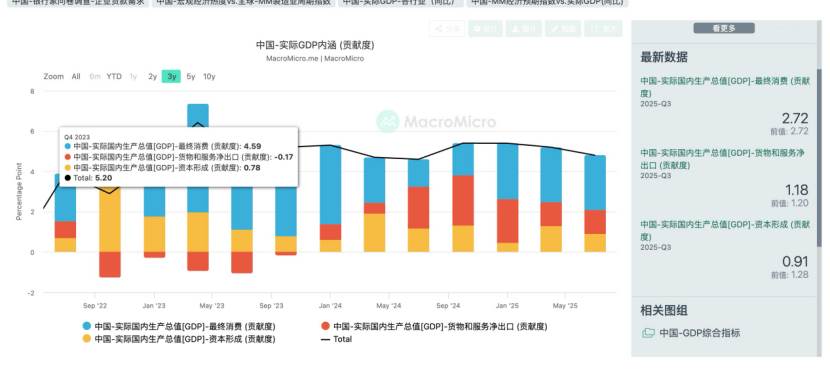
First, I would like to discuss why the renminbi is currently showing an appreciation trend. To understand this, let’s return to a fundamental economic concept: GDP. Generally speaking, although GDP has some limitations, it remains the simplest and most effective indicator for assessing a country’s overall economic situation. The composition of GDP is as follows:
GDP = C + I + G + (X – M)
Where:
C: Consumption spending: Total expenditures by households and individuals on purchasing goods and services.I: Investment spending: Expenditures on capital formation (new equipment, factories, etc.) and housing construction.
G:政府支出:政府购买的商品和服务支出(不包括转移支付)。
X–M:净出口:出口(X)减去进口(M)。
在明确了这个简单的公式后,人民币的升值原因就比较清晰了,主要有三点:
1、吸引外资,提升投资支出
The first benefit of the appreciation of the RMB is that it can quickly attract foreign investment. We know that in the past, both China and the United States faced the same problem: debt issues. In the United States, this was reflected in the federal government’s outstanding debts, or national debt. In China, it was reflected in the hidden debts of local governments. Since U.S. national debt is tradable and foreign investors hold a large proportion of it, the pressure to reduce debt is even greater. The risk of default can quickly affect bond prices through the secondary market, thereby impacting the U.S.’s ability to refinance its debt. Therefore, only by devaluing the dollar can the real value of debts denominated in dollars decrease for foreign creditors. This “inflation tax” reduces the real value of nominal debts. The natural solutions are interest rate cuts and quantitative easing. In contrast, China’s local debts are mostly domestic debts, held by domestic commercial banks or investors. There are many ways to manage these debts, such as extending debt terms or using transfer payments to ease the burden. Therefore, relatively speaking, the appreciation of the RMB isn’t greatly affected by debt issues. However, this debt problem has had an impact on both China and the United States. Government borrowing capacity is limited, meaning it’s not easy to stimulate GDP through increased government spending. At this stage, to boost the economy, the appreciation of the RMB can help attract capital back into the country.
2. Stimulating consumption and increasing consumer spending
Another benefit of the appreciation of the RMB is that it makes it cheaper for domestic investors to purchase foreign goods. This has two main effects: first, it allows ordinary consumers to have more money available for consumption and investment. This is particularly evident in categories of consumer goods that account for the largest proportion of total spending, such as food and energy products. It is believed that in the coming time, more and more imported goods will be available on supermarket shelves, and their prices will become increasingly affordable. Second, it reduces the costs for companies when they import foreign raw materials or key components, thereby increasing their profit margins. This, in turn, allows companies to allocate more capital towards expansion and profit distribution.
3. It helps to reduce political tensions caused by international trade and lowers government expenditures.
Since November this year, when it was announced that China’s trade surplus exceeded $1 trillion, there has been increased discussion in the international community about the undervaluation of the RMB. China is facing greater friction in trade negotiations with major trading partners, especially those countries within the European Union that are major consumers of Chinese goods. So, why is this happening?
我们知道理论上在财会原则中全球国际贸易经常帐加总一定是0,因为一个国家的出口一定是别国的进口、收入/转移支付也是互为对应的经济流。那么在贸易顺差突破新高时,一定意味着某些净进口国家的逆差也升高。在当前的宏观经济环境中,各个国家都以提振经济作为首要任务,因此贸易逆差的扩大,会对本国GDP带来拖累的发展,特别是针对一些已经进入低增速模式的已开发国家来说,数据上的微小波动,对GDP的成长带来的影响反而更大。而缓解贸易逆差通常有两个手段,第一是贸易保护主义为基础的增加关税,第二是调整汇率关系。前者以中美之间关税战的暂时休战而告一段落,而人民币有序升值则有利于快速缓解与其他国家的贸易摩擦带来的政治冲突,进而减少由此带来的政府支出。
虽然人民币升值有以上好处,但是一个核心原则在于升值一定要稳定有序,不能过快。而最近一个月人民币升值幅度明显过快,当然这也是因为岁至年底,前三季度的经济增长目标已经达到了5.2%,这相对于全年度目标“5%左右”已经基本达成,因此适当放开升值有利于为下一年度的经济转型做提前布局,观望市场发展,提前发掘发展机会与风险。否则凭借着庞大的外汇存底,央行还是比较容易稳汇率的。
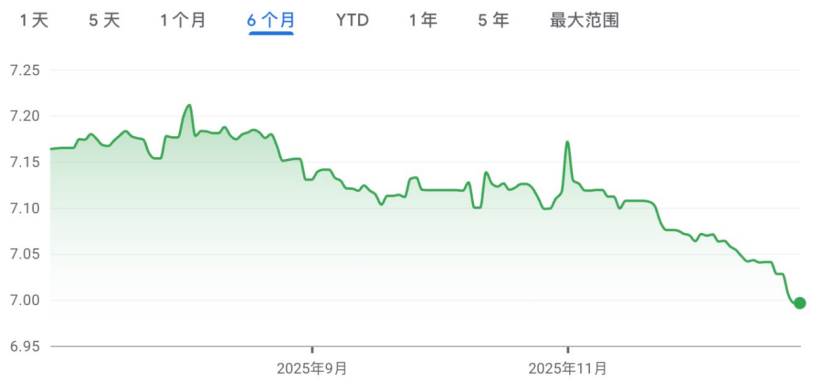
而明年度我相信汇率的升值速度一定会明显放缓,理由也很简单,目前中国GDP增量中来自于净出口的贡献虽然呈现收敛态势,但仍然很关键。如果人民币升值过快,显然会让净出口快速减小,进而对明年度经济增长目标的达成产生压力。
在明确了人民币短期升值的原因后,我们来讨论一下为什么USDT会呈现负溢价。主要原因我认为有以下三个:
1、加密市场持续低迷,缺乏足够吸引人的投资标的,投资人重新配置资产组合。
2、年底很多从事国际贸易的企业结汇往往集中出现,这时将美元兑换为人民币的需求将变得更旺盛。我们知道在岸人民币汇兑额度存在较大的限制。因此很多从事国际贸易或海外经营的中小企业主会选择通过USDT进行结汇,一方面可以避开额度限制,另一方面也更便捷、成本更低。
3、中国政府近期明显收紧对稳定币的政策,这增加了加密货币投资的风险溢价,因此引发了资金避险。
综上所述,笔者认为USDT的负溢价不会持续过久,这种情况更多的是受短期的供需关系改变而影响,但人民币短中期的强势走升,一定会导致人民币本位的投资者承受一定的汇率亏损。
Should we convert USDT stablecoins back into RMB?
Since the RMB is moving towards an appreciation trend, do we really need to do so in order to avoid exchange rate losses? In my opinion, unless the proportion of USDT stablecoins in your investment portfolio is too high, then you can make appropriate adjustments. Otherwise, it’s still possible to maintain a certain proportion of assets in this category. There are three reasons for this:
1. Short-term negative premiums on USDT could lead to significant exchange rate losses: As mentioned in the previous analysis, I believe that these negative premiums on USDT are due to short-term factors, not structural risks. If you try to convert currencies too quickly, you might suffer substantial exchange rate losses. Therefore, I suggest adjusting your investment portfolio immediately, or waiting until the negative premiums return to normal before making any changes.
2. Opportunity cost: We understand that although China's economic fundamentals remain resilient, it still faces significant challenges. One of these challenges is the lack of a positive wealth effect due to the decline in real estate prices. Therefore, under such circumstances, economic policies should focus on stability, addressing debt issues, adjusting the industrial structure, and optimizing resource distribution. While we see an overall increase in China's stock market, I believe this can only be seen as a correction in valuations or speculation, and not as a favorable environment for long-term development. In terms of interest rates, the continuous decline in RMB bond rates has also increased the opportunity cost of such investments. Holding stablecoins, on the other hand, offers greater flexibility, making it easier to allocate assets globally. This is especially true during periods when the US is reducing interest rates, as liquidity is relatively high.
3. The uncertainty of RMB appreciation: The tariff negotiations between China and the US will not be resolved permanently; they will only be suspended for one year. The US cannot respond effectively to the rare earth issue in the short term, and it will soon enter the mid-term election period. This means the US must take a backseat and focus on internal development. However, this does not mean that the tariff war will not resume. We have already analyzed the policies of the Trump administration in previous articles. Therefore, until the goal of attracting key manufacturing industries is achieved, there is still a high likelihood of a renewed tariff war. At that time, the RMB exchange rate will certainly be affected.
How to hedge against exchange rate losses through blockchain-based strategies? Gold and euro stablecoins
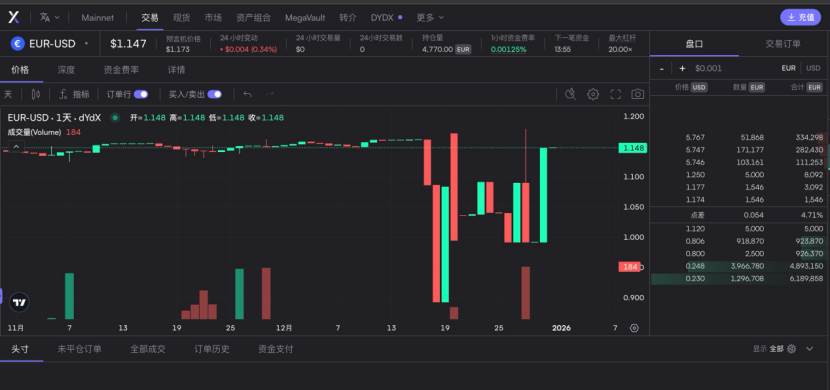
So, based on such a strategy, how can we appropriately hedge the exchange rate losses caused by the appreciation of the RMB? Naturally, we think of using exchange rate derivatives to mitigate the impact of RMB appreciation. However, this is very difficult to implement in a decentralized environment. At the beginning of last year, I considered creating a decentralized exchange rate derivative platform to meet this need. But my research showed that some competing products were not performing well. For example, in DYDX’s Foreign Derivatives section, it was clear that the market depth was very low, and liquidity was insufficient. This indicates that market makers show little interest in this business. The main reason for this is regulatory pressure. We know that exchange rate controls have always been a priority for many manufacturing countries, such as China and South Korea. Therefore, compared to cryptocurrency investments, exchange rate derivatives face higher levels of regulation. Most investors who need exchange rate hedging are from these countries, so the obstacles they face are quite significant.
But this doesn’t mean there’s no way to mitigate these issues. In my opinion, there are three asset classes that deserve special attention:
● Stablecoins in Hong Kong, Japan, and South Korea: During the middle of the year, as the United States passed laws related to stablecoins, various countries began to actively develop their own stablecoins. The unique nature of the Hong Kong dollar, along with the overlapping industrial structures among East Asian countries, inevitably leads to similar trends in exchange rate dynamics. Therefore, investing in such stablecoins can help mitigate the exchange rate losses caused by the appreciation of the RMB. However, recently we have noticed that countries concerned about exchange rate controls have tightened their regulations on the development of stablecoins. Thus, it is necessary to continue to monitor this situation and make investments only after mature products are available.
● On-chain gold RWA: The price of gold has increased dramatically over the past few years. Factors such as geopolitical uncertainties and expectations of a weakening US dollar have made gold assets highly attractive. For on-chain investors, purchasing gold RWA tokens is relatively easy, and the liquidity is also quite high. Examples include Tether Gold and Pax Gold. However, discussions about whether gold is experiencing a bubble have never stopped. The recent fluctuations in precious metals indicate that the market has entered a delicate balance of power. For investors with lower risk tolerance, it is safer to remain cautious rather than taking immediate action at this point.
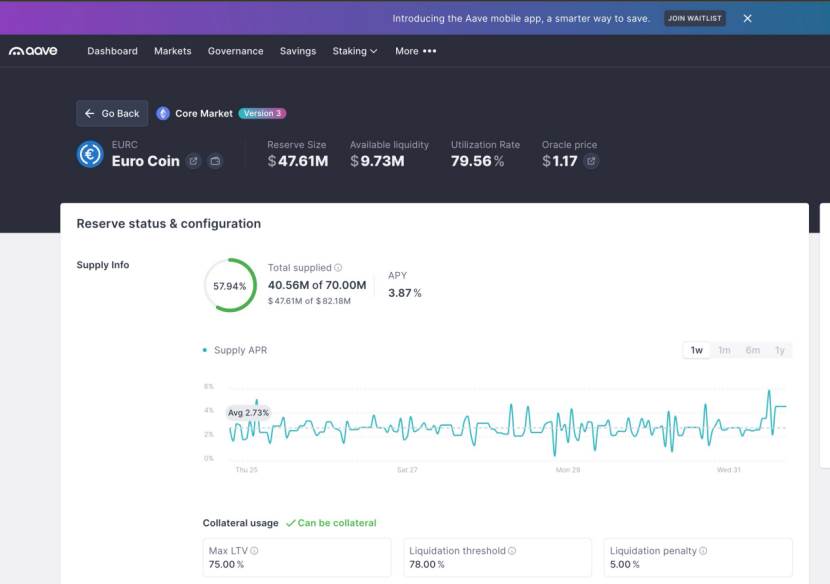
● Euro stablecoins: In my opinion, euro stablecoins are the most worthy of attention among these three asset classes. First, Circle’s compliant euro stablecoin, EURC, has a large issuance volume and good liquidity. Second, I believe that the exchange rate fluctuations between the euro and the RMB will be less severe compared to the US dollar. The reasons are as follows:
Let’s take a look at China’s export data. It can be seen that the three regions with the highest proportion of China’s exports are ASEAN, the European Union, and the United States. Due to the trade wars, China’s exports to the United States have shown a significant decline. Of course, we won’t discuss the issue of re-exports. The most significant contributors to this decline are the European Union and ASEAN.
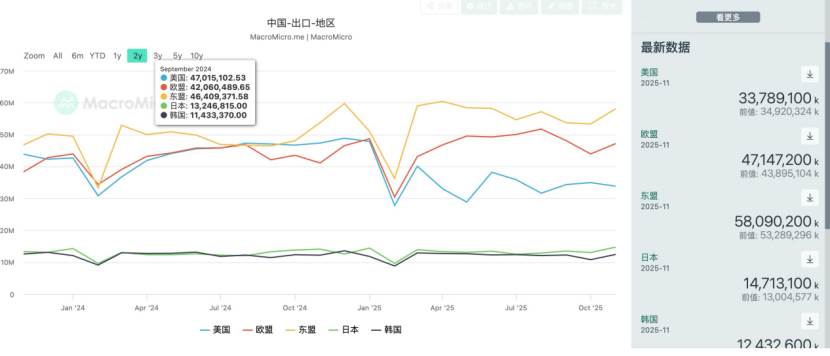
We know that ASEAN consists mainly of developing countries, and their economic growth rates are relatively high. This means that the impact of net exports will be overshadowed by other factors. Additionally, ASEAN has absorbed a large amount of Chinese products and investments at lower levels of production. Moreover, a significant portion of its imports consists of machinery and industrial goods necessary for industrial upgrading. Therefore, the overall impact on the economy is positive. Of course, politically, China’s growing military power also poses certain constraints on the political situation. Thus, we can see that there is a tendency for China and ASEAN to avoid political conflicts.
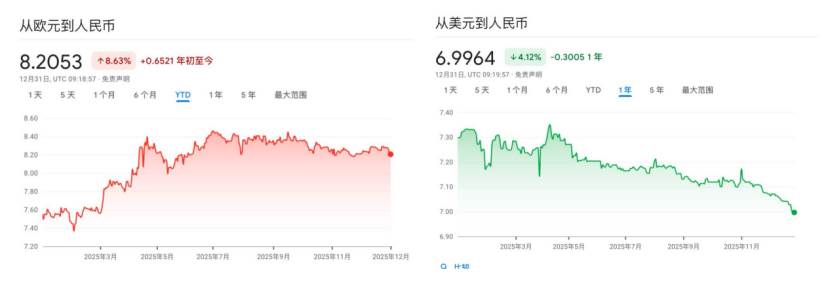
However, the situation with the European Union is different. Among China’s exports to the European Union, industrial manufactured goods account for a larger proportion. Therefore, the profit margins are higher compared to markets like ASEAN. As such, Europe remains an important market for maintaining a trade surplus for China. Since trade settlements between China and Europe are conducted in euros, it makes sense for the RMB exchange rate to remain lower relative to the euro.
Of course, the exchange rate risk also stems from how to resolve the political tensions with the European Union. Since most countries in the EU are developed nations, and their manufacturing sector accounts for a much higher proportion of GDP compared to the United States (where the manufacturing sector makes up 15% of GDP, while in the US it’s less than 10%), this means that ordinary Europeans rely more on wage income than on capital gains from investments. In recent times, the EU has faced increased costs due to the loss of cheap Russian energy supplies. This has had a significant impact on manufacturing industries. In particular, China’s industrial upgrading has had a huge impact on Europe’s core industries, including the automotive sector. This has led to a decline in overall industrial profits in Europe, and as corporate profits decrease, two consequences arise: a reduction in government revenues, and a slowdown in wage growth. The first consequence will also lead to financial pressures, thereby affecting the maintenance of Europe’s high welfare system. Both of these factors will reduce the wealth effect on residents, thereby affecting consumption. In terms of investment, Europe has lost its competitive edge in the AI sector due to the lack of high-quality AI-related assets. Most European capital has flowed into the US AI market in search of higher returns. Therefore, investment prospects are also uncertain. On this basis, the impact of net exports on the economy will be amplified, leading to more stringent attitudes towards trade deficits by European governments.
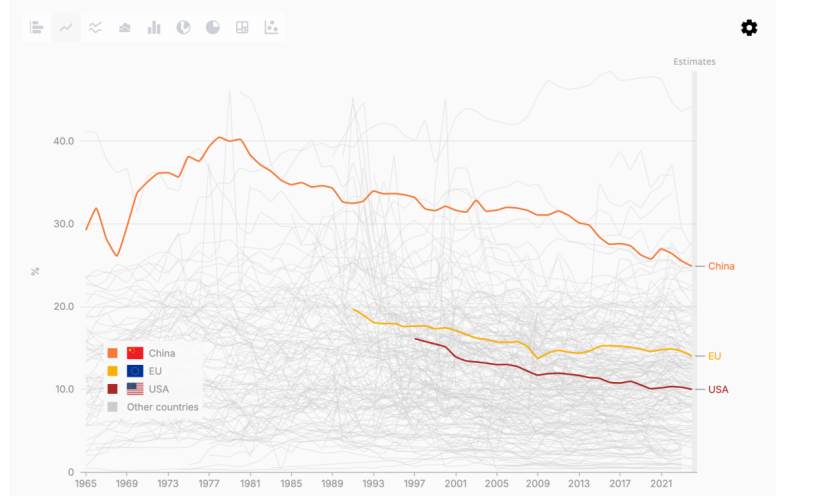
However, I believe that the EU currently does not possess the resources necessary to engage in negotiations with China, as seen during the tariff battles between the two regions. Additionally, the attitudes of EU countries towards China vary from country to country—for example, Hungary and Spain have different approaches. Therefore, it is difficult for the EU to gain more benefits during negotiations. In my opinion, trade balance adjustments between China and Europe will not be based on significant currency rate changes. Instead, a final cooperation framework will likely involve agreements regarding investments made in euros. On one hand, compared to other emerging markets like India, Vietnam, and Brazil, European capital markets are more stable, providing better protection for capital. China currently has sufficient foreign exchange reserves, which can be used for reinvestment to increase profit margins. On the other hand, maintaining stable exchange rates also helps Chinese goods maintain sufficient competitiveness in Europe.
Speaking of exchange rate hedging strategies, I think a practical approach would be to convert US dollars into EURC, then deposit those funds in leading platforms like AAVE to earn interest. Given the current interest rates, the yield on these loans can reach 3.87%, which is quite attractive. If you want to maintain positions in risk assets like BTC while also hedging against exchange rate risks, you can use EURC as collateral to borrow US dollars, and then allocate your funds, such as by purchasing BTC.