Exchange Ranking
 Top Exchanges
 24h Volume Ranking
 Popularity Ranking
 Exchange BTC Balance
 Proof of Reserves
 Decentralized Exchanges
 Funding Rate
 Funding Heatmap
 Liquidation Data
 Max Pain
 Long/Short Ratio
 Whale L/S Ratio
 Binance/Okex/Huobi L/S
 Bitfinex Margin L/S
 ETF Tracker
 Solana ETF
 XRP ETF
 Hong Kong ETF
 Bitcoin Treasuries
 Crypto Reversal
 Ethereum Reserves
 HyperLiquid Wallet Analysis
 Hyperliquid Whale Watch
 Large Transactions
 On-chain Movement
 Bitcoin ROI
 Stablecoin Market Cap
 Options Analysis
 News
 Articles
 Economic Calendar
 Features
 Wallet
 Contract Calculator


 Security
 Collections
 Watchlist
 Following
 DOGE
 PEPE
 ZEC
 IP
 WLFI
As the new year begins, the crypto market has experienced a long-awaited upward movement: Bitcoin has managed to hold above $90,000 per unit, Ethereum has recovered above $3,100, and Solana has regained its position around $130. What’s more interesting is that altcoins like PEPE, IP, and WLFI have seen increases of over 20% in just three days, causing market sentiment to surge. The return of funds from the blockchain, coupled with the replenishment of short positions by derivatives traders, along with loosening of macro-risk-averse investments, has made “Is the bull market back?” once again a hot topic of discussion. Although it remains to be seen whether the altcoin season will repeat this year, the crypto market is receiving renewed attention, and this isn’t just driven by emotions alone.
Analysis of three key market indicators: The altcoin season hasn’t really arrived yet; currently, we are seeing only a “local rebound”.
Apart from the overall market situation, it’s difficult to conclude that the altcoin season has returned based on current data. Looking at the rankings of tokens that have seen increases on exchanges, many of these tokens were previously undervalued or highly controlled by certain investors. From the perspective of these three indicators, the crypto market is still in a slow “price recovery phase”.
Indicator one: The total market value of cryptocurrencies hasn’t significantly increased yet.
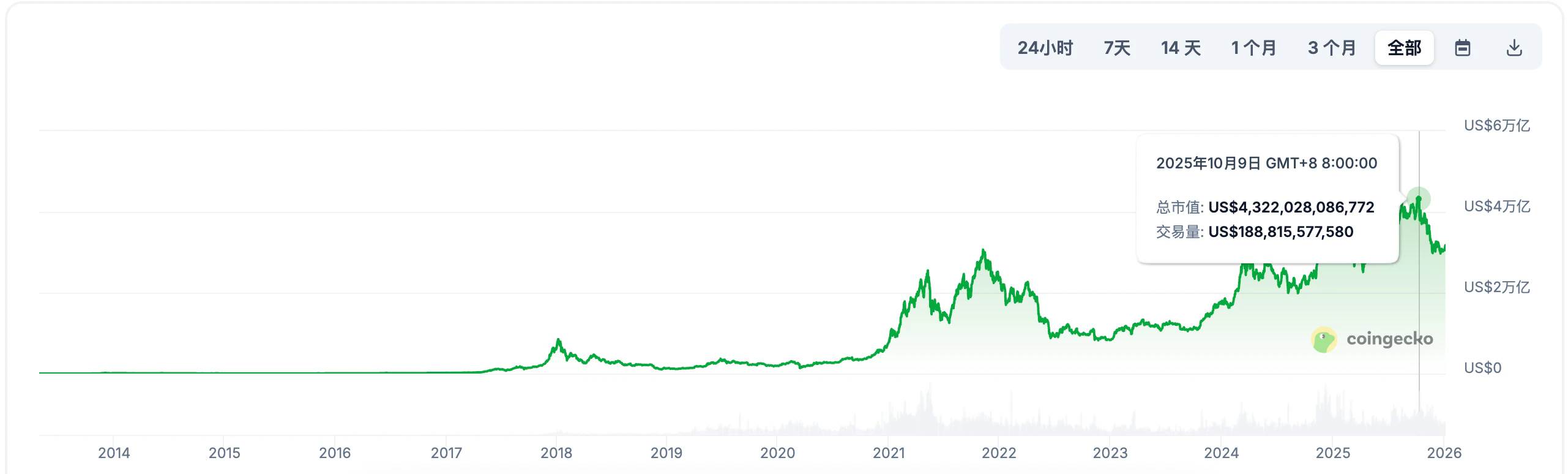
According to Coingecko data, the total market value of the crypto market currently stands at $3.19 trillion, with BTC accounting for 57% of the market, and ETH accounting for 11.9%.
There is still a gap of over $1 trillion from the previous peak market value of over $4.3 trillion. This is certainly due to the significant declines in prices of mainstream coins such as BTC, ETH, SOL, and BNB. However, it’s also undeniable that many altcoins are facing declining prices and reduced trading activity, especially in the context of decreasing liquidity and ongoing capital outflows from the market.
It can be seen that the overall environment in the crypto market has not improved much.
Indicator two: The altcoin season index remains low
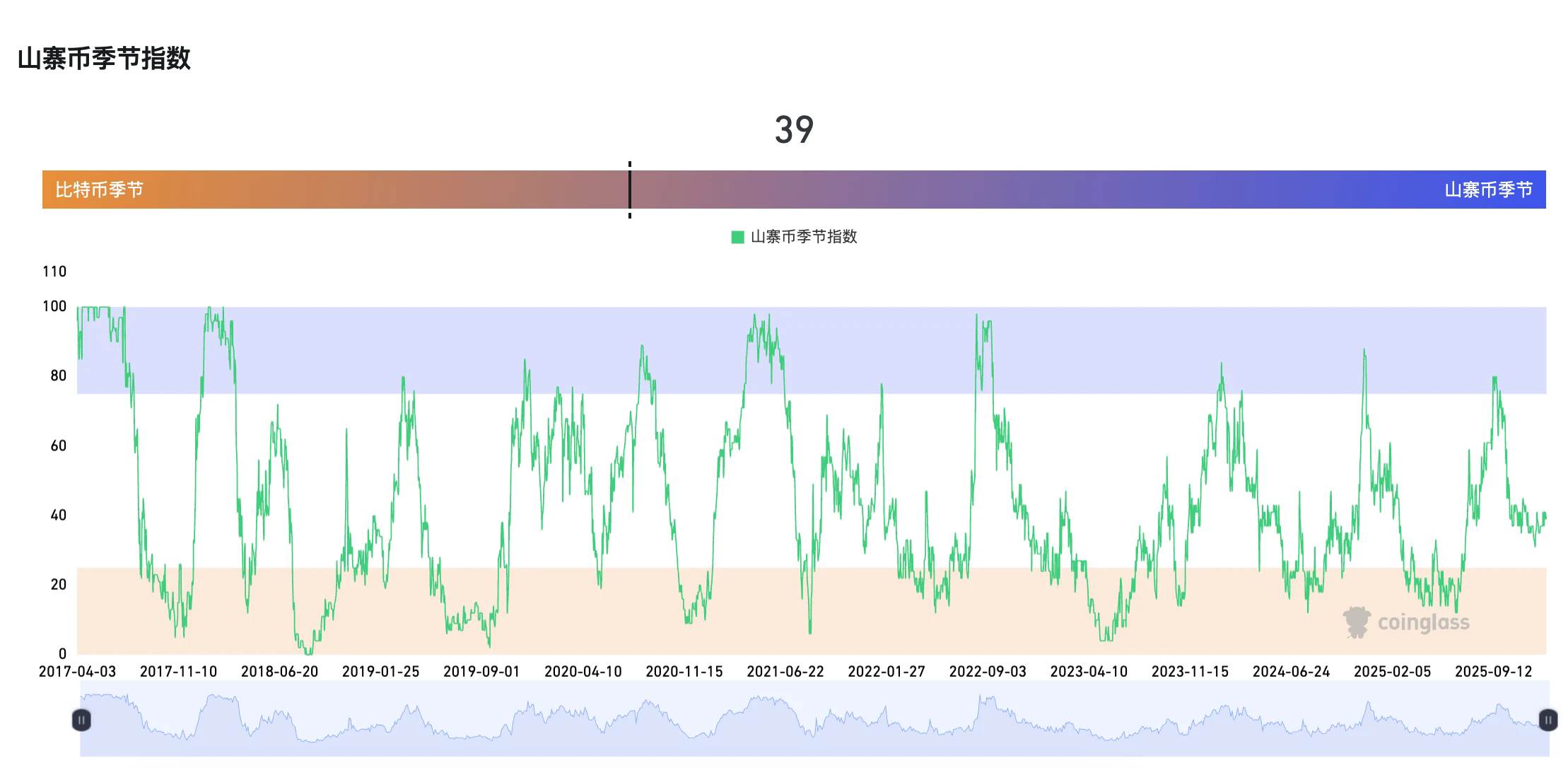
According to the Coinglass altcoin season index, the current season index for altcoins is 39. This level is similar to that in mid-July last year, when the market was still in a period of relative calm, with both mainstream and altcoins at relatively low levels. Of course, as more companies listed on the DAT Treasury platform continue to emerge, ETH eventually reached a new high. However, compared to the increased buying pressure from these listings, the liquidity in the market has now decreased significantly.
Indicator three: Market sentiment remains in a fearful range
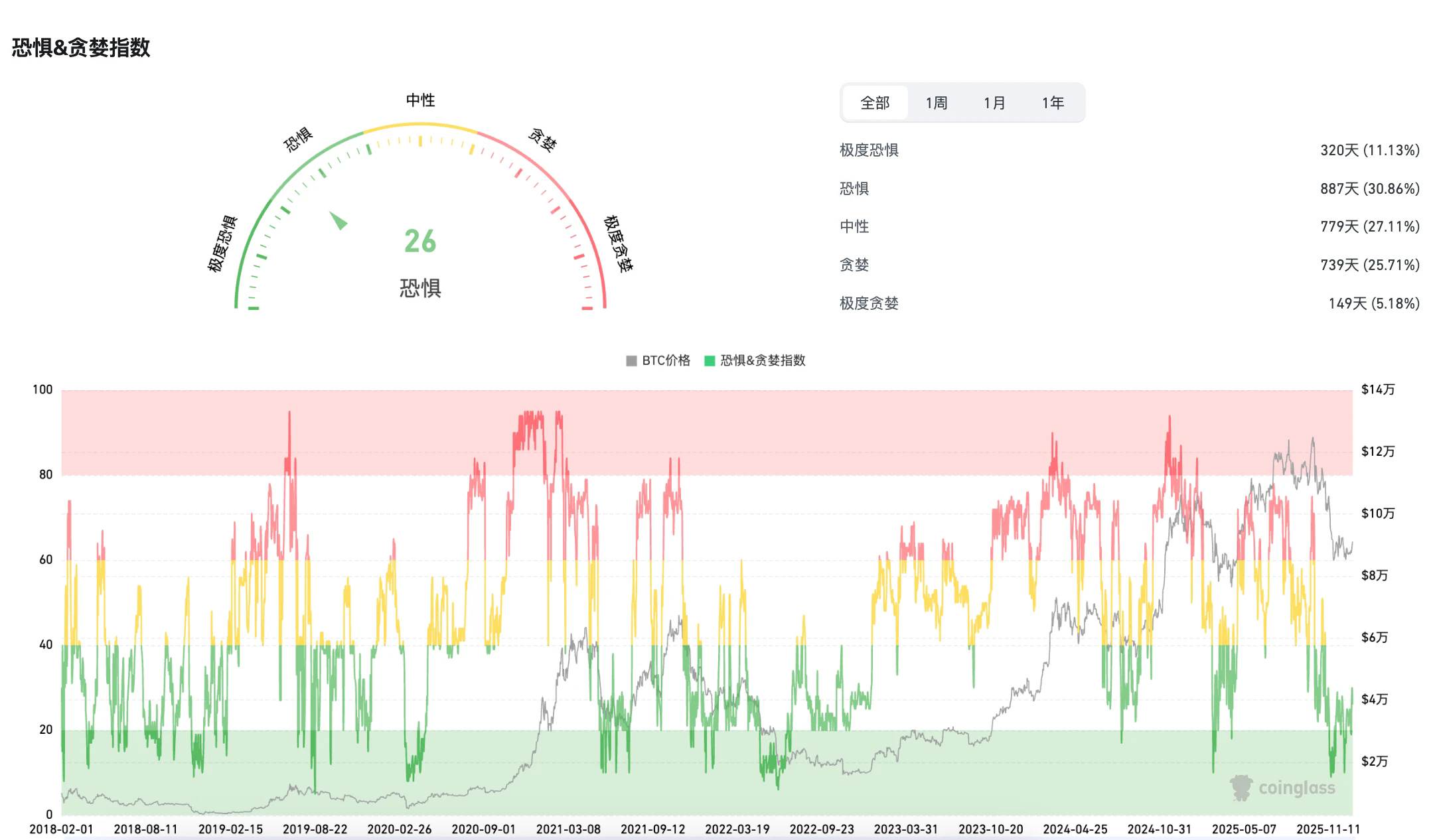
According to Coinglass data, the fear-greed index for the crypto market currently stands at 26, indicating a fearful sentiment. This range represents the phase where market sentiment accounts for the largest proportion, reaching 30.86% overall. This seems to align well with the market’s bearish sentiment at the time.
Based on the above indicators, it seems that the market is still in a sluggish phase. But does this mean that there are no opportunities for making money? The mainstream views in the market clearly do not believe this. On the contrary, many institutions and individuals believe that this could be a good time to buy low. The main rationale for this is the expected improvement in liquidity and progress in macro-economic conditions. As the saying goes, “Greed arises when others fear.” Of course, this only holds true if you choose the right targets.
There are three key signs of a turning point in the market: improved liquidity, BTC taking over from precious metals in its rise, and retail investors maintaining rational sentiment.
Currently, the mainstream views in the market seem to agree on short-term bottoming and rebound. However, the real turning point may depend on increased market liquidity, better performance of BTC, and a shift in retail investors’ attitudes. Here are some representative views in the market at present:
Global market liquidity is likely to improve next week, and short-term rallies could result from intraday trading activities.
Jens Naervig Pedersen, a foreign exchange and interest rate strategist at Danisco Bank, said in his report that global market liquidity is expected to remain weak this week, but it may improve next week with the release of more economic data. During the end-of-year period, many market participants take vacations or close their positions, resulting in generally lower market liquidity.
Key data to watch next week includes important figures from the US labor market, such as the December non-farm employment report released on January 9th, as well as the ISM survey results.
CoinKarma stated that the cryptocurrency market is now returning to a stage where intraday trading plays a key role in determining short-term price movements. With no clear external inflows of capital, the market relies primarily on intraday capital flows. Short-term price fluctuations are caused by changes in intraday capital flows and overall liquidity levels.
Additionally,通过分析USDC/USDT Premium (a measure of the premium or discount between USDC and USDT) and Overall LIQ (an indicator of overall market liquidity), it can be seen that when the USDC/USDT Premium becomes positive, it indicates a decrease in the active selling behavior of market players towards BTC/USDT. Currently, the USDC/USDT Premium and Overall LIQ are aligning again, suggesting a high probability of a bottoming out and subsequent rebound in the short term. CoinKarma also noted that compared to previous periods, the long-term trend remains bearish, and potential selling pressure should be taken into consideration.
Precious metal prices have been declining, and it is possible that BTC may take over the rise trend.
After gold and silver experienced another period of strong demand last month, many market participants and analysts are now considering cryptocurrencies, including BTC, as potential candidates for taking advantage of the declining liquidity of these metals.
Daniel Ghali, senior commodity strategist at TD Securities, said that it is expected that within the next two weeks, up to 13% of the total silver holdings on the Comex market in New York will be sold, leading to significant price revaluation and declines. Low liquidity after the holidays could further exacerbate price fluctuations.
Delphi Digital stated that the price of gold has increased by 120% since the beginning of 2024, achieving one of the strongest gains in history. Since gold historically leads Bitcoin by about three months during periods of monetary easing, this trend serves as an important reference for cryptocurrencies. Currently, gold has renegotiated its value during this period of economic expansion, while Bitcoin’s sentiment remains influenced by previous cycles and recent declines. The performance of precious metals reflects signals of monetary easing and fiscal support. When precious metals perform better than stocks, the market tends to price in currency depreciation rather than a collapse in growth. Volatility in the precious metals market could be a signal for future trends in other risky assets.
Garrett Jin, agent for “10·11 Insider Whale,” also wrote that, as analyzed earlier, the prices of gold and silver have reached their peak. After the U.S. market opened today, funds began to flow into the cryptocurrency market. Even after the stock market started to sell off, cryptocurrencies continued to rise. The inflow of funds may continue, and the upward momentum could accelerate, leading to bearish pressure without any pullbacks.
Retail investor sentiment will become an important indicator of market changes
Brian Quinlivan, analyst at the blockchain analysis platform Santiment, pointed out that participants in the cryptocurrency market showed strong sentiment on social media at the beginning of the year. However, he warned that whether the market can continue to rise depends on whether retail investors remain rational. He said that Santiment’s social media data shows that retail investor sentiment is very positive. “This is usually concerning, but this time it might just be a normal rebound after the holidays,” he said.
Quinlivan said that he isn’t overly concerned about the emergence of “a large amount of FOMO sentiment”. However, he added that if Bitcoin surges to $92,000 quickly, such sentiment could flood into the market. When market excitement becomes too high, the crypto market often moves in the opposite direction to what most people expect.
Expectations in the market deviate from reality, with funds from both the exchange and off-exchange markets moving in different directions.
Considering the current market conditions, traders remain cautious regarding ETFs, which is quite the opposite of the optimistic attitude of funds in the crypto market.
Over the past three weeks, there has been a net outflow of more than $900 million from BTC ETFs.
Yesterday, the price of Bitcoin rose above $90,000, reaching a three-week high. However, data on derivative and spot ETF flows shows that traders remain cautious, indicating limited confidence in further price increases. Data shows that despite the price rebound, demand for long positions in Bitcoin remains stable. The basis rate of Bitcoin futures is below the neutral threshold, with an annualized yield of 4%. Since December 15th, BTC spot ETFs have experienced a net outflow of over $900 million. Additionally, put options on Bitcoin were traded at a premium on Saturday, indicating that professional traders have increased their need for protection against downside risks.
DOGE and PEPE led a general increase in Meme coins, while IP, ZEC, and WLFI emerged as stocks that rebounded from declines.
Recently, Dogecoin and PEPE led a wave of price increases among Meme coins at the beginning of the year. Some analysts believe that momentum traders are following a familiar pattern: once liquidity improves, speculative funds will flow from mainstream coins into Meme coins. Currently, the prices of many Meme coins have risen, including PEPE, DOGE, SHIB, WIF, FLOKI, etc.
Tokens like IP, ZEC, WLFI, etc., which were popular earlier, have seen a rebound after experiencing significant declines last year, thanks to relevant news and market fundamentals after the start of the new year.
Among AI-related tokens, tokens like RENDER and PIPPIN remain highly active in trading, with both spot and contract prices experiencing impressive gains of over 15%.
Based on current information, the key factors affecting the crypto market remain the macroeconomic data for this month, as well as the nomination of a new chairman for the Federal Reserve by Trump. Before this, it’s possible to take advantage of bargain opportunities, but it’s important to avoid taking excessive risks and stick to short-term trading strategies.
The BTC price prediction contest is underway, with prices ranging from $12,000 to $17,000 being the main range.
Finally, we conclude this article with our predictions for BTC prices, as well as our expectations for further growth this year.
The newspaper “Speculative Attributes Wane, Bitcoin Prices Stabilize” states that the surge in Bitcoin prices in 2025 differs from previous years. The main reason for this is the widespread implementation of ETFs. The recent price adjustments are not as significant as those in the past four or five years. This change may be related to the influence of macroeconomic factors on traditional investment strategies. There are two opposing views on Bitcoin’s future trajectory in 2026: some believe that Bitcoin prices could experience a significant drop, potentially returning to lower levels, while other investors expect Bitcoin prices to reach $150,000 by the end of the year, with a target of $250,000 by 2027.
Forbes published an article titled “Bitcoin Price Forecast for 2026,” which notes that there is a wide range of predictions for Bitcoin prices in 2026. Analysts like Tom Lee, Standard Chartered, and Bernstein are optimistic, but some institutions are bearish. Although no single target price has been established yet, predictions range between $120,000 and $170,000. This indicates that Bitcoin prices are increasingly influenced by structural factors such as ETF inflows and corporate treasury assets. If favorable macroeconomic conditions continue and institutional participation increases, potential price increases could reach $250,000 or more. How institutions allocate their capital will become a key factor in determining Bitcoin prices.