Exchange Ranking
 Top Exchanges
 24h Volume Ranking
 Popularity Ranking
 Exchange BTC Balance
 Proof of Reserves
 Decentralized Exchanges
 Funding Rate
 Funding Heatmap
 Liquidation Data
 Max Pain
 Long/Short Ratio
 Whale L/S Ratio
 Binance/Okex/Huobi L/S
 Bitfinex Margin L/S
 ETF Tracker
 Solana ETF
 XRP ETF
 Hong Kong ETF
 Bitcoin Treasuries
 Crypto Reversal
 Ethereum Reserves
 HyperLiquid Wallet Analysis
 Hyperliquid Whale Watch
 Large Transactions
 On-chain Movement
 Bitcoin ROI
 Stablecoin Market Cap
 Options Analysis
 News
 Articles
 Economic Calendar
 Features
 Wallet
 Contract Calculator


 Security
 Collections
 Watchlist
 Following
 ZORA
We are currently in the transition period between holidays. In theory, you should have “returned to work,” but it seems like your brain is still immersed in the memories of those holidays. Emails are scarce, while social media is bustling with activity. Every post either serves as a review of the past year or promises something ambitious—like turning your passion into money by 2026.
When I wrote that article, my argument was simple: turning every post into a financial asset sounds interesting, but in reality, it’s just an upgraded version of the old power-law mechanism. On Zora, your profile is a form of currency, and your posts are also currency. Attention becomes something that can be traded, cultivated, and sold off.
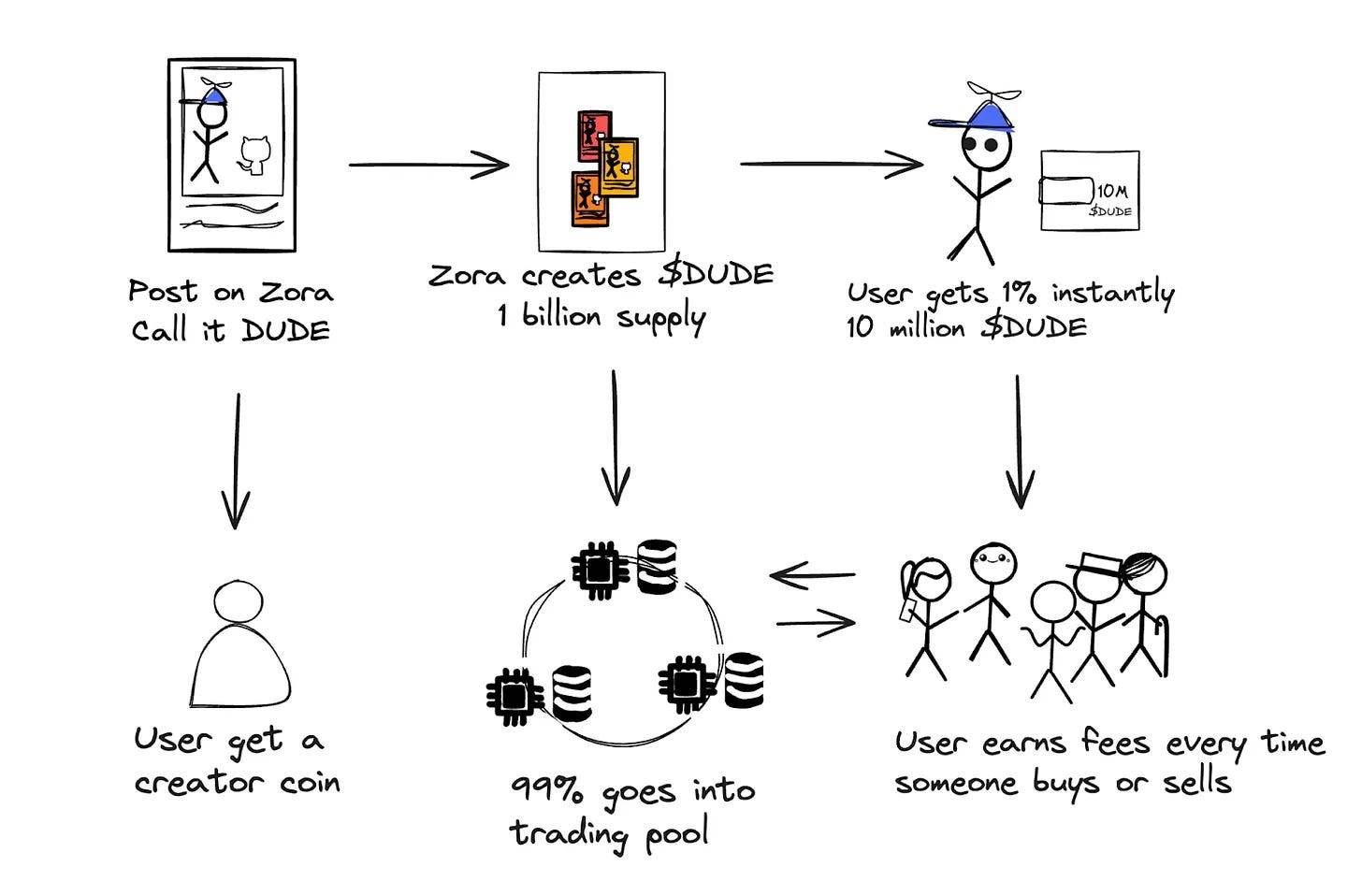
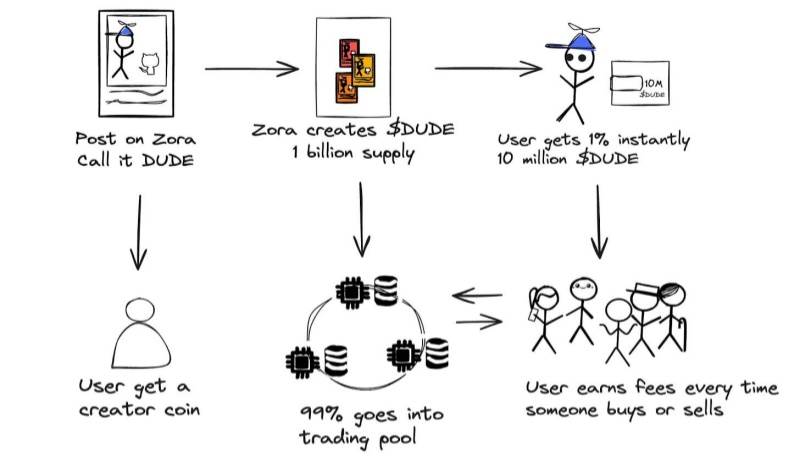
This basic mechanism still exists. Each post corresponds to a token worth ten billion units. Creators receive a certain number of tokens and profit from each transaction. Recent data shows that the trading volume of these tokens has reached hundreds of millions of dollars. So far, tens of millions of dollars have been paid out to creators.
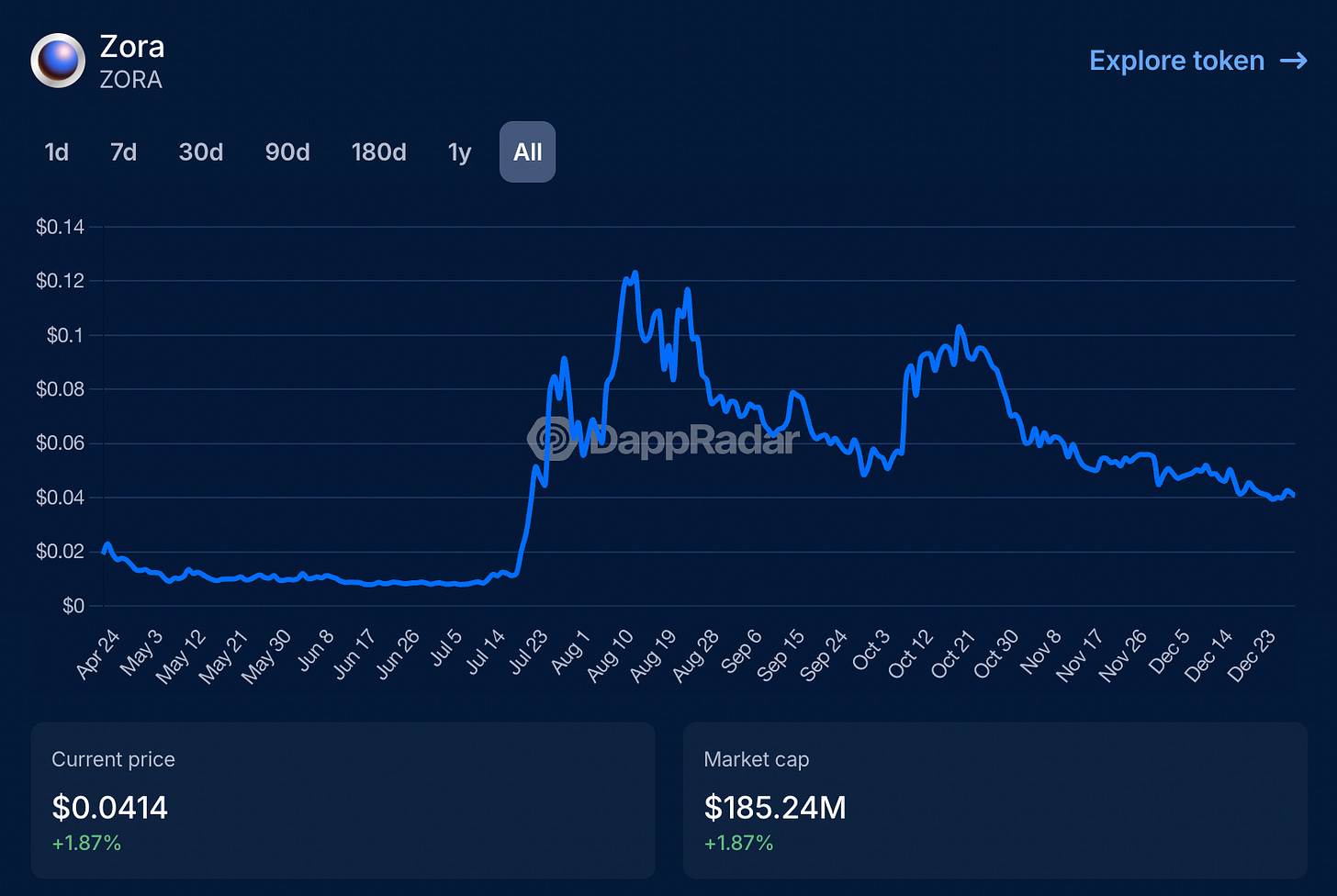
@dappradar.com
What has changed is the “flywheel effect”—a phenomenon that is now fully manifested. Zora has achieved cross-chain trading, allowing users to deposit and trade SOL in all its markets. This has helped to increase Solana’s liquidity and attract new users to the platform. One of the founders, Nick Shirley, generated approximately $2 million in transaction volume through his posts alone. Each post also led to a net demand of about $87,000 for his tokens.
They also run Zora TV live broadcasts, promoting products that require “double-click likes,” emphasizing the importance of gaining attention. This serves both as entertainment and as a means of generating orders.
The on-chain dashboard shows that the total DEX trading volume of Zora tokens has exceeded $400 million. Since launching, the fees generated have reached nearly $10 million, with around $7 million to $8 million going towards protocol revenue. The remaining amount is distributed among token holders and creators. You can see a step-by-step increase in usage between July and August, followed by a steady rise until the end of the year. This is a sustainable and repeatable revenue stream, rather than short-term fluctuations. In other words, Zora no longer seems like an experimental art platform; it resembles a mid-sized DeFi company, where its balance sheet is actually driven by creators’ efforts to avoid losing in algorithmic draws. This is a digital trap: every time a post becomes popular, token prices rise, and the protocol earns commissions. At the same time, the power dynamics at the base level become even more intense.
So, what’s the situation now? There’s no problem with technology itself. Some creators have indeed made a lot of money. The market clearly needs such products. But the distribution of traffic and value remains concentrated around a few very well-known accounts and protocols. Most people still work tirelessly without any compensation to develop content.
The trap lies not in becoming a creator, but in thinking that once your content is fully commercialized, everything will suddenly become fair. This is something I will continue to pay attention to in 2026. And the timeline suggests that we should produce more content instead.