Exchange Ranking
 Top Exchanges
 24h Volume Ranking
 Popularity Ranking
 Exchange BTC Balance
 Proof of Reserves
 Decentralized Exchanges
 Funding Rate
 Funding Heatmap
 Liquidation Data
 Max Pain
 Long/Short Ratio
 Whale L/S Ratio
 Binance/Okex/Huobi L/S
 Bitfinex Margin L/S
 ETF Tracker
 Solana ETF
 XRP ETF
 Hong Kong ETF
 Bitcoin Treasuries
 Crypto Reversal
 Ethereum Reserves
 HyperLiquid Wallet Analysis
 Hyperliquid Whale Watch
 Large Transactions
 On-chain Movement
 Bitcoin ROI
 Stablecoin Market Cap
 Options Analysis
 News
 Articles
 Economic Calendar
 Features
 Wallet
 Contract Calculator


 Security
 Collections
 Watchlist
 Following
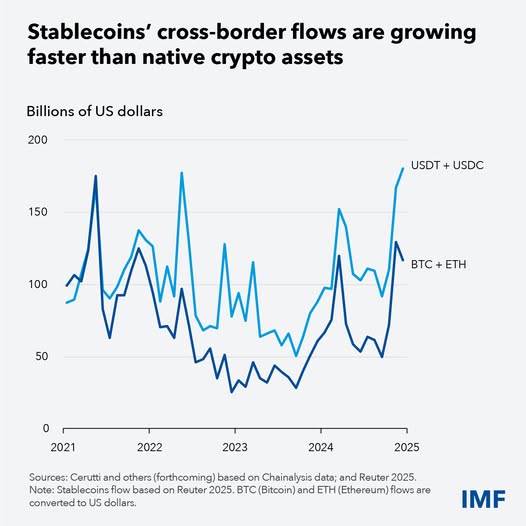
Global crypto regulation is accelerating significantly, shifting from questions of “whether regulation should be implemented” to “how it should be done”. In the United States, legislation related to the transparency of stablecoin reserves and the qualifications of issuers has entered the practical implementation stage. After the official implementation of MiCA in the European Union, several platforms have adjusted their business structures. Hong Kong and Singapore have also included stablecoins in their financial stability assessment systems. Data shows that the average daily settlement volume of stablecoins has long remained in the tens of billions of dollars, far exceeding the transaction volumes of most public blockchains. This means that regulations are no longer merely based on principles. Stablecoins are evolving from being considered innovative but unregulated entities to becoming key financial components that are systematically integrated into financial systems. They are becoming the foundation for institutional capital inflows, cross-border settlements, and expanded financial services on the blockchain.
Crypto regulation has shifted from theoretical discussions to structured frameworks.
By 2025, the global crypto regulatory landscape has undergone a major transformation. Instead of relying on theoretical debates, isolated court rulings, and fragmented policy signals, regulations now involve specific legislative measures and regulatory frameworks across various jurisdictions. In this transition, stablecoin regulation has become a core policy focus, reflecting regulators’ increasing concern about liquidity risks, reserve management, and the potential systemic impacts of digital assets.
One of the most significant regulatory developments occurred in the United States. The “Guidance and Establishment of National Innovation Act for US Stablecoins” (GENIUS Act) came into effect on July 18, 2025, establishing a federal regulatory framework for payment-based stablecoins. The act requires certain stablecoins to be pegged to the US dollar or other low-risk assets at a ratio of 1:1. It also introduces dual regulatory structures at both federal and state levels, aiming to improve transparency and strengthen consumer protection.
Over 70% of jurisdictions have begun to establish regulations regarding stablecoins.
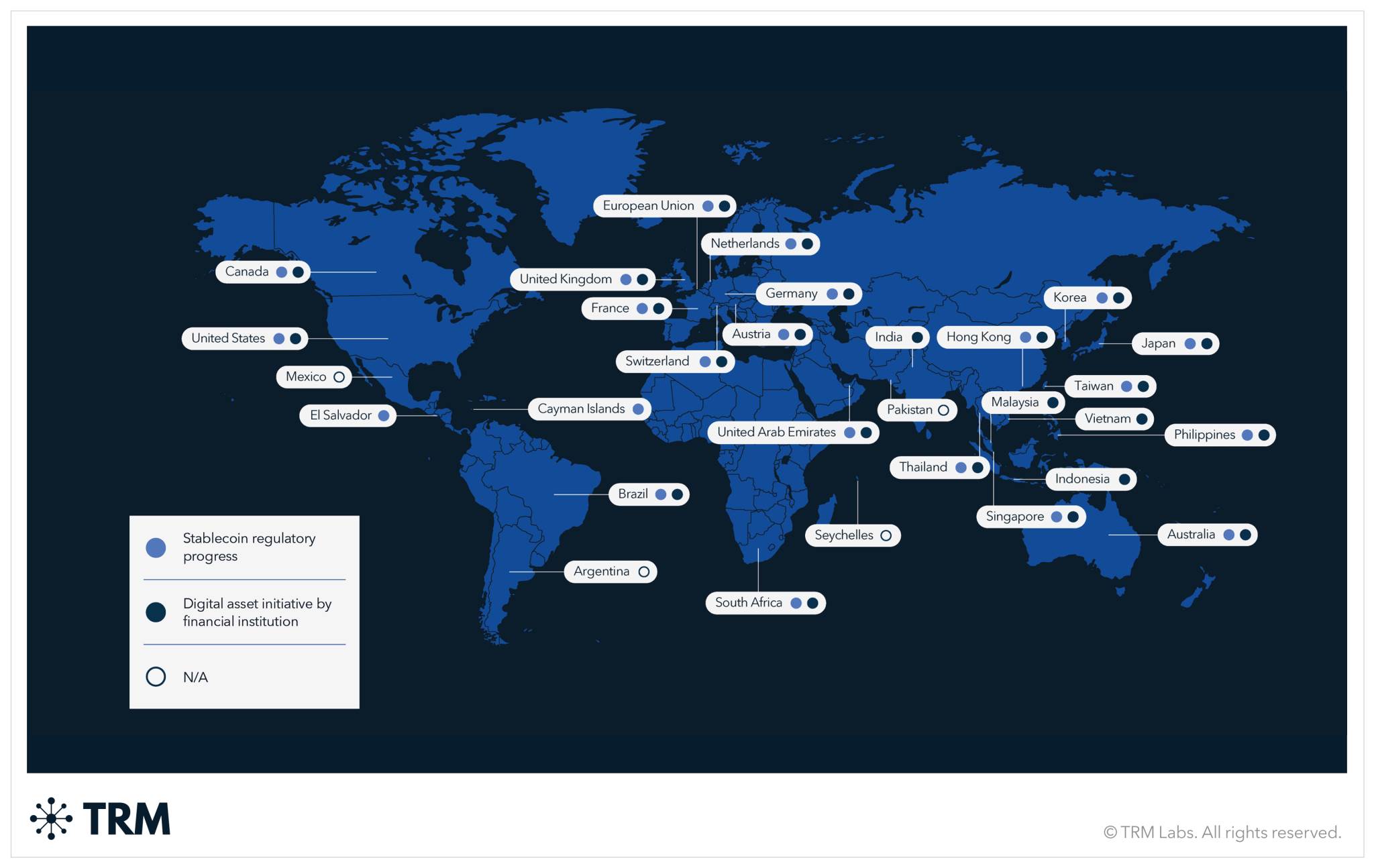
According to a global cryptocurrency policy assessment report released by TRM Labs in 2025 (covering 30 jurisdictions), more than 70% of these jurisdictions have prioritized regulating stablecoins. This data indicates that there is a growing consensus among nations worldwide regarding the regulation of digital currencies and payment infrastructure.
Meanwhile, the report indicates that approximately 80% of the surveyed jurisdictions have introduced policies related to digital assets, involving banks or regulated fintech institutions. This suggests that regulatory developments are creating clearer pathways for traditional financial institutions to participate in the crypto infrastructure.
The U.S. Office of the Comptroller of the Currency has clarified the situation regarding banks’ involvement in cryptocurrency transactions.
In the United States, regulatory clarity is not only reflected in legislation but also extends to guidance on bank operations. At the beginning of December 2025, the OCC issued a clarification document stating that national banks can conduct “risk-free principal” transactions involving cryptocurrency on behalf of clients. Under this model, banks act as intermediaries, facilitating the transfer of cryptocurrencies without taking on any risks related to the balance sheet.
This clarification is of great significance, as many American banks were previously cautious about executing cryptocurrency transactions for clients, due to uncertainty regarding which activities related to cryptocurrencies were permitted. By comparing the transfer of risk-free crypto assets with brokerage services in traditional securities and derivatives markets, the Office of the Comptroller of the Currency (OCC) has provided banks with a clear path for compliance in engaging in cryptocurrency settlement activities.
Additionally, on December 12, 2025, the OCC conditionally approved the licensing applications of five digital asset-related companies, including entities specializing in custody and settlement services. This move could further accelerate the integration of crypto assets into the federal regulatory financial system.
The changes in U.S. policy are in line with global regulatory trends
. U.S. regulatory developments are closely related to broader global trends. Analyses by several independent policy analysts indicate that more and more jurisdictions are proposing or implementing regulatory frameworks that cover stablecoins and other digital asset infrastructure.
Regulatory focus has shifted from the earlier “ sandbox” approach to establishing enforceable rules aimed at protecting wallet users and maintaining financial stability. These frameworks typically focus on operational risk management, liquidity management, transparency in reserves, and prevention of regulatory arbitrage. They also include stricter requirements for information disclosure, reserve audits, and clear regulatory responsibilities.
From uncertainty to clarity
In summary, these developments represent a structural shift in global digital asset policies. The way regulations are implemented is moving from fragmented and uncertain approaches to more consistent frameworks. Special attention is being paid to issues such as the integrity of stablecoins, the limits of banking participation, and consumer protection. This shift indicates that policymakers have reached a consensus that, in the absence of clear regulatory mechanisms, the expansion of stablecoins and other digital assets could lead to liquidity risks, reserve risks, and systemic risks similar to those encountered by traditional financial systems. By establishing clearer regulatory expectations and legally binding frameworks, regulators aim not only to reduce risks but also to create conditions that support broader institutional participation. This could lay the foundation for a deeper integration of digital assets into mainstream financial systems in the coming years.