Exchange Ranking
 Top Exchanges
 24h Volume Ranking
 Popularity Ranking
 Exchange BTC Balance
 Proof of Reserves
 Decentralized Exchanges
 Funding Rate
 Funding Heatmap
 Liquidation Data
 Max Pain
 Long/Short Ratio
 Whale L/S Ratio
 Binance/Okex/Huobi L/S
 Bitfinex Margin L/S
 ETF Tracker
 Solana ETF
 XRP ETF
 Hong Kong ETF
 Bitcoin Treasuries
 Crypto Reversal
 Ethereum Reserves
 HyperLiquid Wallet Analysis
 Hyperliquid Whale Watch
 Large Transactions
 On-chain Movement
 Bitcoin ROI
 Stablecoin Market Cap
 Options Analysis
 News
 Articles
 Economic Calendar
 Features
 Wallet
 Contract Calculator


 Security
 Collections
 Watchlist
 Following
 ETH
As a supporter of Ethereum, I too have developed this annoying habit this year. I always open the Ethereum chart, do some mental calculations, and estimate how much my investment portfolio has lost. After that, I close the chart, hoping to see it turn from losses to profits in the near future.
As the end of the year approaches, I expect most of those who bought Ethereum at the beginning of the year to be disappointed. However, the Ethereum blockchain itself has stood out from the price movements of the past 12 months, along with the wealth generated by its native token ETH.
Today’s story focuses on the performance of Ethereum and ETH this year.
If we define “making money” as something positive, then Ethereum’s performance hasn’t been very good. But if we ignore the returns related to its native token, Ethereum will become more manageable in 2025, thanks to market-driven solutions like exchange-traded funds (ETFs) and digital asset-backed tokens (DAT). Two major upgrades to Ethereum—Pectra and Fusaka—have made it easier and more efficient to use this blockchain for large-scale applications.
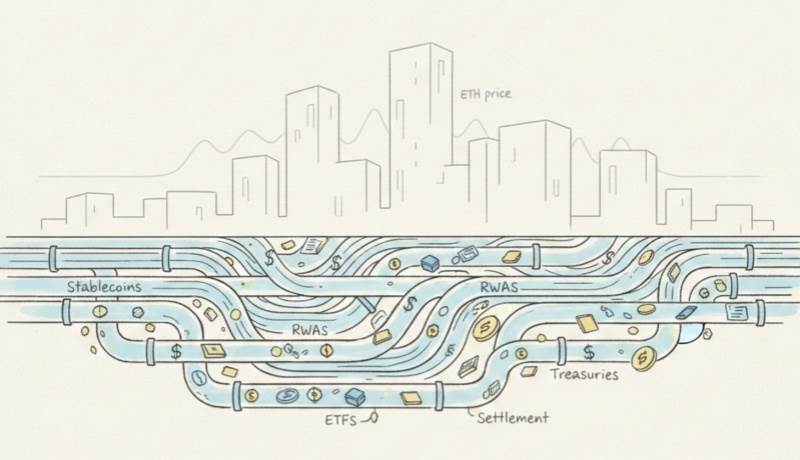
In today’s quantitative analysis, I will show how the development paths of the Ethereum network and ETH assets in 2025 differ, and what this means for both of them as we move into 2026.
Ethereum has gained a new platform for development.
For most of the past two years, the concept of “institutional ownership of Ethereum” seemed far from reality. As of June 30th, the cumulative inflow of funds into Ethereum ETFs since their introduction a year ago was only slightly over $4 billion. Companies that list their shares on public markets have only recently begun to consider holding Ethereum as part of their asset portfolio.
In the second half of the year, things changed drastically. From June 1st, 2025, to September 30th, 2025, the cumulative inflow of funds into ETH ETFs nearly tripled, reaching over $10 billion.
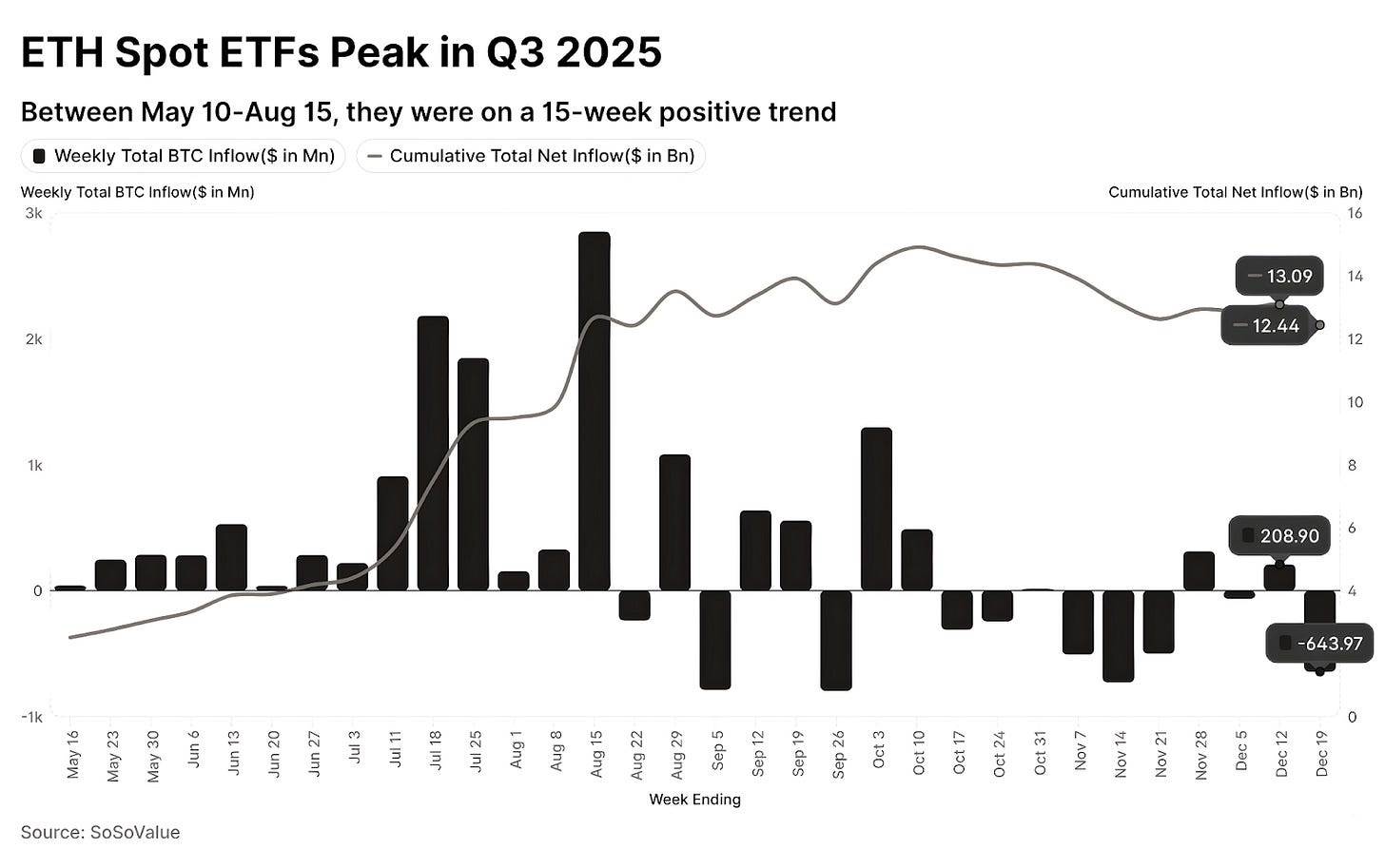
This surge in ETF prices led to a psychological shift. It made it easier for people to purchase Ethereum, and expanded the audience for this asset from developers and traders to a third group of investors who seek to invest in this second-largest cryptocurrency by market value.
This brings us to the second development that occurred this year.
The latest buyers of Ethereum
Over the past five years, Bitcoin has seemed to be the most natural form of capital management, thanks to the strategies employed by companies like MicroStrategy. At least until problems began to emerge, this approach appeared to be the most straightforward way for companies to invest in cryptocurrencies. Companies would purchase scarce cryptocurrencies, driving up their prices, thereby increasing their stock prices. Then, they could use this advantage to sell more shares at a premium.
So, when the Ethereum treasury was introduced in June this year, it caused confusion among many people at first. The Ethereum treasury stood out because it offered features that the Bitcoin treasury lacked. This became even more apparent after Joe Lubin, co-founder of Ethereum and CEO of ConsenSys, announced that he would serve as the chairman of SharpLink Gaming’s board of directors, overseeing its $425 million Ethereum treasury strategy. Soon after, many other companies followed SharpLink’s example. Currently, the top five Ethereum treasury holders own over 5.56 million Ethereum units, accounting for more than 4.6% of the total supply. In terms of value, this represents more than $16 billion at current prices. When buyers use tools like ETFs and bonds to invest in certain assets, those assets begin to function as items on a balance sheet. They are subject to scrutiny regarding corporate governance, reporting, board discussions, quarterly updates, and risk committees. The staking mechanism allows Ethereum treasuries to offer features that Bitcoin treasuries cannot provide. While the Bitcoin treasury can only help companies make profits from selling Bitcoin, holding Ethereum itself enables Ethereum treasuries to secure network security by staking Ethereum, thereby earning even more Ethereum. If companies can find a way to combine their revenue with staking income, they can maintain their financial operations. Marketing strategies are difficult to predict.
Those who have been following the development of Ethereum know that marketing efforts are often closely linked to the overall progress of Ethereum. On the other hand, the development of Ethereum itself tends to be quite ordinary, until certain external events occur—such as changes in product packaging, shifts in market cycles, or new ways of storytelling—which force people to take notice of Ethereum’s potential.
This time, with the increase in the price of Ethereum DAT and the influx of funds into Ethereum ETFs, people’s attention towards Ethereum has also increased. I used a relatively simple method to measure this attention: by checking whether retail investors, who usually don’t pay much attention to blockchain developments, are actually paying attention to Ethereum.
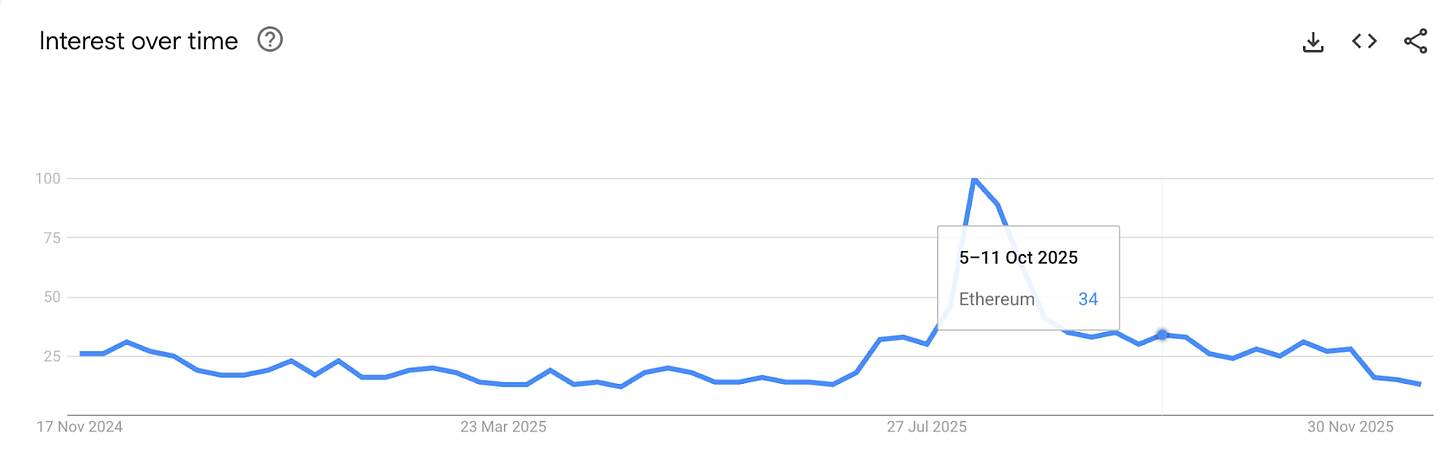
Between July and September, Google Trends data showed a significant surge, which coincided with the strong performance of Ethereum DAT and ETFs. Traditional methods of holding Ethereum have sparked curiosity among retail investors, and that curiosity has led to increased attention.
But mere attention isn’t enough. Attention is unpredictable—it comes and goes quickly. This is one of the reasons why many people consider this year to be a year of great success for Ethereum supporters, a reason that’s often overlooked.
Hosting dollars on the blockchain
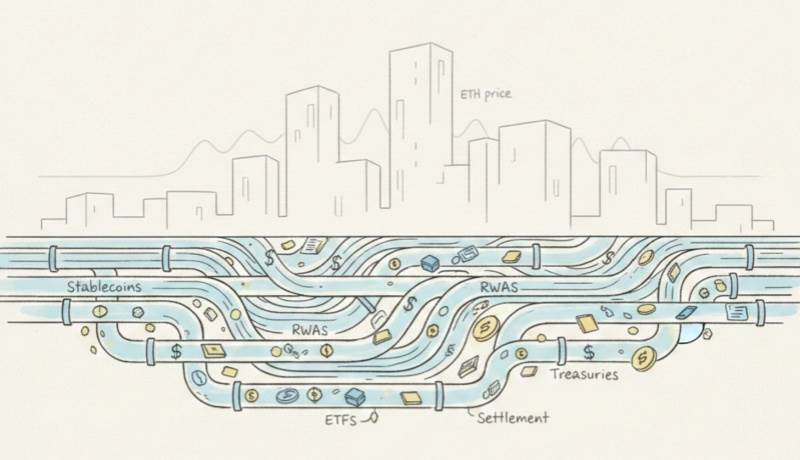
If we look at things from a broader perspective, from the perspective of price charts, fluctuations in prices seem to be merely the result of market sentiment. But stablecoins and tokens representing real-world assets aren’t like that. They are based on solid fundamentals and connect traditional finance with decentralized finance.
2025年,以太坊仍然保持着美元层最受欢迎的平台地位,实现了稳定币的流通和现实世界资产的代币化。
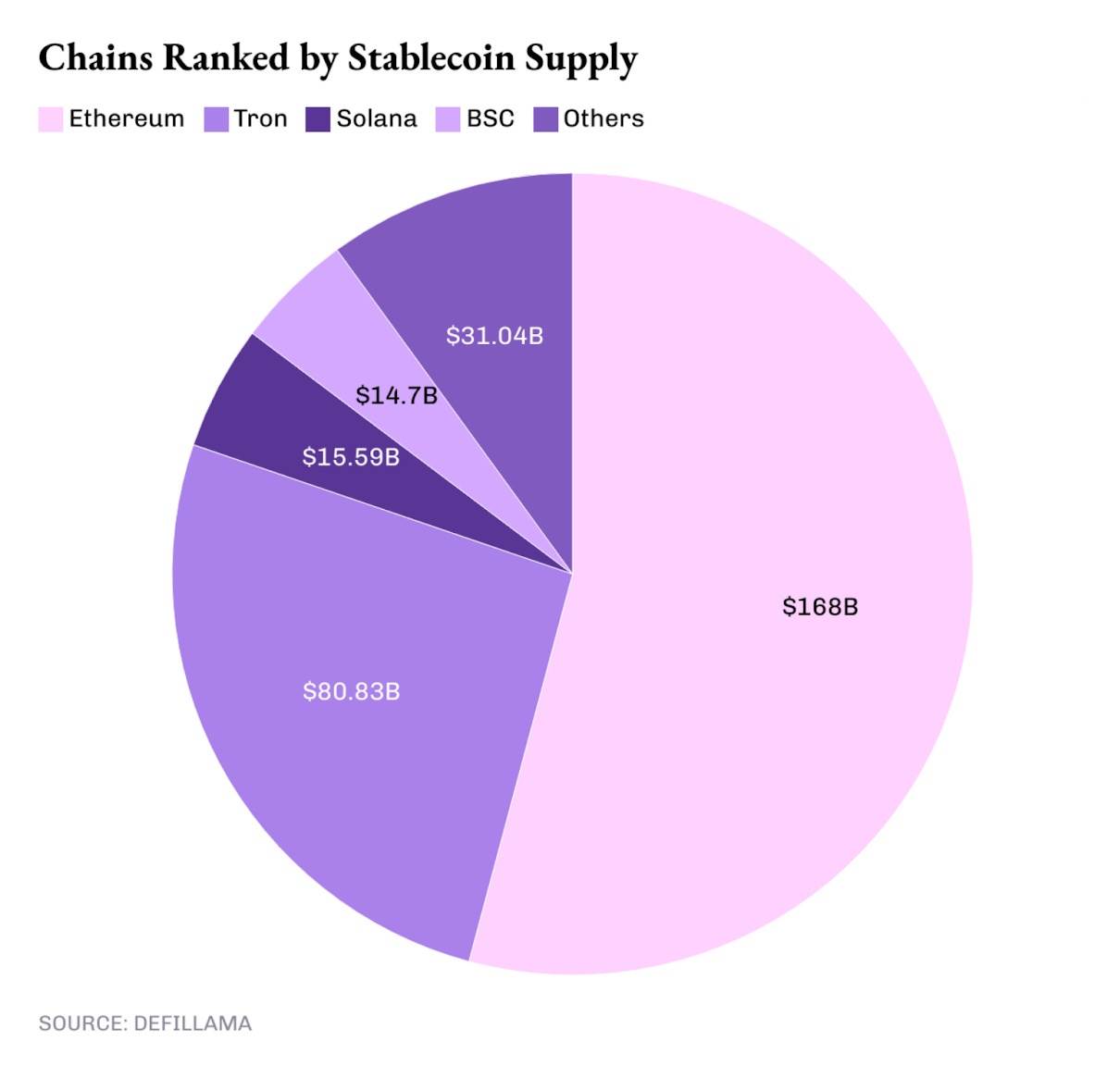
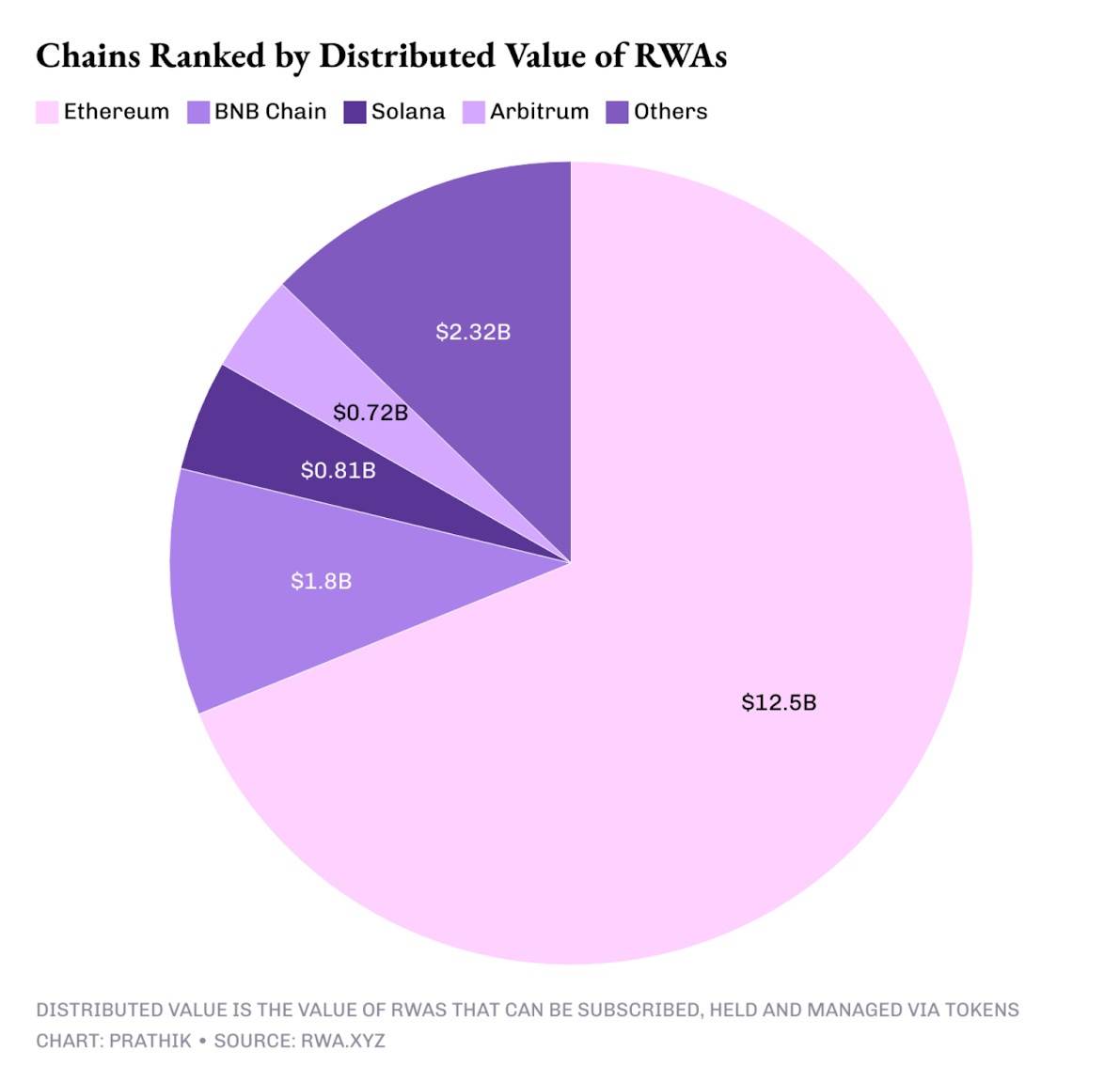
在代币化的RWA中,你会看到同样的现象。
截至撰写本文时,以太坊仍然占据“分布式”代币化资产价值的大部分。这意味着,超过一半允许持有者购买、管理和持有其代币化RWA的代币都是在以太坊链上发行的。
因此,虽然ETF让购买ETH变得更容易,但国债允许买家通过受监管的华尔街渠道持有ETH,从而获得杠杆ETH的敞口。
所有这些都进一步将以太坊融入了传统资本市场,人们已经习惯于在受监管的环境中持有资产。
双重升级
以太坊在2025年经历了两次重大升级。这些升级使网络感觉不那么拥堵,更加稳定,并且更适合作为那些希望在可信平台上结算交易的人的基础层。
Pectra于5月上线,扩展了blob容量,通过为L2层服务器提供更多空间来发布其压缩数据,从而提升了可扩展性并降低了L2层交易成本。此外,它还提高了交易吞吐量、加快了确认速度,并提升了以汇总为中心的应用程序的整体效率。
今年晚些时候,Fusaka也跟进,进一步扩大规模并提升用户体验。
总体而言,以太坊在2025年致力于优化自身,使其成为可靠的金融基础设施。升级的重点在于提升正常运行时间、吞吐量和成本可预测性。这些特性对于Rollup、稳定币发行方以及在链上结算价值的机构用户至关重要。这些选择提升了以太坊的规模化可靠性,即使它们并未显著增强网络活动与ETH价格之间的短期关联性。
那我们该怎么办?
如果你想从这一年中得到一个简单的、非此即彼的结论——“以太坊好”或“以太坊坏”——那么2025年可能不会提供明确的答案。
相反,它呈现了一个更有趣,但也更令人不安的真相。
2025年,以太坊进入了基金发行机构(ETF)的账簿和上市公司的资产负债表(DAT),并保持了与机构配置相一致的关注度。
然而,ETH持有者经历了一年的时间,期间价格走势与区块链的发展并不相符。
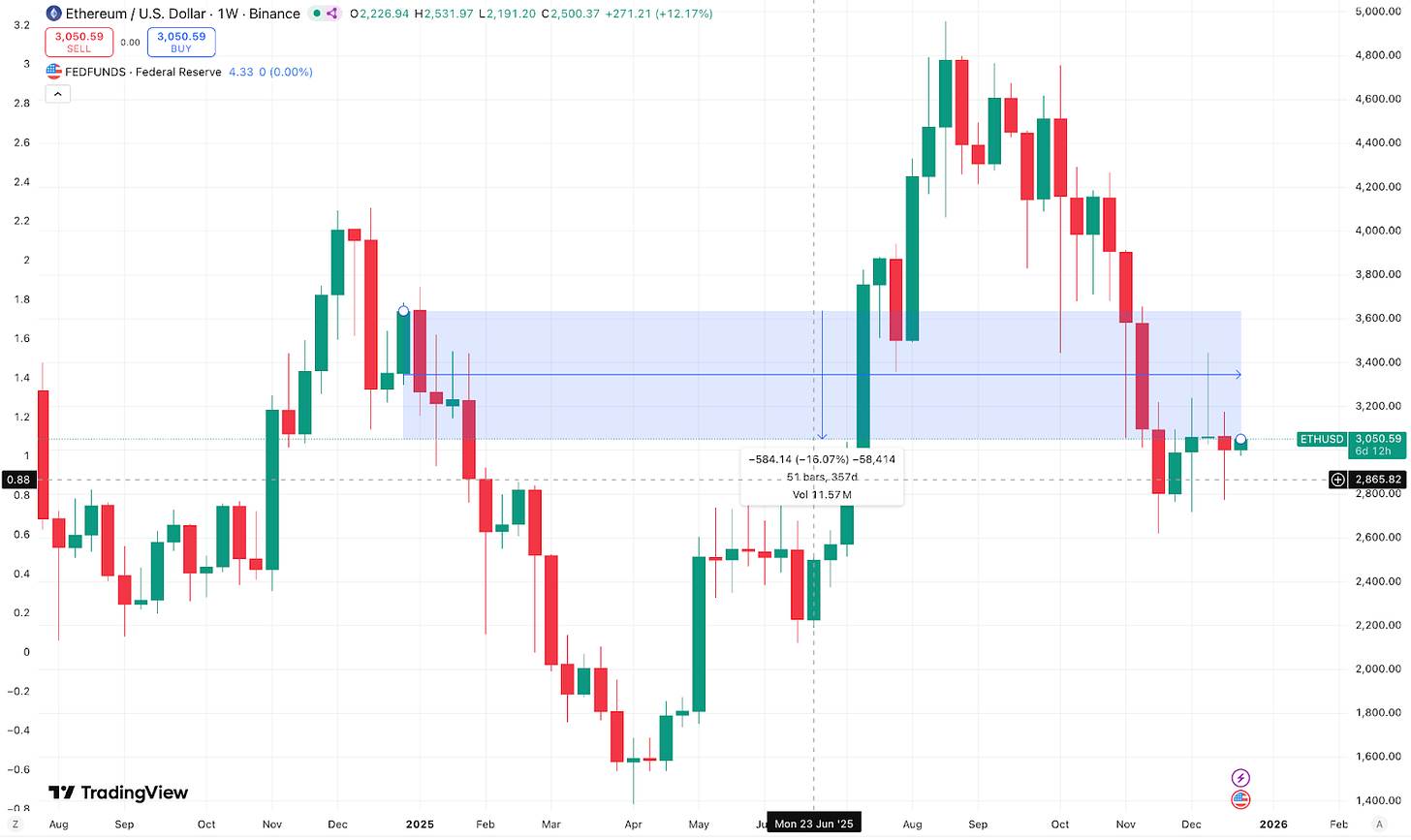
1月1日买入以太坊的投资者目前仍亏损至少15%。以太坊价格在8月份曾创下接近4953美元的历史新高,但好景不长。目前其交易价格接近五个月来的低点。
以太坊在2026年仍将保持强劲的升级势头,并拥有大量的稳定币和代币化RWA。如果以太坊网络能够充分利用这些优势带来的势头,就能将其转化为长期的价格走势。