Exchange Ranking
 Top Exchanges
 24h Volume Ranking
 Popularity Ranking
 Exchange BTC Balance
 Proof of Reserves
 Decentralized Exchanges
 Funding Rate
 Funding Heatmap
 Liquidation Data
 Max Pain
 Long/Short Ratio
 Whale L/S Ratio
 Binance/Okex/Huobi L/S
 Bitfinex Margin L/S
 ETF Tracker
 Solana ETF
 XRP ETF
 Hong Kong ETF
 Bitcoin Treasuries
 Crypto Reversal
 Ethereum Reserves
 HyperLiquid Wallet Analysis
 Hyperliquid Whale Watch
 Large Transactions
 On-chain Movement
 Bitcoin ROI
 Stablecoin Market Cap
 Options Analysis
 News
 Articles
 Economic Calendar
 Features
 Wallet
 Contract Calculator


 Security
 Collections
 Watchlist
 Following
 BTC
Recently, there has been a lot of global financial developments that have attracted market attention. The French economy is showing signs of instability, while the Federal Reserve announced a reduction in interest rates by 0.25 percentage points. This news immediately led to a sharp increase in the price of Bitcoin. Investors are paying close attention to the interactions between macroeconomic policies and digital assets, trying to seize potential market opportunities.
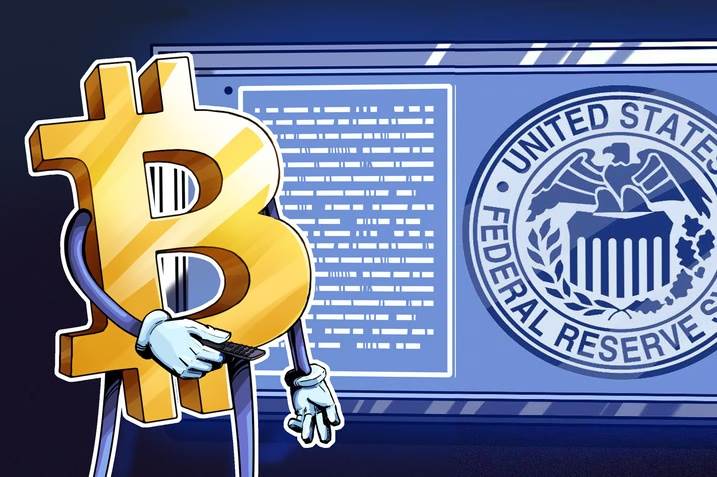
After the Federal Reserve cut interest rates, the cryptocurrency market rose in value. However, the situation in other parts of the world is not so optimistic.
In Thailand, many banks are experiencing widespread closures. France has indicated that it may impose restrictions on companies that operate using encrypted licenses obtained from other EU countries.
Meanwhile, in Australia, securities regulators have abolished licensing requirements, providing convenience for stablecoin distributors.
Last week, significant progress was made in this industry, from the Federal Reserve’s policies to stimulate the cryptocurrency market to Pakistan opening its doors to cryptocurrencies.
Here is the first issue of “Global News”:
The Federal Reserve cut interest rates
On Wednesday, the Federal Reserve reduced interest rates by one quarter of a percentage point. This is the first time the Federal Reserve has cut interest rates since December 2024. Short-term interest rates dropped from 4.3% to around 4.1%. The price of Bitcoin increased due to this news.
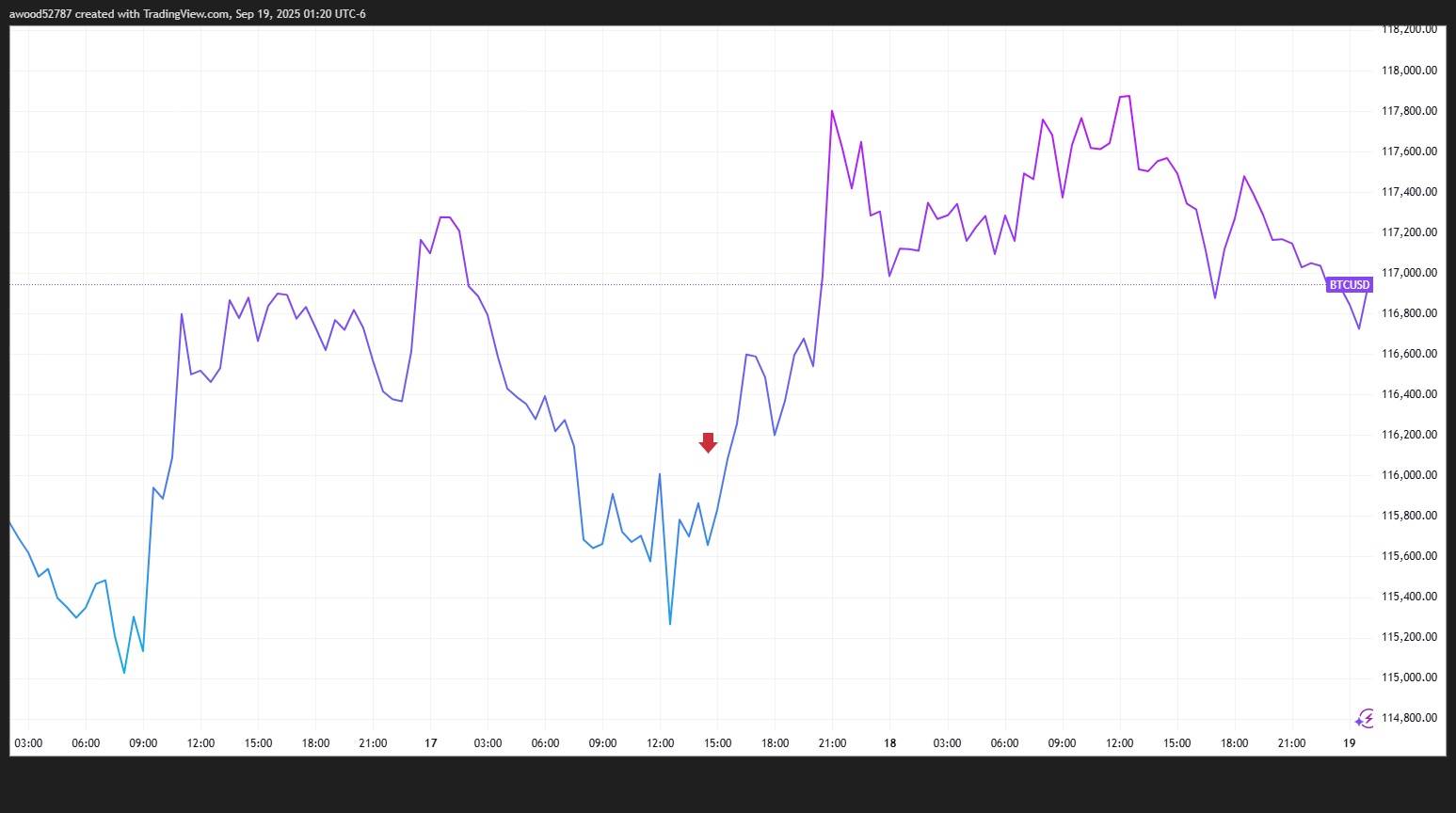
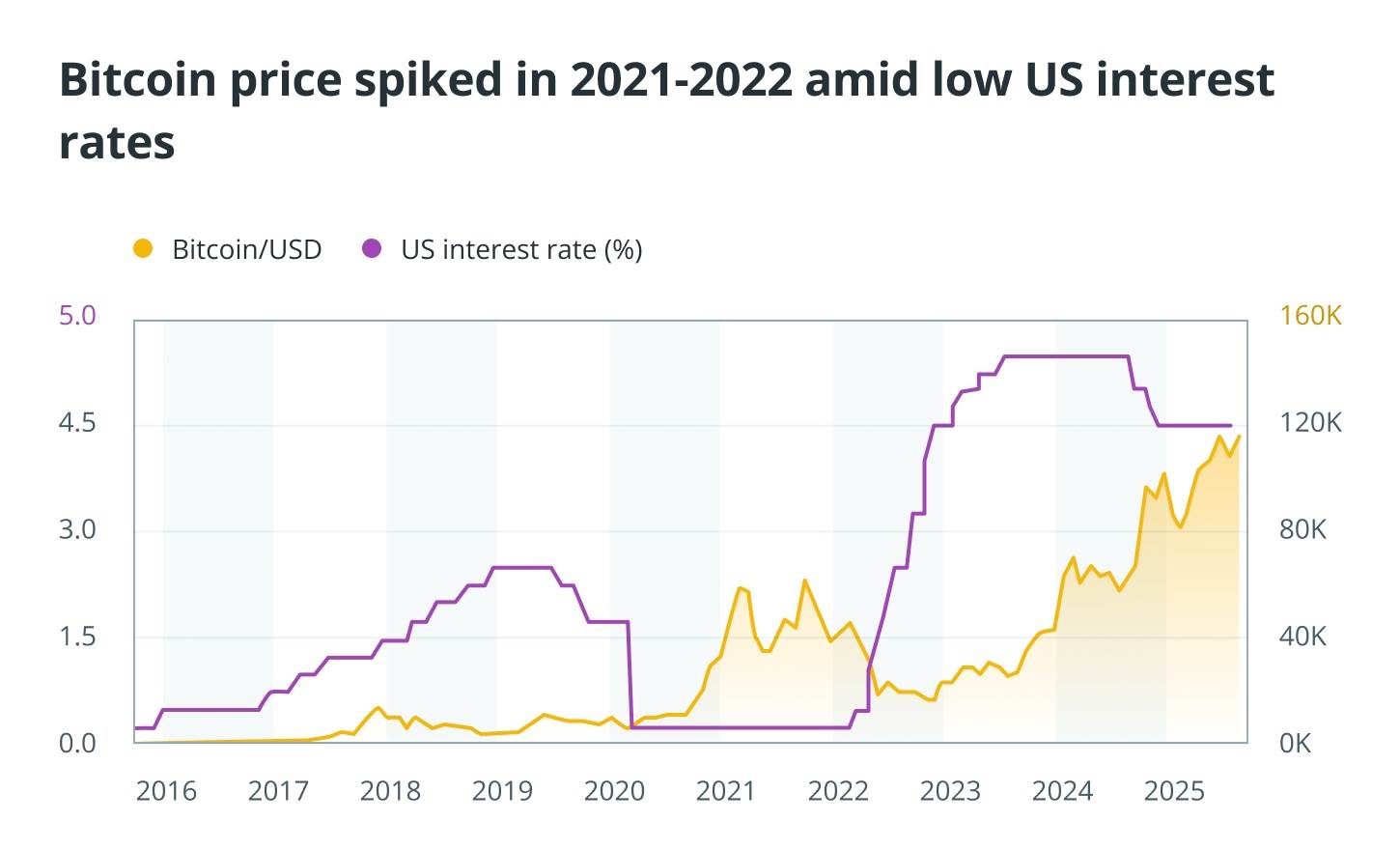
In the long term, cryptocurrency analysts expect this rate cut to be beneficial for the market, as the price of cryptocurrencies is closely related to liquidity cycles. After the COVID-19 crisis in 2020, interest rates were significantly lowered, and the cryptocurrency market experienced a boom at the beginning of 2021.
Some people suggest that prices are likely to experience a pullback in the short term. Nic Puckrin, founder and market analyst at Coin Bureau, said, “The main risk is that this trend has already been absorbed by the market… The market has placed high expectations, and there is a possibility of a pullback due to selling pressure after news breaks. When this happens, speculative currencies, especially memecoin, are particularly vulnerable to damage.”
The Federal Reserve initially planned to keep interest rates unchanged to address inflation, but the level of inflation remains higher than expected by the Fed. However, official reports show that employment data is poor. With President Donald Trump’s unpredictable economic policies, the U.S. job market has largely stagnated, which means the Fed needs to adjust its policies.
Lower interest rates mean that the cost of borrowing for housing, car, and business loans decreases. The Fed hopes this will promote employment.
France may revoke the EU passport for cryptocurrency companies.
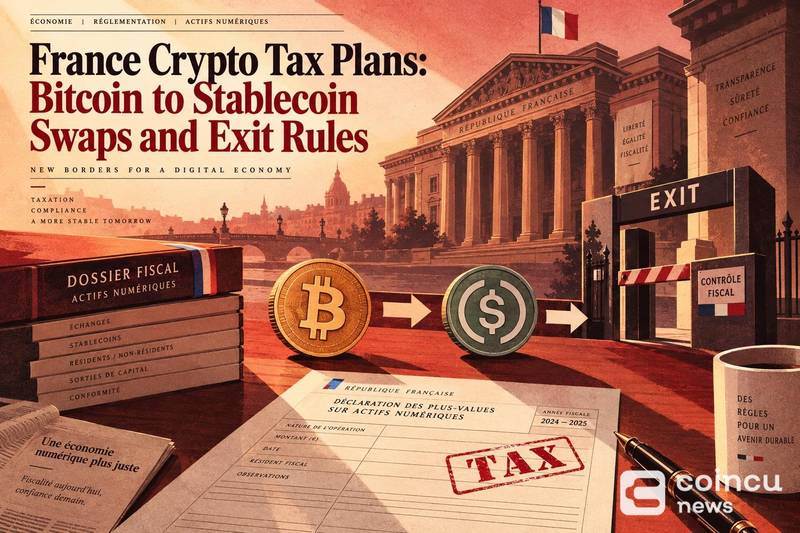
On Monday, France’s securities regulator, the Autorité des Marchés Financiers (AMF), expressed concerns about the unequal enforcement of laws related to the crypto asset market (MiCA).
MiCA is the EU’s flagship cryptocurrency legislation, setting requirements for stablecoin issuers, exchanges, and other virtual asset service providers. The law includes a travel clause that allows companies that have obtained the law in one EU member state to operate in all member states.
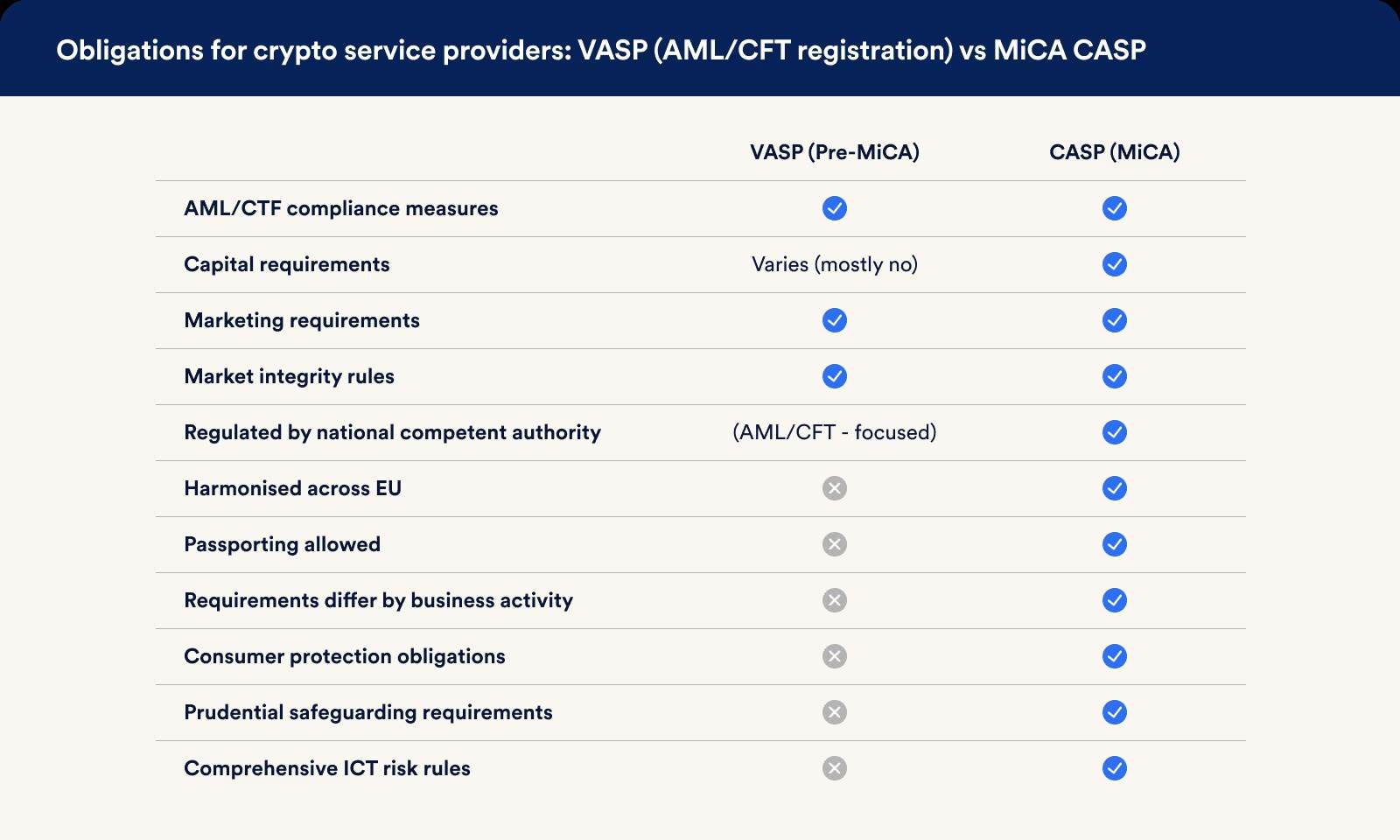
AMF is concerned that cryptocurrency companies may seek the most relaxed legal jurisdictions to operate in across Europe. AMF Chairperson Marie-Anne Barbat-Layani stated that these companies are “looking for regulatory loopholes across Europe, trying to find a weak point in the regulations so that they can obtain less stringent licensing requirements compared to other regions.”
Barbat-Layani acknowledged that this approach could seriously undermine trust in the European market. “This is highly complex legally, and it isn’t a good sign for a single market—it’s like using ‘atomic weapons’… but we still have this option.”
The statements from AMF’s officials reflect a growing trend. After Austria and Italy, France has become the third EU country to call on the European Securities and Markets Authority (ESMA) to take over the regulation of cryptocurrency companies.
After reviewing the authorization process for the Malta Financial Services Authority, it was found that its efforts were only “partially effective.” These three countries’ regulators hope to implement stricter controls.
Pakistan is opening up its doors to cryptocurrencies.
Last weekend, Pakistan’s Virtual Assets Regulatory Authority (PVARA) asked major cryptocurrency companies to submit proposals regarding their intention to enter the country’s digital asset market.
PVARA Chairman and Minister of State for Cryptocurrencies and Blockchain, Bilal bin Saqib, said that they hope for collaboration between world-leading cryptocurrency companies to create a transparent and inclusive digital finance future for Pakistan.
PVARA requires companies to submit a large amount of information, including a brief introduction, proposed services, security standards, revenue figures, management details of assets, existing licenses, as well as a business model for the Pakistani market.
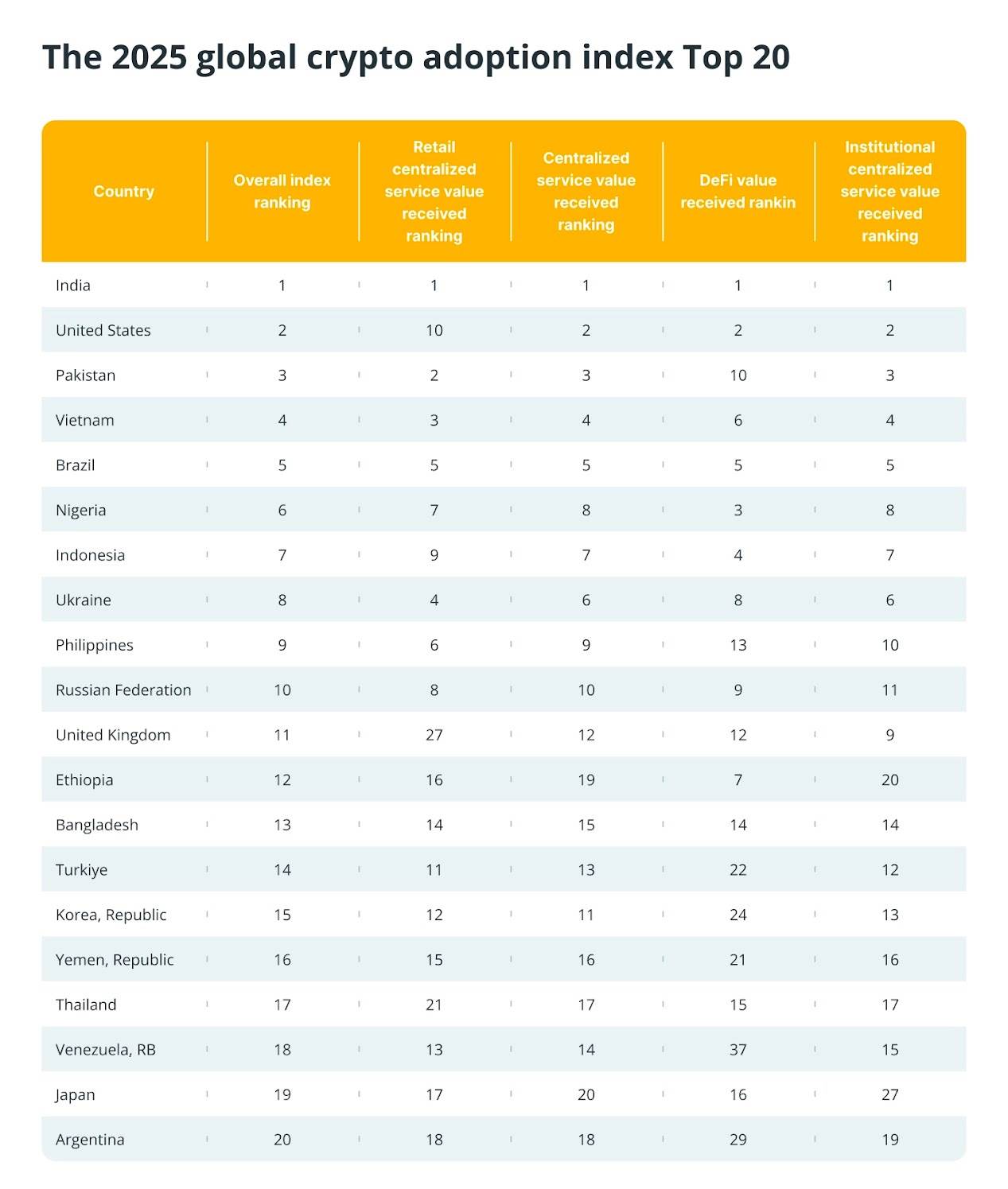
PVARA is an independent regulator established specifically for the digital asset industry, with the goal of promoting the development of the digital asset sector in Pakistan. According to Chainalysis’ 2025 Global Cryptocurrency Adoption Index, Pakistan ranks third in terms of global cryptocurrency adoption.
In Thailand, millions of bank accounts were frozen earlier this week, but Bitcoin users were surprisingly happy about this situation.
The National Anti-Crime Bureau launched a nationwide campaign to combat fraud, including the closure of the accounts of innocent suppliers and businesses. A total of approximately 3 million accounts were frozen, and the daily transfer limits for all bank customers were also restricted.
On Monday, Wisit Wisitsora-at, Minister of Digital Economy and Society, urged the public not to panic. He said that the suspension was temporary, and once any irregularities were identified, the restrictions would be lifted.
However, some people in the cryptocurrency community have proposed alternative solutions. Bitcoin supporter Daniel Batten said, “Thank you to BoT for providing free Bitcoin marketing services.”
Jimmy Kostro from the Thai Bitcoin Learning Center posted:
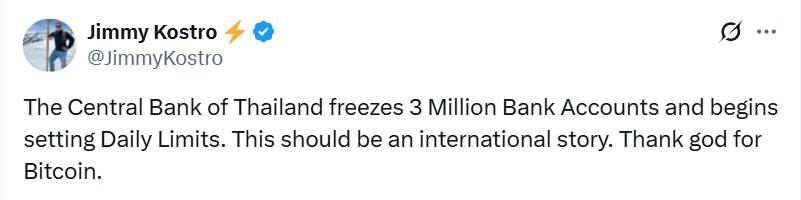
Although Bitcoin can provide a way to circumvent government payment restrictions, using cryptocurrencies for payments is currently illegal in Thailand. The Thai government has recently opened up a sandbox for cryptocurrency payments, aiming to revive its struggling tourism industry.
Australia has also relaxed the requirements for stable coin distributors.
On Wednesday, the Australian Securities and Investments Commission (ASIC) granted additional exemptions for stable coin distributors. Entities distributing stable coins issued by Australian Financial Services (AFS) license holders no longer need to hold an AFS license themselves.
The Australian Securities and Investments Commission stated that this measure is part of their efforts to support “responsible innovation in the rapidly developing digital asset sector, while ensuring adequate consumer protection measures are in place”.
Currently, this exemption applies only to one company.