Exchange Ranking
 Top Exchanges
 24h Volume Ranking
 Popularity Ranking
 Exchange BTC Balance
 Proof of Reserves
 Decentralized Exchanges
 Funding Rate
 Funding Heatmap
 Liquidation Data
 Max Pain
 Long/Short Ratio
 Whale L/S Ratio
 Binance/Okex/Huobi L/S
 Bitfinex Margin L/S
 ETF Tracker
 Solana ETF
 XRP ETF
 Hong Kong ETF
 Bitcoin Treasuries
 Crypto Reversal
 Ethereum Reserves
 HyperLiquid Wallet Analysis
 Hyperliquid Whale Watch
 Large Transactions
 On-chain Movement
 Bitcoin ROI
 Stablecoin Market Cap
 Options Analysis
 News
 Articles
 Economic Calendar
 Features
 Wallet
 Contract Calculator


 Security
 Collections
 Watchlist
 Following
Since entering the field of stock tokenization at the end of the year, Robinhood has been rapidly accelerating its transition towards becoming a true Web3 financial infrastructure platform. By integrating U.S. stocks onto the blockchain, it aims to overcome the challenges associated with traditional financial systems, such as slow settlement processes, high entry barriers, and limited trading hours. As a result, Robinhood has tokenized nearly 1,500 stocks, and the value of these tokens on the blockchain continues to grow. Additionally, the volume of market transactions is also increasing rapidly, making Robinhood a powerful new growth driver. With the rapid integration of RWA and blockchain technology, Robinhood’s approach serves as a model for traditional brokerages to transform their operations.
I. Robinhood’s Path to Success
1. Robinhood’s zero-comission strategy as a growth engine
Robinhood’s rise can be seen as a prime example of business model innovation in the fintech industry. Its founding team achieved this by implementing three key strategies: offering zero-comission trading, prioritizing mobile-friendly experiences, and creating a highly user-friendly brand image. This allowed them to break through the barriers of the mature financial market. Among these strategies, the zero-comission service was crucial for gaining a first-mover advantage. By eliminating explicit transaction costs, Robinhood significantly reduced the barriers for retail investors to enter the capital market, thereby enabling a rapid accumulation of assets among individual investors.
The “free mode” behind this strategy is based on a cleverly designed profit mechanism called PFOF. In this mechanism, Robinhood directs customers’ trading orders to high-frequency traders or market makers. These market makers earn profits from the spread between the buying and selling prices of the orders they execute, and they receive commissions from Robinhood in return. Although the PFOF model has sparked controversy at the regulatory level due to concerns about the quality of order execution and potential conflicts of interest, it does provide long-term financial viability for a zero-comission strategy. Through this mechanism, Robinhood has successfully transformed its initial growth opportunities into a stable asset base, laying the foundation for future expansion into comprehensive financial services. At the same time, Robinhood’s success has encouraged traditional financial giants to consider adopting zero-comission models. This has also served as a reference for other industries in their user growth strategies. For example, Web3 projects like Lighter are trying to replicate this low-friction, high-growth approach in the DeFi sector, using low-cost trading methods to achieve new levels of user expansion.
2. Robinhood might be the best example of a hybrid model combining cryptocurrency and stocks.
随着加密资产体系与股票代币化业务逐步融合,Robinhood成为币股融合市场重点关注的平台之一,也被视为币股融合趋势下最具代表性的Beta。其核心优势在于平台结构层面的独特定位,Robinhood在同一体系内整合了受监管的传统券商业务与加密资产交易功能,形成兼具合规属性与链上效率的混合型金融体系。在资产代币化方式上,Robinhood的代币化股票本质上是受监管托管资产的链上映射模式,即先由持牌主体合规持有真实资产,再在链上生成对应代币进行内部交易,从而在链上反映现实资产的持仓和变动。具体而言Robinhood由其持有立陶宛证券牌照的欧洲子公司作为合规主体,在传统金融体系内合法采购并托管美股等资产,再按对应托管规模在Arbitrum上生成股票代币,并将交易限定于自有平台内部。在运行过程中,每笔代币交易都会同步反映至链上账本,而后台系统则根据受监管账户中的实际持仓情况动态调整对应映射关系。未来,Robinhood亦计划将该套映射与结算体系逐步迁移至自研的Robinhood Chain,以提升系统的链上自主性并支持跨链流转。
In terms of business development, Robinhood’s advantages lie primarily in its ability to manage user structures and distribute products. Robinhood serves both traditional stock investors and those who trade cryptocurrency assets. This allows for the integration of tokenized stock products into existing account systems and trading scenarios, without the need for external traffic inflows or additional user education costs. This model of integrating multiple assets under one account reduces the challenges associated with launching tokenized stock products, making it easier to achieve large-scale adoption. In comparison with other platforms, Robinhood occupies a position between traditional crypto-native issuance platforms and large-scale brokerage firms. It differs significantly from both of them. Compared to other tokenization platforms that target professional or qualified investors, such as Backed, Robinhood focuses more on retail users. Its product design emphasizes usability, transaction frequency, and user experience. At the same time, while traditional brokerages have advantages in institutional services and professional trading, they are relatively cautious when it comes to issuing blockchain assets, settlement processes, and 24/7 trading capabilities. Therefore, tokenized stocks are not yet a core focus of their business strategy.
It should be noted that Robinhood’s efforts in tokenizing stocks have sparked regulatory concerns. In June 2025, when Robinhood launched stock tokens including those from OpenAI in the European market, OpenAI immediately announced that it had no partnership with Robinhood, and had not authorized the issuance of any form of tokenized equity. OpenAI also emphasized that these tokens did not represent any actual ownership of OpenAI’s shares. Following this announcement, regulators also raised objections, and Robinhood subsequently removed the related token products from the market. This indicates that Robinhood’s current tokenization efforts are still in a transitional stage, with significant issues regarding the mapping of actual equity, authorization for issuance, and legal status.
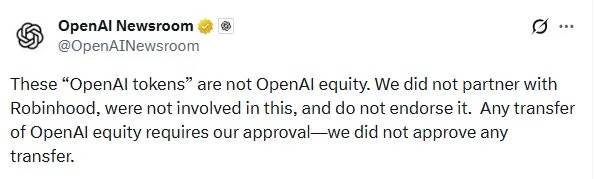
Source: OpenAINewsroom, https://x.com/OpenAINewsroom/status/1940502391037874606
3. Robinhood is entering the prediction market sector.
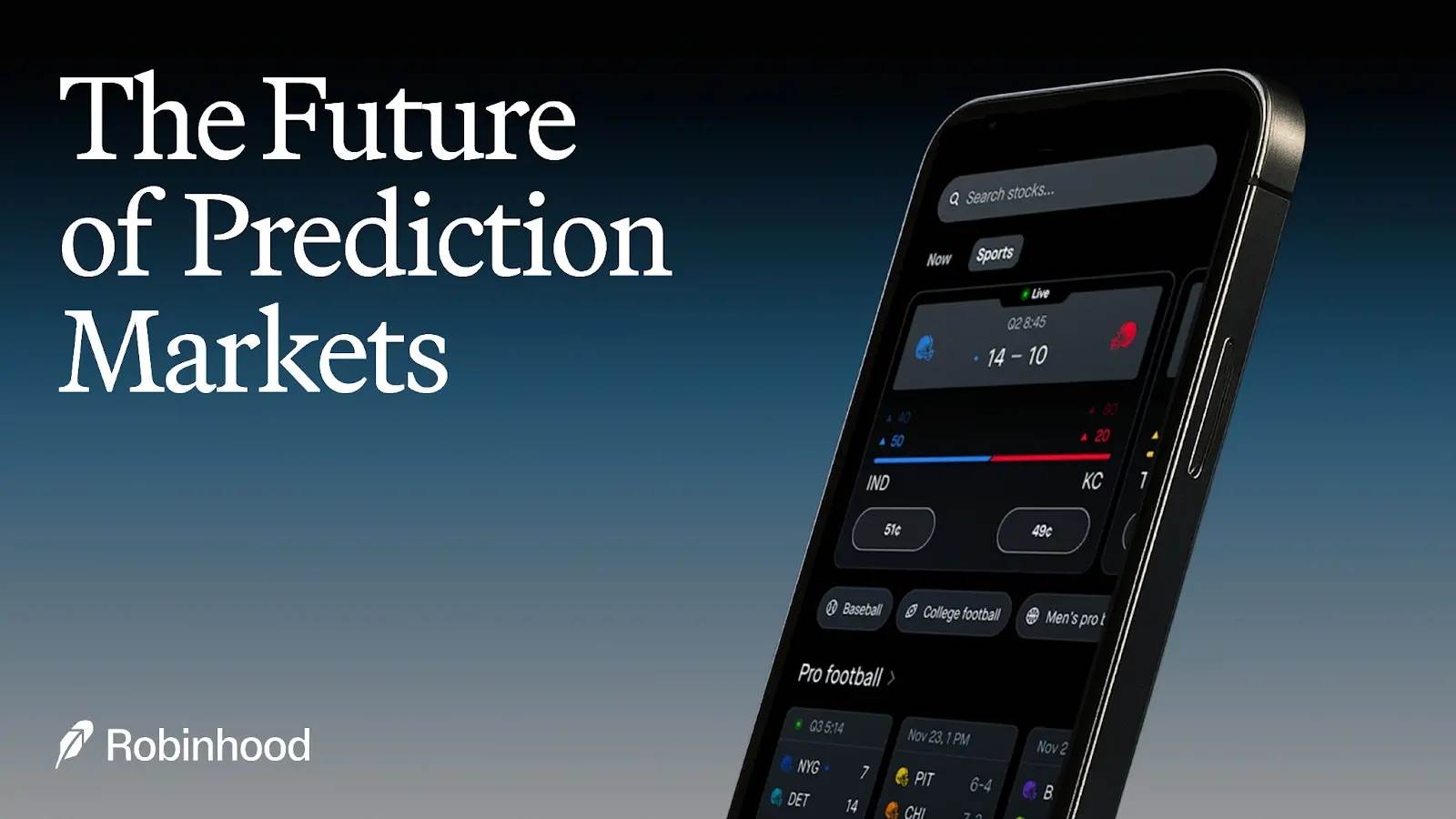
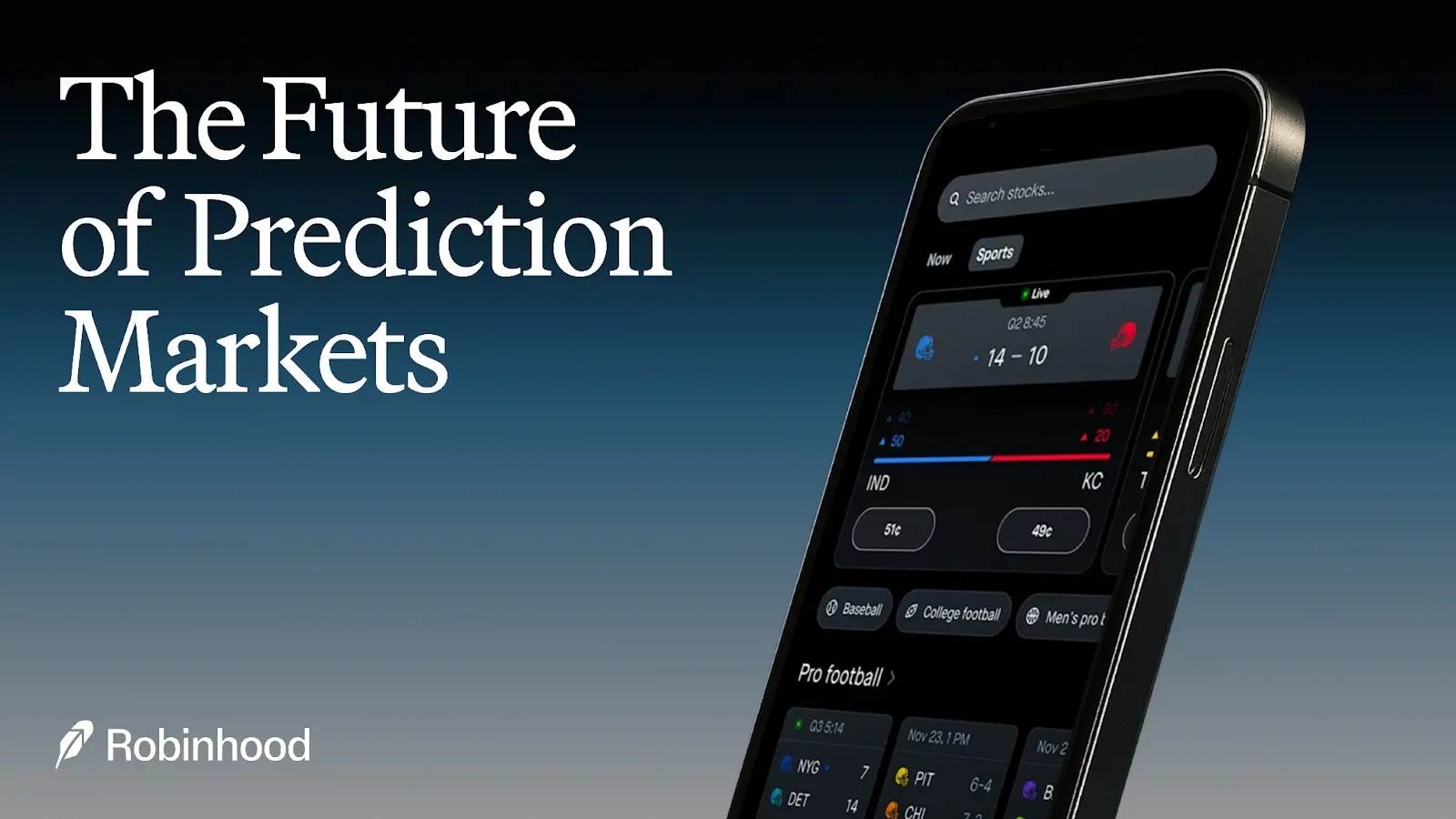
With the advancement of tokenized services, Robinhood has also begun to expand its business scope to include predictive markets. However, it doesn’t start by building infrastructure from top down. Instead, it starts with specific products like event contracts, gradually encouraging retail users to participate in such transactions. In October 2024, Robinhood officially launched event contracts through its Robinhood Derivatives platform. Users can now trade based on the outcome of U.S. presidential elections, with contract settlements determined by whether certain events occur or not. This marks Robinhood’s first attempt to expand retail trading scenarios beyond traditional asset price fluctuations, into the realm of pricing for macro events and uncertainties. In 2025, Robinhood will further expand the range of event contracts, extending this model to other scenarios such as sports events. Eventually, the predictive market will become an independent product within Robinhood’s retail trading suite. From a product logic perspective, these event contracts differ both from traditional gambling and standard financial derivatives. They resemble more of a type of probabilistic risk management tool that operates within regulatory frameworks.
After completing the initial verifications at the product level, Robinhood began to address issues related to trading and settlement capabilities in the prediction market sector. In November 2025, Robinhood announced its intention to acquire 90% of the shares of MIAXdx (formerly LedgerX) through a joint venture arrangement. MIAXdx is an institution regulated by the U.S. Commodity Futures Trading Commission (CFTC). It holds important qualifications such as being a Designated Contract Markets (DCM) provider and a derivatives settlement organization. This transaction still requires regulatory approval and is expected to be completed in early 2026. On this basis, Robinhood will leverage top-tier quantitative market makers like SIG to provide institutional-level liquidity support for contracts in the prediction market, thereby addressing common issues such as insufficient depth and excessive price differences. Additionally, in December 2025, Robinhood joined forces with leading prediction market platforms like Kalshi, crypto trading platforms like Crypto.com and Coinbase, as well as sports betting platform Underdog, to form an industry alliance dedicated to promoting compliance within the prediction market sector under regulatory frameworks. On December 17th, Robinhood’s CEO stated, “We are at the early stages of a significant cycle in the prediction market sector. As this sector develops, we can expect continuous growth in user adoption and trading volume. The annual trading volume could reach trillions of dollars.”
Source: Robinhood, https://robinhood.com/us/en/newsroom/robinhood-prediction-markets-joint-venture/
II. Robinhood Business Data
1. Comprehensive business data of Robinhood
According to Robinhood's Q3 2025 financial reports, Robinhood achieved net revenues of approximately $127 million, a year-on-year increase of around 100%. Among these revenues, trading revenues increased by 129% to $730 million, primarily due to crypto-related revenues of $268 million (an increase of over 300%), options revenues of $304 million (a 50% increase), and stock revenues of $86 million (a 132% increase). Net interest revenues also increased by 66% to $456 million, mainly thanks to the growth of interest-generating assets. However, this increase was partially offset by lower short-term interest rates. Other revenues increased by 100% to $88 million, mainly due to the increase in subscribers for Robinhood Gold. During this period, the total assets on the Robinhood platform increased by 119% to approximately $333 million, indicating a rapid expansion in the size of users' assets. This shows that Robinhood's revenue sources have evolved from relying solely on transaction commissions and order flow payments to including interest income, crypto trading, subscription services, and derivatives, resulting in a more diversified business structure.
2. Data on Robinhood’s stock tokenization efforts
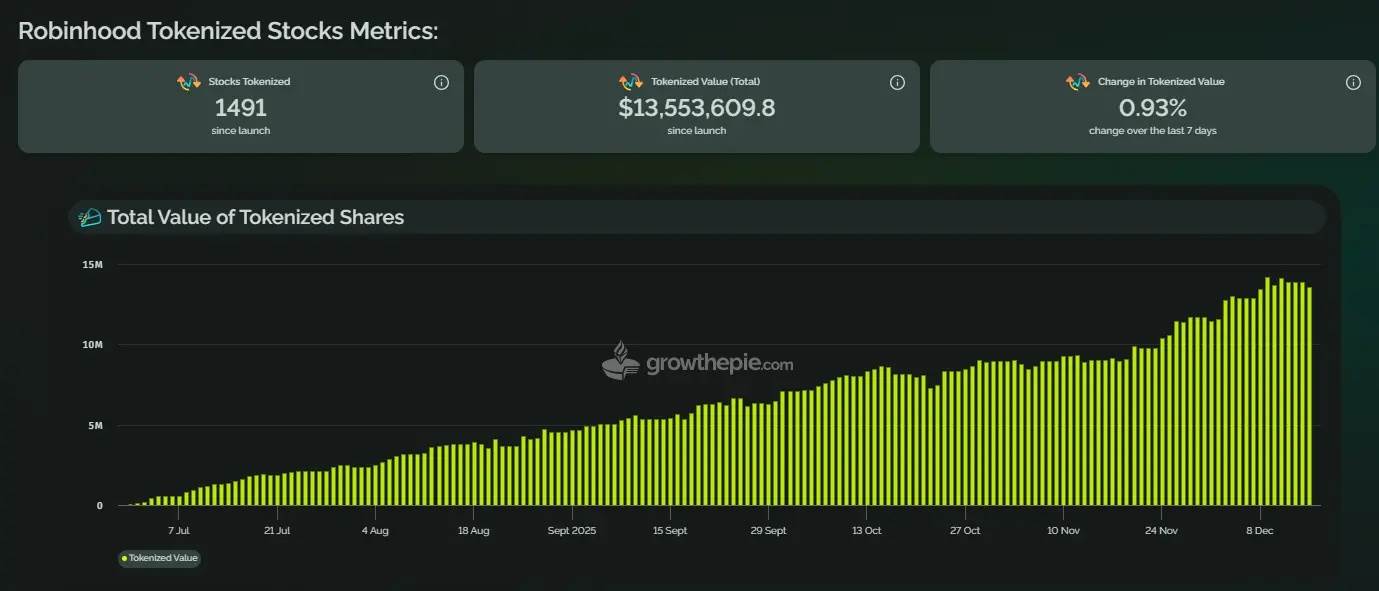
As of now, Robinhood has tokenized 1,491 stocks, with the total market value of these tokenized stocks reaching approximately $13.55 million. In the past seven days, the total value of these tokens has increased by 0.93%. Since the launch of the stock tokenization service, the total value of tokenized assets has shown a steady upward trend, particularly with recent accelerated growth, indicating that there is continued demand for Robinhood’s tokenized stock products in the market.
Source: growthepie, https://www.growthepie.com/quick-bites/robinhood-stock
Among these assets with attached tokens, the top five tokens are those belonging to technology giants and popular companies that enjoy high liquidity and significant market attention. Here is detailed information about the top five tokens:
a. YieldMax MSTR Option In.(MSTY): The tokenized value of this asset is approximately $1.6 million. This asset ranks first in terms of total tokenized value, indicating strong market demand for financial instruments related to MicroStrategy, especially those related to Bitcoin. Its stock price is $31.76, and 50,272 shares have been tokenized. The number of shares has increased by 47.8% over the past seven days.
b. Alphabet Class A(GOOGL): The tokenized value of this asset is $1.06 million. As a Class A stock of a technology giant, its tokenized value ranks second, reflecting the continued attractiveness of large tech companies. Its stock price is $308.22, and 3,448 shares have been tokenized. However, the number of shares has decreased by 6.1% over the past seven days.
c. Microsoft(MSFT): The tokenized value of this asset is $790,000. Microsoft ranks third in terms of tokenized value. Its stock price is $474.82, and 1,669 shares have been tokenized. The number of shares has increased by 1.0% over the past seven days.
d. BitMine Immersion Techn.(BMNR): The tokenized value of this asset is $720,000. This asset ranks fourth, with a stock price of $30.95. 23,312 shares have been tokenized, and the number of shares has decreased by 4.3% over the past seven days.
e. Meta Platforms(META): The token value is currently $660,000. As another major tech giant, Meta Platforms ranks fifth in terms of token value. Its stock price is $647.51, and there are 1,029 tokens issued for each share of stock. The number of shares has increased by 1.7% over the past 7 days.
3. Robinhood’s prediction market business has grown rapidly since its launch in October 2024. It has become one of the fastest-growing businesses within Robinhood, both in terms of user adoption and revenue. According to Robinhood’s monthly operational data report for November 2025, the volume of contracts traded in the prediction market reached 3 billion contracts in November, a nearly 20% increase from the 2.5 billion contracts in October. This data indicates that the prediction market platform is becoming more active on a monthly basis, and it also shows that retail investors are becoming more involved in these event-driven assets. Conclusion
Looking at Robinhood's continuous efforts in areas such as stock tokenization, crypto assets, and predictive markets, it is clear that its core strategy isn't simply about blind expansion into new markets. Instead, it involves a systematic expansion beyond the boundaries of the platform's capabilities. Robinhood is using a unified account system, compliant underlying technologies, and Web3 technology frameworks to integrate assets and risk management mechanisms that were previously separated by different regulatory and technical systems into a single framework. This means that Robinhood is evolving from a traditional securities trading platform into a more versatile financial service provider. Robinhood's practices also provide a real-world example of how traditional finance can be integrated with blockchain technology. By promoting asset tokenization and other innovative trading methods within existing regulatory frameworks, Robinhood has effectively tested the feasibility of blockchain technology in managing securitized assets and involving large-scale retail participants. This process reflects ongoing negotiations between institutional norms and technological advancements. This model aims to leverage the efficiency of blockchain technology while ensuring control over key issues such as ownership determination, risk disclosure, and regulatory compliance. As financial infrastructure continues to digitalize, these explorations based on real-world regulatory environments will become important indicators for assessing the feasibility of bringing traditional assets onto the blockchain.