Exchange Ranking
 Top Exchanges
 24h Volume Ranking
 Popularity Ranking
 Exchange BTC Balance
 Proof of Reserves
 Decentralized Exchanges
 Funding Rate
 Funding Heatmap
 Liquidation Data
 Max Pain
 Long/Short Ratio
 Whale L/S Ratio
 Binance/Okex/Huobi L/S
 Bitfinex Margin L/S
 ETF Tracker
 Solana ETF
 XRP ETF
 Hong Kong ETF
 Bitcoin Treasuries
 Crypto Reversal
 Ethereum Reserves
 HyperLiquid Wallet Analysis
 Hyperliquid Whale Watch
 Large Transactions
 On-chain Movement
 Bitcoin ROI
 Stablecoin Market Cap
 Options Analysis
 News
 Articles
 Economic Calendar
 Features
 Wallet
 Contract Calculator


 Security
 Collections
 Watchlist
 Following
Recently, the Federal Reserve announced the purchase of $40 billion in short-term government bonds. This seemingly routine action has sparked significant reactions in the market. Many macro analysts believe that this may not be simply a measure to manage liquidity, but rather a sign of deeper institutional changes. TS Lombard even suggested that the boundaries between the U.S. Treasury and the Federal Reserve are becoming blurred, with signs of “substantial consolidation” occurring within the balance sheets of both institutions. Against the backdrop of high interest rates, persistent fiscal deficits, and increasing pressure from policy coordination, the redistribution of monetary and fiscal powers may be quietly reshaping the global expectations regarding the dollar, risk assets, and even cryptocurrency assets.
I. Policy Shifts
● On December 11, the Federal Reserve announced an initiative to begin purchasing $40 billion in treasury bonds this month, with plans to gradually reduce the amount purchased later next year. On the surface, this seems to be a technical measure to address the expansion of the Treasury’s general fund and to manage interest rates in the money market.
● However, Blitz suggests a more profound intention behind this move: the Federal Reserve is essentially providing financial support for the Treasury’s spending plans, ensuring that government financing won’t be disrupted by fluctuations in interest rates.
Under this logic, the traditional role of the bond market in signaling “overfunding” warnings to governments through changes in interest rates is becoming ineffective.
II. Structural Reforms
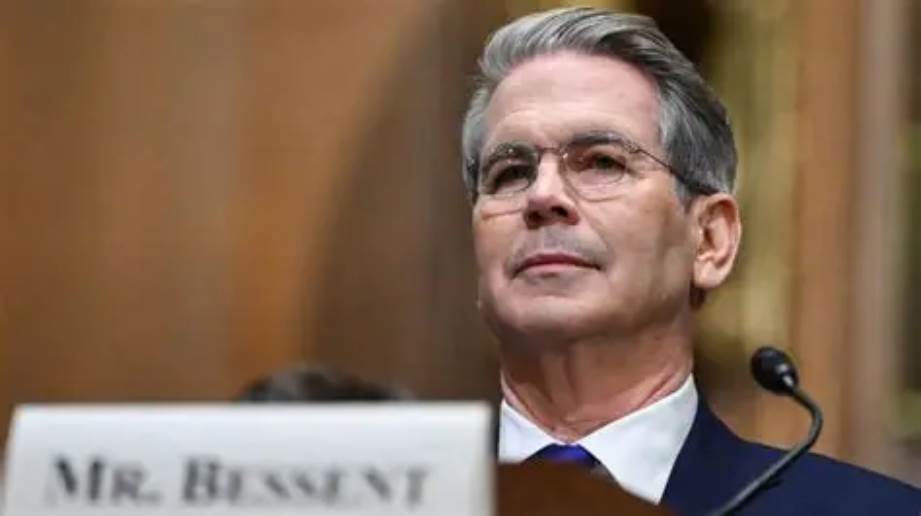
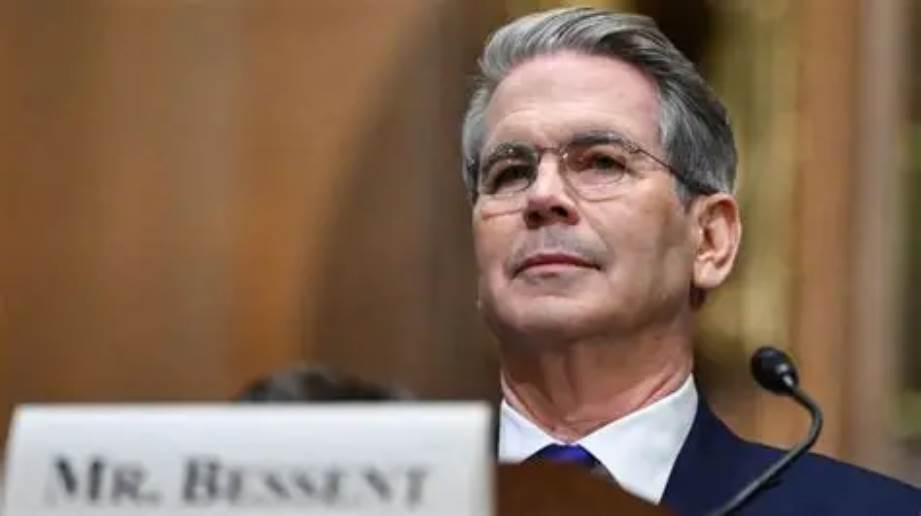
● Behind this policy shift lies a new power structure that is currently emerging. Analysts suggest that once potential candidates such as Kevin Hassett, former Trump economic advisor, become part of the Federal Reserve, Bessen will become their actual “boss”. Blitz described how a “single presidential authority model” is becoming a reality, with daily policy coordination being handled directly by Bessen.
● American media reported in July that a list of potential candidates for the position of Federal Reserve chairman under Trump’s administration was listed. Hassett was considered the top candidate, and Bessen himself was also mentioned. Previously, Bessen publicly suggested the establishment of a “shadow chairman” to counter the current chairman, Powell.
● Under this structure, the core goal of the Treasury Department is clear and straightforward: to obtain cheap financing costs. The strategy involves injecting liquidity into the short-term market, while restricting long-term bond issuance to lower the government’s borrowing costs.
III. Historical Red Lines
● The independence of the Federal Reserve isn’t innate; it has evolved over nearly a century of institutional construction and political negotiations. In the 1970s, Arthur Burns, then chairman of the Federal Reserve, cut interest rates significantly under Nixon’s pressure. This was seen as one of the main reasons for the severe inflation in the United States.
● Today, signs of political interference are even more apparent. Trump openly called for lowering the federal funds rate below 1%, claiming that this would save the government trillions of dollars in debt costs.
● 这种将央行政策工具化的倾向已经引发华尔街担忧。摩根大通首席执行官杰米·戴蒙警告,干预美联储独立性将产生负面后果。
四、内部纷争
● 美联储内部对这一趋势存在明显分歧。达拉斯联储主席洛丽·洛根和美联储理事米歇尔·鲍曼从“哲学角度”强烈反对资产负债表合并的观点。
● 他们主张恢复短期市场的波动性,让市场信号重新发挥作用。布利茨认为,这种哲学立场可能最终向“政治现实和实际操作”让步。
● 值得注意的是美联储官方对未来利率的预测变化。布利茨指出,与9月相比,预计12个月后联邦基金利率低于3.5%的FOMC成员数量已从11人跃升至16人。
● 美联储12月发布的经济预测摘要显示,到2026年底核心PCE通胀预期中值为2.5%,低于9月预测的2.6%,呈现缓慢下降趋势。
五、通胀警钟
● 布利茨报告中最严厉的警告指向未来通胀。他预测,旨在为政府提供廉价资金的策略将导致2026年通胀水平走高。尽管美联储目前对核心通胀的预期有所下调,但随着财政政策刺激与货币政策配合,“通胀故事将在未来一两年内重新占据主导地位”。
● The report outlines a two-phase scenario: in the short term, the economy may experience weakness, leading the Federal Reserve to lower interest rates. However, in the long term, “the overall trend is inflationary”.
● Blitz concluded that unless economic conditions prove to be weaker than expected by early 2025, inflation will resume by “late 2026 or 2027”.
VI. Market Pricing
● The gold market has already responded to potential changes in monetary policy. In December, the Federal Reserve lowered its policy rate to the range of 3.50%-3.75%, reducing the opportunity cost of holding gold. Additionally, the Fed’s decision to purchase approximately $40 billion in short-term Treasury bonds to alleviate liquidity pressures also supported gold prices.
● Market analysts believe that, given the confirmed interest rate cuts and relaxed market liquidity, gold’s long-term “pricing anchor” tends to be driven by falling real interest rates and increasing demand for safe assets. The continuous buying by central banks around the world further reinforces the gold market’s characteristics of high volatility and rising price levels.
VII. Future Dynamics
● There will be changes at the helm of the Federal Reserve. Current Chairman Powell’s term expires in May 2025, and a new leadership will take over. Blitz believes that Powell’s speeches regarding the new policy framework have lost their significance, as the transition of leadership will bring about new policy directions.
● The economic team under the Trump administration is seeking a “more compliant” chairman of the Federal Reserve, in order to achieve the goal of significantly lowering interest rates before the midterm elections and stimulating the economy. If this trend of political-driven monetary policy becomes reality, it could lead to a repeat of the “hyperinflation” that occurred in the 1970s.

Blitz described the predictions based on conventional fiscal and monetary policies as “precarious”.
Gold prices have reached historical highs, and markets are expressing their uncertainty about future currency values through capital voting. When Federal Reserve Chairman Powell’s speeches are considered by analysts to be “of little significance”, and when the Secretary of the Treasury may become the true “shadow chairman”, the fundamental rules of the financial market are quietly changing under pressure that seems to be shifting like tectonic plates.
The outcome of this transformation will determine the direction of global capital over the next decade.