Exchange Ranking
 Top Exchanges
 24h Volume Ranking
 Popularity Ranking
 Exchange BTC Balance
 Proof of Reserves
 Decentralized Exchanges
 Funding Rate
 Funding Heatmap
 Liquidation Data
 Max Pain
 Long/Short Ratio
 Whale L/S Ratio
 Binance/Okex/Huobi L/S
 Bitfinex Margin L/S
 ETF Tracker
 Solana ETF
 XRP ETF
 Hong Kong ETF
 Bitcoin Treasuries
 Crypto Reversal
 Ethereum Reserves
 HyperLiquid Wallet Analysis
 Hyperliquid Whale Watch
 Large Transactions
 On-chain Movement
 Bitcoin ROI
 Stablecoin Market Cap
 Options Analysis
 News
 Articles
 Economic Calendar
 Features
 Wallet
 Contract Calculator


 Security
 Collections
 Watchlist
 Following
 BNB
 BTC
 ETH
 JTO
 LDO
 LINK
 SOL
 TRX
 ZEC
 XPL
在比特币现货ETF持续吸金、机构配置比例稳步抬升的背景下,Grayscale最新展望认为,加密市场的上升周期并未在2025年结束,而是有望延续至2026年。从历史周期、链上活跃度和宏观流动性来看,资金正从“单一押注”转向更系统化的主题投资,包括AI+加密、现实世界资产代币化、稳定币支付、模块化基础设施等方向。市场不再只赌行情,而是在为下一阶段的长期叙事提前布局。
一、2026年数字资产展望:机构时代的曙光
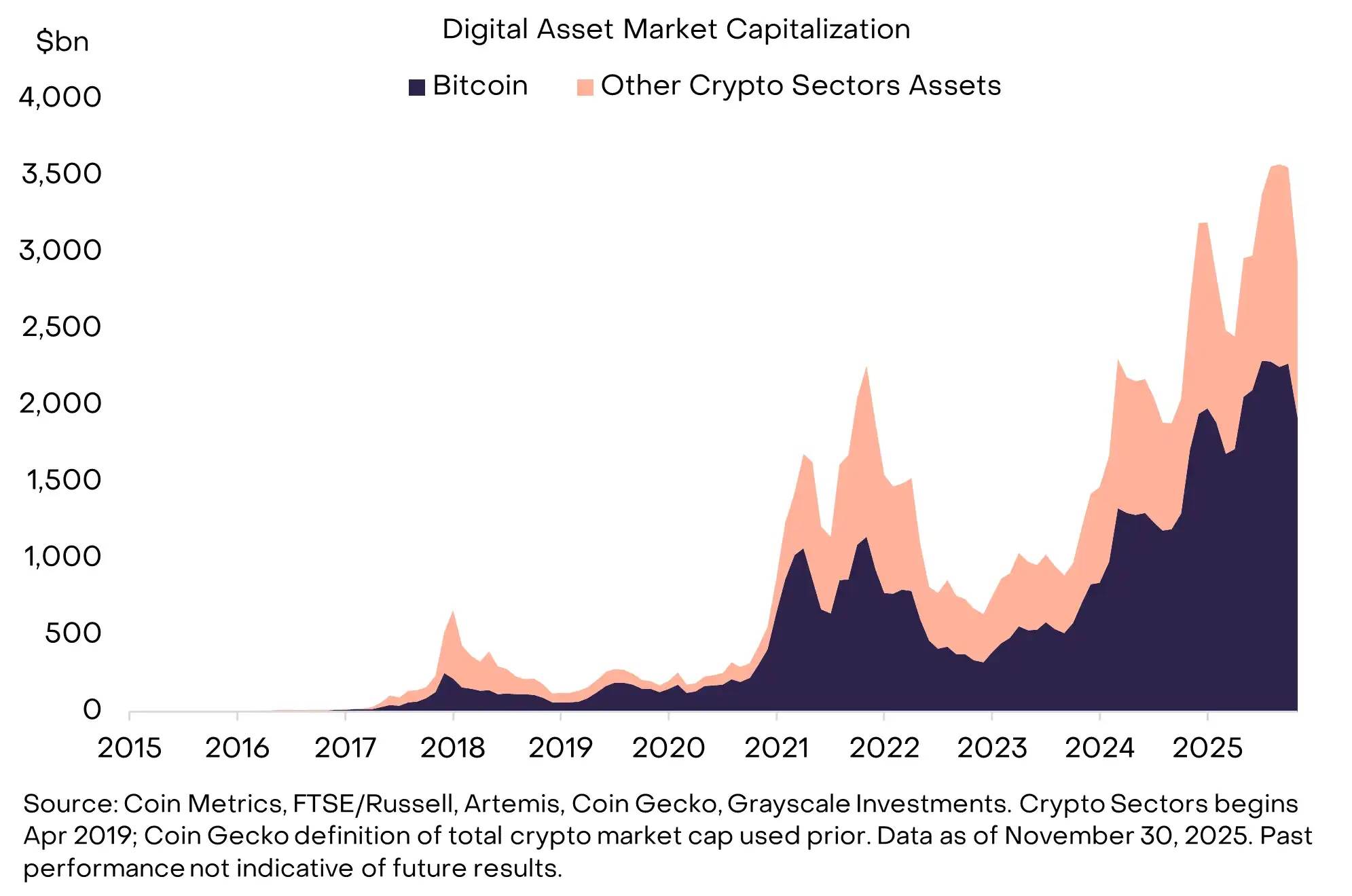
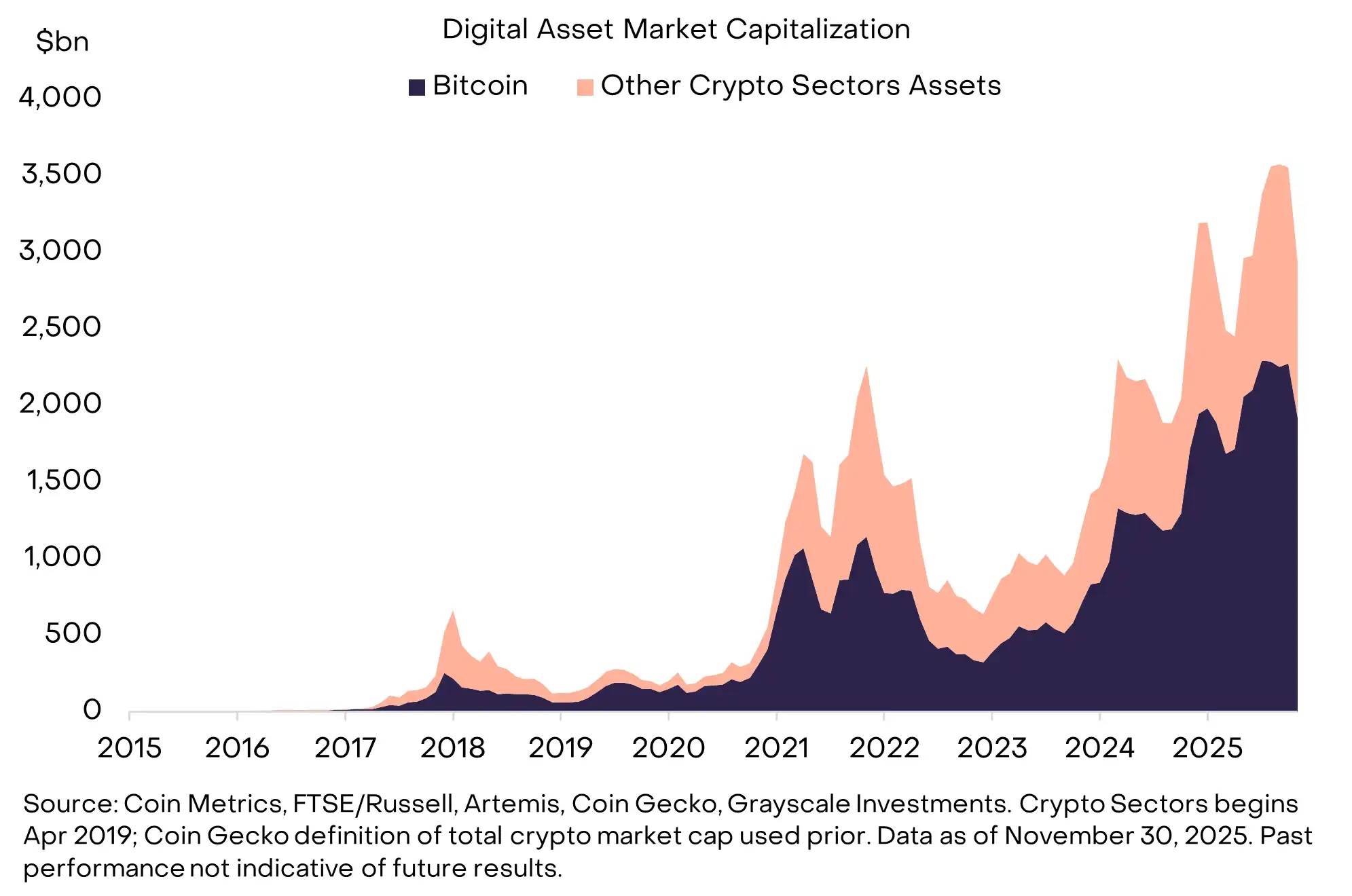
十五年前,加密货币还只是一项实验:当时只有一种资产(比特币),市值约为100万美元。如今,加密货币已发展成为一个新兴产业和中等规模的另类资产类别,包含数百万种代币,总市值约为3万亿美元(见图表1)。目前,主要经济体中更加完善的监管体系正在加深公共区块链与传统金融的融合,并推动长期资本流入市场。
图表1:加密货币如今已成为中等规模的另类资产类别
Since the inception of cryptocurrencies, their value has experienced four significant cyclical declines, with each decline occurring every four years on average (see Chart 2). In three of these cases, the cyclical peaks in value occurred within one to 1.5 years after the Bitcoin halving event, which happens every four years. The current bull market has lasted for over three years, and the last halving event took place in April 2024, more than a year and half ago. Therefore, some market participants believe that Bitcoin’s price may have reached its peak in October, and 2026 will be a challenging year for cryptocurrencies.
Chart 2: The rise in valuation in 2026 would mark the end of the “four-year cycle” theory.
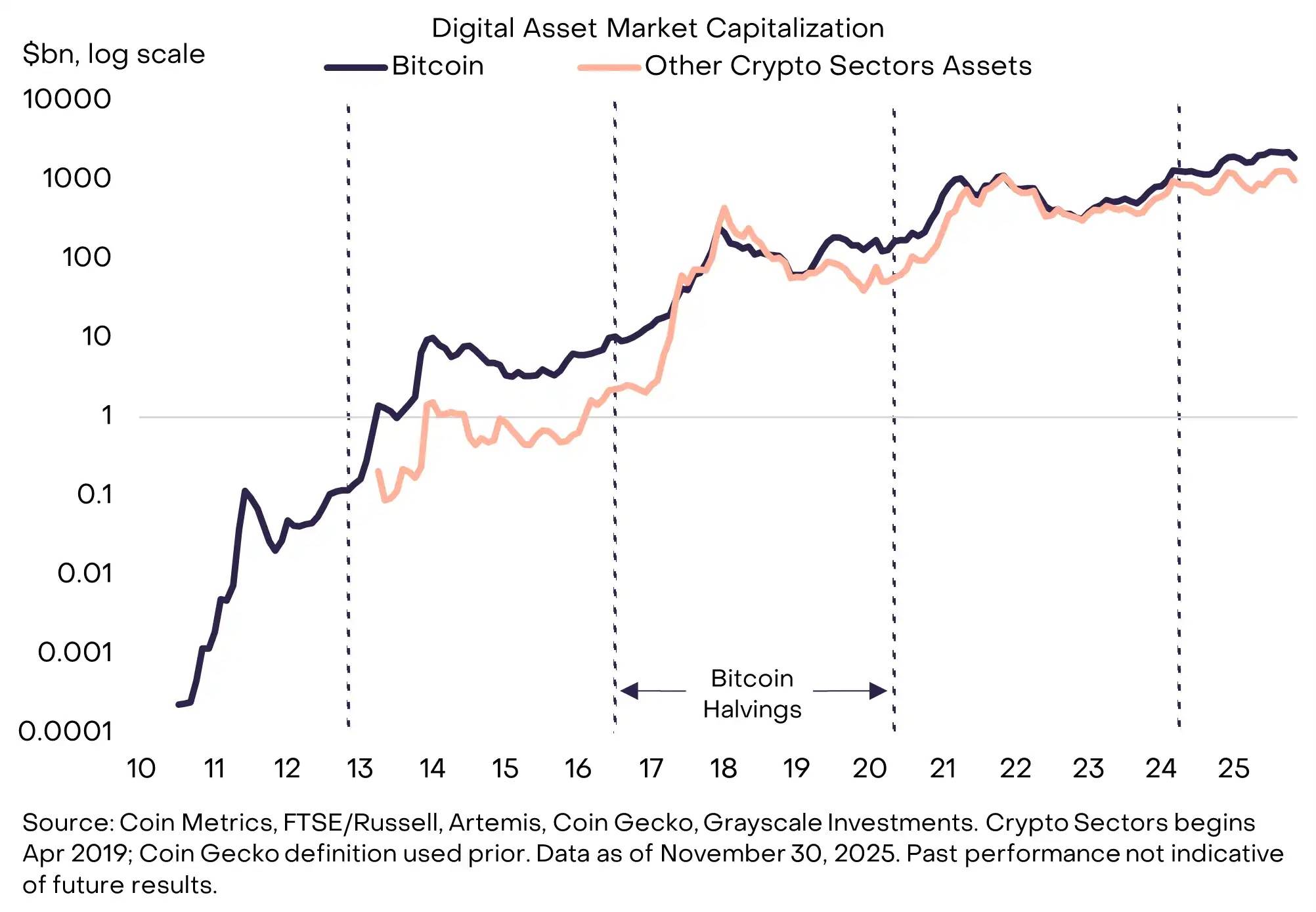
Grayscale believes that the crypto asset class is currently in a continuous bull market, and 2026 will mark the end of this four-year cycle. We expect that the valuations of all six major cryptocurrency sectors will increase in 2026, and we believe that Bitcoin’s price could exceed previous highs during the first half of 2026.
Our optimism is based on two main pillars:
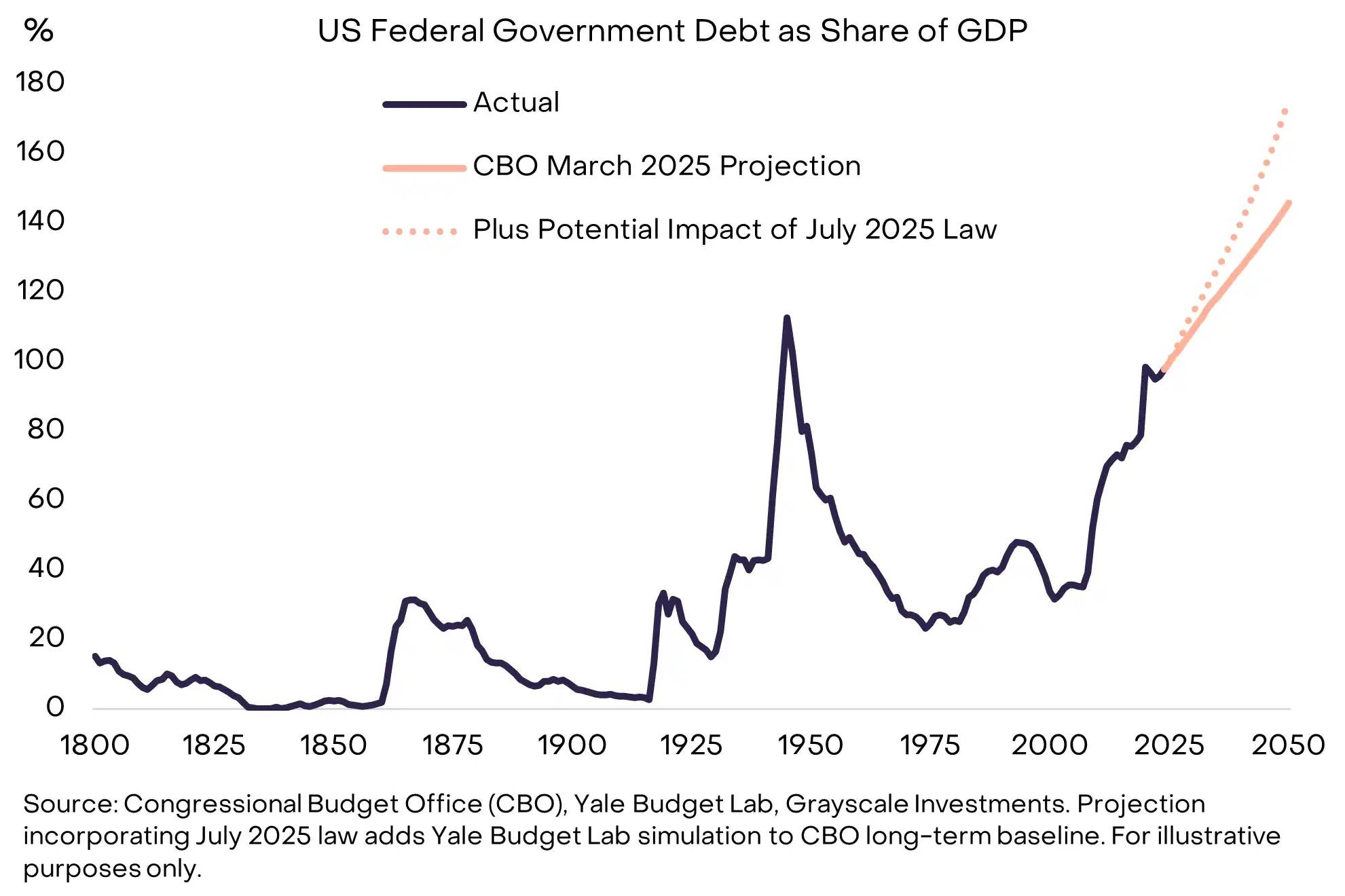
Firstly, the market’s demand for alternative means of value storage will continue to exist. Bitcoin and Ethereum are the two most valuable cryptocurrencies, and can be considered as scarce digital commodities and alternative monetary assets. Legal tender (as well as assets denominated in legal tender) faces additional risks due to high government debt levels and their potential long-term impact on inflation (see Chart 3). Scarce commodities—whether physical gold and silver or digital currencies like Bitcoin and Ethereum—can serve as components in investment portfolios to hedge against the risks associated with legal tender. We believe that as the risk of legal tender depreciation continues to rise, demand for Bitcoin and Ethereum in investment portfolios will also grow.
Chart 3: The US debt crisis raises questions about the credibility of low inflation levels.
Secondly, clear regulatory frameworks are driving institutional investment in public blockchain technologies. It’s easy to forget that until this year, the U.S. government was still investigating and/or litigating many leading companies in the cryptocurrency industry, including Coinbase, Ripple, Binance, Robinhood, Consensys, Uniswap, and OpenSea. Even today, exchanges and other cryptocurrency intermediaries still lack clear guidelines for operating in the spot market.
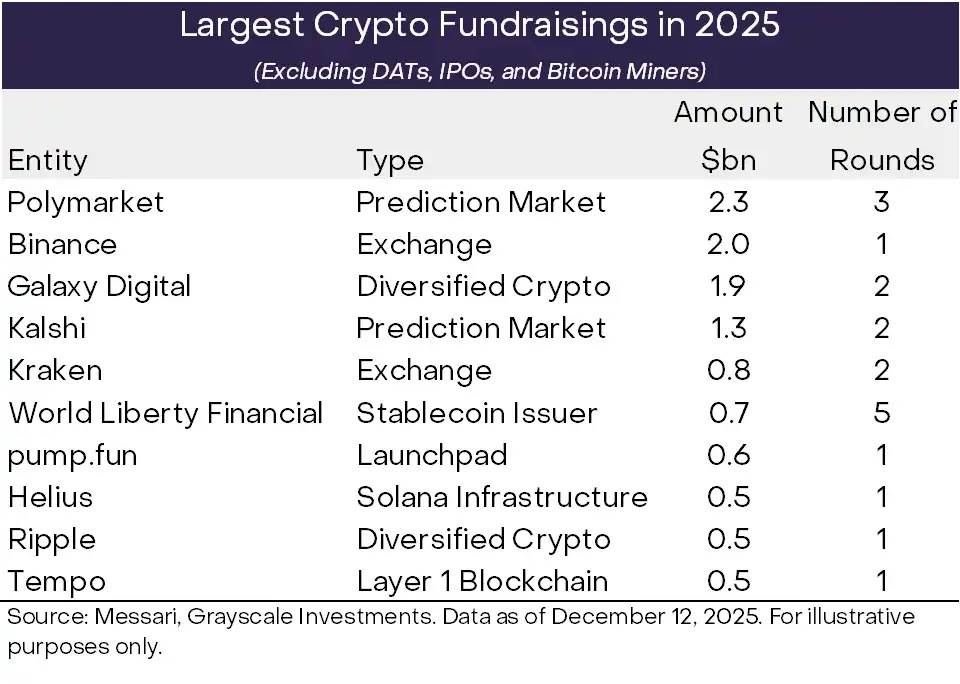
这艘船一直在缓慢转向。2023年,Grayscale赢得了针对美国证券交易委员会(SEC)的诉讼,为现货加密ETP铺平了道路。2024年,比特币和以太坊现货ETP上市。2025年,国会通过了关于稳定币的《GENIUS法案》,监管机构也转变了对加密货币的态度,与业界合作提供明确的指导,同时继续关注消费者保护和金融稳定。Grayscale预计,2026年国会将通过两党共同支持的加密货币市场结构立法,这很可能巩固基于区块链的金融在美国资本市场的地位,并促进机构的持续投资(见图表4)。
图表4:融款额增加可能是机构信心增强的迹象
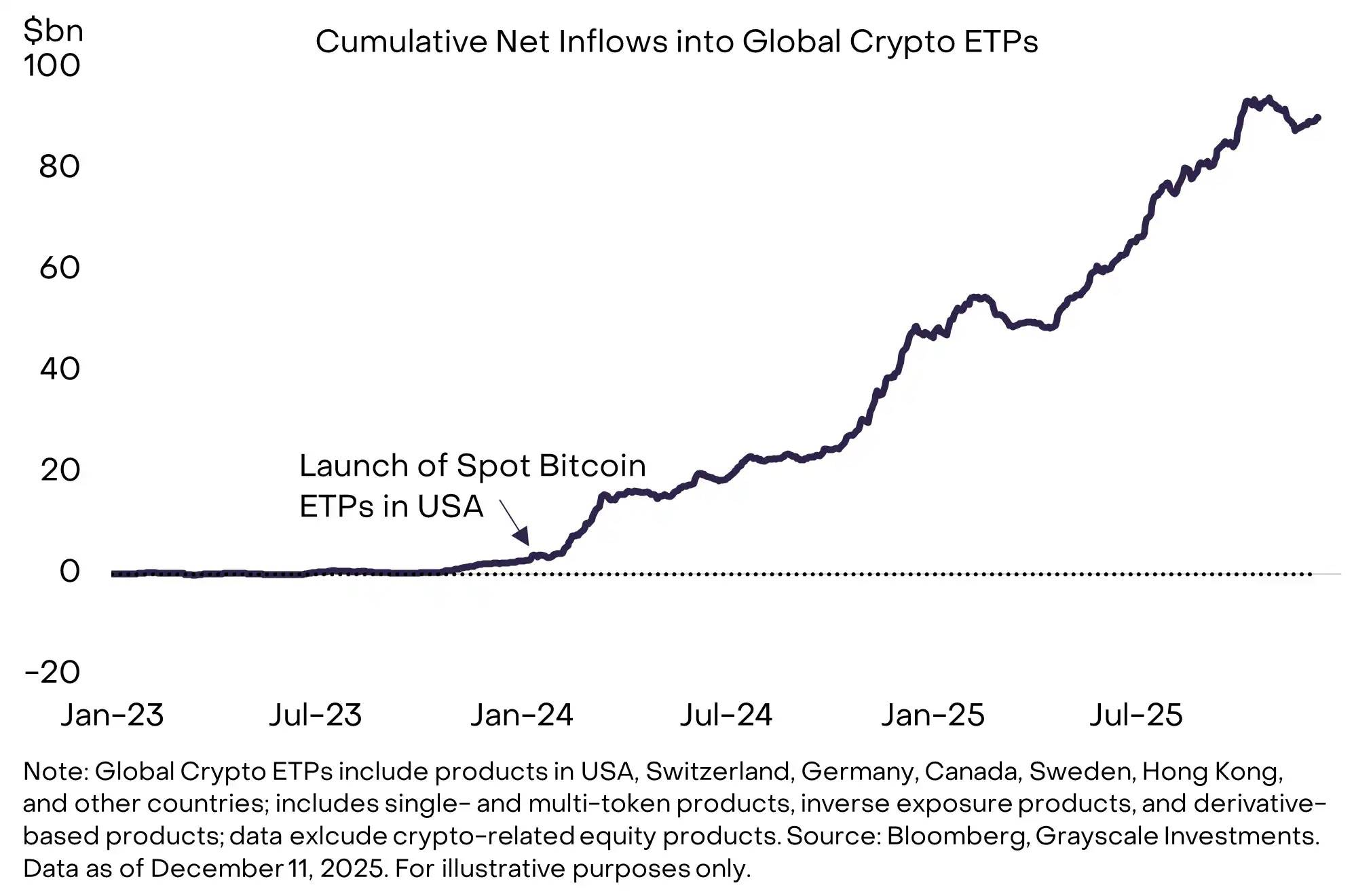
我们认为,流入加密生态系统的新资本很可能主要来自现货ETP。自2024年1月比特币ETP在美国推出以来,全球加密ETP的净流入已达870亿美元(见图表5)。尽管这些产品早期取得了成功,但将加密货币纳入主流投资组合的进程仍处于起步阶段。Grayscale估计,美国受托管理的财富中,只有不到0.5%配置于加密资产类别。随着更多平台完成尽职调查、完善资本市场假设并将加密货币纳入模型投资组合,这一数字有望增长。除了受托管理的财富之外,一些先行者已在其机构投资组合中采用了加密货币ETP,包括哈佛管理公司和穆巴达拉(阿布扎比主权财富基金之一)。我们预计,到2026年,这一名单将显著增长。
图表5:现货加密货币ETP的持续资金流入
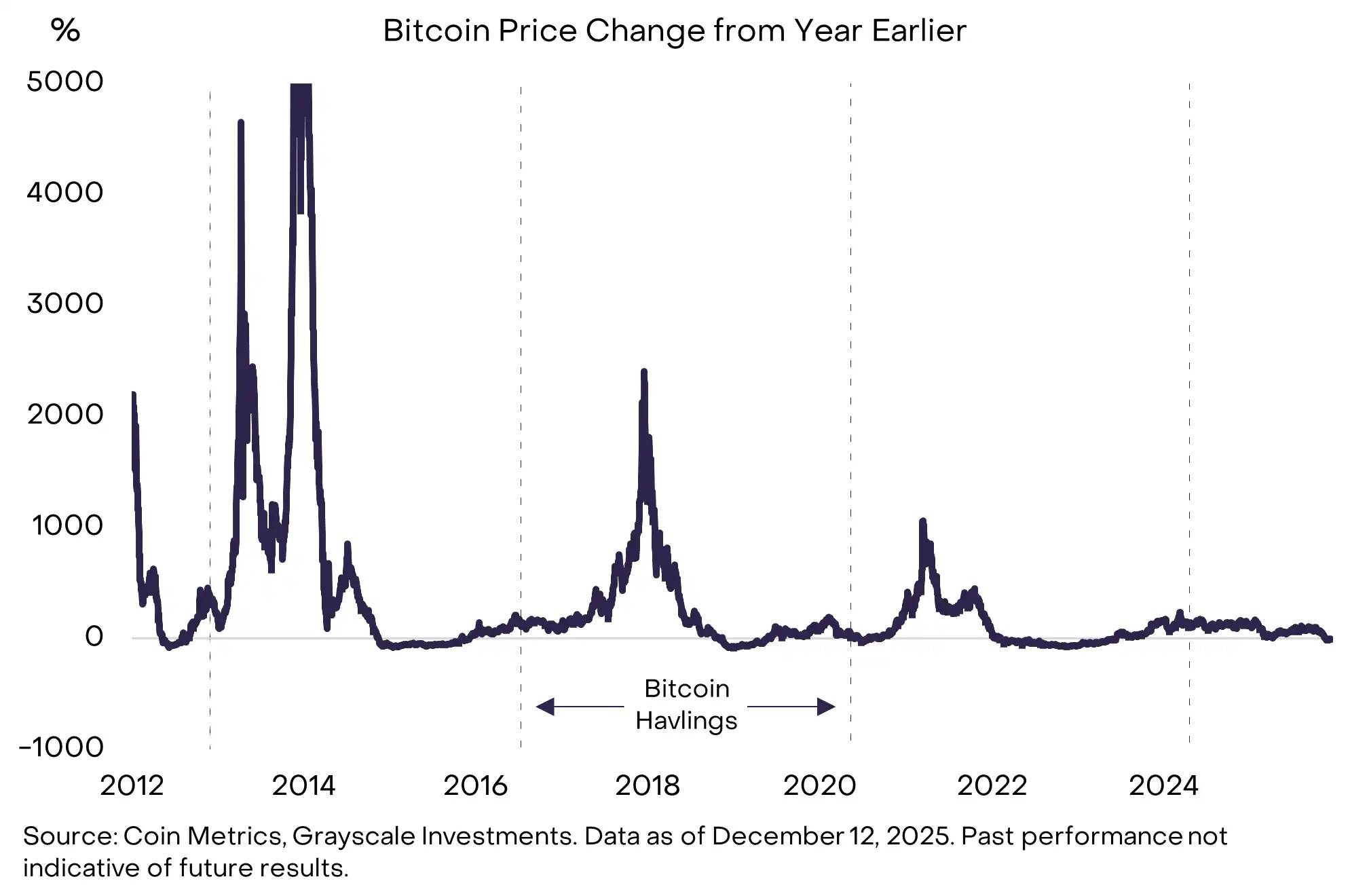
随着加密货币价格越来越受到机构资本流入的驱动,其价格走势的性质也发生了变化。在之前的每一次牛市中,比特币的价格在一年内至少上涨了1000%(见图表6)。而这一次,自2024年3月的一年内,比特币价格的最大年涨幅约为240%。我们认为,这一差异反映了这一周期机构买盘的稳定性高于以往周期中散户追涨的趋势。Although investing in cryptocurrencies involves significant risks, we believe that, as of the time of writing this article, the likelihood of a deep and prolonged decline in prices is relatively low. On the contrary, we believe that next year, driven by inflows from institutional investors, prices are more likely to experience stable increases.
Chart 6: There has been no significant increase in Bitcoin prices during this cycle.
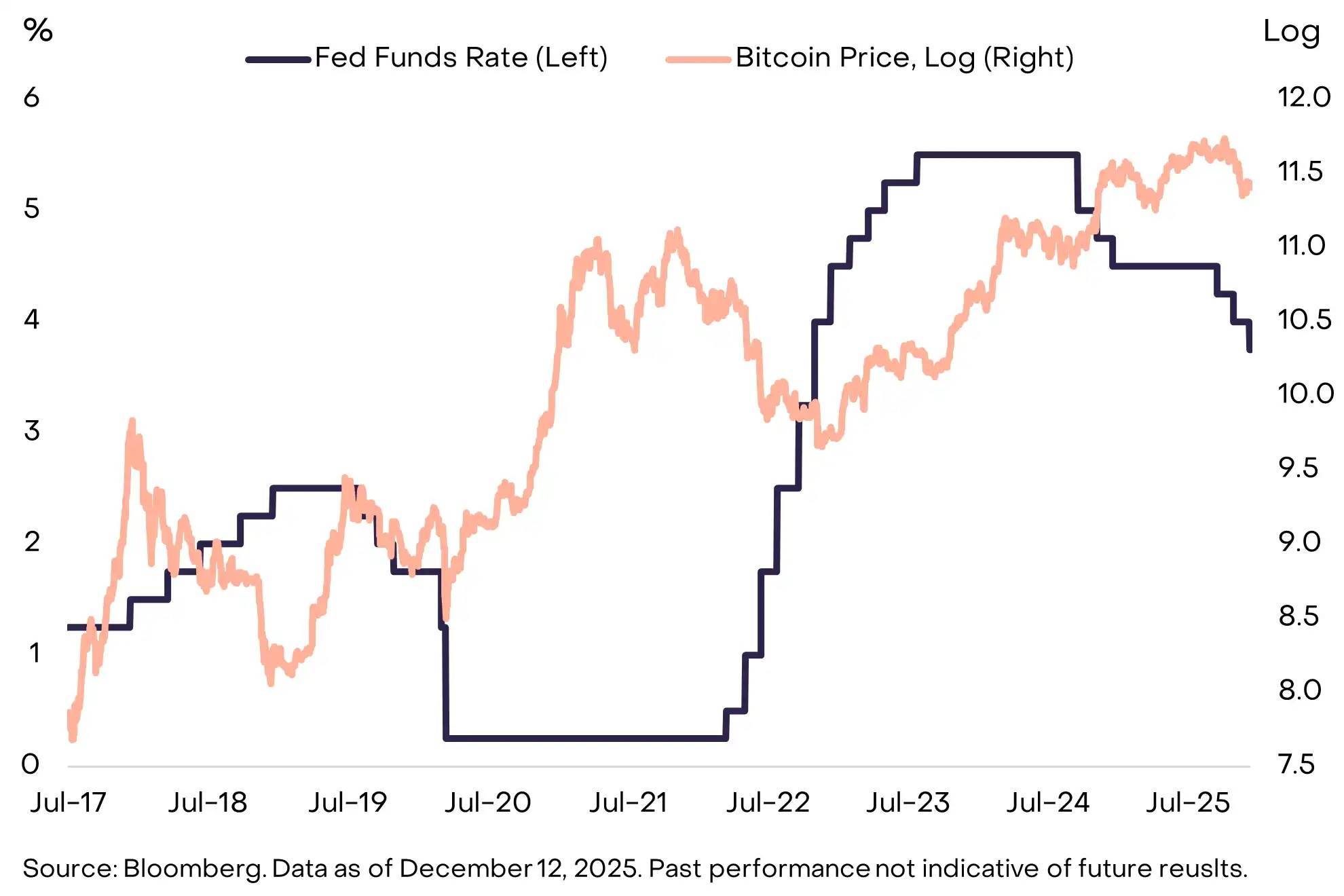
A favorable macroeconomic environment could also limit some of the downside risks associated with Bitcoin prices in 2026. The last two cyclical peaks occurred before the Fed raised interest rates (Chart 7). In contrast, the Fed will cut interest rates three times in 2025, and it is expected that further rate cuts will occur next year. Kevin Hassett, who may replace Jerome Powell as the Fed chairman, said in an interview with the program “Facing the Nation”: “The American people can expect President Trump to choose someone who can help them get cheaper car loans and more convenient low-interest mortgages.” Overall, economic growth and the Fed’s generally supportive policies should be consistent with investors’ favorable risk appetite, as well as the potential returns of risky assets, including cryptocurrencies.
Chart 7: Previous cyclical peaks have always been related to Fed rate hikes.
Like all other asset classes, the price of cryptocurrencies is also determined by both fundamental factors and capital flows. The commodity market is cyclical, and it’s possible for cryptocurrencies to experience downturns in certain periods. However, we believe that this will not happen in 2026. The fundamentals remain strong: we expect that the demand for alternative forms of value storage from the macroeconomy will continue, and the clarity of regulatory environments will encourage institutional investors to invest in public blockchain technologies. Additionally, new funds are continuing to flow into the market: by the end of next year, cryptocurrency ETPs are likely to be included in more investment portfolios. During this cycle, there was no significant demand from individual investors; instead, continuous purchases of cryptocurrency ETPs by various investment portfolios played a key role. With the overall support of the macroeconomic environment, we believe that these factors will help the cryptocurrency asset class reach new highs in 2026.
II. Top Ten Cryptocurrency Investment Topics for 2026
Cryptocurrencies represent a diversified asset class that reflects various applications of public blockchain technology. The following section outlines Grayscale’s views on the top ten most important cryptocurrency investment topics for 2026, along with two “less important” topics. For each topic, we have listed the tokens that we believe are most relevant.
Topic One: The Risk of Dollar Devaluation Fuels Demand for Alternative Currencies
Related Cryptocurrencies: BTC, ETH, ZEC
美国经济面临债务问题(参见图表3),这最终可能会削弱美元作为价值储存手段的地位。其他国家也面临类似问题,但美元是当今世界主要的国际货币,因此美国政策的信誉对潜在的资本流动更为重要。我们认为,由于数字资产的普及程度足够高、去中心化程度高且供应增长有限,一小部分数字资产可以被视为可行的价值储存手段。这其中包括市值最大的两种加密资产:比特币和以太坊。与实物黄金类似,它们的效用部分源于其稀缺性和自主性。
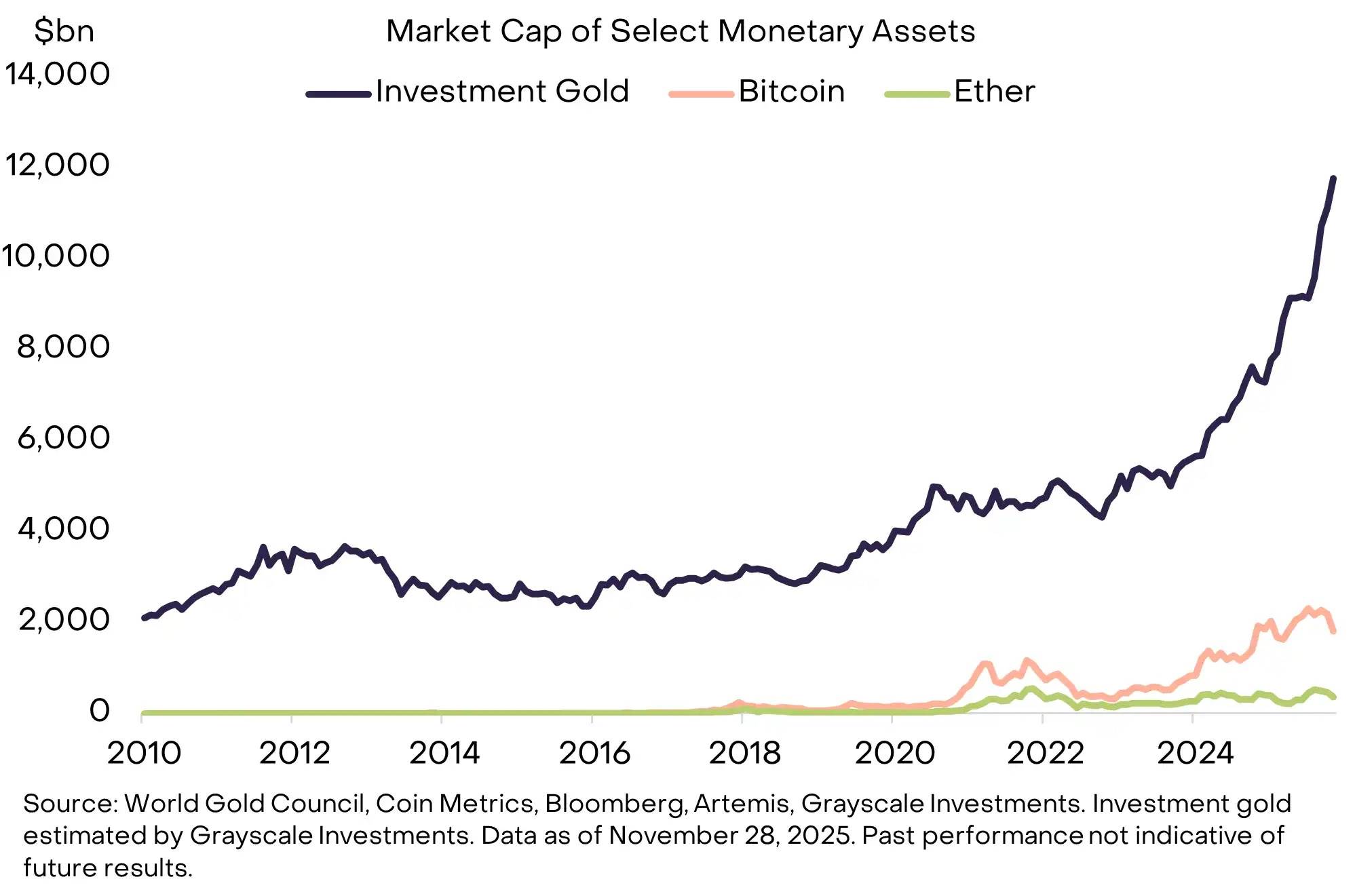
比特币的供应量上限为2100万枚,并且完全由程序控制。例如,我们可以自信地预测,第2000万枚比特币将于2026年3月被挖出。一个拥有透明、可预测且最终稀缺供应的数字货币系统理念简单,但由于法币尾部风险,它在当今经济中越来越受欢迎。只要造成法定货币风险的宏观失衡持续加剧,对替代价值储存手段的投资组合需求也可能继续增长(图表8)。Zcash是一种规模较小的去中心化数字货币,具有隐私功能,也可能适合那些为应对美元贬值而配置投资组合的投资者(参见主题5)。
图表8:宏观经济失衡可能推动对其他价值储存手段的需求。
主题二:监管政策的明确有助于推动数字资产的普及应用
相关加密资产:几乎所有
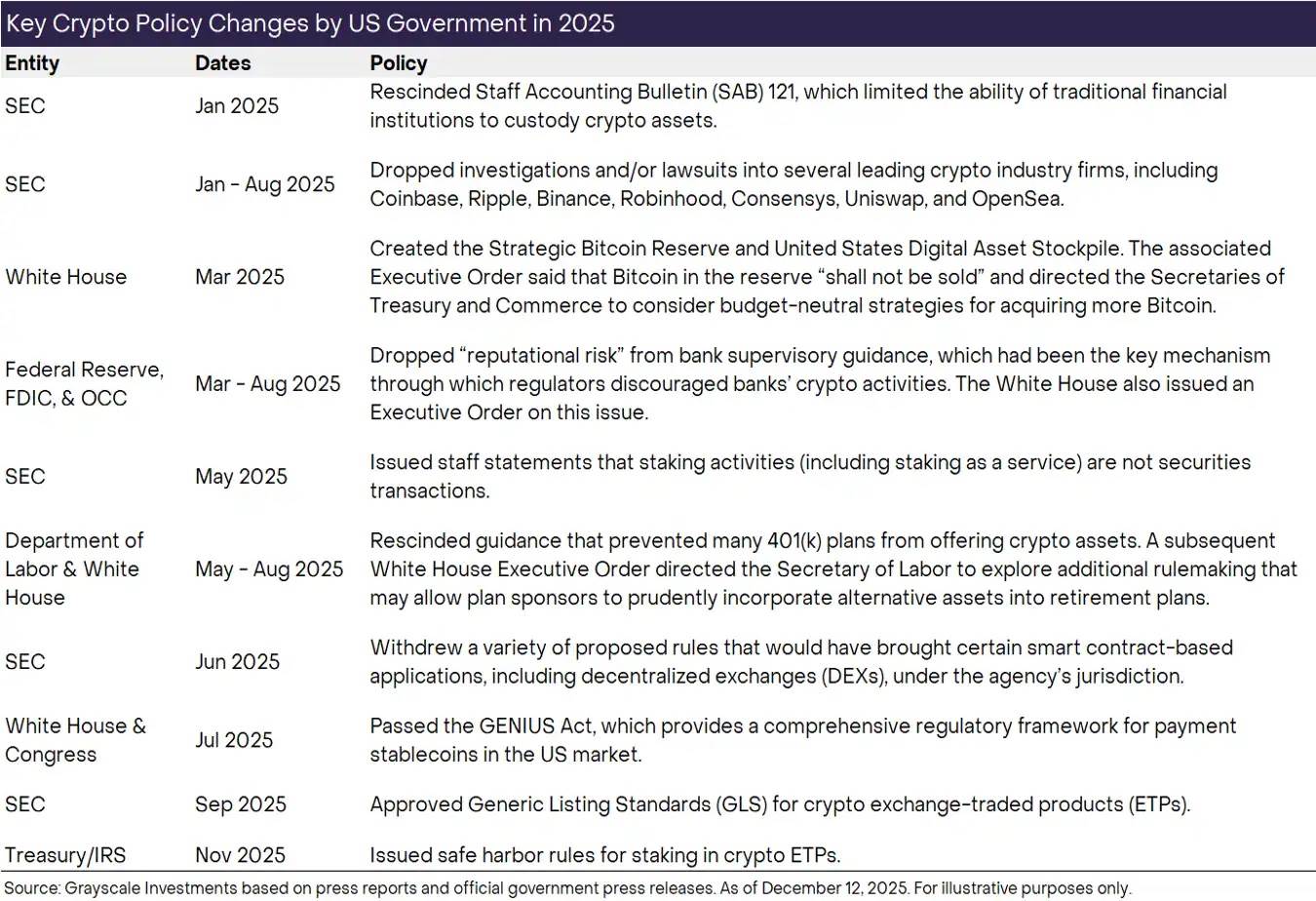
2025年,美国在加密货币监管方面取得了重大进展,包括通过了《GENIUS法案》(针对稳定币)、撤销了美国证券交易委员会(SEC)关于托管的第121号会计公告、引入了加密ETP的通用上市标准,以及解决了加密货币行业获得传统银行服务的问题(见图表9)。明年,我们预计随着两党共同提出的市场结构法案的通过,将取得又一重大进展。众议院已于7月通过了该法案的版本——即《清晰法案》(Clarity Act)——参议院也已启动了相关程序。尽管仍有许多细节需要敲定,但总体而言,该法案为加密货币资本市场提供了一套传统的金融规则,包括注册和披露要求、加密资产分类以及内部人士规则。
在实践中,美国和其他主要经济体若能建立更完善的加密资产监管框架,则意味着受监管的金融服务公司可以将数字资产纳入资产负债表,并开始在区块链上进行交易。这还可能促进链上资本的形成,使初创企业和成熟企业都能发行受监管的代币。通过进一步释放区块链技术的全部潜力,监管的清晰化应有助于提升整个加密资产类别的发展。鉴于监管清晰度在推动2026年加密资产类别发展方面可能发挥的关键作用,我们认为,国会两党在立法程序上的分歧应被视为一种下行风险。
Chart 9: The United States has made significant progress in terms of regulatory clarity by 2025
Topic 3: The GENIUS Act will boost the influence of stablecoins
Related crypto assets: ETH, TRX, BNB, SOL, XPL, LINK
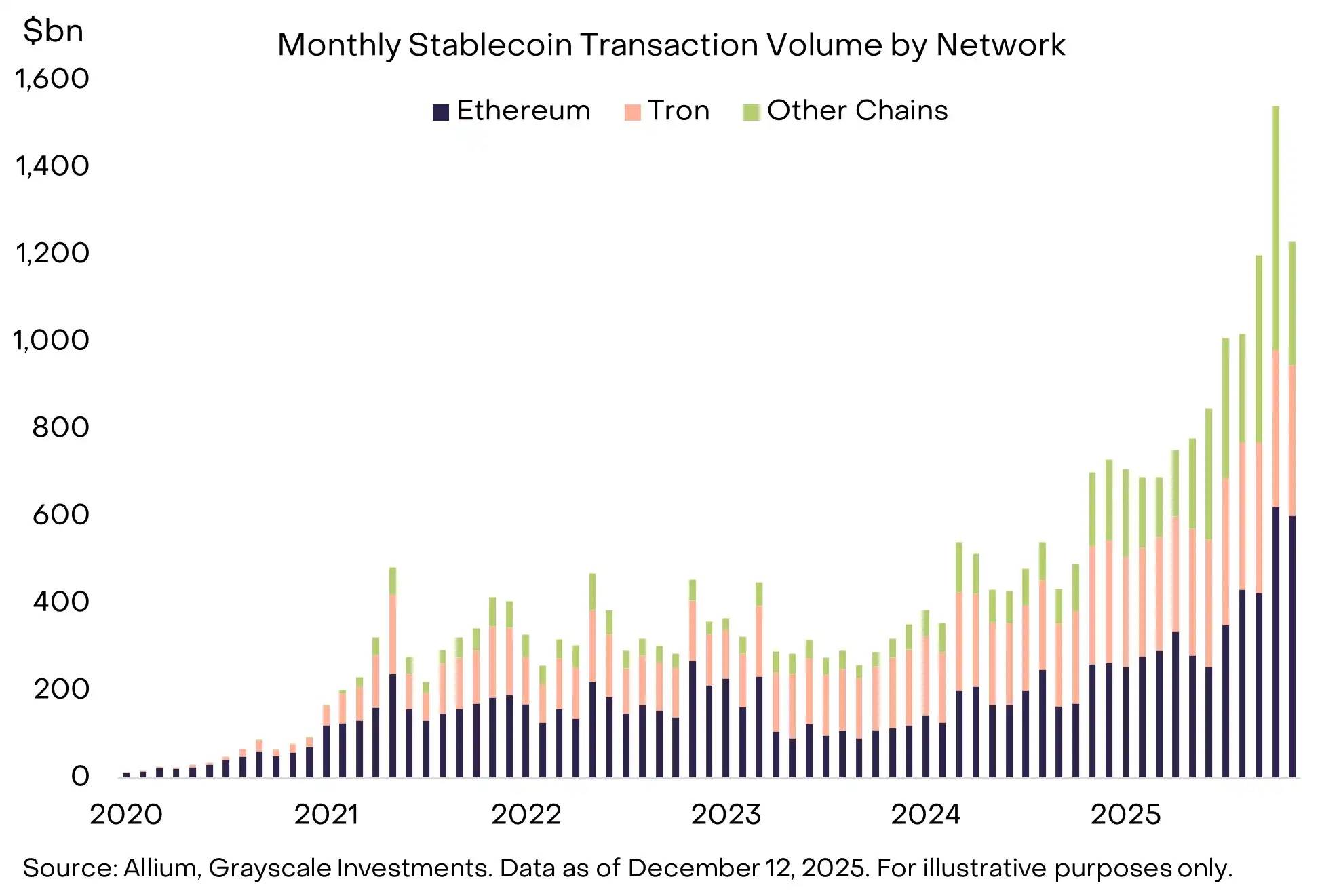
Stablecoins will experience explosive growth in 2025: The total supply will reach $300 billion, and the monthly transaction volume will exceed $1.1 trillion within six months. The U.S. Congress has passed the GENIUS Act, attracting a large amount of institutional capital into this industry (Chart 10). We expect to see practical results by 2026: Stablecoins will be integrated into cross-border payment services, used as collateral in derivatives exchanges, appear on corporate balance sheets, and become an alternative to credit cards for online consumer payments. The continued growth of the market may also drive new demand for stablecoins. Higher trading volumes of stablecoins will benefit the blockchain networks that record these transactions (such as ETH, TRX, BNB, and SOL), as well as various supporting infrastructure components (such as LINK) and decentralized finance applications (see Topic #7).
Chart 10: Stablecoins reach a critical point of growth
Topic 4: Asset tokenization reaches a turning point
Related crypto assets: LINK, ETH, SOL, AVAX, BNB, CC
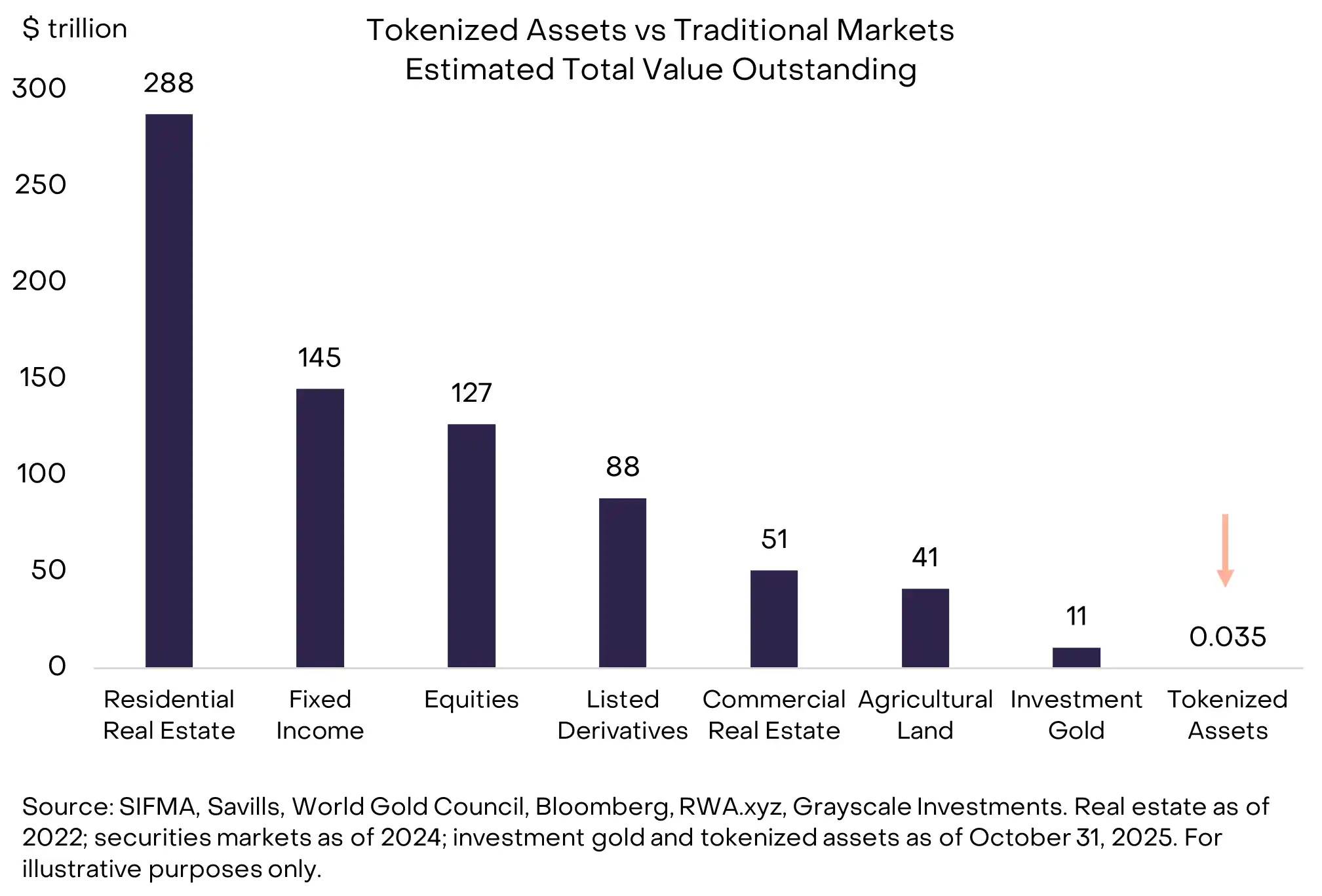
The scale of tokenized assets is currently very small: they account for only 0.01% of the total value of the global stock and bond markets (see Chart 11). Grayscale expects that the use of tokenized assets will grow rapidly in the coming years, thanks to the increasing maturity of blockchain technology and the increasingly clear regulatory environment. We believe that by 2030, the size of tokenized assets could increase by approximately 1,000 times. This growth could bring significant value to the blockchain networks used for handling tokenized asset transactions, as well as various related applications. Currently, leading blockchain platforms for tokenized assets include Ethereum (ETH), BNB Chain (BNB), and Solana (SOL). However, this list may change over time. In terms of related applications, Chainlink (LINK) demonstrates strong competitiveness due to its unique software technology suite.
Chart 11: The vast potential for growth in tokenized assets
Topic Five: As blockchain technology becomes more mainstream, privacy solutions become essential
Related crypto assets: ZEC, AZTEC, RAIL
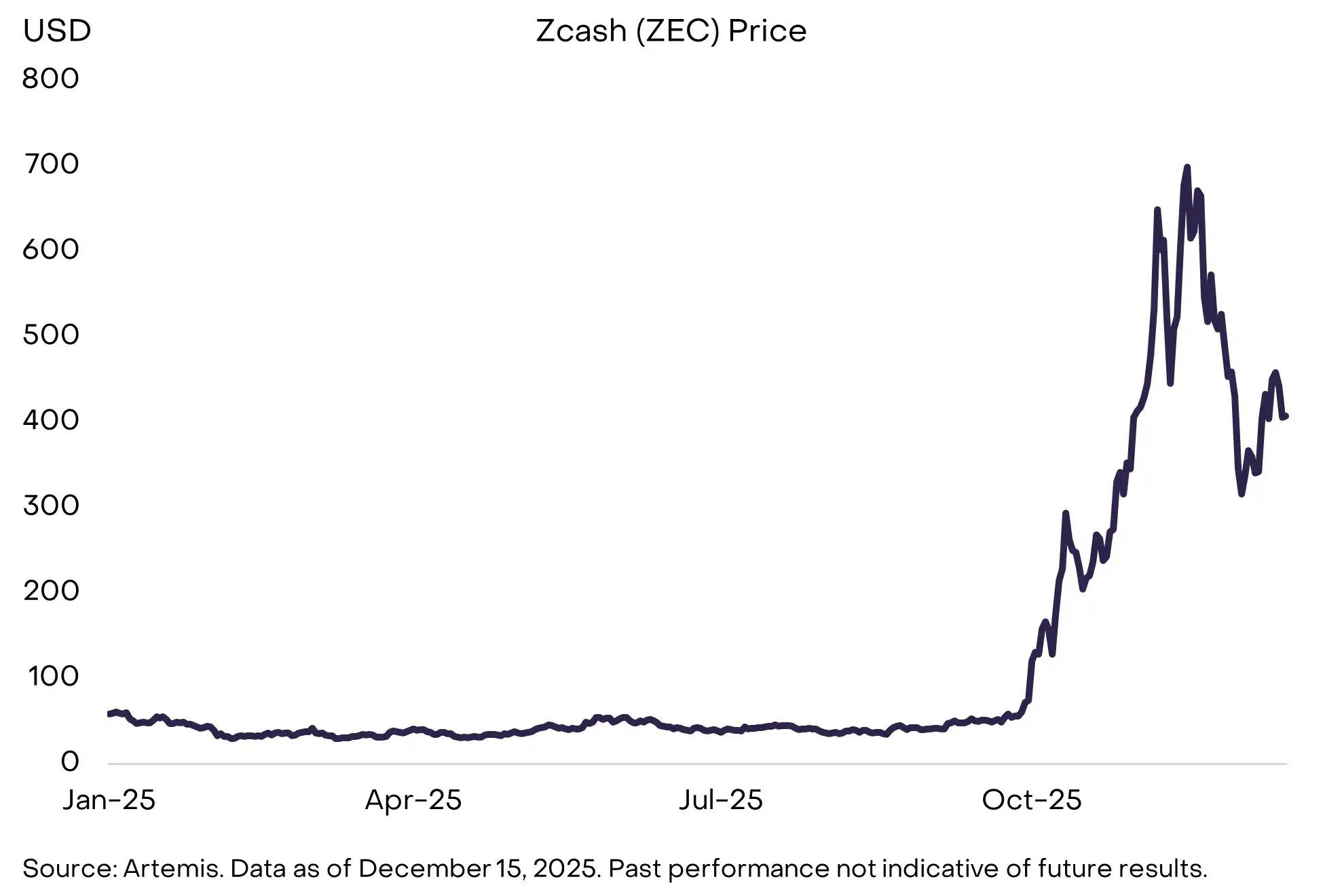
Privacy is an essential component of the financial system: almost everyone expects that their salary, taxes, net assets, and spending habits will not be publicly available on public ledgers. However, most blockchain networks are inherently transparent. If public blockchains are to become more integrated into the financial system, more robust privacy technologies will be required. This trend becomes even more apparent as regulators encourage such integration. Investors’ concerns about privacy could benefit projects like Zcash (ZEC), a decentralized digital currency similar to Bitcoin that offers privacy features. Zcash saw significant gains in the fourth quarter of 2025 (see Chart 12). Other important projects include Aztec, an Ethereum Layer 2 protocol focused on privacy, and Railgun, a privacy-enhancing middleware for DeFi applications. It’s also possible that the use of confidential transactions will continue to increase on leading smart contract platforms such as Ethereum (using ERC-7984 protocol) and Solana (using Confidential Transfers tokens). Better privacy tools may also require stronger identity and compliance infrastructure within DeFi ecosystems.
Chart 12: Cryptocurrency investors are increasingly concerned about privacy features
Topic Six: Centralized AI demands blockchain solutions
Related crypto assets: TAO, IP, NEAR, WORLD
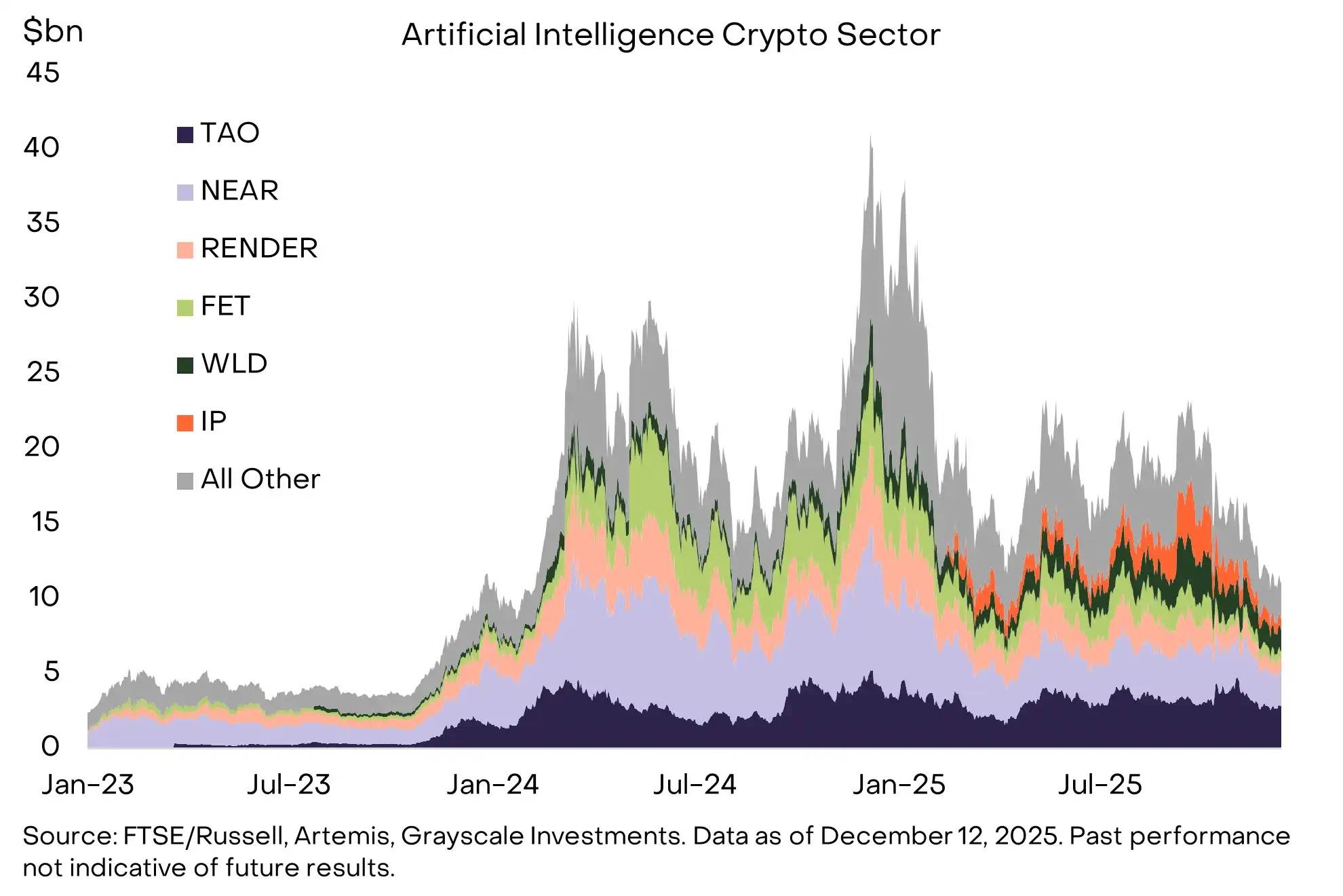
The fundamental compatibility between cryptocurrencies and artificial intelligence is more pronounced and clear than ever before. Artificial intelligence systems are increasingly being controlled by a few dominant companies, leading to concerns about trust, bias, and ownership. Cryptocurrencies provide a mechanism for addressing these risks directly. Decentralized artificial intelligence development platforms like Bittensor aim to reduce reliance on centralized AI technologies. Verifiable identity verification systems like World can distinguish humans from intelligent agents in synthetic worlds. Networks like Story Protocol offer transparent and traceable intellectual property rights, especially in an era when identifying the source of digital content becomes increasingly difficult. Tools like X402—open-source stablecoin payment layers with zero fees, supporting platforms like Base and Solana—enable low-cost, instant payments between intelligent agents or between machines and humans. Together, these components form the foundational infrastructure for what’s known as “agency economics,” where identities, computing power, data, and payments must be verifiable, programmable, and resistant to censorship. Although the integration of cryptocurrencies and artificial intelligence is still in its early stages and unevenly developed, it has already led to some of the most promising long-term applications in this field. Protocols that build true infrastructure are expected to benefit from the increasing decentralization, autonomy, and economic activity of artificial intelligence (Chart 13).
Chart 13: Blockchain solutions to some of the risks brought by artificial intelligence
Topic Seven: DeFi Accelerates Development, with Lending Services Leading the Trend
Related crypto assets: AAVE, MORPHO, MAPLE, KMNO, UNI, AERO, RAY, JUP, HYPE, LINK
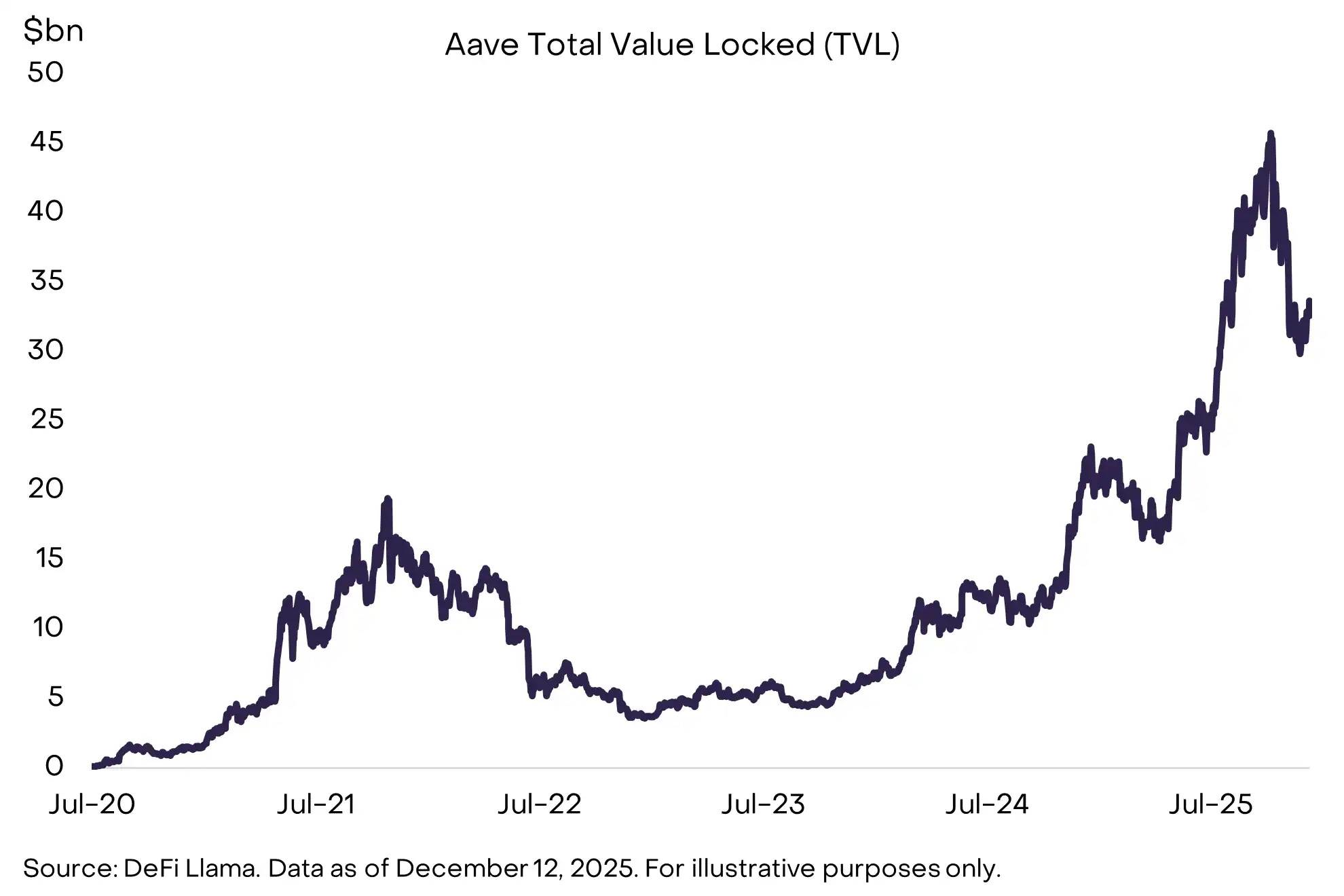
In 2025, driven by technological advancements and regulatory benefits, DeFi applications are experiencing strong growth. The increase in stablecoins and tokenized assets is a significant example of this success. DeFi lending also has seen remarkable growth, with platforms like Aave, Morpho, and Maple Finance standing out (see Chart 14). At the same time, decentralized perpetual futures exchanges like Hyperliquid continue to see increasing volume of open positions and daily transactions, rivaling some of the largest centralized derivatives exchanges. Looking ahead, these platforms’ growing liquidity, interoperability, and relevance to real-world prices make DeFi a reliable option for users who wish to conduct financial transactions directly on the blockchain. It is expected that more DeFi protocols will integrate with traditional fintech companies, leveraging their infrastructure and large user bases. We expect core DeFi protocols to benefit from this, including lending platforms like AAVE, decentralized exchanges like UNI and HYPE, as well as related infrastructure such as LINK. Additionally, blockchains that support most DeFi activities, such as ETH, SOL, and BASE, will also play a key role.
Chart 14: DeFi continues to grow in scale and diversity
Topic Eight: Mainstream Adoption Requires Next-Generation Infrastructure
Related crypto assets: SUI, MON, NEAR, MEGA
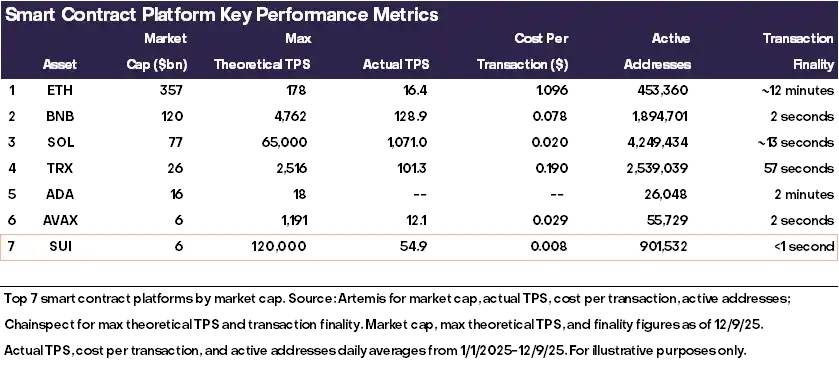
New blockchain technologies continue to push the boundaries of technology forward. However, some investors believe that due to insufficient demand for existing blockchains, more block space isn’t necessary. Solana itself is a prime example of this criticism: a fast but underused chain that was initially seen as “extra space in the blockchain.” But during the subsequent wave of large-scale applications, it became one of the most successful cases in the industry. Not all high-performance blockchains today will follow this path, but we expect some to do so. Excellent technology doesn’t guarantee widespread adoption, but the architecture of these next-generation networks makes them ideal for emerging fields such as artificial intelligence micro-payments, real-time gaming, high-frequency transactions, and systems based on intentions. In these areas, we expect Sui to stand out due to its technical advantages and integrated development strategy (see Chart 15). Other promising projects include Monad (parallelized EVM), MegaETH (a super-fast Ethereum L2 cache), and Near (a blockchain focused on artificial intelligence, with its Intents product already proving successful).
Chart 15: Next-generation blockchains like Sui offer faster and cheaper transactions.
Topic Nine: Focus on sustainable income.
Related crypto assets: SOL, ETH, BNB, HYPE, PUMP, TRX.
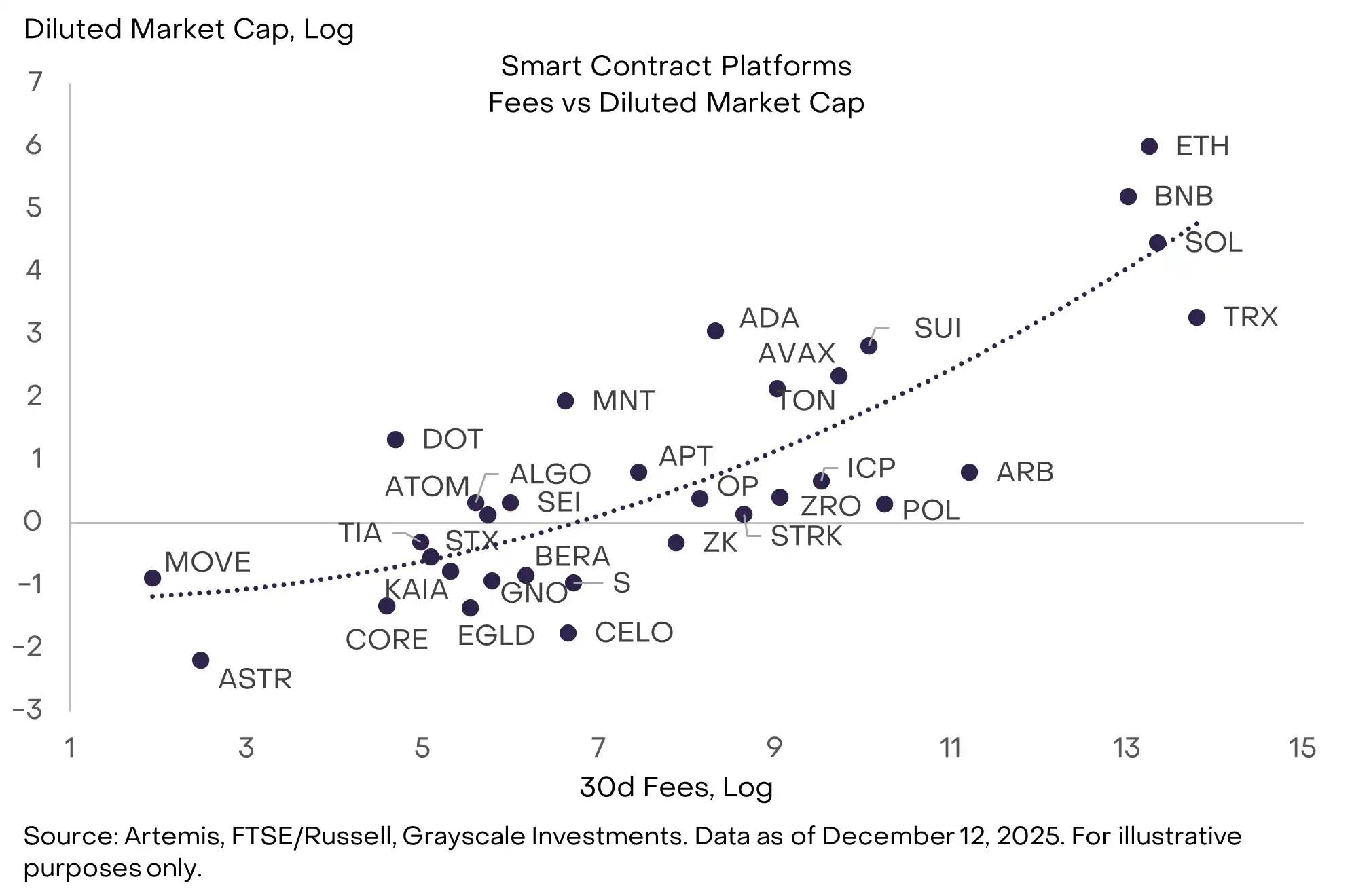
Blockchains are not traditional enterprises, but they do possess measurable key elements, including users, transaction volume, fees, total locked value (TVL), developers, and applications. Among these metrics, Graycast believes that transaction fees are the most valuable indicator, as they are最难被操纵的,并且在不同区块链之间具有最高的可比性(同时也提供了最佳的经验拟合)。Transaction fees are similar to “revenue” in traditional corporate finance. For blockchain applications, it’s also important to distinguish between protocol fees/revenue and “provider” fees/revenue. As institutional investors begin to allocate funds to the cryptocurrency sector, we expect them to focus on those blockchains and applications that have high fee revenues and/or continuous growth trends (except Bitcoin). Smart contract platforms with relatively high revenues include TRX, SOL, ETH, and BNB (Chart 16). Application layer assets with relatively high revenues include HYPE and PUMP, among others.
Chart 16: Institutional investors may carefully evaluate fundamental aspects
Topic Ten: Investors typically seek collateralized investments
Related crypto assets: LDO, JTO
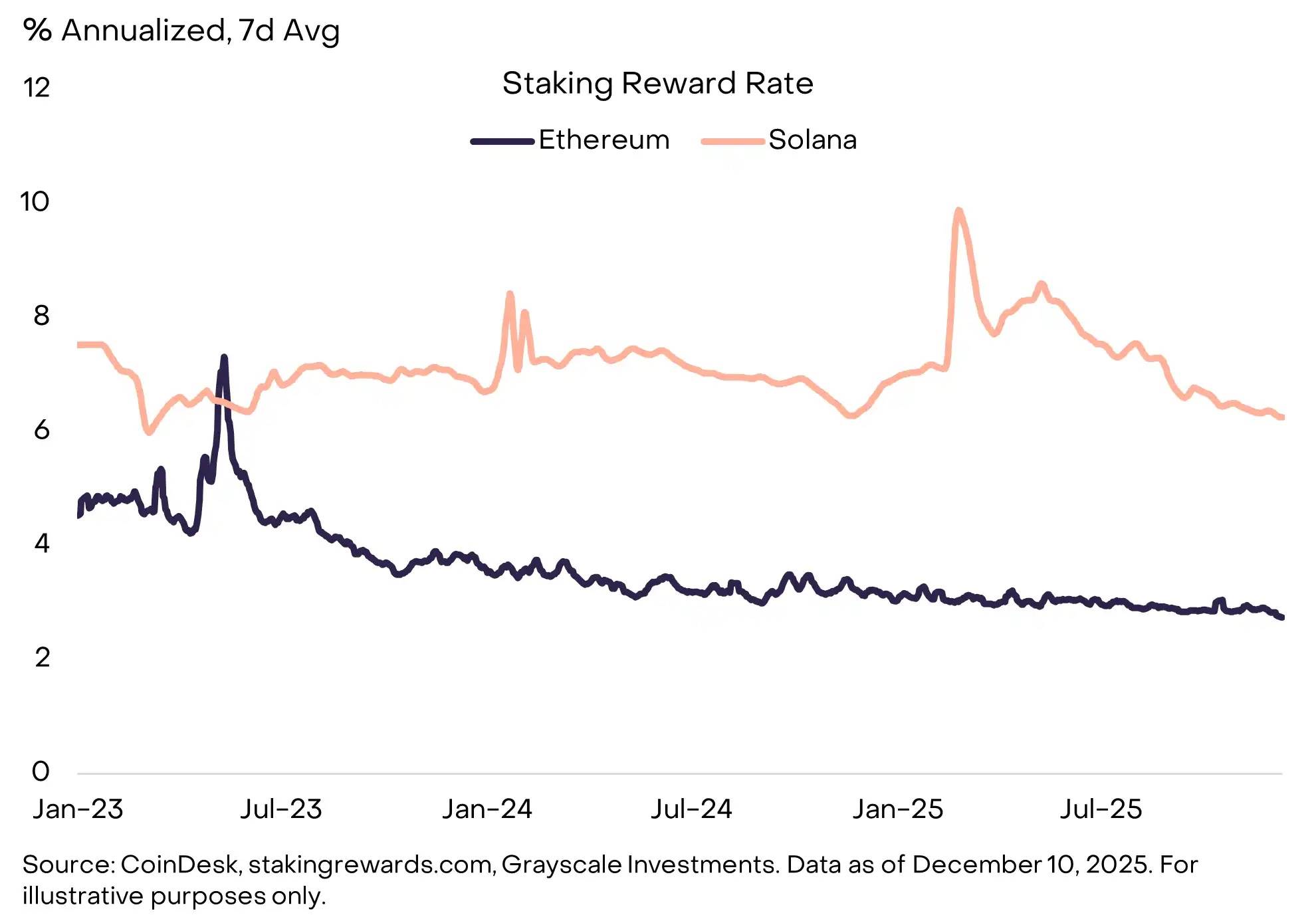
U.S. policymakers made two adjustments to regulations related to staking in 2025, allowing more token holders to participate: (i) The U.S. Securities Exchange Commission clarified that liquidity-based staking activities do not constitute securities transactions; (ii) The Internal Revenue Service and the Department of Treasury stated that investment trusts/exchange-traded products can hold digital assets as part of their portfolio. These guidelines regarding liquidity-based staking services could benefit leading TVL-based liquidity protocols on Ethereum and Solana, such as Lido and Jito. More broadly, the ability for crypto ETPs to support staking may make them the default choice for investors holding PoS tokens, resulting in higher staking ratios and higher reward rates (Chart 17). With staking becoming more widespread, ETPs offering staking services will provide a convenient way to earn rewards, while off-chain, unmanaged liquidity-based staking offers combined advantages within DeFi ecosystems. We expect this dual structure to continue for some time.
Chart 17: PoS tokens offer native rewards
Two topics that are not significant in 2026
We believe all of the above investment topics will contribute to the development of the crypto market in 2026. There are two hot topics that we expect will not have a substantial impact on the crypto market next year: one is the vulnerability of encryption technologies to quantum computing, and the other is the evolution of digital asset wallets. Although these topics will generate extensive discussion, we believe they are not central to market prospects.
If quantum computing technology continues to develop, most blockchain networks will ultimately need to upgrade their encryption methods. In theory, a sufficiently powerful quantum computer could be used to derive private keys from public keys, thereby generating valid digital signatures for processing cryptocurrency payments. Therefore, Bitcoin and most other blockchain networks—along with almost everything in the economy that uses encryption technologies—will eventually need to be upgraded to accommodate tools suitable for the post-quantum era. However, experts estimate that it will not be until 2030 that quantum computers become capable of breaking the encryption algorithms used by Bitcoin. Research on quantum risks and efforts to mitigate these risks are likely to accelerate by 2026, but we believe that this topic is unlikely to have any significant impact on prices.
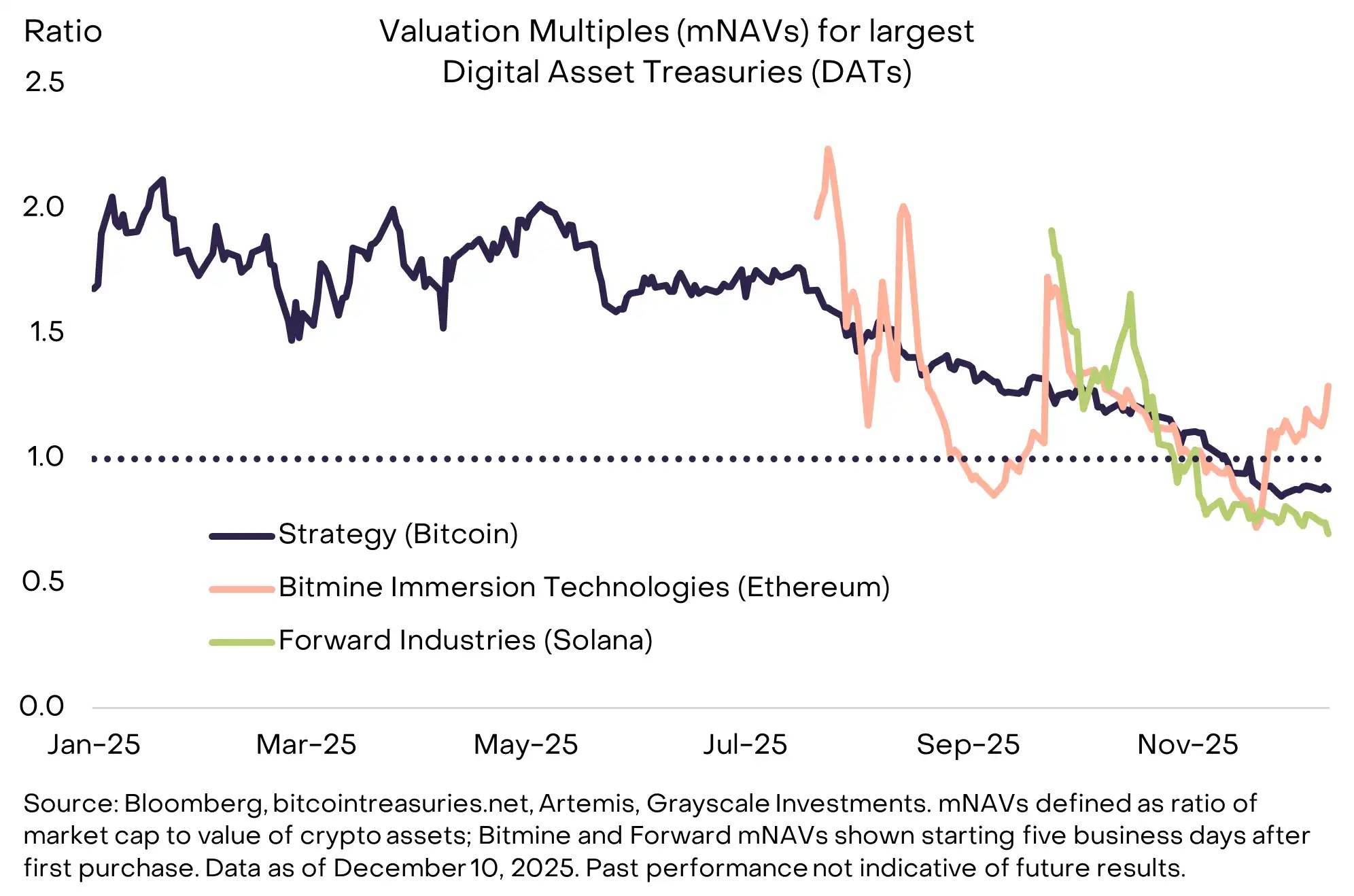
The situation with DAT is similar. Michael Saylor’s strategy of incorporating digital assets into company balance sheets has led to the emergence of dozens of copycats by 2025. We estimate that DAT holds 3.7% Bitcoin, 4.6% Ethereum, and 2.5% SOL. The demand for these assets has decreased from its peak in mid-2025: currently, DAT’s NAV is close to 1.0 (see Chart 18). However, most DAT holders do not use leverage at all, so they may not be forced to sell their assets during market downturns. DAT Strategy, the largest market-capitalized entity, has recently raised funds to ensure that it can continue paying dividends on its preferred shares even when Bitcoin prices fall. We expect that most DAT holders will operate like closed-end funds, with trading prices either above or below their net value, and with a low frequency of asset liquidations. We believe these mechanisms could become long-term components of cryptocurrency investment, but they are unlikely to become the main source of new demand for tokens or the driving force behind sell-offs in 2026.
Chart 18: The premium on DAT has narrowed, but the likelihood of asset sales is low.
Conclusion
We believe that the prospects for digital assets in 2026 are promising. This is largely due to the demand from the macroeconomy for alternative means of value storage, along with increased regulatory transparency. Next year, the integration of blockchain finance with traditional finance is expected to further improve, and institutional capital will flow into these areas significantly. Tokens that have clear use cases, sustainable revenue sources, and can be traded on regulated platforms are likely to attract interest from institutional investors. Investors can expect a widening range of crypto assets available through ETPs, with pledge features being supported to the greatest extent possible.
At the same time, clearer regulations and greater recognition from institutions may raise the barriers for crypto projects to enter the mainstream market. For example, crypto projects may need to meet new registration and disclosure requirements before they can operate on regulated exchanges. Institutional investors may also overlook those crypto assets that lack clear uses—even those with relatively high market value. The GENIUS Act clearly distinguishes between regulated payment stablecoins, which have specific rights and obligations under U.S. law, and other stablecoins, which do not enjoy the same rights. Similarly, we expect that the era of institutionalization of cryptocurrencies will lead to a clearer distinction between assets that can enter regulated markets and receive institutional funding, and those that cannot. Cryptocurrencies are entering a new era, and not all tokens will be able to successfully transition from the old era to this new one.