Exchange Ranking
 Top Exchanges
 24h Volume Ranking
 Popularity Ranking
 Exchange BTC Balance
 Proof of Reserves
 Decentralized Exchanges
 Funding Rate
 Funding Heatmap
 Liquidation Data
 Max Pain
 Long/Short Ratio
 Whale L/S Ratio
 Binance/Okex/Huobi L/S
 Bitfinex Margin L/S
 ETF Tracker
 Solana ETF
 XRP ETF
 Hong Kong ETF
 Bitcoin Treasuries
 Crypto Reversal
 Ethereum Reserves
 HyperLiquid Wallet Analysis
 Hyperliquid Whale Watch
 Large Transactions
 On-chain Movement
 Bitcoin ROI
 Stablecoin Market Cap
 Options Analysis
 News
 Articles
 Economic Calendar
 Features
 Wallet
 Contract Calculator


 Security
 Collections
 Watchlist
 Following
Solana Breakpoint 2025 was held in Abu Dhabi, UAE, from December 11th to 13th. Over 6,000 developers and project teams from more than 100 countries attended the conference. The event showcased the latest advancements in the Solana ecosystem, focusing on innovations in on-chain applications, DeFi, NFTs, and Web3 development trends. It provided a valuable platform for global communities to exchange ideas and collaborate. This event also highlighted Solana’s potential in a multi-chain landscape.
Raoul Pal, co-founder and CEO of Real Vision; Anatoly Yakovenko, co-founder of Solana; Lily Liu, president of the Solana Foundation; and Mike Novogratz, founder and CEO of Galaxy, among other industry leaders, attended the conference and delivered speeches. This page will continue to update with real-time reports from the conference. Here’s the latest information:

On December 12th,
Jupiter’s stable coin, JupUSD, is expected to be launched next week.
On December 12th, Jupiter announced at Solana Breakpoint that its stable coin, JupUSD, will be launched next week.
According to previous reports by BlockBeats, on October 8th, Ethena partnered with Jupiter to launch a native Solana stable coin called JupUSD. This token is scheduled to be launched in the fourth quarter. Jupiter plans to gradually convert approximately $750 million in USDC into JupUSD.
On December 11th,
Raoul Pal said that the current bull market cycle is expected to peak in 2026. Cryptocurrencies are essentially macro assets.
On December 11th, Raoul Pal, former executive at Goldman Sachs and author of the book “Global Macro Investors”, as well as co-founder and CEO of Real Vision, spoke at Solana Breakpoint.
“The decline in labor participation rate means a reduction in the workforce population. And the population structure is key to determining debt levels. Population growth will continue to decline, which means the proportion of debt to GDP will continue to rise. This is the problem.
We must face the global debt crisis, and currency devaluation has always been a way to address (or delay) this issue. We are already seeing signs that the Federal Reserve needs to reconsider its balance sheet and think about how to ‘monetize’ all this debt. It is expected that in the next 12 months, we will need to print around $8 trillion in currency through liquidity injections.
I know many people might think that the crypto cycle is over, and that ‘good times are over’. But in reality, what drives everything is cyclical patterns, not the Bitcoin halving cycle, but rather the cycle of debt maturity.
So, I believe that we are currently not in a four-year cycle, but rather a five-year one. In this five-year cycle, we have already passed the trough, and the next step is upward. The cycle should reach its peak by the end of 2026, not 2025. This is a breakthrough understanding for us as global macro investors: to recognize that cryptocurrencies are actually a type of macro asset.
Additionally, the cross-rate between altcoins and Bitcoin is driven by business cycles. And it seems like business cycles are reaching their bottom, not their peak.
Solana Co-founder: Stablecoins are the clear direction for now. Solana will try to capture as much of the market as possible during this period.
On December 11th, Anatoly Yakovenko, co-founder of Solana, stated at the Solana Breakpoint conference that the key to growth lies in continuously developing products that people need. He emphasized that stablecoins represent a clear direction for future development. It is expected that there will be 1 to 10 trillion dollars worth of stablecoins on the blockchain, thereby enabling the tokenization and integration of approximately 500 trillion dollars worth of assets into the blockchain ecosystem.
Yakovenko said that the strong property rights provided by public chains and cryptography do not conflict with free-market capitalism or Wall Street logic. Instead, they complement each other by eliminating faults and risks through software, allowing for faster expansion of financial services on a scale comparable to those of Wall Street. He stressed that stablecoins are meant to expand rather than replace the US dollar. L1, especially PoS networks, have clear mechanisms for value capture. Solana aims to gain as much share in this competition as possible.
Lily Liu: SOL spot ETFs have received nearly $1 billion in net inflows within 6 weeks. DAT will act as a bridge between Solana and the public market.
On December 11th, Lily Liu, president of the Solana Foundation, stated at the Solana Breakpoint 2025 conference:
“Solana is the first blockchain platform to establish a policy research institute. Now, it’s essential for every organization to develop strategies for digital assets. As these organizations enter the blockchain space, they have chosen Solana. Western Union, which handles over $60 billion in remittances annually, has also chosen Solana. Pfizer, which processes transactions worth two trillion dollars per year, has likewise chosen Solana. Other organizations are following suit.
Of course, ETFs have been a major topic this year. We finally saw the introduction of Solana-based质押型ETFs supported by physical assets. These ETFs launched into the Solana ecosystem about six weeks ago, and within just six weeks, their asset management volume reached nearly $1 billion. Even during periods of overall market weakness, we continued to experience continuous net inflows of funds for three consecutive weeks. There are already six such Solana-based质押型ETFs listed in the United States alone.
Another important topic this year is, although somewhat controversial, DAT (Cryptocurrency Treasury Company). Many people view DAT as a short-term liquidity tool, but we hold the opposite view. After all, Solana is one of the few platforms that allow companies to build their infrastructure as well as their assets. We believe DAT will become a long-term ecosystem company. It will serve as a bridge between Solana and the public market, enabling the development of infrastructure and asset management systems, and integrating all these functions into one platform.
Coinbase executive: DEX trading functionality based on Solana is now available on the app
On December 11th, Andrew Allen, the head of Coinbase’s Solana products, announced that Coinbase has launched DEX trading functionality based on Solana within its app. Users can trade Solana tokens directly from their familiar interface. Payments can be made using USDC, cash, bank accounts, or debit cards. All aspects of trading and routing are handled automatically by the backend.
Andrew said that Coinbase is expanding its native support for Solana significantly. In the future, users will be able to directly view Solana assets within the app. This ensures that millions of Coinbase users can access Solana assets without having to go through the cumbersome token listing process, as long as there is sufficient liquidity available.
Bitwise’s co-founder noted that applications built on Solana truly leverage the last 1% of network performance.
On December 11th, Bitwise’s co-founder and CIO stated at the Solana Breakpoint conference that compared to networks like Ethereum, applications running on Solana actually utilize the last 1% of network resources, providing users with additional marginal liquidity and scalability.
On many other chains, running nodes involves simply “downloading software and starting it with a double-click”. After that, it doesn’t really matter who holds more or less tokens—it has little impact on the network or users. But on Solana, the application landscape changes daily, with protocols, performance, and capacity all evolving rapidly. The performance of nodes directly determines the maximum potential of the network.
It’s precisely because of this that we place great importance on ensuring that when products like these (i.e., leveraged ETFs/trusts) lock in more and more SOL tokens and increase their weight, the entire ecosystem, developers, users, and the community as a whole will feel that this growth doesn’t disrupt the market structure or the ecosystem. Instead, it makes the network more stable, reliable, and capable of supporting further innovations.
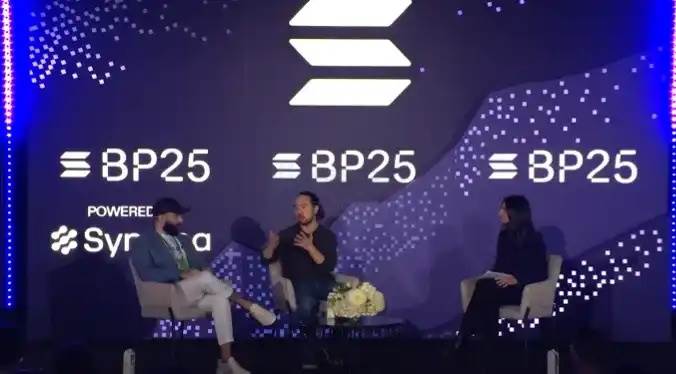
Paxos CEO: Has applied to the US SEC for a clearinghouse license, allowing for the issuance of stocks and bonds on the native blockchain.
On December 11th, Chad Cascarilla, co-founder and CEO of Paxos, stated at the Solana Breakpoint conference that Paxos has applied to become a clearing agency with the U.S. SEC. In the future, Paxos will be able to directly custody and issue stocks and bonds on the blockchain, allowing users to hold real underlying assets rather than derivatives. He emphasized that this will lay the foundation for the large-scale integration of traditional financial assets into the blockchain.
Cascarilla said that Paxos’ goal is to promote the integration of traditional assets into the blockchain ecosystem and continue to expand in the fields of stablecoins and asset tokenization, including the growth of USDG and gold tokenization products. He believes that a public blockchain will become a global unified platform for asset trading, significantly improving market accessibility and liquidity.
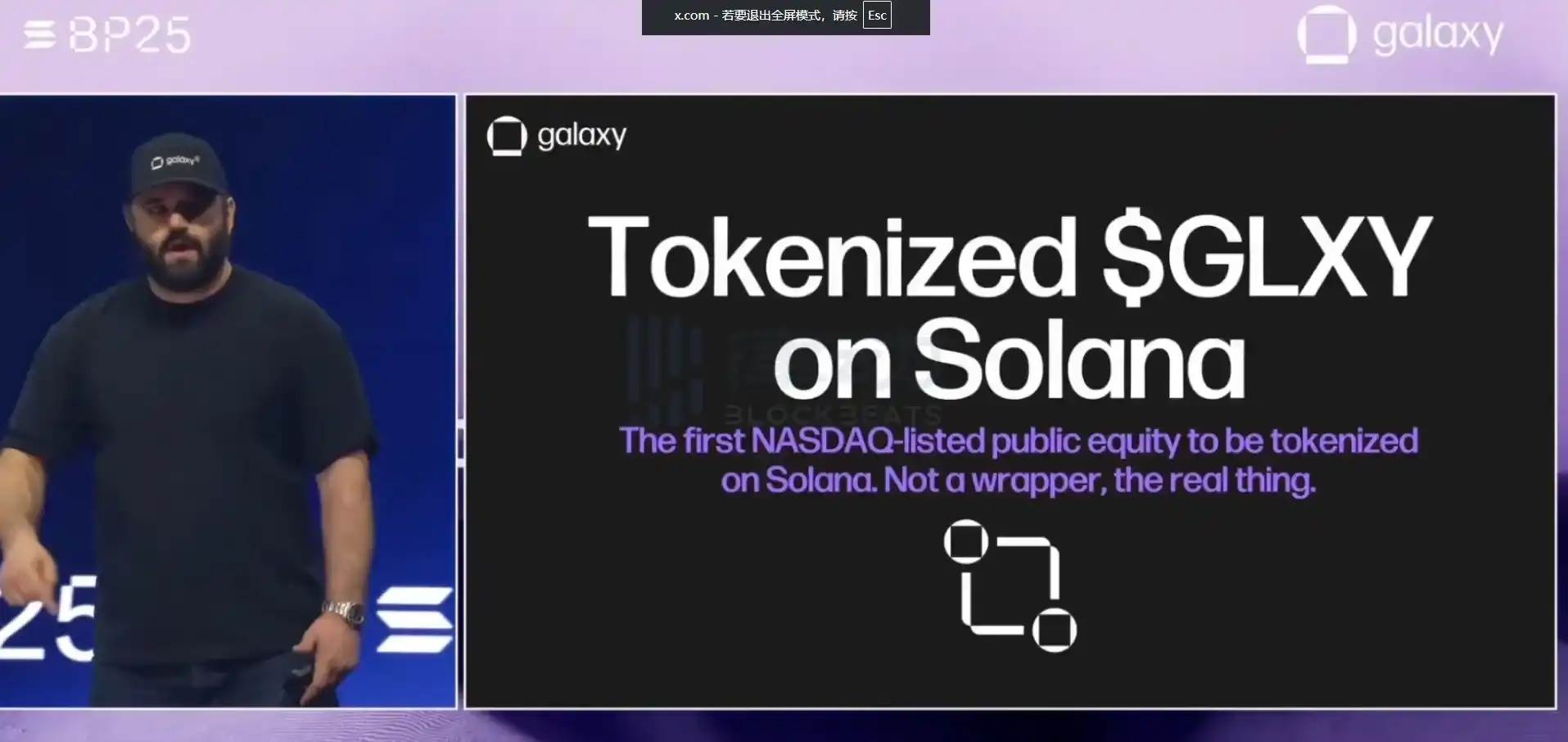
The head of Galaxy DeFi: Solana is the only blockchain capable of handling tokenized securities
On December 11th, Marcantonio, head of Galaxy DeFi, said at the Solana Breakpoint conference: “Galaxy Digital is listed on NASDAQ, meaning its shares are publicly traded. But we chose Solana to tokenize our shares because, in our opinion, Solana is the only blockchain that can handle tokenized securities with the required speed and efficiency.”
We hope that Solana will become absolutely dominant, so that when you compare prices of the same asset on Solana and NASDAQ, you will choose to buy on Solana. That’s our ultimate goal.
Max Resnick, chief economist at Anza: The volume of SOL transactions on the Solana network is already three times that of Binance, and competition is becoming increasingly fierce.
12月11日,Solana研究和开发公司Anza的首席经济学家Max Resnick在Solana Breakpoint大会上表示,「我们在五月份达到了10万TPS。不是在测试网上,也不是在白皮书里,而是在正式上线。市场结构也在实时进化:自营做市商把价差压得更紧,现在SOL-USD的成交量已经是Binance的三倍,竞争极度白热化,盘口每天都在变得更紧、更深。」
Circle CEO:将在Solana上线Circle Gateway
12月11日,Circle联合创始人兼首席执行官Jeremy Allaire在Solana Breakpoint大会上表示,Circle即将在Solana上线Circle Gateway,可实现跨链即时访问统一USDC余额功能。
Sunrise CEO:成功上线MON,交易量在前24小时超过Hyperliquid及一众CEX
12月11日,Solana生态流动性网关Sunrise CEO Saeed在Solana Breakpoint大会上表示,Sunrise在Solana上的首个资产上线案例是MON代币。我们把一个原本并非发行在Solana上的非原生代币,在上线首日、首分钟就直接引入Solana生态。它不仅与链上所有其他交易场所竞争,还要直面一众CEX对手。
As a result, within 24 hours of being listed, its trading volume surpassed that of well-known platforms such as Hyperliquid, KuCoin, Kraken, Coinbase, Bybit, Bitget, and Gate. Some of these CEXs have millions of users. What’s even more impressive is that its spread is tighter than those established CEXs, and its trading volume is also higher. All of this is made possible by the native user base of Solana.
Additionally, Saeed believes that if assets can be issued on Solana, and if those assets are competitive in terms of their liquidity, then it’s not just about listing crypto tokens. It could also involve stocks, commodities, or any financial products.
Helius CEO: Investors are advised to purchase BSOL, which will help developers build applications faster.
On December 11th, Helius CEO Mert stated at the Solana Breakpoint conference that investors can purchase BSOL, a stock token managed by us. By purchasing this token, we can use the profits to make the network run faster. In other words, each transaction you make helps developers build applications more efficiently.
Circle CEO: Solana’s appeal continues to grow, with more and more platforms using USDC on Solana as their main infrastructure.
12月11日,Circle CEO Jeremy Allaire在Solana Breakpoint大会上表示,Solana的交易量远超其他所有链。Solana基础设施越来越成熟,吸引力也与日俱增。越来越多面向消费者、面向商户的大型平台,都把Solana上的USDC当成首选基础设施来用。
DoubleZero联创:已有15家核心贡献者正在为Solana提供光纤电缆,以打造高性能的替代互联网
12月11日,DoubleZero联创Austin Federa在Solana Breakpoint大会上表示,DoubleZero拥有众多独立贡献者——现在已增至15家——他们正把光纤容量贡献给Double Zero网络。这些都是真实的物理光缆,它们被接入进来,为Solana打造一条完全独立的传输路径。
这种「众包光纤」的做法史无前例:所有现有高性能链网都由单一公司运营、手握一把总控私钥;Double Zero没有这样的「单点」,而是由15家贡献者各自铺设并掌控自己的光纤线路。
Yat Siu:Animoca Brands已布局超过628家投资组合公司,约200家为游戏项目
On December 11th, Yat Siu, co-founder and director of Animoca Brands, stated at the Solana Breakpoint conference that Animoca Brands has invested in over 628 companies, with approximately 200 of them being gaming projects. He believes that Bitcoin is similar to digital gold, while altcoins can be compared to the stock market, serving as the driving force behind growth in the crypto industry. Given that altcoins have practical applications, their total market value will eventually surpass that of Bitcoin significantly.
OSL Group plans to launch a stablecoin called USDGO on Solana.
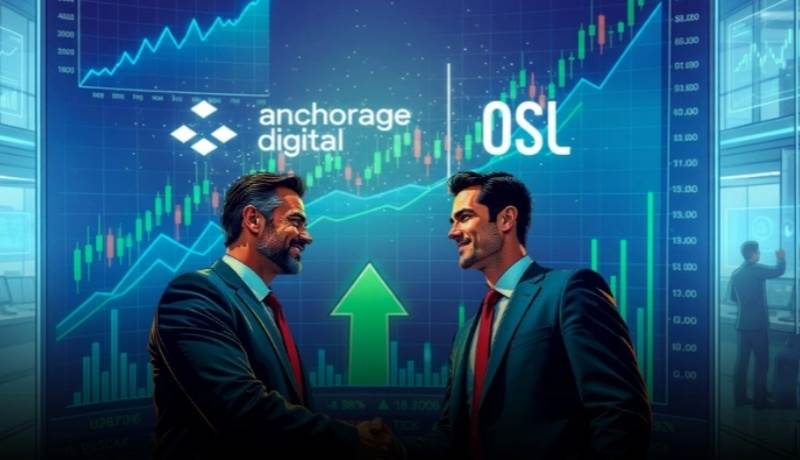
On December 11th, Zhang Yinghua, Chief Commercial Officer of OSL Group, announced at the Solana Breakpoint 2025 conference that OSL Group will collaborate with the Solana network to launch a US dollar stablecoin called USDGO. As the brand and distributor of USDGO, Anchorage Digital Bank will be responsible for its issuance.
It is reported that USDGO will be pegged to the US dollar at a 1:1 ratio and will comply with U.S. federal regulations. It is planned to be launched in the first quarter of 2026. Solana will be the first blockchain to host USDGO, and in the future, it will be expanded to more chains. USDGO is not just another stablecoin, but a legitimate stablecoin payment infrastructure designed for use by businesses and institutions.
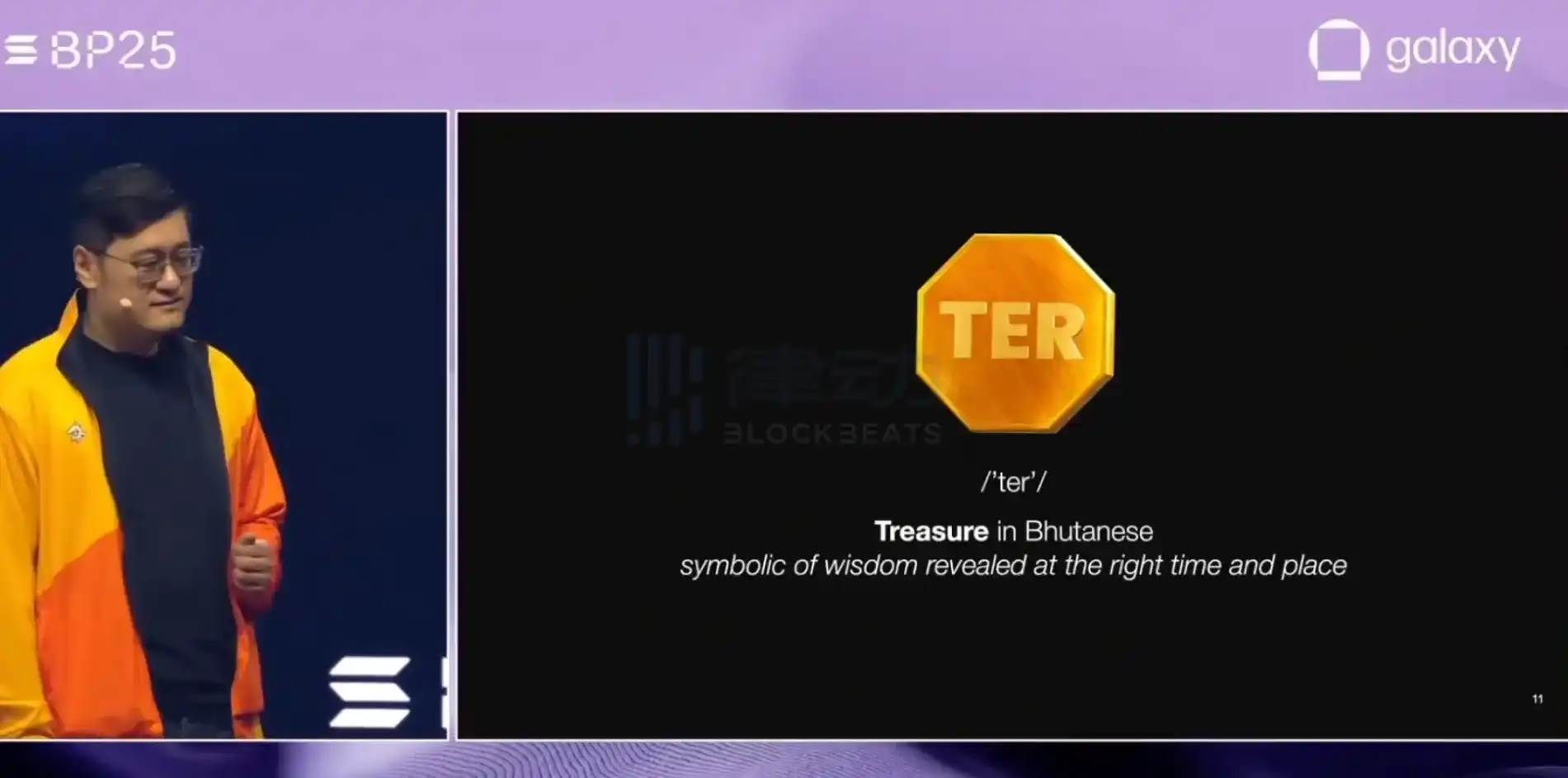
Bhutan announced that it will launch the world’s first sovereign-issued gold token called TER on Solana.
On December 11th, government officials from Bhutan announced another milestone partnership with Solana at the Solana Breakpoint 2025 conference, marking a key step towards making Bhutan a “crypto-friendly country”.
On December 17th, 2025 – Bhutan’s National Day – the world’s first sovereign-issued gold token will be launched on the Solana chain. The token is called “TER”, which means “treasure” in the language of Bhutan.
It is reported that TER will use SPL tokens, which are anchored in Bhutan’s national treasury gold at a 1:1 ratio, and offer real-time auditability along with second-level settlement capabilities. This will be Terra’s first entry into the blockchain ecosystem.
The Solayer mainnet Alpha version is now available, supporting real-time financial applications.
On December 11th, Solayer officially released the Alpha version of its InfiniSVM mainnet. InfiniSVM is a hardware-accelerated blockchain platform capable of handling up to 300,000 transactions per second, with confirmation times in the sub-second range. This network allows developers to deploy existing Solana applications while enjoying exceptional performance, thereby opening up new application scenarios such as high-frequency trading, real assets, and institutional finance.
Users can connect SOL through sBridge and immediately interact with deployed applications. Developers can access documentation and deployment tools, and begin building applications on InfiniSVM.
This release coincided with the Solana Breakpoint event held in Abu Dhabi. This marks Solayer’s integration into the Solana ecosystem, along with its commitment to providing support for Solana, while continuously expanding its capabilities in demanding application categories.
Galaxy’s founder said that Solana is still considered a blockchain network “designed for the capital market”.
On December 11th, Mike Novogratz, founder and CEO of Galaxy, stated at the Solana Breakpoint conference:
“As regulations become clearer, the industry has reached a stage where it’s essential to create products that users can actually use. The value of crypto assets is driven by both community engagement and actual growth. Narratives about these assets must be supported by real-world usage and innovation. Solana boasts high-performance capabilities, making it a chain “created for the capital market.” The collaboration between Galaxy and Jump also stems from Solana’s expertise in high-frequency infrastructure.
This year, the crypto market has seen significant fluctuations, but I remain optimistic. This year, one of Galaxy’s clients completed a sale of $9 billion in Bitcoin. Early investors are taking advantage of this opportunity to diversify their portfolios. At the same time, more and more people are continuing to buy Bitcoin. I have been in Abu Dhabi over the past few days, where I met with top investors from around the world, including some of the biggest capitalists. After discussing with these leaders in various industries, I am even more convinced that the global embrace of blockchain and digital assets is accelerating, rather than slowing down.”
Kyle Samani explained Solana ACE: It will allow developers to specify custom sorting rules.
On December 11th, Kyle Samani, co-founder of Multicoin and chairman of the board of Forward Industries (FORD), stated at the Solana Breakpoint conference that ACE (Application-Controlled Execution) will enable developers to define custom sorting rules, while still operating within a single global system with a global liquidity pool.
As part of Solana’s “Internet Capital Market” roadmap for July 2025, ACE grants smart contracts the ability to control transaction sorting on a millisecond level. This integration of traditional financial structures with blockchain scalability aims to reduce fragmentation within DeFi ecosystems.
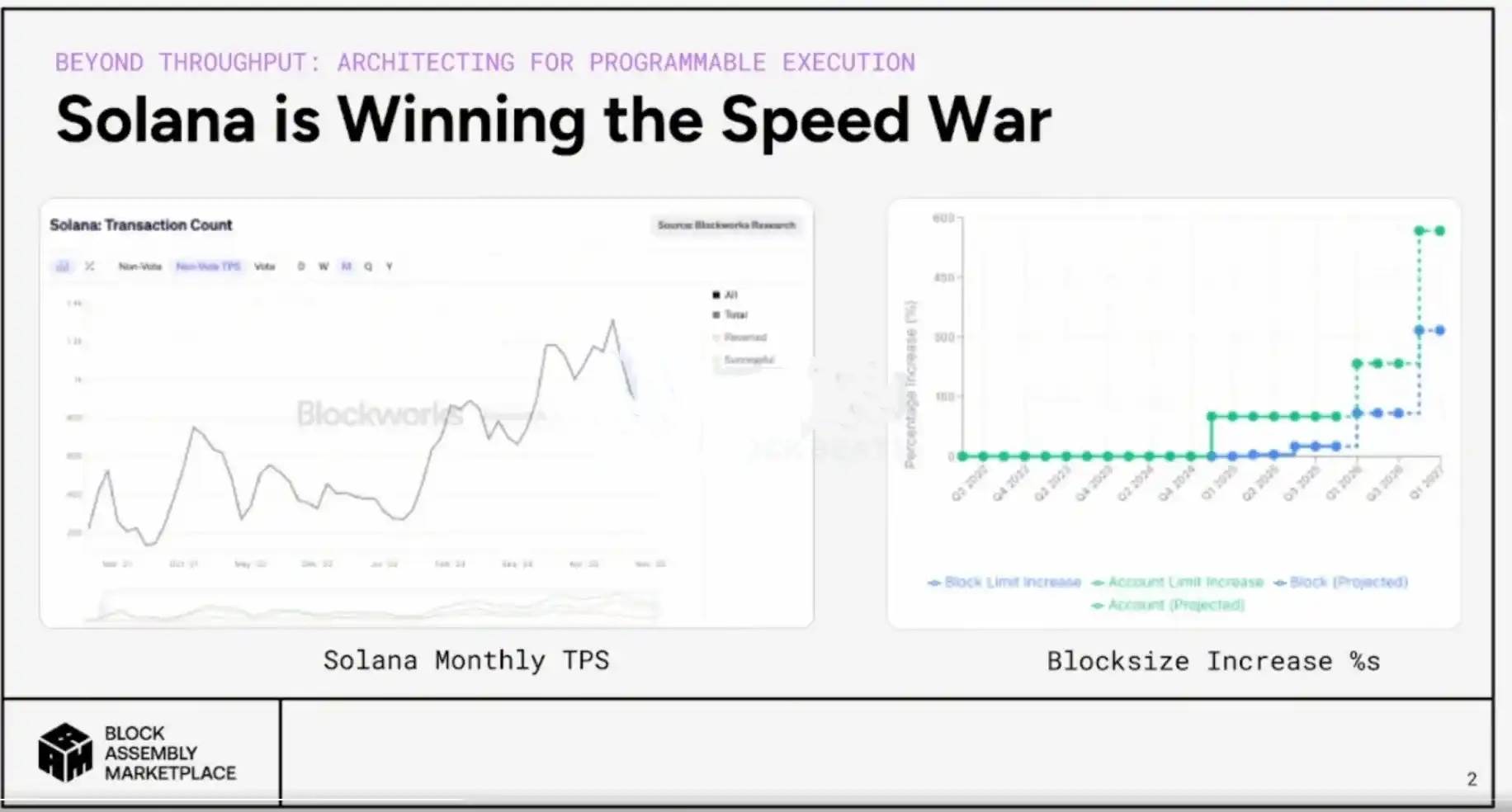
Jito Co-founder: Solana is winning the battle for speed. The maximum number of computational units per block in the network is expected to increase to 100 million by early next year.
On December 11th, Jito Co-founder and CEO Buffalu stated at the Solana Breakpoint conference that Solana is indeed winning this battle for speed. “Over the past few years, we have seen a six-fold increase in transaction volume per second, thanks to the efforts of all Solana engineers and outstanding application developers.”
In the chart on the right, you can see the continuous growth in block space over the past few years. At the beginning of this year, the maximum number of computational units per Solana block was around 48 million. This number has since increased to 50 million and 60 million units. It is expected that by early next year, this number will reach 100 million units, with continued exponential growth.