Exchange Ranking
 Top Exchanges
 24h Volume Ranking
 Popularity Ranking
 Exchange BTC Balance
 Proof of Reserves
 Decentralized Exchanges
 Funding Rate
 Funding Heatmap
 Liquidation Data
 Max Pain
 Long/Short Ratio
 Whale L/S Ratio
 Binance/Okex/Huobi L/S
 Bitfinex Margin L/S
 ETF Tracker
 Solana ETF
 XRP ETF
 Hong Kong ETF
 Bitcoin Treasuries
 Crypto Reversal
 Ethereum Reserves
 HyperLiquid Wallet Analysis
 Hyperliquid Whale Watch
 Large Transactions
 On-chain Movement
 Bitcoin ROI
 Stablecoin Market Cap
 Options Analysis
 News
 Articles
 Economic Calendar
 Features
 Wallet
 Contract Calculator


 Security
 Collections
 Watchlist
 Following
 BTC
Over the past week, there has been a intriguing trend in the Bitcoin market. Data from the blockchain shows that approximately $800 million worth of Bitcoins were transferred out of various centralized exchanges. The main destinations for these transactions were Binance, Gemini, and Bybit. This occurred during a period when Bitcoin prices were fluctuating significantly, leading investors to wonder whether this was due to fear of further losses or if it was a typical example of “smart money” using price fluctuations to accumulate assets quietly, transferring funds from exchanges to cold wallets in preparation for future market movements. These unusual actions are becoming a key indicator of what’s happening in the crypto community.
I. Flow of Funds: Continuous outflows and short-term fluctuations
The recent trend of Bitcoins being withdrawn from exchanges is not accidental.
● Data shows that this pattern of negative net outflows has been occurring since March 2025, indicating that the amount of Bitcoins withdrawn from exchanges is consistently greater than the amount deposited. In the previous 30-day period, the net outflow even reached around 170,000 Bitcoins.
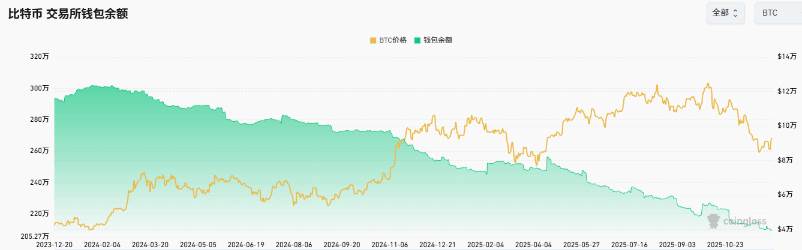
● Data from the past 24 hours indicates that market sentiment is somewhat mixed: overall, there was a slight net inflow of 145.36 Bitcoins, but Binance still recorded a net outflow of 326.22 Bitcoins. On the other hand, platforms like OKX and Bitfinex experienced net inflows.
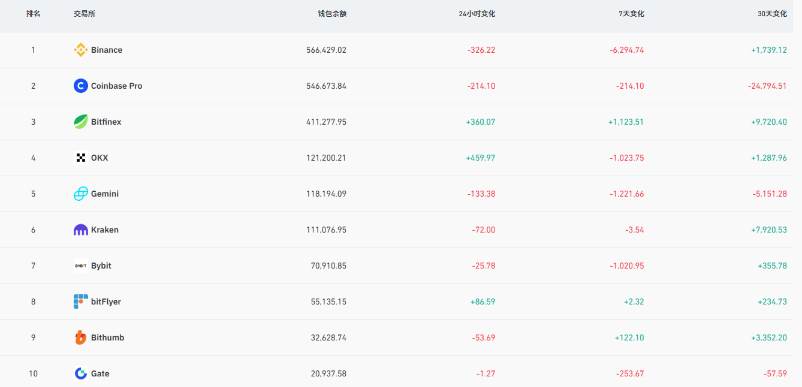
● This suggests that the long-term trend of withdrawing funds from exchanges is clear, but short-term flows may vary between different platforms, reflecting the immediate actions of different types of investors (such as institutional and retail investors).
II. Where did the leaked Bitcoins go?
The fact that a large amount of Bitcoins leave the exchange does not necessarily mean they are sold in the market. There are several possible explanations for this behavior, each conveying different market signals:
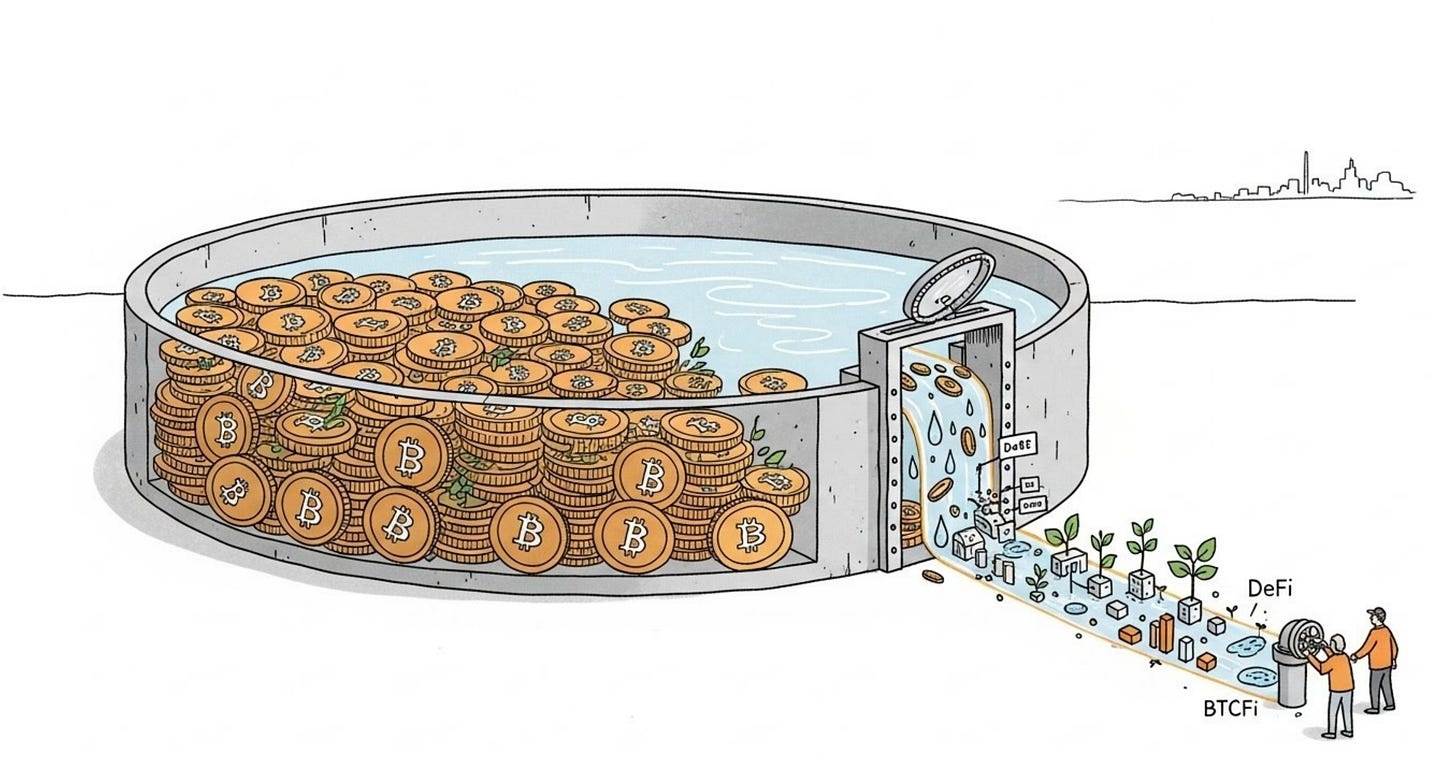
● Transfer to private wallets for long-term storage: This is the most common interpretation of this situation. Investors transferring their assets to cold wallets under their control indicates that they intend not to sell those assets in the short term, but rather to hold them for longer periods with greater safety. Such self-hosting behavior reduces the “circulating supply” available for trading, thereby creating conditions for price increases.
● Adjustments and allocation by institutional investors: Large institutions, funds, or businesses could be key players in this scenario. They may transfer Bitcoins from exchanges to professional custody services that meet regulatory requirements, or use these Bitcoins as underlying assets for new financial products like spot ETFs. Some analyses suggest that structural buyers like companies and ETFs currently absorb far more Bitcoins per day than miners can generate, which means they must continuously purchase Bitcoins from exchanges or the secondary market.
● Mitigating market fluctuations and risk avoidance: In times of severe market volatility and increased uncertainty, storing assets in personal wallets can be a defensive measure to manage risks. This isn’t necessarily based on strong bullish expectations; it’s more about avoiding potential risks associated with exchanges, such as liquidity and credit risks.
III. Key implications: Restricting supply and restructuring the market structure
Regardless of the specific purpose behind this phenomenon, the direct result of continuous net outflows is a continuous decrease in the total amount of Bitcoin held by exchanges. This has two significant effects on the market structure:
● Supply-side tightening leads to an increase in price levels: The number of “flexible tokens” that can be sold at any time decreases. When demand increases again, buyers will need a higher price to persuade holders to sell their tokens. This naturally creates a stronger price support mechanism. Some believe that this imbalance between supply and demand is the core driving force behind the long-term rise of Bitcoin.
● Market leverage and emotional reactions: Outflows often coincide with significant corrections in market prices. Recently, large-scale leveraged positions were liquidated, which some analysts see as a sign of “surrender” by speculative traders. This clearing of unstable positions helps pave the way for a healthy market growth. At the same time, some on-chain indicators show that short-term holders are suffering significant losses. This is typically one of the signs of a temporary market bottom.
IV. Outlook for the future: Is this a break from the bull market, or a turning point?
There are differing opinions on the future market situation, but most analysts view this outflow as a positive signal.
● Bullish analysts believe this is a phase of building momentum: 历史数据显示,大规模交易所资金流出事件,往往标志着牛市的启动或熊市的终结。当前,比特币的许多长期看涨叙事依然稳固,如第四次减半后新币供应永久性减少、全球范围内机构与国家队的采纳趋势等。当前的震荡被视为牛市周期中的“中场休息”和区间整理,为下一轮上涨积蓄能量。
● 谨慎观点关注短期风险:看涨逻辑的实现需要宏观环境的配合。如果全球流动性收紧,或关键买家(如ETF)的资金流入趋势发生逆转,上涨动能将受阻。此外,价格短期内可能仍需测试并巩固关键支撑位。
五、对投资者的启示:在复杂信号中聚焦本质
面对复杂的市场信号,普通投资者可以把握几个要点:
● 关注长期趋势,而非短期噪音:交易所净流出是一个中长期链上指标,其意义在于揭示累积趋势。短期价格波动和资金流向反复是常态,不应作为单一决策依据。
● 理解指标背后的多重含义:“流出”不等于“看涨”,也可能是避险。需要结合衍生品市场数据、宏观经济和监管新闻等其他维度综合判断。
● 认识到市场结构的根本变化:The Bitcoin market has shifted from being dominated by individual investors to being deeply involved in by institutions, corporations, and other long-term holders. This means that price volatility may change, and the strategy of holding assets over the long term becomes more attractive than ever before.
The withdrawal of nearly ten thousand Bitcoins within seven days is just one example of this trend. It represents both an individual’s decision to vote with their feet by placing assets under their own custody, as well as a reflection of Bitcoin evolving from a highly volatile trading asset to a valuable asset that is held for long periods of time.