Exchange Ranking
 Top Exchanges
 24h Volume Ranking
 Popularity Ranking
 Exchange BTC Balance
 Proof of Reserves
 Decentralized Exchanges
 Funding Rate
 Funding Heatmap
 Liquidation Data
 Max Pain
 Long/Short Ratio
 Whale L/S Ratio
 Binance/Okex/Huobi L/S
 Bitfinex Margin L/S
 ETF Tracker
 Solana ETF
 XRP ETF
 Hong Kong ETF
 Bitcoin Treasuries
 Crypto Reversal
 Ethereum Reserves
 HyperLiquid Wallet Analysis
 Hyperliquid Whale Watch
 Large Transactions
 On-chain Movement
 Bitcoin ROI
 Stablecoin Market Cap
 Options Analysis
 News
 Articles
 Economic Calendar
 Features
 Wallet
 Contract Calculator


 Security
 Collections
 Watchlist
 Following
进入2026年,加密市场正面临深刻的结构性调整。高FDV却缺乏实际应用的项目消耗了大量资金,Memecoin的狂热不仅吸干了公众信心,也让加密名声受损,而赚到的钱几乎没有回流生态系统。与此同时,绝大多数空投演变成了“拉高抛售”(Pump and Dump),TGE的存在更多是为了给早期投资者和团队提供退出渠道。结果,“钻石手”和长期投资者成为重灾区,多数山寨币难以恢复,泡沫正在破裂,代币暴跌引发市场情绪极度紧张。
一切都结束了吗?
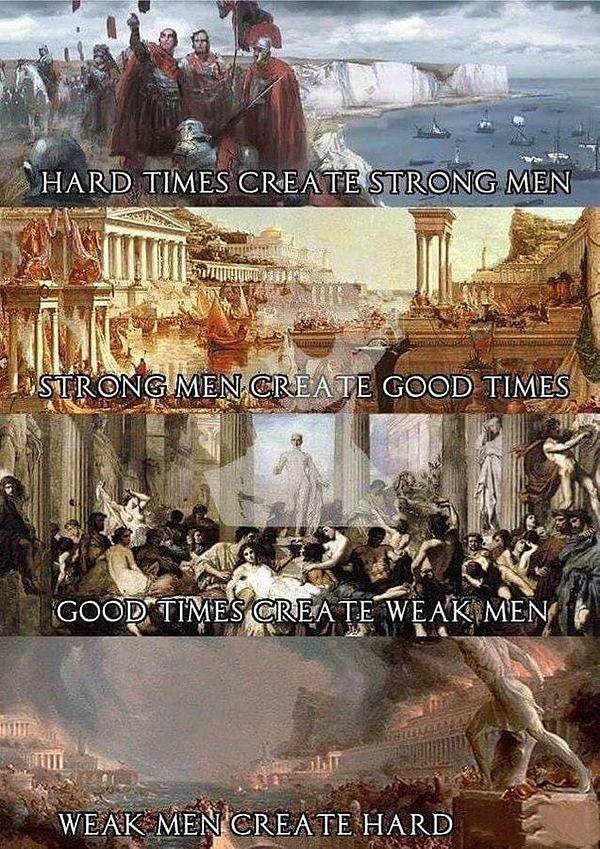
艰难时刻造就强者
公平地讲,2025年一点也不差。我们拥有一大批杰出的项目:Hyperliquid、MetaDAO、Pump.fun、Pendle、FomoApp,它们每一个都在证明,这个行业仍有真正的建设者在以正确的方式做事。
这是行业所需的一次大清洗,旨在剔除害群之马。我们正在反思,也将改进。
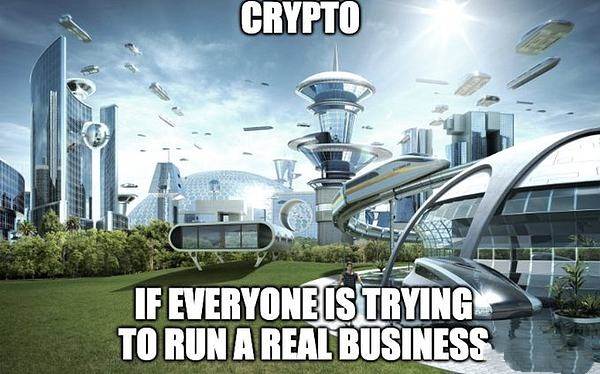
现在,为了吸引更多的资金和用户,我们需要展示更多的真实应用、真实业务、以及具有实际价值捕获能力的代币营收。我相信,这正是2026年行业应有的走向。
回顾 2025:稳定币、PerpDex与 DAT 之年
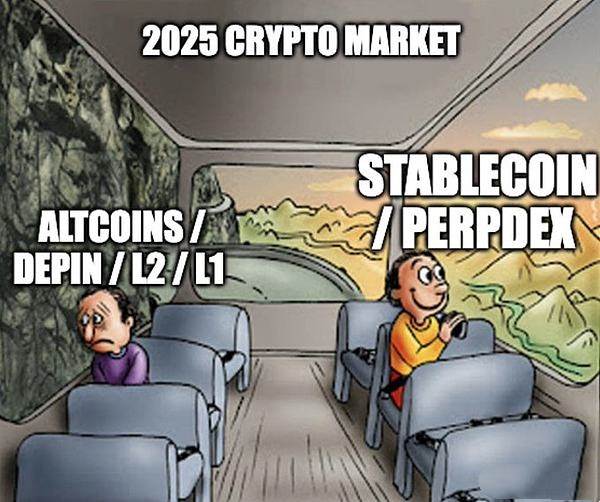
1、稳定币趋于成熟
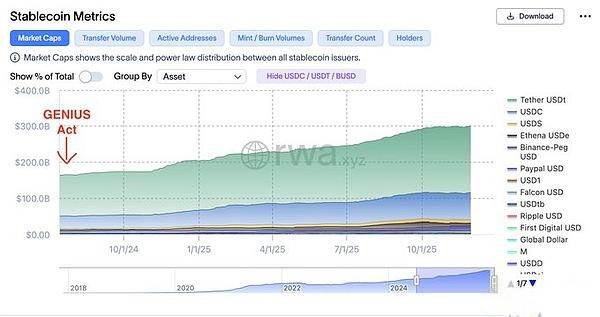
In July 2025, the "Genius Act" was signed into law, marking the introduction of the first regulatory framework for stablecoins. This framework requires that stablecoins must be backed by 100% cash or short-term government bonds. Since then, traditional financial institutions have shown significant interest in stablecoins. This year, the net inflow of stablecoins exceeded $100 billion, setting a record. Institutions believe that stablecoins have the potential to replace traditional payment systems. The reasons are as follows:
● More affordable and efficient cross-border transactions
● Instant settlement
● Extremely low transaction fees
● 24/7 availability
● Hedging against currency fluctuations
● Transparency on the blockchain
We have seen major mergers and acquisitions by tech giants, such as Stripe acquiring Bridge and Privy, Circle’s successful IPO, and top banks expressing interest in issuing their own stablecoins.
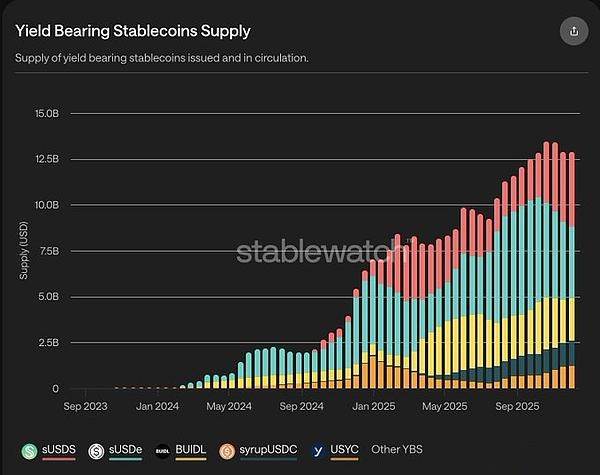
In addition to payments, another useful application of stablecoins is to generate non-discretionary income, known as “yield-bearing stablecoins” (YBS).
This year, the total supply of YBS doubled, reaching $12.5 billion. This growth was driven by initiatives like BlackRock BUIDL, Ethena, and sUSDs. Although recent security incidents, such as those involving Stream Finance, have dampened market sentiment, stablecoins remain one of the few sustainable growth businesses in the crypto industry.
2. PerpDex
PerpDex is the star of this year. According to DeFiLlama data, its Open Interest has increased by an average of 3-4 times, rising from $3 billion to a peak of $23 billion. Weekly trading volume has also exploded, from $80 billion to over $300 billion.
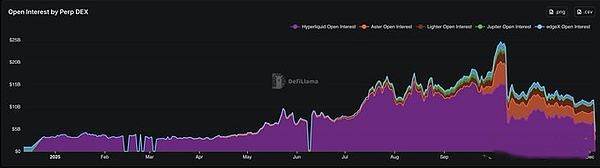
PerpDex’s rise is threatening the dominance of centralized exchanges. Take Hyperliquid as an example: its trading volume has already reached 10% of Binance’s volume, and it continues to grow. Traders choose these platforms for several reasons:
● No need for KYC authentication
● Liquidity comparable to CEXs
● Expected token distribution
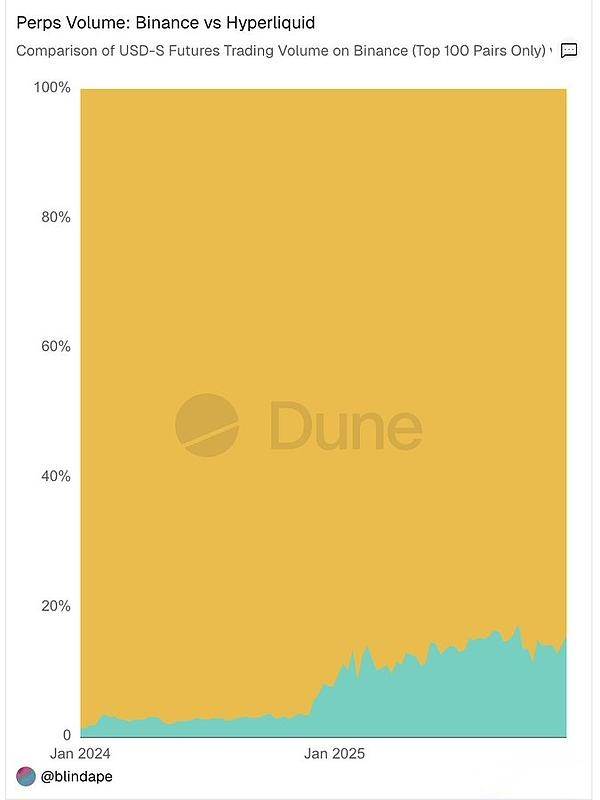
The valuation logic is also changing. Hyperliquid has shown that PerpDex can have extremely high valuation potential, leading to a “points race.” Through mechanisms like token repurchase programs (such as those related to $HYPE), these tokens provide real value rather than just high-valued, useless governance tokens.
3. DAT
Thanks to Trump’s support for cryptocurrencies, interest on Wall Street has increased significantly. DAT follows MicroStrategy’s model and has become a key channel for traditional finance to gain access to the crypto market.
Approximately 76 new DATs were created this year, with a total capitalization of $137 billion (82% in BTC). Over 82% of the assets are in BTC, while about 13% are in ETH. The rest are spread across various altcoins.
Please refer to the chart below:
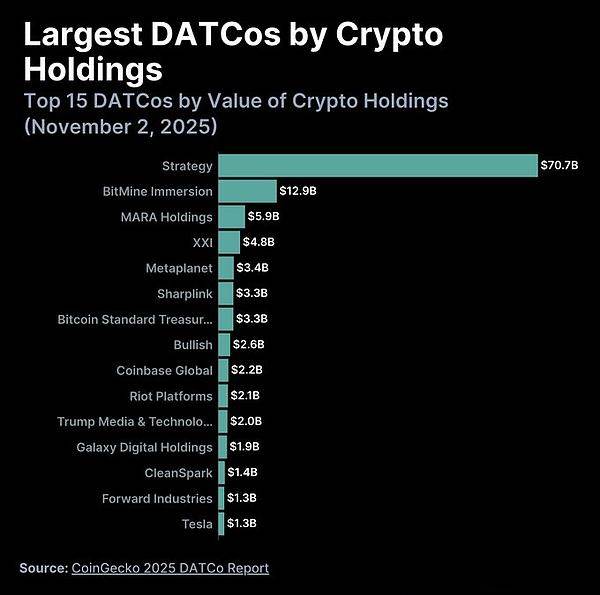
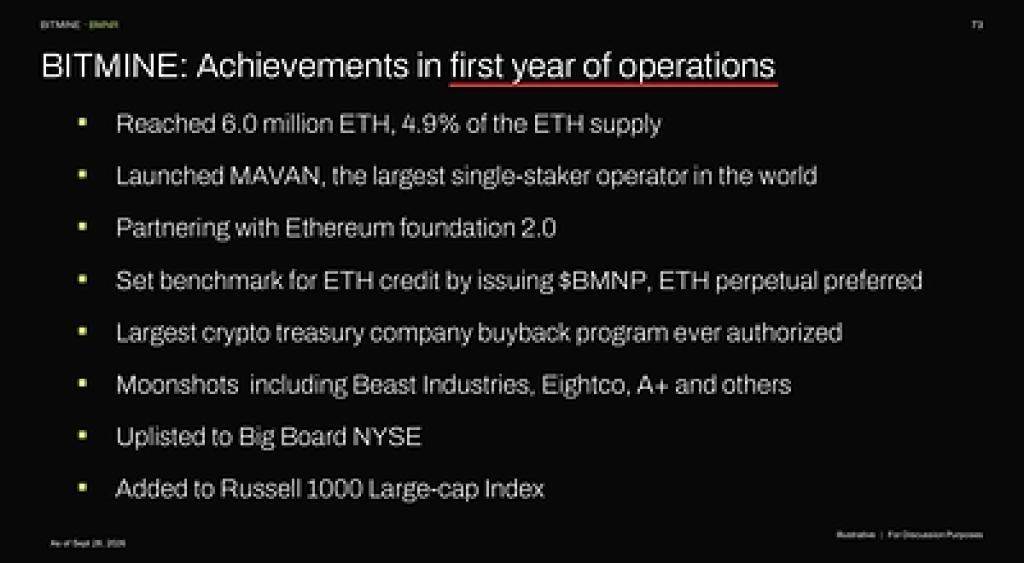
Bitmine (BMNR), founded by Tom Lee, is one of the most representative entities in this DAT wave. It has become the largest buyer of ETH among all participants in the DAT ecosystem. However, despite the initial hype, most DAT stocks experienced a “pump and dump” scenario within the first 10 days after listing. After October 11th, funds flowing into DAT plummeted by 90% compared to the peak seen in July. Moreover, the price of most DAT tokens fell below their net asset value per share. This indicates that the bubble has burst, and the hype cycle around DAT is essentially over.
During this period, we have learned the following:
● Blockchain technology requires more practical applications in the real world.
● The core uses of cryptocurrencies remain focused on trading, financial management, and payments.
● People’s preferences have shifted: the “potential for creating value through fees” now outweighs “decentralization” (refer to @EbisuEthan’s views).
● Most tokens need stronger “value anchors” that are tied to the fundamentals of the protocol, in order to protect and reward long-term holders.
● A more mature regulatory and legislative environment will provide greater confidence for builders and top talents to join this industry.
● Information has become a tradable asset on the Internet, such as in projects like Prediction Market PM and Kaito.
● New public blockchains (L1/L2) that lack clear positioning or competitive advantages will gradually disappear.
So, what should we do next?
Looking to 2026: Prediction markets, stablecoin payments, and more mobile-based revenue generation
I believe that cryptocurrencies will evolve in four directions by 2026:
● Prediction markets
● More stablecoin payment services
● More mobile-based DApp applications
● More real-world revenue opportunities
1. The popularity of prediction markets continues to grow
Undoubtedly, prediction markets remain one of the most exciting areas in the cryptocurrency ecosystem.
● The ability to bet on anything
● Predictions with an accuracy rate of up to 90% for real-world outcomes
● Creating incentives for participants
These slogans have attracted significant attention in this field, and their underlying principles are also compelling. As of this writing, the weekly total volume of prediction market transactions has already surpassed the peak during the 2024 elections in the United States (including any fraudulent transactions at that time).
Currently, companies like Polymarket and Kalshi have dominated distribution channels and liquidity. Competitors who lack substantial differentiation (except for Opinion Lab) have little chance of gaining meaningful market share.
Institutions are also showing strong interest in these markets: Polymarket received an investment from ICE worth $8 billion, with a secondary valuation of $12 billion to $15 billion. Meanwhile, Kalshi completed an E-round financing worth $11 billion.
This trend is unstoppable.
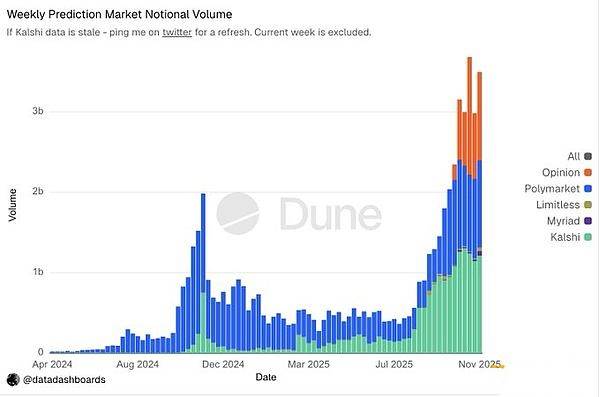
更重要的是,随着即将推出的 POLY 代币、即将到来的 IPOs,以及通过 Robinhood 和 Google Search 等平台的主流分发渠道,预测市场将很容易成为 2026 年的主要叙事之一。
尽管如此,该领域仍有很大的改进空间,例如:完善裁决和争议解决机制、开发应对“有害流动性”(toxic flow)的方法、以及在漫长的反馈周期中保持用户参与度等。
除了这些占据主导地位的玩家,我们还可以期待新的、更加个性化的预测市场出现,例如 @BentoDotFun 等。
2、稳定币支付领域
在《天才法案》(Genius Act)出台后,机构对稳定币支付的兴趣和参与度激增,成为推动采用增长的关键驱动力之一。
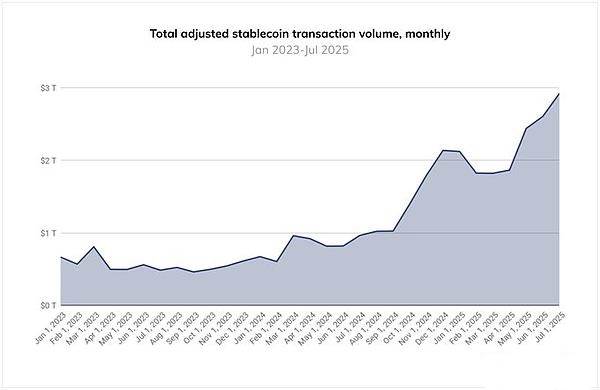
在过去一年中,稳定币月交易量已攀升至近 3 万亿美元,且采用正在迅速加速。虽然这可能不是一个完美的衡量指标,但它已经显示出稳定币在《天才法案》和欧洲 MiCA 框架生效后的使用增长。
On the other hand, companies like Visa, Mastercard, and Stripe are embracing stablecoin payments. This includes enabling consumers to use stablecoins through traditional payment channels, as well as working with centralized exchanges (e.g., Mastercard x OKX Pay). Businesses now have the option to accept stablecoins, regardless of how customers pay. This shows that Web2 giants are willing to show confidence and flexibility towards such assets.
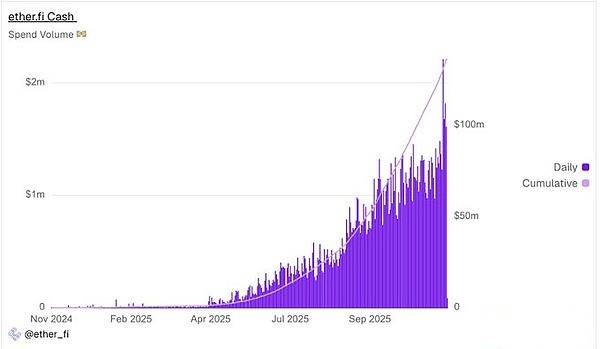
Additionally, new crypto banking services like Etherfi and Argent (now renamed Ready) are also offering card products, allowing users to directly consume their stablecoins.
Take Etherfi as an example: daily transactions have steadily increased to over $1 million, and there is no sign of slowing down.
However, we cannot ignore one fact: new crypto banks still face high customer acquisition costs. Moreover, since users must host their own assets, it’s difficult to monetize the funds deposited by users.
Some potential solutions include offering in-app swaps or re-packaging revenue-generating products as financial services for users.
With @tempo and @Plasma ready to launch as dedicated payment networks, I expect the payment industry to see significant growth, especially considering the distribution and brand influence brought by Stripe and Paradigm.
3. Popularity of mobile applications
Smartphones are becoming more and more popular around the world, and the younger generation is driving the shift towards electronic payments.
As of now, nearly 10% of global daily transactions are conducted through mobile devices. Thanks to its mobile-first culture, Southeast Asia is leading this trend. This represents a fundamental shift in the traditional payment landscape, and I believe this change will naturally extend to the crypto sector, as mobile transaction infrastructure has improved significantly compared to a few years ago.
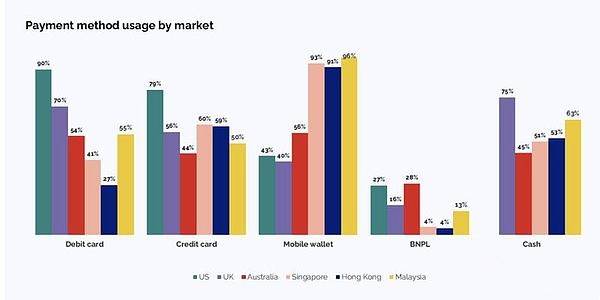
This also applies to tools like Privy, which offer features such as account abstraction, unified interfaces, and mobile SDKs.
The process of integrating mobile applications now is much smoother than it was two years ago.
According to research by a16z Crypto, the number of users with crypto mobile wallets has increased by 23% year-over-year, and this trend shows no signs of slowing down.
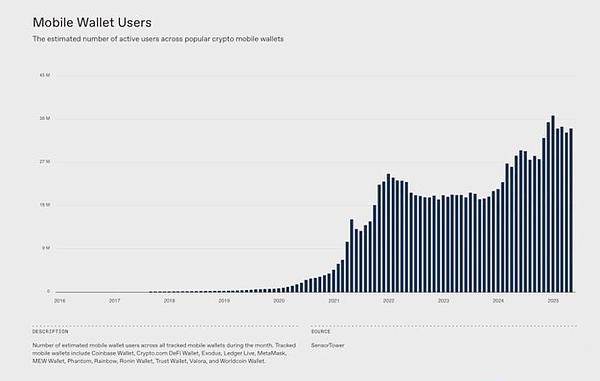
In addition to the changing consumption habits of the Generation Z, we can also expect more mobile-native DApps to emerge by 2025.
For example, the social trading app Fomo has seen explosive growth among its new users, thanks to its intuitive and user-friendly interface, allowing anyone to buy tokens without any prior knowledge.
In just six months of development, they managed to achieve an average daily transaction volume of $3 million, reaching a peak of $13 million in October.
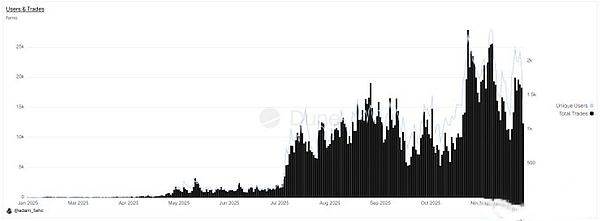
Along with Fomo, major players like Aave and Polymarket are also prioritizing the development of mobile-first savings and betting experiences. Newcomers like @sproutfi_xyz are also trying out mobile-first revenue models.
With the continuous growth of mobile-based activities, I expect that mobile DApps will become one of the fastest-growing sectors by 2026.
There are several reasons why people find it difficult to believe this trend.
Most tokens listed on major exchanges generate almost no meaningful revenue at all. Even when they do generate some revenue, there is a lack of value that can be attributed to the tokens themselves. Logically speaking, once the hype subsides, these tokens will no longer be able to attract sustainable investors, and their value will continue to decline.
It’s clear that cryptocurrencies tend to focus too much on speculative trading, rather than on addressing the underlying fundamentals of real businesses.
Most DeFi projects have fallen into the trap of designing “ponzi schemes” in order to gain initial traction. But every time, the end result is finding ways to sell off the tokens after the initial launch, rather than creating sustainable products.
As of today, only 60 protocols have generated revenues of over $1 million over the past 30 days. In contrast, there are approximately 5,000 to 7,000 IT companies on the Web2 platform that can generate such amounts of revenue monthly.
Fortunately, under Trump’s pro-cryptocurrency policies, things are starting to change in 2025. These policies make profit-sharing possible and help address the long-term issue of weak token value anchors.
Many projects like Hyperliquid, Pump, Uniswap, and Aave are taking active steps to develop their products and generate revenue.
他们认识到加密货币是一个“无记名资产”(bearer-asset)生态系统,这自然要求积极地进行价值累积。
这就是为什么回购在 2025 年成为如此强大的价值锚点,因为它是一个最清晰的信号,表明团队与投资者利益是一致的。
那么,哪些业务产生了最稳健的收入呢?
加密货币的主要使用场景仍然是交易、理财和支付。
然而,区块链基础设施的费用压缩意味着链级别的收入预计今年将下降约 40%。相比之下,DEXs(去中心化交易所)、交易所、钱包、交易终端和应用成为了大赢家,增长了 113%。
请押注更多的应用和 DEXs。
如果这还不能说服你,根据 1kx 的研究,我们实际上正经历着加密货币历史上向代币持有者流动的最高价值。请看下图。
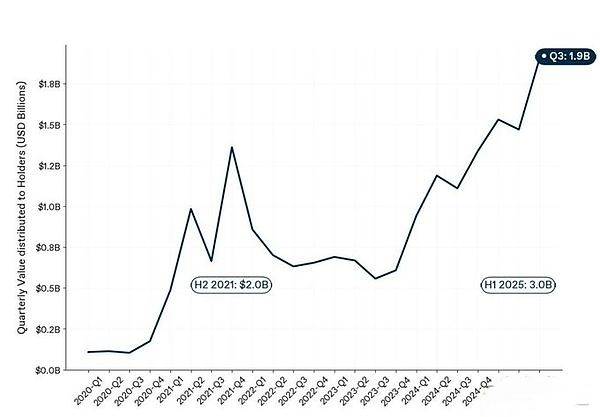
总结
加密货币并未结束,它正在进化。我们正在经历市场所需要的一次清洗,这将使加密货币比以前变得好 10 倍。
那些能够生存下来、实现现实世界应用、产生真实收入、并构建具有有意义效用或价值累积的代币的项目,最终将成为大赢家。
2026 年将是属于这种转变的一年。