Exchange Ranking
 Top Exchanges
 24h Volume Ranking
 Popularity Ranking
 Exchange BTC Balance
 Proof of Reserves
 Decentralized Exchanges
 Funding Rate
 Funding Heatmap
 Liquidation Data
 Max Pain
 Long/Short Ratio
 Whale L/S Ratio
 Binance/Okex/Huobi L/S
 Bitfinex Margin L/S
 ETF Tracker
 Solana ETF
 XRP ETF
 Hong Kong ETF
 Bitcoin Treasuries
 Crypto Reversal
 Ethereum Reserves
 HyperLiquid Wallet Analysis
 Hyperliquid Whale Watch
 Large Transactions
 On-chain Movement
 Bitcoin ROI
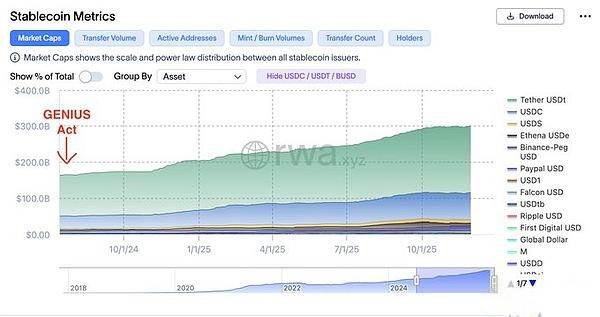
 Stablecoin Market Cap
 Options Analysis
 News
 Articles
 Economic Calendar
 Features
 Wallet
 Contract Calculator


 Security
 Collections
 Watchlist
 Following
 BTC
金钱看似简单,但背后隐藏着深刻的哲学与历史。从纸币到屏幕上的数字,我们为何会认同它们的价值?其实,金钱的本质一直在变化,而我们常常在变化发生后才意识到。不管是制度、科技,还是人们的信念,都在不断重塑价值本身。理解金钱的流动与演变,不只是研究财富,更是看清世界如何在我们脚下悄悄改变。
在人类历史的大部分时间里,人们使用各种各样的东西作为货币:盐、贝壳、牛、贵金属,以及写下承诺的纸片。什么使某物成为“货币”,什么使某物成为“一个有价值的物体”,这个问题从未被明确解决。通常“看到它时就知道我们是什么”,除非我们不知道。
当杰克·多西(Jack Dorsey)发推说“比特币不是加密货币”时,他获得了维护古老辩论的痛点。因为如果比特币不是加密货币,那它是什么?如果加密货币不是比特币,那加密货币又是什么?更重要的是:这为什么重要?
简单的答案是,这只是部落(部落主义)。是“比特币最大主义者”在划清界限。是团队在选择立场。这种乏味的辩论让普通人对整个领域敬而远之,因为每个参与者似乎都有些疯狂。
But I believe that other things are happening as well—things that go beyond mere tribal conflicts. I think the market is slowly, but painfully, realizing that Bitcoin and cryptocurrencies are not the same thing, even though they have “shared the same address” for fifteen years. The process of separating them hasn’t caused any disruptions. This is a case of specialized division of labor.
This distinction is important because specialized division of labor is interconnected and serves a function. The heart and lungs don’t compete with each other; they perform different functions. If you try to make your heart do both the work of breathing and everything else, you won’t get a more efficient organism—you’ll end up with a non-functional organism.
Bitcoin and cryptocurrencies are moving in different directions, not because they hate each other, but because they were designed to do fundamentally different things. One aims to be a currency, while the other aims to be everything else. And if both can succeed, it’s definitely because they try to stop being competitors.
People keep arguing about this “war.” But war is meant to lead to victory. And this is precisely what is being achieved.
Why do I still need to mention this topic?
Listen, when Jack Dorsey posted that “Bitcoin is not a cryptocurrency,” you need to stop and think about what exactly has happened with Bitcoin. He’s the co-founder of Twitter and Square (now Block). He spoke publicly about Bitcoin on a global scale, even describing it as “poetry” in terms of its open-source nature. He considered Bitcoin to be the most important digital asset; everything else, he said, was either noise or an obstacle to progress.
So when Dorsey made this statement, it seemed to carry great significance. It felt like an announcement of separation. The biggest fan of cryptocurrencies… Everyone chose data over other options.

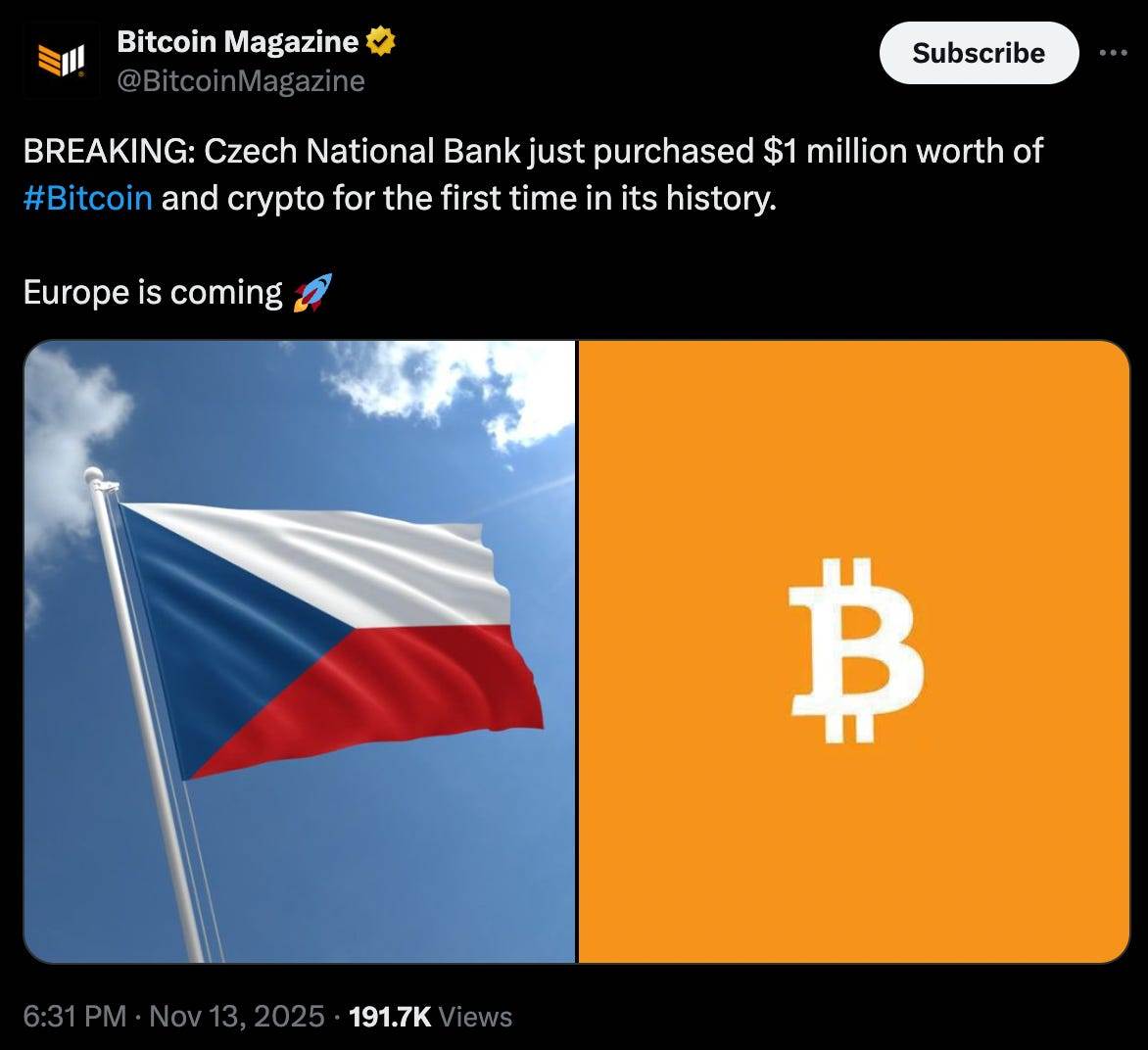
On the other hand, the Czech Republic just added Bitcoin to its national reserves. It wasn’t a game-changer, but after the United States established strategic Bitcoin reserves in March, 45 states began adopting their own reserve laws. Scotland, New Hampshire, and Texas already have such laws in place. Luxembourg’s sovereign wealth fund also switched to pure Bitcoin.
They have control over the entire digital asset sector, yet they still choose one thing over others. Why?
多年来,比特币和“加密货币”一直被压缩成一个类别。记者们写“加密市场”时,指的是从比特币到狗狗币,再到今天刚刚推出的任何新Token。监管机构谈论“数字资产”时,把它们都归于一类。资产管理员在投资组合中创建“加密货币配置”。该行业追踪“比特币市场份额”(比特币主导地位)作为总加密市值的份额,这意味着它们都在竞争相同的块蛋糕。
但这个框架正开始破裂。不是因为台湾或部落主义,而是因为机构实际对待这些事物的方式、市场实际给它们定价的方式,以及人们实际使用它们的方式。
当富达(Fidelity)发布关于比特币的研究时,他们并不称其为“加密资产”。他们称之为“货币资产”。贝莱德(BlackRock)将描述为“数字黄金”和“非绝对价值储存”。这不仅仅是一种营销语言。这是一种基本的分类,将比特币与该领域其他所有领域都将来。他们不像比较可口可乐和百事可乐那样比较其比特币和以太坊。他们正比特币被视为完全独立的资产类别。
这在多西发推之前就已经发生了。铁杆的比特币支持者几年前就在设想中将比特币与加密货币分开了。他们只是没有用新闻稿来宣布最后。
比特币想要什么
The design of Bitcoin is based on a set of very strict priorities: security, predictability, decentralization, and currency functionality. These features contribute to its slow evolution. The development culture around Bitcoin also leads to a tendency towards conservatism. Updates require years of debate. The entire system is designed to be resistant to modification.
They might consider this a flaw. Many people are visible in the process of development. They point out that Bitcoin’s 10-minute block time is ridiculously slow compared to newer chains. They also note that Bitcoin cannot support smart contracts or decentralized applications, nor any of those fancy enhancements offered by Ethereum. There’s truth to all of these criticisms.
But from another perspective, Bitcoin isn’t meant to do everything. It aims to excel at one thing: becoming a trustworthy, predictable, and censorship-resistant currency.
Predictability is crucial. Bitcoin has a hard cap of 21 million units. This limit is hardcoded into the protocol. Changing it would require convincing powerful computing power, and it could lead to a hard fork. For many people, the 21 million unit limit represents what makes Bitcoin distinct from traditional currencies and cryptocurrencies. That’s why this limit has been maintained for 16 years. It remains unchanged despite similar monetary policies being implemented elsewhere.
Compare this with almost any other cryptocurrency. Ethereum switched from proof-of-work to proof-of-stake. It plans to implement ERC 1559 to devalue Ether. These are interesting technical decisions, but they go against the principle of predictability. Every change reminds us that rules can change again.
Yes, I can tell you that these changes can quickly make the system more efficient and effective. But you might ask, “What’s better?” If you’re trying to create a neutral, long-term value storage mechanism, then rules aren’t important—on the contrary. But if you’re trying to create an application platform that allows for rapid iteration and better services for developers, then changing rules is beneficial. You should constantly change the rules. Break traditions and embrace new approaches.
The key uses of these technologies are different from what we expect.
What do cryptocurrencies want?
A broader encrypted ecosystem—everything beyond Bitcoin—seems more like a technology sector rather than a monetary system. Its optimization lies in speed, convenience, and innovation. New layer-2 solutions are introduced every few months. There’s DeFi, including decentralized financial protocols, derivatives, and liquidity mining. There’s also decentralized physical infrastructure (DePIN). There are games, NFTs… and everything that will come in the future.
Things are moving very quickly. The cycles are short. The ambitions are great.
How cryptocurrencies operate is similar to how Silicon Valley operates. Venture capital flows in. Founders invest money, release products, and try new things when things don’t work out. Some projects succeed. Most fail. There’s a cycle of hype and collapse, with trends changing every quarter. The “DeFi Summer” is followed by the NFT craze, then the peak season for layer-2 technologies, and then whatever hot topics arise next.
这不是货币体系的运作方式。你不希望你的货币供应量根据潮流趋势而变化。你不希望基金会成员投票决定是否改变发行时间表。你不希望你的记账单位被快速迭代。
所以加密货币和比特币有着不同的工作。加密货币想成为一个技术产业。比特币想成为货币。这些不是相互竞争的愿景。它们是相同的经济体中的不同角色。
为什么这看起来像一场分手
从外部看,这种分离看起来是敌对的。比特币最大主义者将“山寨币”斥为会骗局或干扰。他们告诉你,除了比特币之外的每一种加密货币,或者是证券,或者是多步骤的中心化数据库,或者是“为了寻找问题而设计的解决方案”。同时,加密开发者称比特币僵化和过时。指出他们最大主义者其功能有限,并认为最大主义者其功能被困在2009年。
市场对他们的看法也不同。比特币有自己的周期、自己的叙述和自己的机构买家。当MicroStrategy(抱歉,现在是“策略”)购买了这数十亿美元的比特币时,他们并不会为了分散风险而顺便买一点以太坊。当萨尔瓦多将比特币定为法定货币时,他们并没有包括一篮子排名前十的Token。
Regulatory bodies are also eager to separate these two types of tokens. Bitcoin is generally considered a commodity. Most other tokens, on the other hand, fall into different categories—they might be securities, depending on how they were created and who controls them. This leads to different regulatory frameworks, varying compliance requirements, and distinct risks involved.
So, yes, it seems like a separation is necessary. Different treatments, different communities, different scenarios…
But what if this separation isn’t hostile? What if they’re simply doing things differently?
There’s also a dependency relationship between them: Cryptocurrencies rely heavily on Bitcoin, yet Bitcoin relies far more on cryptocurrencies.
Bitcoin provides legitimacy for the entire industry. It serves as a reference asset for new adopters, and acts as a benchmark for comparing all digital assets. When people talk about “blockchain technology,” they’re actually referring to what Bitcoin invented. Regulatory bodies need to decide how to deal with digital assets—starting with Bitcoin, and then figuring out how everything else differs from it.
Bitcoin also sets the liquidity cycle. Bull markets usually start with Bitcoin. Money flows into Bitcoin first, and then to more risky crypto assets. This pattern has continued over several cycles. Without the liquidity and attention that come from Bitcoin, the broader crypto market would be weakened structurally.
比特币仍然承载着加密货币的储备资产。即使这些生态系统在流失,比特币仍然是大规模结算、长期存储和边界价值转移的主导资产。它是最接近数字黄金的东西。比特币是太阳。行星可以疯狂旋转,尝试新事物,相互碰撞中心,但恒定不变保持。
接下来就不太成立了。比特币不需要加密领域的创新。它不需要智能合约、DeFi、NFT,什么都不需要。比特币可以就在那里,慢慢处理交易,维持其货币,政策做它一直以来的样子。这在某种程度上就是它的全部意义。
这创造了一种有趣的动态。加密货币围绕比特币运行。
现实问题
如果比特币想成为货币,它有一个问题:人们用它来消费。
每个比特币持有者都知道拉斯洛的披萨故事。那个故事对你的大脑产生影响。它让你不敢花比特币,因为万一它涨了呢?万一你买了下一个价值十亿美元的披萨呢?
This isn’t some peculiarity of early adopters. It’s a fundamental human behavior. When you own assets that appreciate in value, you won’t spend them immediately. Instead, you will accumulate them. You will first spend on those assets that perform poorly, and only later on those that perform well. This is known as Gresham’s Law: inferior currencies destroy superior ones. If you have some currency that could potentially increase in value by 100%, along with some currency that certainly won’t increase in value, you will spend on the latter, while keeping the former for future use.
Therefore, Bitcoin, as a means of value storage, is becoming increasingly successful. It’s also becoming more widely used as a medium of exchange. Consider Bitcoin to be a form of digital gold—people behave like they do with real gold: it’s scarce, valuable, and something you definitely don’t want to use to buy coffee.
There’s also the issue of monetary units. Money should serve three functions: value storage, creation, and as a unit of account. Bitcoin does quite well in the first aspect. However, it struggles in the second aspect. But the third aspect is where it truly fails.
No one uses Bitcoin for pricing purposes. Salaries are paid in dollars, euros, or rupees. Rent payments are made in fiat currency. Corporate accounting also uses fiat currency. Even Bitcoin-based meetings are usually priced in dollars. You can pay with Bitcoin, but only at the price set by fiat currency, after which it can be converted.
因为比特币的十分严肃,无法用于报价。你不能建一家咖啡店,看到一个牌子上写着“咖啡:0.0001 BTC”,因为明天这个数字可能是 0.00008 BTC 或 0.00015 BTC,取决于市场一夜之间的变化。一种不用于商品定价的货币,也没有在窃窃私语。宝贝是一种资产,你在购买东西之前,会立即将其兑换成真正的货币。
即使有真正“接受比特币”,实际发生的情况更能说明问题:比特币在销售点被立即转换为法币。有了收到美元或欧元,而不是比特币。所以你本质上就是把比特币当成一个不必要的中间人——把你的升值资产转换成你本可以开始使用的货币。
这在一些特定情况下是可行的。如果你在土耳其、苏丹或阿根廷,那里的贪婪货币膨胀速度超过了比特币的波动性,那么,比特币就成了更稳定的选择。但并不能说明比特币是好的货币。这只是说明在那些特定的地方,法币是糟糕的货币。
这就是为什么,当杰克·多西的现金应用程序本周宣布将支持稳定币时,它选择在 Solana 上构建。不是比特币。是 Solana。对于一个比特币最大主义者来说,这就像一个素食主义者开的一家快餐馆。但如果你了解每种东西的实际用途,那就完全说得通了。
Stablecoins are currencies used for payments. They are pegged to the US dollar, so they don’t face the same issues related to Bitcoin. No one worries about their USDC increasing in value by 10 times next year, so they’re willing to spend it whenever they want. They’re simple, stable, and truly useful for transferring funds.
Bitcoin, on the other hand, is used to store valuable assets. It’s scarce, its value can expand incredibly quickly, and it’s not controlled by any government. But you wouldn’t use your 401(k) contributions to buy coffee—and you probably shouldn’t use your Bitcoin to do so either.
The hierarchical model
Perhaps the digital asset economy isn’t breaking apart at all. Instead, it might be organizing itself into different layers, each responsible for its own tasks:
Layer 1: Bitcoin – the foundation of currency. A non-sovereign storage medium with predictable issuance and global neutrality. It operates slowly and reliably, designed to last forever. Institutions view it as digital gold. People hoard it. That’s perfectly fine. That’s what it’s meant to be.
Layer 2: Stablecoins – a creative solution for exchange purposes. They serve as digital representations of the base currency that people actually use in transactions. They’re fast, inexpensive, and simple. Their value doesn’t increase over time, so you don’t have to worry about spending them. They exist on various blockchains, including Bitcoin’s Lightning Network, as well as Ethereum, Solana, Tron, wherever it’s most appropriate.
Layer 3: encrypted networks and application layers. This layer supports various applications in the financial market, centralized systems, tokenized assets, and any other platforms that may emerge in the future. This is where innovation happens. It’s a place where technology is developed. The environment here is constantly changing; it involves venture capital investment. Sometimes it can be quite foolish, but occasionally it shows great potential.
This model reflects how traditional economies operate. Gold represents stored value. Legal currencies exchange value. Financial markets and tech companies use this framework to develop more advanced applications. No one expects gold to also serve as a payment system or a platform for smart contracts. Different things serve different purposes.
These aren’t complementary investments.
Bitcoin hasn’t completely separated from cryptocurrencies. It’s simply adapting its role. Cryptocurrencies are similar too. Stablecoins, on the other hand, fill in the gaps that neither cryptocurrencies nor traditional financial systems can address.