Exchange Ranking
 Top Exchanges
 24h Volume Ranking
 Popularity Ranking
 Exchange BTC Balance
 Proof of Reserves
 Decentralized Exchanges
 Funding Rate
 Funding Heatmap
 Liquidation Data
 Max Pain
 Long/Short Ratio
 Whale L/S Ratio
 Binance/Okex/Huobi L/S
 Bitfinex Margin L/S
 ETF Tracker
 Solana ETF
 XRP ETF
 Hong Kong ETF
 Bitcoin Treasuries
 Crypto Reversal
 Ethereum Reserves
 HyperLiquid Wallet Analysis
 Hyperliquid Whale Watch
 Large Transactions
 On-chain Movement
 Bitcoin ROI
 Stablecoin Market Cap
 Options Analysis
 News
 Articles
 Economic Calendar
 Features
 Wallet
 Contract Calculator


 Security
 Collections
 Watchlist
 Following
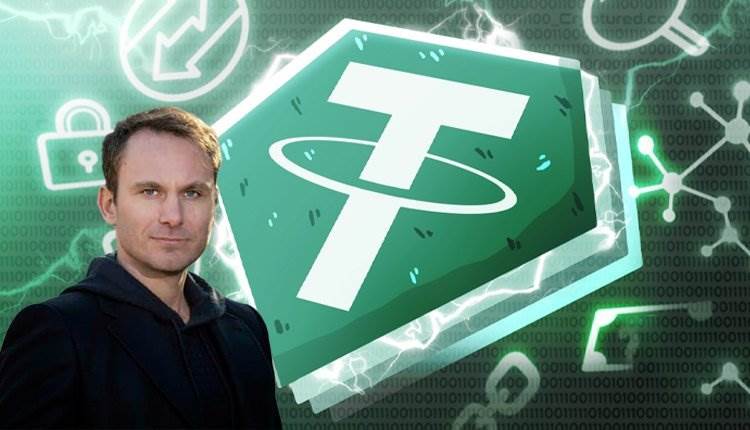
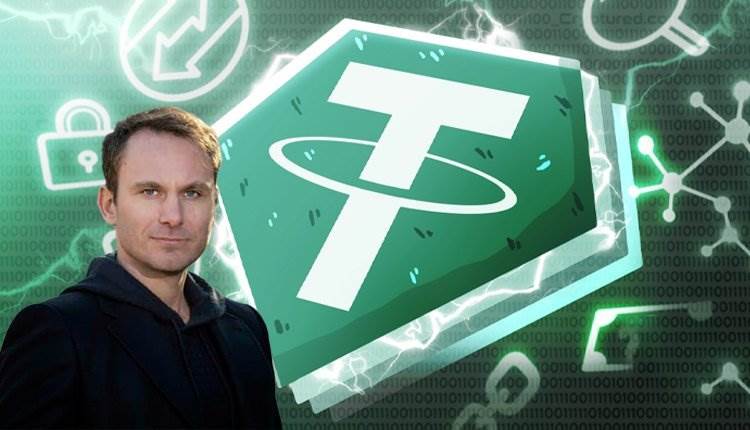
如果说加密圈谁最能赚钱,Paolo Ardoino 肯定上榜。他是 Tether CEO,也是 Bitfinex CTO,带着公司创造了惊人成绩——平均每个员工就能贡献 约 1 亿美元利润。他的杀手锏是 USDT,这款全球最广泛的稳定币,让 30 亿没有银行账户的人也能参与金融,尤其在通胀和金融危机严重的地方格外重要。去年 Tether 收入 137 亿美元,可见 Paolo 打造的“民主化金融帝国”,真不是吹的。
精彩观点摘要
1、我通常每晚至少睡5个小时。但问题是我的睡眠是碎片化的,因为我始终保持通知开启,每隔一个小时我都会醒来检查通知,然后再继续睡。
2、我的家乡是一个只有600人的小村庄,所以娱乐活动有限。8岁时我开始学习编程,这种热情一直延续到我的大学时期,直到现在。
3、我个人几乎没有什么爱好。实际上,我的唯一爱好就是每天都在思考如何使命,为世界带来稳定。
4、USDT的存在正是为了给那些身处新兴市场、面临极端经济不稳定的人们提供金融上的稳定。
5、Tether不只是稳定币公司,而是稳定公司。这正是Tether的使命所在,也是“稳定公司”的真正意义——一个以社会稳定为最终目标的公司。
6. What we need to do is to make access to finance and technology more democratized. Through peer-to-peer technologies and decentralized finance, more people can participate directly in these processes.
7. Tether is a company that appears once in a century. Unlike other companies that try to create closed ecosystems, Tether’s platform is accessible to everyone around the world. This is a completely different business model, and it’s what makes us successful.
8. Everyone should have their own mission, no matter how small it is. As long as you are happy, that’s what matters most.
9. People often use art to express their emotions and ideas. I understand that my way of expressing myself is through programming. I can create my own world, and I can invite people into my world through programming.
10. Stablecoins are essentially the ultimate social network.
11. With this funding (20 billion), we hope to show the world that Tether’s mission goes far beyond that. Our goal is to achieve a 100-fold growth. Tether has the capital, philosophy, and technological innovation to do anything it wants.
12. If you create products that solve real-world problems, they have the potential to truly change the world.
13. Football is a global sport that connects people from all walks of life, regardless of their wealth. Therefore, investing in football clubs is a simple way to reach users around the world. We hold a 10% stake in Serie A club Juventus.
The drive to keep working hard…
Kevin Follonier: Many of the guests here share one thing in common—they have all experienced certain events in their lives that left them feeling somewhat unbalanced. So, does Tether’s mission relate to something that was missing from your youth?
Paolo Ardoino: I consider myself very lucky. Although my family wasn’t wealthy, I learned the most important lesson from them: hard work. I remember my grandparents, who have passed away, but who ran a small farm in Italy. They focused on producing high-quality olive oil and tomatoes, paying great attention to detail. Whether it was tomatoes, sage, rosemary, or asparagus, they always tried to do their best. This passion continued throughout their lives.
My grandfather would get up at five in the morning, take a short nap at one o’clock in the afternoon, and then continue working until nightfall. This simple yet fulfilling lifestyle kept him happy. Even though he only had a basic education, he was extremely skilled in mathematics. My parents were also examples of hard work. My mother was a kindergarten teacher, while my father worked as an employee at a national energy company in Italy. He later retired in Israel. They are still alive today, and I feel very fortunate for that. After work, they would take us out for sports activities, and then return to the farm to help out. In short, our days were filled with getting up, working hard, and completing tasks. But all of this was done with passion. I never heard them complain, because for them, that was their mission.
Everyone should have their own mission, no matter how small it is. As long as they are happy, that’s enough. So, when someone says to me, “Oh, you work very hard,” I would say, no, I see the meaning of hard work in much more than just that. I definitely don’t just work hard all the time.
My schedule is also quite special. I usually sleep for at least 5 hours every night. But the problem is that my sleep is fragmented. I always keep notifications turned on, waking up every hour to check the notifications, and then going back to sleep.
Kevin Follonier: You’ve been doing this for 11 years now, sleeping 5 hours every night, waking up every hour? Do you even catch any sleep during the day?
Paolo Ardoino: No. If I take a nap during the day, I’ll feel dizzy. So I never take naps.
I started programming at the age of 8.
Kevin Follonier: You started programming at the age of 8? How did that happen?
Paolo Ardoino:
My father worked at the Italian National Energy Company. In the early 1990s, Italian public enterprises began to introduce computers in order to improve efficiency and modernize their operations. As we all know, Italy’s bureaucratic system is extremely complex, and many tasks take a long time to complete. Therefore, the introduction of computers was crucial for improving work efficiency. My father was very enthusiastic about these new technologies. I remember when I was seven years old, he brought home a computer and told me that it was very expensive—equivalent to two months of his salary. Although I didn’t fully understand what “two months of salary” meant at that time, he told me that the computer was quite expensive, and I needed to use it carefully, making sure not to damage it.
As the only child in the family, I naturally had a lot of questions about this computer. We had floppy disks for playing games, but due to financial reasons, we couldn’t afford too many games. Moreover, in Italy in 1991, it was difficult to find any games at all. My hometown was a small village with only 600 people, so there were limited options for entertainment. Over time, I became bored with the games we had, and I decided to create my own games. I asked my father if he could buy me a book on how to program games. He replied, “Okay, Paolo, I can buy it for you, but it will cost 60,000 lire.”
In those days, Italy still used the lira as its currency. He asked me, “Are you sure you want to buy this book? It’s very expensive.” I replied, “I want to learn.” Then he brought the book home, and I began learning programming. This passion continued throughout my university years, and it still persists today.
The infinite possibilities of programming
Kevin Follonier: You once said that programming is a unique form of expression. It differs from other art forms in that it allows us to unleash our imagination and create entirely new worlds, filled with endless possibilities. Could you talk more about your thoughts on this?
Paolo Ardoino:
Of course. To be honest, I’m not particularly good at traditional art forms. Although I was once a pretty good guitarist, I haven’t played since many years ago. In other artistic fields, I can say that I have no talent at all. For example, in art classes at school, whether it’s technical design or other hands-on projects, my work always seems messy and unorganized. I remember when I tried to draw, my arms moved too much, and the pencil moved around the canvas randomly. The results were always unsatisfactory. I can’t even color properly, let alone sing. It seems like I can’t even do basic artistic expressions well.
But people usually use art to express their emotions and thoughts. I realize that my way of expressing myself is through programming. I can create my own world, and through programming, I can invite others into my world.
What are stablecoins, and why are they so important?
Kevin Follonier: You use programming to create stablecoins. What is a stablecoin? If you had to explain it to a mother, how would you do so?
Paolo Ardoino: In simple terms, a stablecoin is a form of digital currency, similar to the digital balance you see in your bank account. But the difference is that stablecoins are transferred using blockchain technology, rather than relying on bank systems. You can think of it as a “digital dollar” that can be used worldwide, just like cash.
Blockchain is a decentralized technology, similar to a large database without any boundaries. Its servers are distributed around the world, rather than being concentrated in one bank or institution. We use the best form of database—a decentralized database—to manage dollars.
Kevin Follonier: Why are stablecoins so important in our world?
Paolo Ardoino: The significance of stablecoins lies in their ability to provide solutions for billions of people worldwide who lack access to financial services. These people often live in countries with high inflation rates. For example, in Europe, inflation ranges from 30% to 34%, in Turkey it’s 50%, in Nigeria it’s even higher, and in Argentina, it sometimes exceeds 200%. In such countries, high inflation causes local currencies to depreciate rapidly, severely affecting people’s purchasing power. Now, by 2025, everyone is interested in stablecoins.
In developed countries such as the United States and Europe, the efficiency of financial systems is quite high. People typically have bank accounts, credit cards, and payment tools like Cash App or PayPal, making everyday transactions relatively straightforward. However, in some developing countries, the efficiency of financial systems may be only 5%, and many people simply cannot even open a bank account. With stablecoins, through blockchain technology, financial efficiency in these regions can be increased to 60% or 70%. For people living in remote villages in Africa, this represents a significant change—it allows them to participate in the global economy and brings them more opportunities.
The Internet has made it possible for people to connect with each other. In fact, the Internet is a way of bringing people together in a global context. But without financial services, the Internet would be meaningless. I believe that stablecoins represent the ultimate form of social networks. After all, the currency of social networks, in my opinion, is the ultimate form of social networks, because it involves interpersonal interactions, peer-to-peer interactions, and it contains value as well as information that needs to be transferred.
Tether’s mission is to become a stable company.
Kevin Follonier: So what is your mission?
Paolo Ardoino:
我的使命是为世界带来稳定。在一个逐渐走向不安和混乱的世界中,我认为稳定性尤为重要。这听起来可能有些奇怪,但 Tether 的成功实际上与全球许多问题的加剧息息相关。如果金融体系是公平的,资源是可获得的,并且运作正常,那么 USDT 就不会有存在的必要。USDT 的存在正是为了给那些身处新兴市场、面临极端经济不稳定的人们提供金融上的稳定。
作为一名开发者,我认为我们正在将 Tether 打造成技术领域的佼佼者,不仅限于金融领域,还包括电信、社交媒体以及能源等其他行业。我们的目标是通过去中心化技术,让这些行业变得更加开放和可获得,就像我们在美元和金融领域所做的一样,这就是 Tether 的核心使命。值得一提的是,我们所赚取的大部分利润并不会分配给股东,约 95% 的利润留在公司内部,投资于新的事物、新的想法,以支持我们的使命。
我个人几乎没有什么爱好。实际上,我的唯一爱好就是每天都在思考如何实现这个使命。我对这个问题非常痴迷,我是那种会陷入某个领域的人,这基本上占据了我整个生活。
Kevin Follonier:你在 Docker Times 中提到,随着全球局势日益不稳定,Tether 将继续将部分利润投资于安全资产,比如比特币、黄金和土地。那么,什么是稳定公司?
Paolo Ardoino:
我经常思考,什么才是真正的“稳定公司”?有一次,一位记者问我如何用几句话定义 Tether,他尝试说,Tether 是一家稳定币公司。而我的回答是,Tether 不只是稳定币公司,而是稳定公司。
在我看来,技术和金融的可获得性是社会稳定的关键。如果人们能够轻松获得技术和金融服务,他们就会减少制造混乱和不稳定的动机。很多时候,社会动荡的根源在于人们的不满,而这种不满往往源于生活条件的极端困难。
Of course, there are other reasons for social instability. But overall, I believe that global stability is closely related to the huge gaps between countries and regions. Over the past 20 to 30 years, although technology has tried to reduce these gaps, it has actually exacerbated inequality. The same situation occurs in the financial sector as well—about half of the world’s population cannot access financial services consistently, and many even don’t have the opportunity to open a bank account. This isn’t because they aren’t trustworthy, but because their poverty level makes banks unwilling to provide them with services. This phenomenon is particularly evident in some African or Central American countries, severely affecting the stability of those regions, as resources in the form of technology and finance are disproportionately allocated to a few wealthy individuals. What we need to do is to make access to finance and technology more democratized, allowing more people to participate directly through peer-to-peer technologies and decentralized finance. I believe that when people’s lives, families, communities, and nations become more stable, their motives for causing chaos will decrease. This is precisely the mission of Tether, and the true meaning of a “stabilizing company” – a company whose ultimate goal is to promote social stability. We have proven that such companies can be established. And fortunately, the more we strive in this direction, the stronger the company’s profitability will become.
This is also the reason why I consider Tether to be a “company of its time”. This isn’t an act of boasting, but rather a recognition of Tether’s unique nature. The more Tether promotes open-source principles, openness, and decentralization, the more it can attract a wider range of users. These users use Tether’s tools to achieve financial freedom and freedom of expression. The broader this reach, the more value Tether’s data can create. Unlike other companies that try to create closed ecosystems, Tether’s platform is accessible to everyone around the world. This is a completely different business model, and it’s what makes our success possible.
Tether: The company with the highest profit per employee worldwide
Kevin Follonier: You once said that Tether is one of the best companies in the world, with a profit margin of up to 99%. How do you manage to create a company where each employee earns about $100 million per year on average? Have you thought deeply about this question?
Paolo Ardoino: Honestly, I don’t really think about such numbers. We always focus on optimizing efficiency. Whenever we do anything, I ask myself: Why do we need to do this? Is there a better way? How can we further improve efficiency? Two years ago, Tether had only 40 employees. But as our business grew, we now have 250 to 300 employees, including many developers, as we are expanding into new areas like artificial intelligence. However, the team responsible for managing stablecoins remains around 100 people.
Of course, the current high interest rates actually help our profitability. Before 2022, global interest rates were relatively low, so this change was difficult to predict. Additionally, the impact of the pandemic was also unexpected. Together, these factors have contributed to our profit growth. However, we believe that by continuously expanding into new business areas, we can maintain a high level of profitability in the long term. Optimizing efficiency and seizing opportunities are key to our success.
Why raise $20 billion?
Kevin Follonier: You recently announced that you are considering raising $20 billion, valuing the company at $500 billion. If this funding becomes available tomorrow, how do you plan to use it?
Paolo Ardoino: Last year, we achieved profits of $13.7 billion. This year, we expect to achieve similar results. But what I want to emphasize is that the purpose of raising funds isn’t just about making money, but also about sending a message. Just like what the Joker said in “Batman”: “It’s not about money, it’s about sending a message.” We hope to show the world through this fundraising that Tether’s mission goes far beyond that. Our goal is to achieve 100 times more growth.
Once, in a public setting, I mentioned that I was a huge fan of Peter Thiel and that I was reading his book “From 0 to 1”. But nowadays, it’s no longer the era where startups can make huge profits just through simple data-driven growth. I prefer to say that our goal is to start from scratch and reach the stage where we can go from “0 to 100”. I liken this process to “0.25”, because we’ve only just begun.
I say this because it’s not about how much money we make, but rather about the potential we believe we need to seize, to express our views on this opportunity.
I consider Tether to be a once-in-a-century opportunity. I believe that every company needs three things: philosophy, direction, and capital. First, you need a philosophy or belief that defines what kind of company you want to become. Second, you need the ability to innovate, whether in technology or other areas. Third, you need capital. Most companies have only one or two of these elements. You can be an innovative entrepreneur with the right philosophy, but if you don’t have the necessary funds, you’ll have to raise money from venture capital firms. However, the incentive mechanism of venture capital firms is to make more money than they invest in your project. This can lead to deviations from your original ideas and philosophy.
我认为在这种情况下,Tether 拥有资本、哲学和技术创新,可以做任何想做的事情。因此,我们传达的信息是,我们还有很多要展示的东西,我们想要大幅增长,我们的愿景是惊人的。我们希望有合作伙伴加入我们的公司,帮助我们实现这个独特而强大的愿景,我们不想搞砸这一切。
为什么 Tether 投资了 @Plasma?
Kevin Follonier:Tether 最近投资了一家名为Plasma的公司,这家公司的创始人 Paul 之前参与过我们的播客节目,并且帮助我们搭建了这个平台。那么,Plasma 为什么会如此重要,以至于 Tether 决定投资他们?
Paolo Ardoino:
我认为 Tether 的 USDT 不仅仅是一种数字货币,它还是区块链技术的重要组成部分,稳定币本质上是基于区块链技术的数字化美元。然而,过去多年来,区块链技术的发展方向出现了一些偏差。许多开发者更关注如何快速推出受炒作驱动的区块链项目,比如像狗狗币这样的 Meme。虽然这种方式可能在短期内有效,但它并不能真正推动行业的长远发展。尽管如此,这样的项目确实让一些团队赚到了钱。
USDT 的成功证明了一个事实:如果你创造出能够解决现实问题的产品,它就有可能真正改变世界。
因此,我认为基于稳定币或专注于某一用途的区块链可以让稳定币的转账变得非常便宜、使用起来非常简单。比如,现在如果你在以太坊上有稳定币,你还需要购买 ETH 作为 gas 来转移 USDT,这种用户体验需要改进。我认为,尽管区块链行业已经发展了很多年,但用户体验的质量仍然很低,因为我们把注意力放在了错误的事情上,只关注我们自己的“生态圈,这个生态圈的成员基本上是极客和那些有时间学习新事物的人。然而,对于大多数普通人来说,这种方式并不适用。这也是为什么 USDT 在全球范围内如此受欢迎的原因,因为 USDT 并不是在迎合那些想要投机的人。
一个有趣的统计数据表明,67% 的 USDT 交易仅仅是为了转移资金,而其他稳定币的交易中,只有 10% 到 20% 的交易涉及转移其他资产。这说明使用 USDT 的大多数用户只是为了获取 1 美元的稳定价值。相比之下,80% 的其他稳定币用户同时在转移其他资产,这意味着他们更倾向于在 DeFi 领域进行资产交易。因此,我更希望 USDT 能服务于数千万生活在非洲的普通用户,而不是仅仅满足 1 万名纽约银行家的需求。
为什么 Tether 拥有尤文图斯足球俱乐部 10% 的股份?
Kevin Follonier: Tether has recently invested in Juventus Football Club, holding approximately 10% of the shares. This raises questions about why a company focused on stablecoins would choose to invest in a football club.
Paolo Ardoino: First of all, both Giancarlo and I are passionate fans of Juventus. Giancarlo comes from the Piedmont region in Italy, and Juventus is the representative team of that region. I grew up near Genoa, about 80 to 100 kilometers from Turin. Many people from my hometown go to Piedmont for vacation, so Juventus has a huge influence there. My father was a fan of Juventus, and I inherited his love for the team. Giancarlo也是如此。
Another reason is that we believe the Italian football industry needs to be modernized. In Italy, football clubs are often used as tools of power by entrepreneurs who typically own both the media and the clubs, using these resources for political purposes. In contrast, we see investments in the football industry in countries like Saudi Arabia, along with clubs like Chelsea, Manchester United, and Paris Saint-Germain, which have millions of followers worldwide. Football is a global sport that can reach people from all walks of life, regardless of wealth. Therefore, investing in football clubs is a simple way to reach global audiences.
We hope that Italian football clubs can establish closer relationships with their fans, spread positive values, and achieve profitability through modern management practices. The success of a club should be based on its team’s strength, performance in matches, and interaction with fans. However, in many Italian clubs, this model has not been truly implemented yet. Through our investment in Juventus, we aim to drive change in the Italian football industry, making Juventus more international and forward-thinking.