Exchange Ranking
 Top Exchanges
 24h Volume Ranking
 Popularity Ranking
 Exchange BTC Balance
 Proof of Reserves
 Decentralized Exchanges
 Funding Rate
 Funding Heatmap
 Liquidation Data
 Max Pain
 Long/Short Ratio
 Whale L/S Ratio
 Binance/Okex/Huobi L/S
 Bitfinex Margin L/S
 ETF Tracker
 Solana ETF
 XRP ETF
 Hong Kong ETF
 Bitcoin Treasuries
 Crypto Reversal
 Ethereum Reserves
 HyperLiquid Wallet Analysis
 Hyperliquid Whale Watch
 Large Transactions
 On-chain Movement
 Bitcoin ROI
 Stablecoin Market Cap
 Options Analysis
 News
 Articles
 Economic Calendar
 Features
 Wallet
 Contract Calculator


 Security
 Collections
 Watchlist
 Following
在加密市场情绪本就高度敏感的时刻,华盛顿突然丢来一颗更大的“政治炸弹”。特朗普提名的美联储主席候选人凯文·哈塞特公开表态支持大幅降息,而财政部长贝森特则亲自挂帅启动遴选程序,这意味着美国金融监管体系可能迎来一次深度改写。与此同时,市场更被一条爆炸性传闻点燃——特朗普正在白宫亲自审阅解雇鲍威尔的信件草稿。消息刚传出,美元指数立刻跳水,风险资产瞬间走强。随着权力更替进入关键时点,美联储的独立性、未来利率路径以及加密资产的宏观叙事,都在发生剧烈重组。
特朗普提名的CFTC主席人选迈克尔·塞利格已在参议院农业委员会通过初步投票,若获得最终确认,他将成为该机构唯一的委员。同时,特拉维斯·希尔的FDIC主席提名也已获参议院银行委员会批准。
一、美联储的独立传统与政治冲击
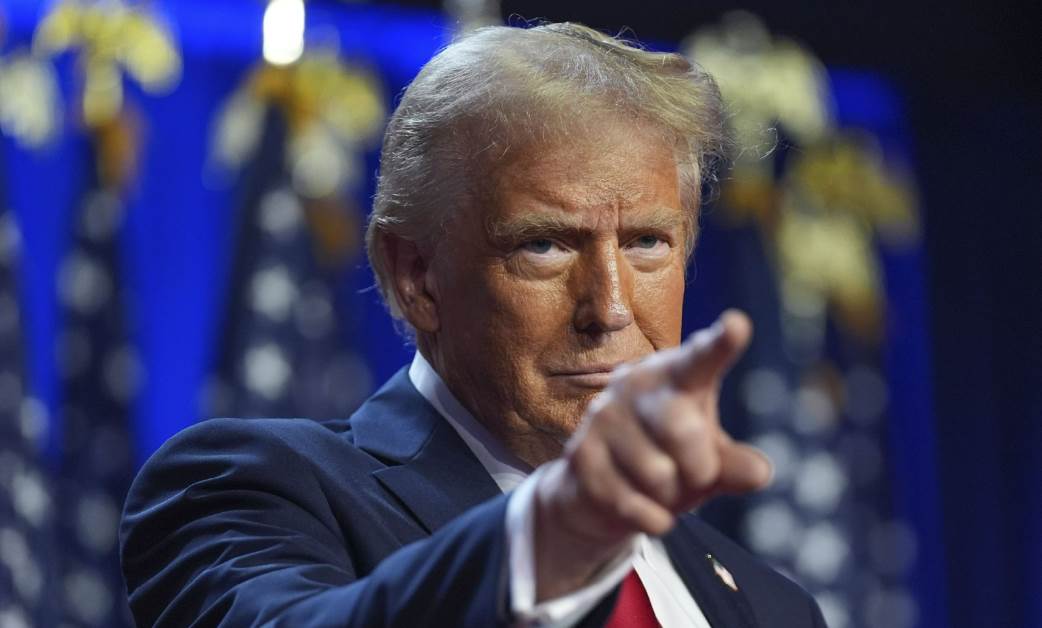
● 自1913年成立以来,美联储的独立性被视为美国乃至全球金融稳定的基石。其制度设计初衷,正是为了隔离短期政治压力对货币政策的影响。然而这一传统正面临前所未有的挑战。
● The Trump administration not only publicly criticized the current chairman, Powell, but also initiated the process for selecting the next chairman. Trump’s dissatisfaction with the Federal Reserve stems from several reasons. He believes that Powell is too slow in reducing interest rates, which contradicts the White House’s desire to stimulate economic growth through low interest rates.
● The current chairman insists on the Federal Reserve’s principle of “independent operation.” He repeatedly refused to comply with the White House’s policies in public, which put Trump in an awkward position. Trump hopes that those in key positions will align their actions with his policies and be willing to make public statements in support of his agenda.
II. Candidates for Chairman and Tests of Political Loyalty
The list of potential candidates for the position of Federal Reserve chairman has emerged, and all candidates share a common trait: their support for the president’s policies.
● Kevin Hassett, director of the White House National Economic Council, is considered the frontrunner. He holds a doctorate in economics from the University of Pennsylvania and is a conservative economist who supports free markets and trade.
As one of Trump’s trusted advisors, Hassett’s main challenge will be to prove his independence from the government’s policies. His advantage lies in his close relationship with Trump, but this is precisely what markets are concerned about.
● Kevin Warsh, former director of the Federal Reserve, is also a strong contender. He has extensive connections within the Republican Party and served as advisor to former President Bush. Warsh is seen as a “pro-active figure” who emphasizes control over inflation and financial stability.
● Christopher Waller, currently serving as a director of the Federal Reserve, could become a “compromise option”. Other candidates running against Trump are more independent, and at the same time, they are closer to the preferences of Trump’s team than Powell.
Thirdly, there is a systematic reform of the Federal Reserve: from the Board of Governors to regional banks.
Trump’s interference with the Federal Reserve goes far beyond just appointing a new chairman. He has a clear plan to fundamentally reform the structure of the Federal Reserve Board.
● The first step is to control the seven-member Board of Governors. Trump has already appointed two members, and with the early resignation of the member appointed by former President Biden, he quickly nominated his economic advisor to fill the third seat.
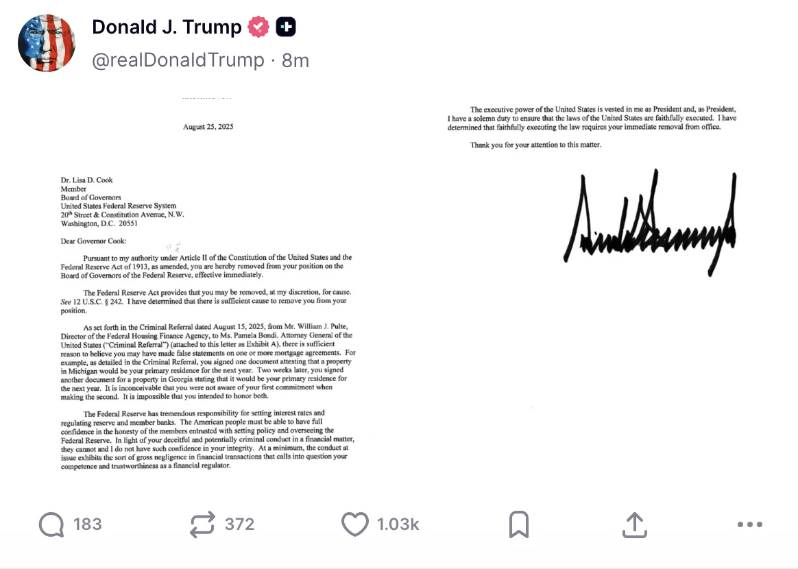
Removing the opposition member, Lisa Cook, was necessary to create a crucial fourth seat. Once this is accomplished, Trump will be able to appoint four of his own people to form a majority in the seven-member Board of Governors.
● The second step is to indirectly control the Federal Open Market Committee, which decides interest rates. The FOMC consists of seven Federal Reserve members and five chairmen of regional banks.
Even if all seven members were under Trump’s control, it would not be possible to fully dominate the FOMC. However, according to law, the appointment of chairmen of regional banks requires approval from the Federal Reserve Board. Trump’s majority could refuse to reappoint regional bank chairmen who disagree with White House policies.
● The third step is to create a “interest-rate-cutting majority,” so that monetary policy can be completely controlled by the White House’s political agenda.Trump's policy preferences have never been hidden. He desires a Federal Reserve that is capable of lowering interest rates significantly for his benefit.
A fully autonomous Federal Reserve would become one of the most powerful tools for the president to implement his economic policies. At that time, interest rate setting will no longer be based primarily on economic indicators such as inflation and employment levels, but rather on the short-term political needs of the White House.
Fourth, there is a scramble for regulatory authority in the crypto industry, along with a reshaping of the role of the CFTC
While trying to reform the Federal Reserve, the Trump administration is also redefining the landscape of financial regulation, especially in the field of cryptocurrencies.
● Michael Selleger has been nominated as the chairman of the CFTC, marking an important shift in the power structure over crypto regulation.
● Selleger currently serves as the chief advisor to the SEC’s crypto working group. During the nomination hearing, he expressed support for creating clear and innovative regulatory frameworks for the crypto industry.
The new legislation currently under consideration in Congress aims to grant the CFTC full regulatory authority over the spot market for digital assets. This aligns with the recent stance of the SEC, which has stated that it is developing standards for “token classification” based on the Howey test.
● The division of responsibilities within the regulatory framework is gradually taking shape: The SEC focuses on tokens with securities attributes, while the CFTC is responsible for regulating the spot market for digital goods. This has been a controversial issue in the crypto industry for years, and now it is being documented in official documents for the first time in Washington.
If confirmed, Selleger will lead the CFTC during a critical period. Currently, lawmakers are planning to have the CFTC take charge of regulating cryptocurrencies. The relevant bills in both the Senate and the House of Representatives will grant the agency broader regulatory powers over the cryptocurrency industry.
Five, changes in regulatory oversight by the FDIC and relaxation of banking restrictions
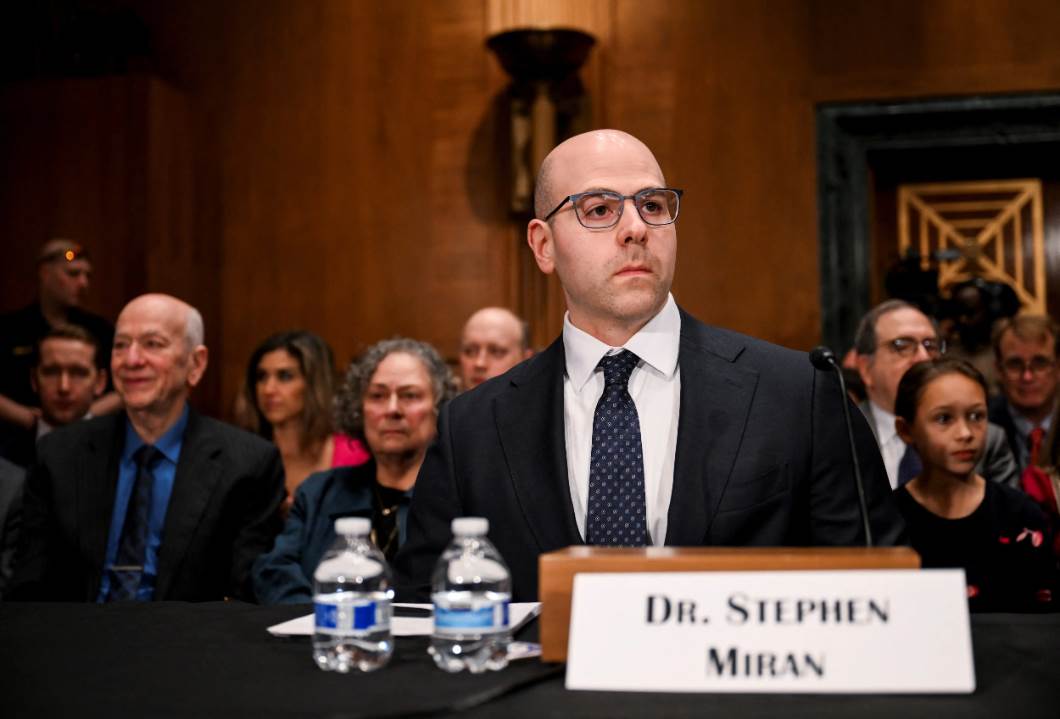
● Along with the nomination of the CFTC, there is also a change in the leadership of the Federal Deposit Insurance Corporation. Travis Hill, nominated by Trump, has been approved by the Senate Banking Committee and has officially become the candidate for FDIC chairman.
● Hill has served as acting FDIC chairman since January 20, 2025. Before working under the Biden administration, he served as vice chairman. Under his leadership, the FDIC has begun adjusting its approach to banking activities related to cryptocurrencies.
● Compared to previous governments, Hill has relaxed restrictions on banks’ involvement in cryptocurrency-related activities. He has eliminated the requirement that banks must notify the FDIC before engaging in cryptocurrency-related activities. This change reflects the more favorable stance towards cryptocurrencies taken by the Trump administration overall.
● Hill’s policies also include removing “reputation risk” from bank review criteria. Traditionally, regulators consider the potential reputational risks associated with bank activities, but the FDIC led by Hill no longer includes this factor as an official assessment criterion.
Six, market reactions and global implications
● Wall Streeters generally express concerns about Trump’s interference with the Federal Reserve. JPMorgan Chase CEO Jamie Dimon warned investors that interfering with the independence of the Federal Reserve could have negative consequences.
● Investors are beginning to adjust their expectations regarding the Federal Reserve’s interest rate policy. Although markets previously expected three rate cuts in 2025, the probability of a first cut in September is currently only 21%. The US Dollar Index has recently fallen to a three-year low, with funds rapidly flowing into non-US markets where valuations are lower.
● Emerging markets may be the first to bear the brunt of these changes. Deutsche Bank strategists warn that if Powell is forced to step down from his position earlier than expected, it could lead to panicked selling of the US dollar and US bonds.
● A more serious risk is that if the Federal Reserve’s decision to cut rates becomes driven by political considerations rather than economic logic, it could lead to two-sided distortions. In the short term, capital will flow back into the United States, increasing borrowing costs in emerging markets. In the long term, weakened US dollar credit could lead to reallocation of global reserve assets.
● According to a survey, 70% of central banks are considering reducing their investments in the US dollar due to the deteriorating political situation in the United States. One-third of the world’s 75 central banks plan to increase their gold holdings over the next one to two years, while 40% intend to continue purchasing gold over the next decade.
As the nominated CFTC chairman, Sellyg, emphasized the need for a “clear and innovative regulatory framework,” as the FDIC acting chairman, Hill, relaxed restrictions on banks’ crypto activities, and as Hassett becomes increasingly likely to become the Federal Reserve chairman, the American financial regulatory landscape is undergoing a silent restructuring.
Trump's personnel arrangements concern not only individual positions, but also the overall structure of financial regulations, with the aim of creating a more coordinated and responsive system that can execute the White House's directives. Global markets are constantly monitoring any fluctuations in the US dollar exchange rate. Central banks around the world are re-evaluating the composition of their foreign exchange reserves. Historical lessons continue to haunt us, and the balance of power in the American financial sector is being redefined.