Exchange Ranking
 Top Exchanges
 24h Volume Ranking
 Popularity Ranking
 Exchange BTC Balance
 Proof of Reserves
 Decentralized Exchanges
 Funding Rate
 Funding Heatmap
 Liquidation Data
 Max Pain
 Long/Short Ratio
 Whale L/S Ratio
 Binance/Okex/Huobi L/S
 Bitfinex Margin L/S
 ETF Tracker
 Solana ETF
 XRP ETF
 Hong Kong ETF
 Bitcoin Treasuries
 Crypto Reversal
 Ethereum Reserves
 HyperLiquid Wallet Analysis
 Hyperliquid Whale Watch
 Large Transactions
 On-chain Movement
 Bitcoin ROI
 Stablecoin Market Cap
 Options Analysis
 News
 Articles
 Economic Calendar
 Features
 Wallet
 Contract Calculator


 Security
 Collections
 Watchlist
 Following
 BTC
 ETH
In the first two weeks of October 2025, Bitcoin spot ETFs attracted $3.2 billion and $2.7 billion in inflows respectively, setting record highs for the highest net inflows in a single week since 2025.
Prior to this, Bitcoin ETFs were expected to achieve “no consecutive outflows” throughout the second half of 2025.
However, the worst-ever crypto liquidation event occurred unexpectedly. This event resulted in an asset loss of $19 billion, leaving a lasting impact on the crypto market.
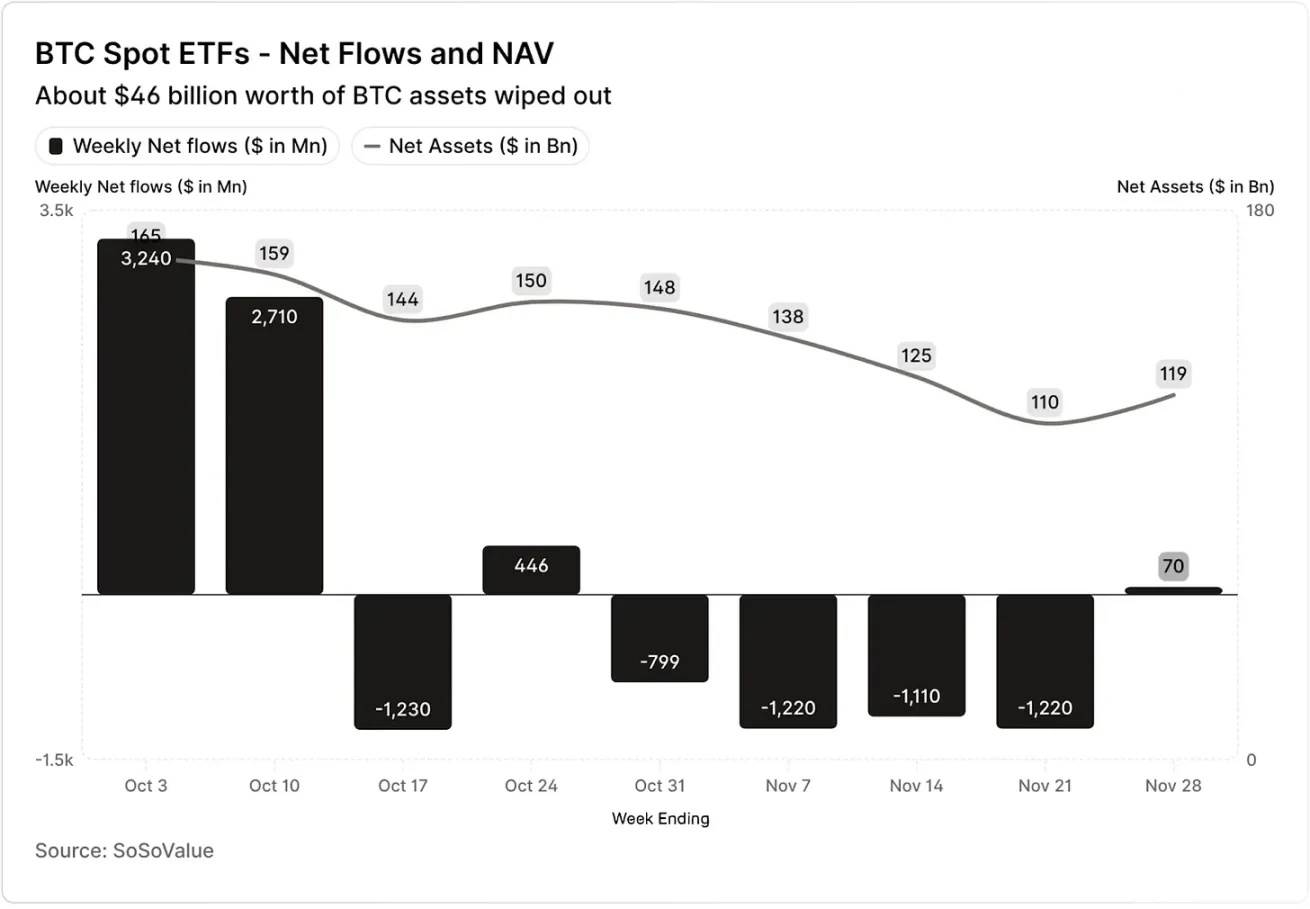
In October and November, Bitcoin spot ETFs experienced net inflows and net asset values that were significant.
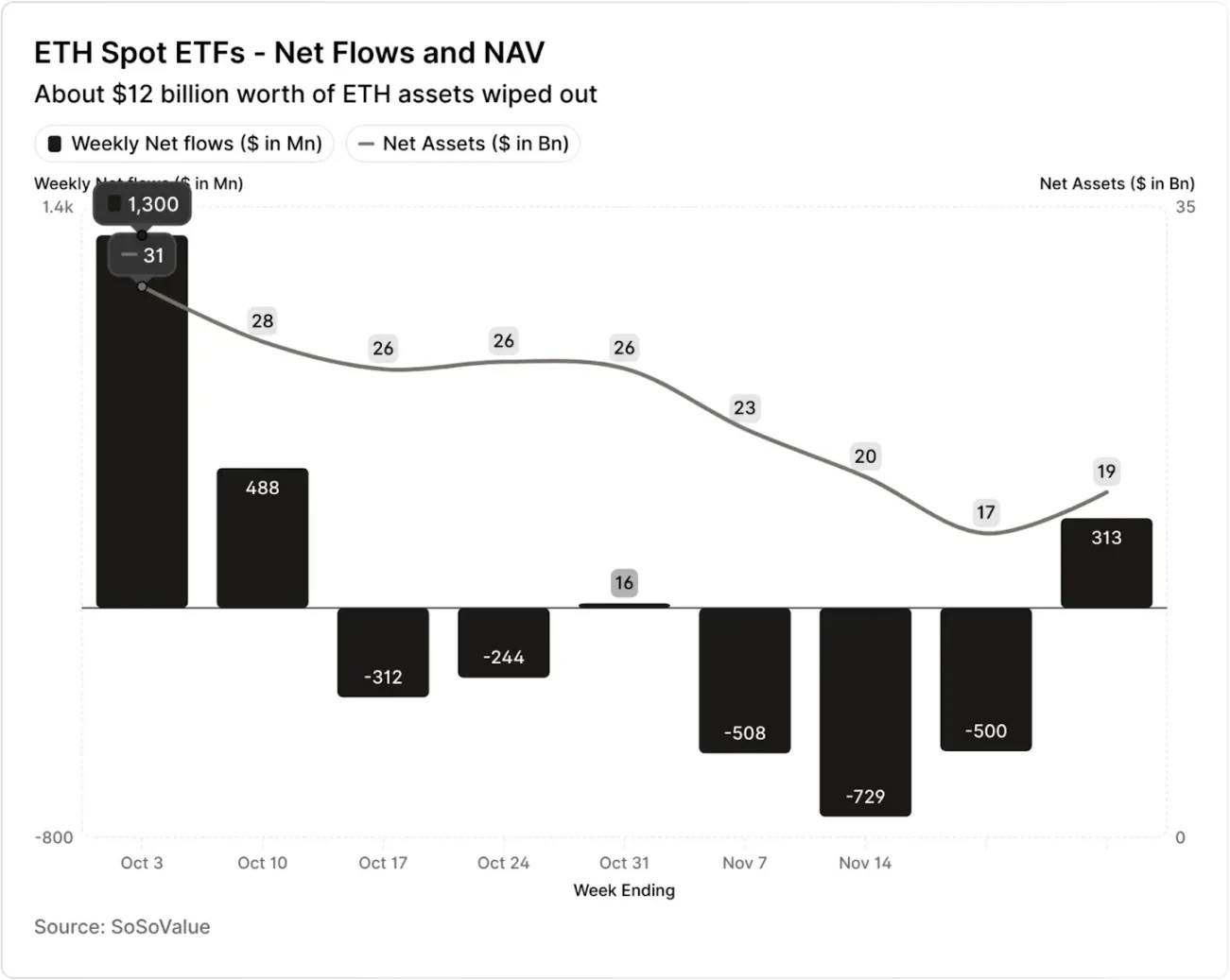
Similarly, Ethereum spot ETFs also saw net inflows and net asset values during those months.
But within seven weeks after the liquidation event, Bitcoin and Ethereum ETFs experienced outflows for five weeks, amounting to over $5 billion and $2 billion respectively.
As of the week ending November 21st, the net asset value of Bitcoin ETFs managed by their issuers dropped from approximately $164.5 billion to $110.1 billion. The net asset value of Ethereum ETFs plummeted by nearly half, from $30.6 billion to $16.9 billion. This decline was partly due to the price drops in Bitcoin and Ethereum, as well as the redemption of some tokens. In just less than two months, the total net asset value of Bitcoin and Ethereum ETFs decreased by about one-third.
The decline in capital flows not only reflects investors’ sentiment but also directly affects the fees earned by ETF issuers.
Bitcoin and Ethereum spot ETFs are essentially “money-making machines” operated by institutions such as BlackRock, Fidelity, Grayscale, and Bitwise. Each fund charges a fee based on the size of its assets, with the rate typically announced annually. However, in reality, the fees are calculated based on the daily net value of the assets. Every day, the funds holding Bitcoin or Ethereum shares sell some of their holdings to cover administrative costs and other expenses. For the issuers, this means that their annual revenue is roughly equal to the total assets managed multiplied by the fee rate. For the holders, however, this means that the number of tokens they own gradually decreases over time. The fee rates for ETFs range from 0.15% to 2.50%. The fact that funds redeem their holdings or have funds flow out does not directly result in profits or losses for the issuers. But when funds flow out, the total assets managed by the issuers decrease, thereby reducing the base amount of assets from which fees can be collected. As of October 3rd, the total assets managed by Bitcoin and Ethereum ETF issuers amounted to $195 billion. Given the aforementioned fee rates, the amount of fees generated is quite significant. By November 21st, however, the remaining assets of these products had decreased to approximately $127 billion. If we calculate the annual fees based on the assets managed during the weekend, the potential revenue of Bitcoin ETFs has decreased by more than 25% over the past two months. ETF issuers dealing with Ethereum have suffered even greater losses, with their annual revenue declining by 35% over the past nine weeks. The larger the issuance size, the more severe the decline in revenue.从单一发行方的维度来看,资金流向背后呈现出三种略有差异的态势。
对贝莱德而言,其业务特点是「规模效应」与「周期性波动」并存。旗下IBIT和ETHA已成为主流投资者通过ETF渠道配置比特币和以太坊的默认选择。这让这家全球最大资管机构得以依托庞大的资产基数收取0.25%的费率,尤其是在10月初资产规模创纪录时,收益十分丰厚。但这也意味着,当11月大型持有者选择降风险时,IBIT和ETHA便成了最直接的抛售标的。
数据足以佐证:贝莱德比特币和以太坊ETF的年化手续费收入分别下滑28%和38%,均超过行业平均25%和35%的降幅。
富达的情况与贝莱德类似,只是规模相对较小。其FBTC和FETH基金也遵循了「先流入后流出」的节奏,10月的市场热情最终被11月的资金外流取代。
灰度的故事则更多关乎「历史遗留问题」。曾几何时,GBTC和ETHE是众多美国投资者通过经纪账户配置比特币和以太坊的唯一规模化渠道。但随着贝莱德、富达等机构领跑市场,灰度的这一垄断地位已不复存在。雪上加霜的是,其早期产品的高费率结构,导致过去两年持续面临资金外流压力。
10-11月的市场表现也印证了投资者的这一倾向:行情向好时,资金会转向费率更低的产品;行情走弱时,则会全面削减持仓。
灰度早期加密产品的费率是低成本ETF的6-10倍。尽管高费率能拉高营收数据,但高昂的费用率会持续驱离投资者,压缩其赚取手续费的资产规模。留存的资金往往是受制于税务、投资指令、操作流程等摩擦成本,而非源于投资者的主动选择;而每一笔流出的资金都在提醒市场:一旦有更优选择,更多持有者会抛弃高费率产品。
这些ETF数据揭示了当前加密货币机构化进程的几个关键特征。
10-11月的现货ETF市场表明,加密货币ETF管理业务与底层资产市场一样具有周期性。当资产价格走高、市场消息面向好时,资金流入会推高手续费收入;而一旦宏观环境生变,资金便会迅速撤离。
大型发行机构虽已在比特币和以太坊资产上搭建起高效的「收费通道」,但10-11月的波动证明,这些通道同样难逃市场周期的冲击。对发行方而言,核心课题是如何在新一轮市场冲击中留住资产,避免手续费收入随宏观风向的变化而出现大幅波动。
虽然发行方无法阻止投资者在抛售潮中赎回份额,但收益型产品可在一定程度上缓冲下行风险。
Collateralized call option ETFs can provide investors with income from premium payments. In other words, a collateralized call option is a trading strategy where investors hold the underlying asset while simultaneously selling a corresponding number of call options. By charging premiums, this strategy aims to increase profits or hedge certain risks. This approach can also help mitigate losses caused by price drops in underlying assets. Pledged products are another viable option. However, such products must undergo regulatory approval before they can be officially launched in the market.