Exchange Ranking
 Top Exchanges
 24h Volume Ranking
 Popularity Ranking
 Exchange BTC Balance
 Proof of Reserves
 Decentralized Exchanges
 Funding Rate
 Funding Heatmap
 Liquidation Data
 Max Pain
 Long/Short Ratio
 Whale L/S Ratio
 Binance/Okex/Huobi L/S
 Bitfinex Margin L/S
 ETF Tracker
 Solana ETF
 XRP ETF
 Hong Kong ETF
 Bitcoin Treasuries
 Crypto Reversal
 Ethereum Reserves
 HyperLiquid Wallet Analysis
 Hyperliquid Whale Watch
 Large Transactions
 On-chain Movement
 Bitcoin ROI
 Stablecoin Market Cap
 Options Analysis
 News
 Articles
 Economic Calendar
 Features
 Wallet
 Contract Calculator


 Security
 Collections
 Watchlist
 Following
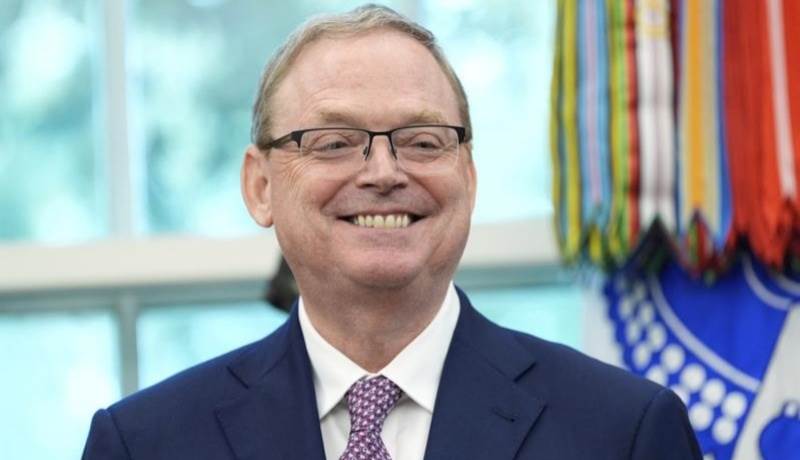
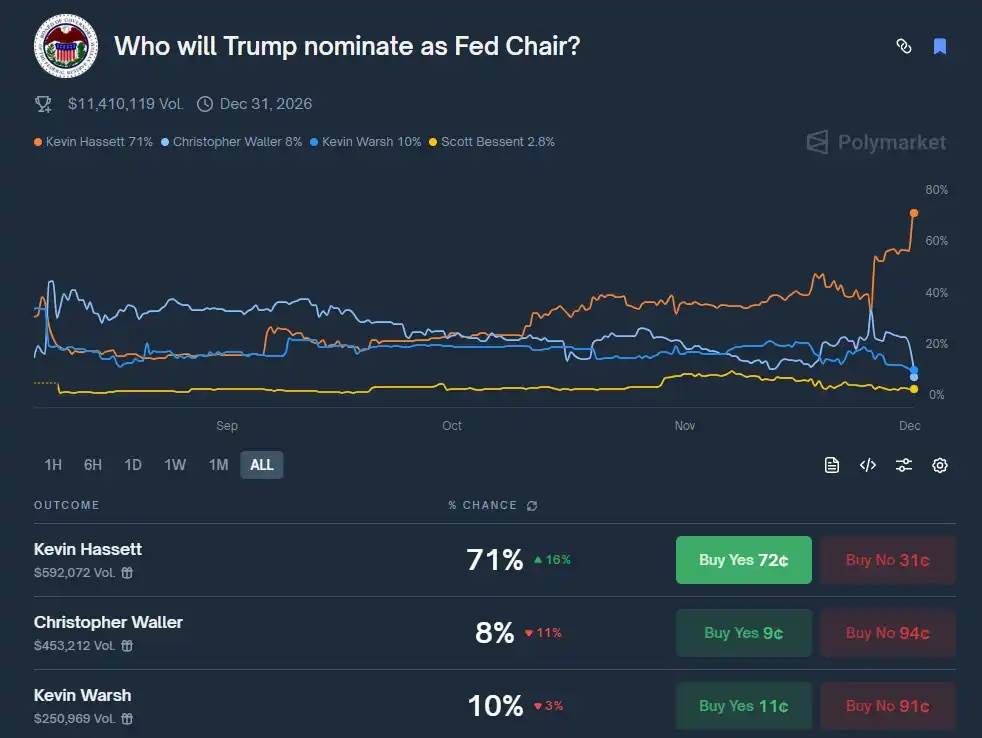
On November 30th, the political landscape and market sentiment in the United States once again became the focus of attention. Hal Asher, director of the White House National Economic Council, openly stated that he would “very much welcome” the opportunity to serve as chairman of the Federal Reserve if Trump nominated him for the position. Upon hearing this news, the probability of Asher being elected surged to 76% on the crypto prediction platform Polymarket. This immediately drew attention to this new figure who could potentially influence U.S. monetary policy. What exactly is Asher’s background? Can his economic ideas lead to more favorable regulations for the crypto industry? If he indeed takes office, will the independence of the Federal Reserve be redefined? And what role will he play in relation to the country’s economy, interest rates, and the future of risky assets? These questions are becoming the main concerns of the market.
I. Who is Hal Asher?
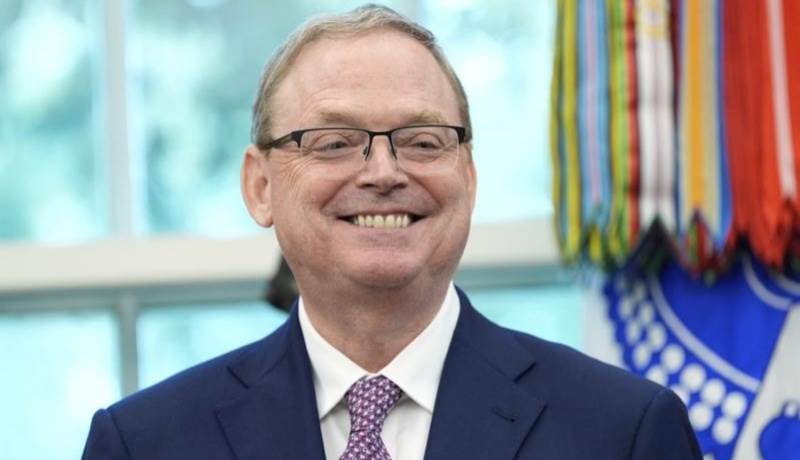
Hal Asher is the director of the White House National Economic Council and also an American economist. From 2017 to 2019, he served as senior advisor and chairman of the Economic Advisory Board. During Trump’s first term, Asher served as chairman of the 29th Economic Advisory Board from September 2017 to June 2019.
Asher joined the American Enterprise Institute (AEI) as a permanent scholar in 1997. His research areas include tax policies, fiscal policies, energy issues, and stock market investments. He has collaborated with R. Glenn Hubbard on studies related to budget deficits, income inequality, and tax reform. Asher has published papers and articles on capital taxes, consistency of tax policies, returns on energy-saving investments, corporate taxes, telecommunications competition, the impact of taxes on wages, dividend taxes, and carbon taxes.
2003年,哈塞特被任命为美国企业研究所(AEI)经济政策研究主任。哈塞特曾为《纽约时报》、《华盛顿邮报》和《华尔街日报》等报纸撰写专栏文章。他每月为《国家评论》撰写专栏文章,自2005年起,每周为彭博社撰写专栏文章。
2024年11月,特朗普赢得大选后,特朗普宣布哈塞特将担任国家经济委员会(NEC)主任。《政客》杂志报道称,哈塞特“将承担更广泛的职责,成为总统在经济事务方面的高级顾问,并在协调政府各部门的政策和战略方面发挥关键作用。” 2025年1月,在特朗普第二任期开始时,哈塞特正式就任国家经济委员会主任。
2025年10月,美国财政部长斯科特·贝森特证实,哈塞特是特朗普总统考虑接替美联储主席杰罗姆·鲍威尔的五位候选人之一,鲍威尔的任期将于2026年5月结束。
二、哈塞特上任后会利好加密行业吗?
尽管缺乏明确的公开声明,哈塞特被普遍认为是加密货币的支持者。今年6月,他披露自己持有Coinbase至少100万美元的股份,并因其在该交易所学术和监管咨询委员会的职务而获得至少50,001美元的报酬,这使得他与加密货币行业的联系异常密切,这对于一位潜在的美联储主席来说实属罕见。
他担任主任的国家经济委员会(NEC)负责监督白宫数字资产工作组的发展,该工作组在今年早些时候发表了一份文件,概述了政府的加密货币政策。
美联储不监管证券或大宗商品,因此其政策变化无法影响加密货币监管。但一个对加密货币友好的美联储仍可能在多个方面对该行业产生积极影响。
首先,较低的利率通常意味着加密货币价格会更好。Bitwise 的高级投资策略师 Juan Leon表示:这对市场的影响“非常利好”。他称哈塞特是一位“激进的‘鸽派’,曾公开批评当前利率过高,并主张更大幅度、更快地降息”。
数字资产投资平台 Grayscale 的研究主管 Zach Pandl表示:“从边际效应来看,哈塞特对加密货币应该被视为利好消息。”
怀俄明州 Custodia 银行的创始人兼首席执行官,同时也是加密货币友好型监管的知名倡导者 Caitlin Long 指出:“如果这一切成真,哈塞特真的成为美联储主席,那么美联储内部那些仍然身居要职的反加密货币人士最终将会下台(至少大部分会下台)。美联储将迎来重大变革。”
The Federal Reserve also regulates banks, particularly bank holding companies, access to payment systems, reserve requirements, as well as liquidity and risk-related rules. Changes to these regulations could affect the ability of cryptocurrency companies to obtain various services, including:
● Cryptocurrency custody services;
● Loans secured with cryptocurrencies;
● Access to payment channels;
● Requirements for stablecoin issuers compared to bank regulations;
● Settlement rules.
However, the White House has not officially nominated any candidates yet. Treasury Secretary Scott Berstet announced in late October that Hassett was one of five candidates to replace Jerome Powell. Other candidates include former Federal Reserve Chairman Kevin Warsh, current Federal Reserve Chairman Christopher Waller, Michel Bohnenbach, and BlackRock CEO Rick Reddle. It is expected that the final nominee will be announced before Christmas.
Third, will the independence of the Federal Reserve be affected?
1. The independence of the Federal Reserve
The independence of the Federal Reserve is based on three institutional arrangements:
1) Independent terms of office
● The term of office for the President and Board members is long—4 years for the President and 14 years for Board members—far longer than the presidential term.
● The President cannot dismiss the President of the Federal Reserve; he can only decide whether to reappoint him at the end of his term (with very few exceptions).
This makes it difficult for the White House to pressure officials who disagree with monetary policy simply by removing them from their positions.
2) Financial independence
● The Federal Reserve operates independently, with its income mainly coming from interest on U.S. government bonds and profits from financial transactions.
● It does not rely on congressional funding, so neither the executive nor legislative branches can influence its decisions through budgetary means.
3) Independent decision-making
● Monetary policy is determined by the FOMC (Federal Open Market Committee).
● It does not require approval from the president or the Treasury Department.
The Foreign Relations Committee has praised the independence of the Federal Reserve, stating that it “protects the Federal Reserve from undue political influence. For example, the White House may try to pressure the Fed to lower interest rates before elections, which may bring short-term political benefits but cause long-term economic damage.”
The independence of the Federal Reserve also “enhances its credibility,” making markets more confident in its decisions. “What’s crucial is that this gives the Federal Reserve the power to take difficult but necessary actions, even if those actions are unpopular.”
2. Is Haselet a political loyalist?
But after Trump took office, he tried to strengthen his control over the Federal Reserve, in order to have more influence over its monetary policies.
Earlier this year, he attempted to dismiss Lisa Cook from her position as a Fed governor. Cook refused to resign, and the case was eventually appealed to the Supreme Court. Currently, the Supreme Court has allowed her to continue in her position. In the documents submitted to the court, Cook’s lawyer, Abby Lowell, described this attempt as “a fierce attack on the Federal Reserve’s century-long independence.”
In the eyes of his supporters, Haskett is an outstanding policy maker. As his long-time ally and former Trump advisor Stephen Moore said, he is a expert in using “hard currency” to defend the US dollar. However, some of his former colleagues view him as a more worrying figure as a presidential advisor: someone who is willing to sacrifice institutional independence and objective facts in order to please his boss. This time, Haskett has become one of Trump’s most staunch economic supporters. He stated that if he were to head the Federal Reserve, he would “immediately cut interest rates,” because “data shows that we should do so.” He also predicted that Trump’s efforts to reduce corporate tax rates and introduce new industrial policies would lead to “significant progress” in GDP and employment growth by 2026.
He also echoed Trump’s criticism of the Federal Reserve and its reliance on statistical data, accusing Fed officials of “putting politics above duty”; calling the Fed’s actions slow in reducing interest rates; and suggesting that the data released by the Bureau of Labor Statistics had partisan biases. When Trump fired the director of the Bureau of Labor Statistics, Erica McIntyre, and accused her of “manipulating” the data, Haskett smiled during the televised interview and described this move as being driven by concerns about accuracy and procedure.
Hassett has become a regular contributor to CNN. He defends Trump’s policies, downplays negative data, and aligns his views with the White House on everything from inflation to the legality of federal statistics. At the beginning of November, the director of the National Economic Council insisted that inflation had “dropped significantly,” and that prices were “very stable.” However, official data shows that the consumer price index has been rising for five months straight.
John O’Sirer, a senior editor at Bloomberg and columnist, wrote that Hassett’s selection seemed to reflect loyalty on Trump’s part. Trump believes that nominating Jerome Powell eight years ago was a huge mistake. Vawker, Wash, and Riddle could all establish their independence from the government in different ways.
George Pollak, a senior U.S. policy analyst at Signum Global Advisors, said that Trump chose Hassett because he believed he was the most likely candidate to support the government’s priorities.
If the Federal Reserve becomes another branch of the government, it might be beneficial for the cryptocurrency market in the short term, but it could have disastrous consequences in other areas. Interest rates below what is actually needed might provide cheap political capital, but it could lead to increased inflation.
The American Progress Center explained, “Interest rates will be based on well-researched data, not political whims. This will reassure the world that the U.S. economy will remain stable, and its markets will remain rational.”
Fourth, the impact on the future economy
Jon Hilsenrath, a senior advisor at StoneX and former Wall Street Journal reporter who worked for the Federal Reserve, pointed out that the immediate increase in the yield on 10-year U.S. government bonds is significant. In his post on LinkedIn, he stated that higher yields indicate that bond traders believe that the Fed under Haspel will adopt a more moderate policy towards inflation. Therefore, higher long-term yields are needed to compensate for this risk. Although a yield of nearly 4% seems acceptable, considering that inflation remains above the Fed’s target of 2%, and with a budget deficit approaching $2 trillion, this yield is actually “abnormally low”. If the bond market loses confidence in the Fed’s independence, this discrepancy could lead to severe market reactions, resulting in soaring interest rates.