Exchange Ranking
 Top Exchanges
 24h Volume Ranking
 Popularity Ranking
 Exchange BTC Balance
 Proof of Reserves
 Decentralized Exchanges
 Funding Rate
 Funding Heatmap
 Liquidation Data
 Max Pain
 Long/Short Ratio
 Whale L/S Ratio
 Binance/Okex/Huobi L/S
 Bitfinex Margin L/S
 ETF Tracker
 Solana ETF
 XRP ETF
 Hong Kong ETF
 Bitcoin Treasuries
 Crypto Reversal
 Ethereum Reserves
 HyperLiquid Wallet Analysis
 Hyperliquid Whale Watch
 Large Transactions
 On-chain Movement
 Bitcoin ROI
 Stablecoin Market Cap
 Options Analysis
 News
 Articles
 Economic Calendar
 Features
 Wallet
 Contract Calculator


 Security
 Collections
 Watchlist
 Following
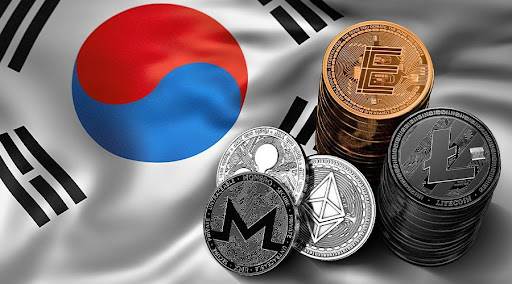
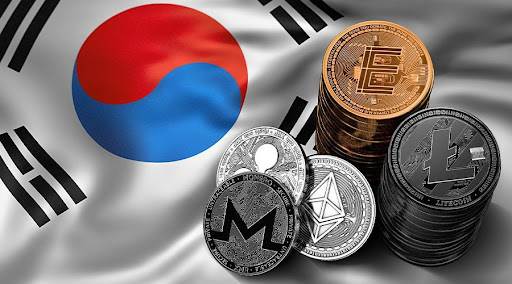
South Korea has taken another crucial step in digital financial regulation—the government is preparing to officially recognize stablecoins as legal payment methods. This means that both USDT and local stablecoins pegged to the Korean won could be used for everyday transactions and online payments. Industry experts believe that this move not only helps promote the use of blockchain payments but also gives South Korea a competitive edge in the Asian crypto finance landscape, further reducing the gap between virtual currencies and the real economy.
Key points:
● South Korea will amend its laws to allow stablecoins to be used as payment methods.
● The goal is to curb money laundering and tax evasion.
● This directly affects global regulatory trends regarding stablecoins.
South Korean lawmakers have introduced a bill to officially allow stablecoins to be used for payments, aiming to prevent illegal activities. This aligns with the Bank of Korea’s concerns about stablecoins evading regulatory oversight.
This legislative initiative highlights the increasing global attention to stablecoins, influencing their adoption and integration into traditional financial systems.
South Korean legislation promotes the integration of stablecoins.
South Korean lawmakers are working to amend the Foreign Exchange Transactions Act, placing stablecoins on par with traditional currencies. This legislative reform stems from concerns over stablecoins avoiding financial regulations, with the aim of bringing them under legal framework.
Stablecoins will now be subject to new regulations, and they will be integrated into existing legal frameworks alongside traditional payment methods. This change could impact the development of global financial strategies related to stablecoin transactions, aiming to ensure compliance and reduce illegal use of these currencies.
Park Seong-hoon, a member of the People’s Power Party in South Korea, stated, “This regulatory change could affect the use of stablecoins in financial transactions in South Korea, and may also influence their broader adoption worldwide.”
The historical context and future implications of stablecoin regulation are worth considering.
Do you know? In 2019, South Korea implemented strict regulations regarding traditional cryptocurrencies. This foreshadowed the trend towards regulating stablecoins four years earlier.
According to data from CoinMarketCap, Ethereum (ETH) has a market value of $494.36 billion, accounting for 12.87% of the total market cap. Within the past 24 hours, the price of ETH dropped by 2.56%, closing at $4,095.87 per unit. Trading volume increased by 19.06%, indicating a significant boost in market activity.
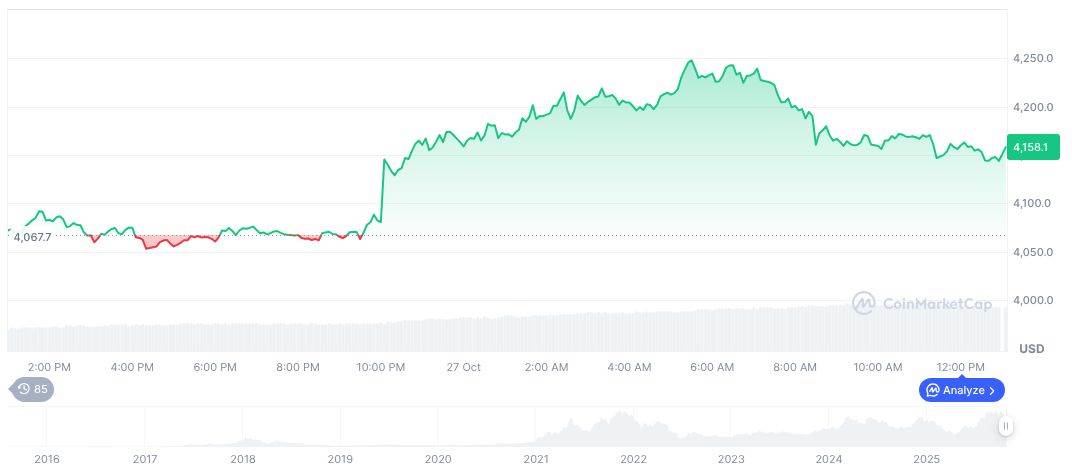
Ethereum (ETH), daily chart, screenshot from CoinMarketCap, UTC time: October 28, 2025, 02:57
Coincu Research predicts that official recognition of stablecoins could foster a regulated environment that promotes trust and transparency. By integrating stablecoins into existing legal frameworks, their global adoption could be promoted, thereby influencing the attitudes of international regulators toward incorporating stablecoins into the formal economy.