Exchange Ranking
 Top Exchanges
 24h Volume Ranking
 Popularity Ranking
 Exchange BTC Balance
 Proof of Reserves
 Decentralized Exchanges
 Funding Rate
 Funding Heatmap
 Liquidation Data
 Max Pain
 Long/Short Ratio
 Whale L/S Ratio
 Binance/Okex/Huobi L/S
 Bitfinex Margin L/S
 ETF Tracker
 Solana ETF
 XRP ETF
 Hong Kong ETF
 Bitcoin Treasuries
 Crypto Reversal
 Ethereum Reserves
 HyperLiquid Wallet Analysis
 Hyperliquid Whale Watch
 Large Transactions
 On-chain Movement
 Bitcoin ROI
 Stablecoin Market Cap
 Options Analysis
 News
 Articles
 Economic Calendar
 Features
 Wallet
 Contract Calculator


 Security
 Collections
 Watchlist
 Following
 ETH
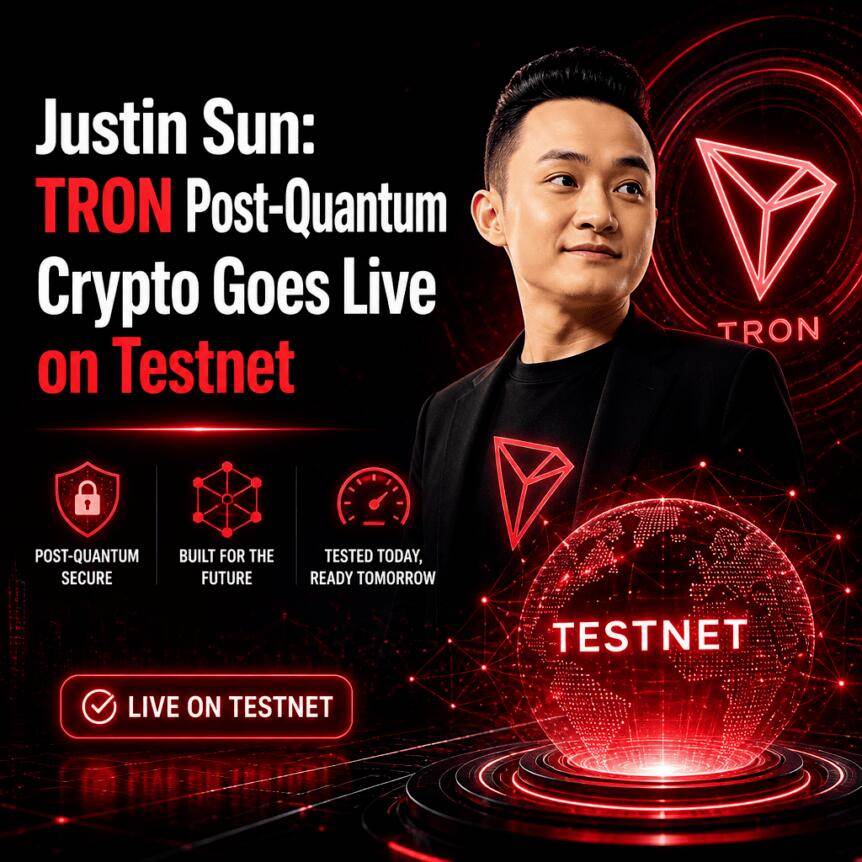
 TRX
Polygon opens payment stack to TRON: a new chapter in stablecoin settlement
Since its announcement on October 8, 2026, Polygon's Open Money Stack has been officially opened to the TRON network. Companies can now use this technology to complete the complete stablecoin payment and settlement process on the TRON chain: receive fiat currency, convert it into USDT, hold it on the TRON network, forward it to other chains as needed, and finally withdraw it to a bank account, bank card or cash withdrawal point.
For TRON (TRX) holders, this is not just a price story, but important news about the blockchain's role in the payments space. Whether this move translates into actual demand for tokens depends on a key indicator, which will be elaborated on below.
Current market performance
So far, TRX's price fluctuations have been extremely small. As of Saturday morning, TRX was trading at $0.3306, down 0.4% from the previous day and 1.1% from the level a week ago, according to CoinGecko data. Its market value is US$31.4 billion, ranking eighth.
How Polygon Open Money Stack works on TRON
Open Money Stack (OMS) is Polygon's toolkit for businesses designed to help companies that want to settle payments in stablecoins but do not need to build their own technology infrastructure.
In short, OMS is a set of prefabricated modules for receiving, holding, forwarding and paying stablecoins that companies can integrate into their products through interfaces.
According to Polygon's announcement, this TRON integration covers five steps:
- Deposits: Customers make payments via bank transfer, bank card, cash or cryptocurrency.
- Conversion and Storage: Funds enter the TRON network in the form of USDT in the TRC-20 standard and are deposited in managed wallets or embedded wallets.
- Routing: Companies can decide when and where funds will flow at this stage.
- Withdrawal: Funds eventually flow to bank accounts, bank cards, cash withdrawal points or other wallets.
Advantages of fixed deposit addresses
One practical detail mentioned in the announcement is that each customer will receive a permanent TRON deposit address that can be used for all subsequent recharge operations. Incoming USDT is automatically matched to the correct customer account. This means companies do not need to generate a new address for each transaction, nor do they need to develop their own reconciliation processes to allocate incoming payments. Anyone who has experience handling large deposits without comments will understand why this feature is seen as a highlight in the announcement.
Polygon lists the Philippines, Mexico, Argentina and Nigeria as target markets, with target customers including remittance services, gig economy platforms, trading venues and financial technology companies. It is worth noting that Germany does not appear on this list, the reasons for which will be explained in the MiCA section later.
USDT on TRON: Flux Analysis
The reason for Polygon's move lies in the size of the TRON network. Data shows that the USDT stock on TRON exceeds US$94 billion, accounting for more than half of the total stock on all chains. After verification, this data is valid under a specific caliber, but two different statistical interpretations need to be paid attention to.
According to Tether's own transparency page display:
- Authorized Supply: The total USDTs authorized on TRON are US$94.25 billion. This is the total supply in smart contracts.
- Treasury Holding: US$810 million of this is in Tether's own treasury, which is the portion that has been issued but has not entered the market.
- Circulating Supply: The difference between the two is US$93.44 billion. This is the quantity actually circulating in the market.
Across all 19 Tether reported chains, the total circulating supply was US$184.25 billion. Therefore, TRON's share is calculated as follows:
- If calculated based on circulation supply , the proportion of TRON is 50.71%.
- If calculated based on authorized supply , TRON accounted for 48.68%.
The wording of Polygon is accurate, but only applies to the second calculation method (circulation). In contrast, Ethereum, as the second largest network, has a circulation of US$86.05 billion, accounting for 46.70%. The gap between the two chains is approximately $7.4 billion. The remaining 17 chains together account for less than 3%, with Solana ranking third with US$2.94 billion in circulation.
Note: This analysis is based on data from 19 chains reported on the Tether Transparency page.
Energy and Bandwidth: How TRC-20 transfers consume TRX
This is the core of the price issue. USDT payments on TRON are not completely free, although users often feel this way. Each transfer of TRC-20 tokens consumes the network's computing resources, which are measured in two units:
- Bandwidth: Covers the original data volume of the transfer.
- Energy: Covers the execution of smart contract code. Since the USDT on TRON is a contract token rather than a native coin, it consumes energy.
There are two ways to obtain these two resources:
- Freeze TRX: Users freeze TRX to obtain continuous bandwidth and energy credits.
- Direct payment: Users pay TRX directly, and this part of TRX will be destroyed (Burn). The network parameters stipulate: 1 The unit energy cost is 100 SUN, which is 0.0001 TRX.
As the amount of USDT payments on the chain increases, energy consumption increases, which in turn causes more TRXs to be frozen or destroyed. This is the real connection between transaction volume and token demand, and it is also the only stable channel from "quantity" to "price".
Polygon Trails: Cross-chain Transport without Bridging
The second technology module in the announcement is called Polygon Trails, which enables the forwarding of USDT and other supporting assets between TRON and Ethereum tethers (such as Polygon, Base, Arbitrum, Avalanche, Optimism) in a single operation.
Unlike traditional "bridging", Trails allows users to complete cross-chain operations without knowing it. Traditional bridging involves asset lock-up and reissuance and has historically been a major target of hackers. In Trails mode, services handle forwarding logic in the background.
For example, Polygon stated that 100 USDT became 99.98 USDC after being transferred from TRON to Polygon, and the difference of 2 cents is the forwarding and conversion fee. This is example data provided by service providers, and the actual cost depends on size, target chain and network load.
MiCA Regulations and USDT: The Situation in Europe after July 2026
This part of the content is crucial for holders in places such as Germany. Although the USDT is huge on TRON globally, its situation is narrow under the EU framework. Tether has not applied for authorization of USDT as an electronic money token (EMT) under European MiCA regulations.
随着过渡期于 2026 年 7 月 1 日结束,USDT 已基本从受 MiCA 监管的欧盟交易平台消失。大型交易所此前已停止为欧盟客户提供 USDT 交易。
这对个人的实际影响可归纳为三点:
- 交易受限:在德国受监管的平台上,通常无法再买卖 USDT。具体支持的稳定币因平台而异。
- 持有合法:在自有钱包中持有 USDT 并在自有地址间转账仍然合法。限制针对的是受监管平台,而非私人持有。
- 替代方案:在受监管平台上,USDC 和 EURC 已成为主要替代品,因其发行人持有欧洲授权。
因此,Polygon 的目标市场避开欧盟并非巧合。德国商家若希望接受稳定币支付,目前只能选择授权的法币代币(欧元或美元)。若想在日常生活中使用加密货币,通过背景结算为欧元的加密信用卡可能是更可行的路径。
TRX 价格走势分析
代币本身对此消息反应平淡。TRX 价格为 0.3306 美元,较前一日下跌 0.4%,一周跌幅为 1.1%。流通供应量为 949.9 亿 TRX,距离 2024 年 12 月 3 日的历史高点 0.4313 美元仍有 23.3% 的差距。
What is worth noting is not the direction, but the narrowness of the fluctuations. Over the past week, TRX's daily value fluctuated between US$0.3306 and US$0.3361, with an amplitude of only 1.7%. In contrast, the broad market fluctuated more during the same period, with Ethereum falling about 7% in a week.
Changes after the DeFi Summer event
Previously reported that TRON has launched the third round of the DeFi Summer event (starting October 4) for a 60-day period and offering US$2 million in rewards. However, data a week later showed that the activity had little impact on prices: prices fell 1.4% from $0.3354 to $0.3306 since October 4. The range of fluctuations even narrowed from 6% monthly to 1.7% this week.
This shows that incentive plans alone cannot drive prices up. TRON currently faces a dual narrative: time-limited incentives on one side and permanent integration with external payment stacks on the other. The latter is progressing slowly but will not expire.
Technical Analysis and Position Recommendations
Key Prices
- Resistance: The week's high was US$0.3361 (about 1.7% above current levels). The upper US$0.35 is the next integer mark, which formed a top in September.
- Support: Current prices are at the lower edge of this week's range. US$0.32 below is the next integer mark (approximately 3.2% below current levels).
Notes for German holders
- Purchase channels and authorizations: TRX 本身不受 MiCA 对 USDT 限制的影响,可在德国受监管平台交易。需关注平台的 MiCA 授权情况及法币出入金手续费模型。
- 托管方式:长期持有者应区分平台托管与自我托管。自我托管需妥善保管助记词。此外,在 TRON 网络上进行转账需要能量,若钱包中仅有 USDT 而无 TRX,则无法发起转账。
- 杠杆与清算:TRX 也可进行带杠杆的期货交易。鉴于近期波动较小,高杠杆极易因小幅反向运动而触发清算。
- 持有期与税务:在德国,个人持有的加密货币适用《所得税法》第 23 条的一年持有期免税政策。2026 年起,提供商需向联邦中央税务局报送数据,但这不改变税务规则本身。
评估结论:交易量尚未转化为需求
我们认为,此次公告对 TRON 网络的意义大于对 TRX 代币价格的直接影响,至少目前如此。
利好因素:
- TRON 拥有最大的 USDT 流通量(934.4 亿美元),集成 OMS 有助于巩固这一地位。
- 集成是永久性的,不同于限时奖励计划。
- 存在真实的能量消耗机制,建立了交易量与代币需求之间的物理联系。
Negative/Uncertainty factors:
- The scale effect is unclear. Polygon's target market is non-EU countries, the adoption rate is unknown, and Polygon did not give a specific timetable or quantity expectation.
- As long as the transaction volume on the chain does not increase significantly, energy consumption will not increase, and news will remain at the "network role" level rather than the "price-driven" level.
Verification method:
Investors should pay attention to whether the number of USDT contracts traded on TRON significantly exceeds the current 3.72 billion. If growth continues, this argument holds; if it remains flat, it will be false.
Summary: Three suggestions for action
- Confirm tradable stablecoins: On regulated platforms in Germany, USDT is basically not available, and USDC and EURC are available. Please check the exchange overview for specific trading pairs.
- Check wallet energy: If you hold USDT but no TRX, you will not be able to transfer money. Large self-custodians should consider hardware wallets and refer to the Hardware Wallet Comparison Guide.
- Focus on consumption rather than headlines: Whether Polygon integration can translate into TRX requirements depends on the increase in the number of transfers on the chain, not the announcement itself. If you need to use cryptocurrency in daily life, cryptocredit cards are still the more practical option in Germany.
(As of October 10, 2026. This article does not constitute investment advice. Price and rate structures are subject to change, please consult your provider before purchasing.)