Exchange Ranking
 Top Exchanges
 24h Volume Ranking
 Popularity Ranking
 Exchange BTC Balance
 Proof of Reserves
 Decentralized Exchanges
 Funding Rate
 Funding Heatmap
 Liquidation Data
 Max Pain
 Long/Short Ratio
 Whale L/S Ratio
 Binance/Okex/Huobi L/S
 Bitfinex Margin L/S
 ETF Tracker
 Solana ETF
 XRP ETF
 Hong Kong ETF
 Bitcoin Treasuries
 Crypto Reversal
 Ethereum Reserves
 HyperLiquid Wallet Analysis
 Hyperliquid Whale Watch
 Large Transactions
 On-chain Movement
 Bitcoin ROI
 Stablecoin Market Cap
 Options Analysis
 News
News Articles
 Economic Calendar
 Features
 Wallet
 Contract Calculator


 Security
 Collections
 Watchlist
 Following
 BTC
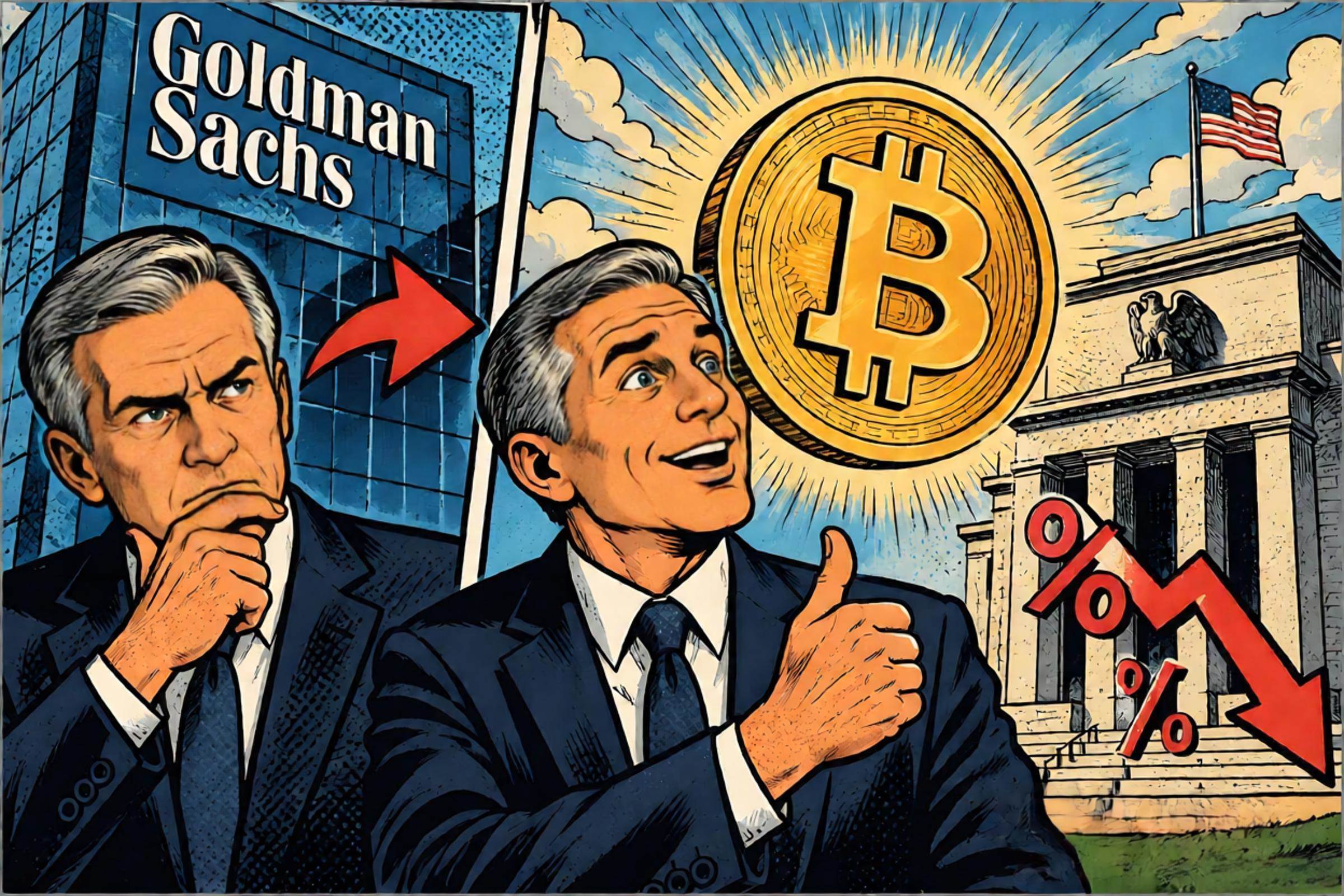
BTC Goldman Sachs adjusts monetary policy expectations as crypto market enters a new phase of uncertainty
As Goldman Sachs reassesses its monetary policy scenario, the cryptocurrency market is entering a new phase full of uncertainty. Given that core inflation data for August exceeded expectations, the U.S. bank now predicts that the Fed will raise interest rates next week. The change came as Bitcoin prices fell below $80,000. Investors have adjusted their expectations and the probability of a rate hike is now close to 90%. Decisions made in September could have a significant impact on market reactions.
Summary of Key Points
- Goldman Sachs now expects the Federal Reserve to raise interest rates by 25 basis points in September.
- The U.S. core inflation rate in August was 0.3%, higher than the expected 0.2%.
- According to data from the CME FedWatch tool, the probability of raising interest rates now exceeds 86%.
- Despite favorable technical signals on the daily chart, Bitcoin remained below $80,000.
- Bitcoin's "golden cross" failed to finally maintain until the close.
Goldman Sachs abandons the status quo scenario
On July 31, Goldman Sachs defended the assumption that the Federal Reserve would keep interest rates unchanged until the end of 2026. At the time, the bank estimated that interest rates would remain stable and monthly core inflation could slow. However, new data prompted analysts to revise that forecast.
Now, a research team led by David Mericle expects the Fed to raise interest rates by 25 basis points at its September 16 meeting. The Federal Open Market Committee (FOMC) may increase the federal funds target rate range from 3.50% to 3.75%. JPMorgan Chase, Citigroup, Mitsubishi UFJ Bank and TD Securities share the same view.
In this context, Bitcoin prices are trading below US$80,000 while the market is digesting the different currency environment. According to the Wall Street Journal, investors are almost certain that a rate hike next week is a foregone conclusion. Therefore, attention turned to the path of interest rates after this possible decision.
August inflation data changes market expectations
The trigger for this change was the core consumer price index (CPI) in August. The indicator, which excludes food and energy, rose 0.3% month-on-month, above expectations of 0.2%. This difference was particularly important in September expectations.
Before the data was released, analysts believed that a 0.2% growth rate was correlated with keeping interest rates unchanged. Conversely, a 0.3% result is believed to strengthen the case for raising interest rates. The data therefore sent an expected signal to quickly adjust positions. Bitcoin therefore faces higher interest rate expectations.
The CME FedWatch tool initially estimated the probability of a 25 basis point rate hike at approximately 69%. After the data was released, that estimate rose to 86.5% during the trading session. Since then, overall market expectations have approached 90%, showing the rapid impact of inflation data.
Multiple signals pave the way for the situation
However, the September rate hike was not based solely on inflation data. Chase has previously pointed out that a slowdown in the normalization of supply chains around the Strait of Hormuz could encourage intervention. The agency also cited market doubts about the Fed's credibility in fighting inflation.
Goldman Sachs now joins several institutions considering tighter decisions. Bitcoin is no longer just questioning whether the Fed will raise interest rates, it is also trying to determine what the decision means for the rest of monetary policy.
For Bitcoin, this transition occurred at a time when the price was still below $80,000. The current environment does not provide clear signals to predict responses. Future indications will largely depend on the FOMC's decisions and market expectations established around interest rates.
Bitcoin charts send unfinished signals
However, the market showed a compelling technical signal on the same day. On the daily chart, the 50-day exponential moving average (EMA) briefly crosses above the 200-day EMA. Traders call this crossover a "golden crossover" and use it as a potential signal of a change in trend. However, the signal failed to maintain until the close.
On the 4-hour chart, another "golden cross" has been visible since late August. The trend remained significant on daily units, with the ADX index at 45. However, the expected technical confirmation did not come at the close. Given currency expectations, Bitcoin remains the focus of attention.
As a result, the upcoming FOMC meeting will be a key date for the market. If a 25 basis point rate increase is confirmed, investors will pay close attention to instructions on the direction of monetary policy. In the short term, Bitcoin is likely to continue to evolve in accordance with monetary expectations and technical signals.
Whethercan continue to stand above US$80,000 will depend on how the market integrates this new scenario.