Exchange Ranking
 Top Exchanges
 24h Volume Ranking
 Popularity Ranking
 Exchange BTC Balance
 Proof of Reserves
 Decentralized Exchanges
 Funding Rate
 Funding Heatmap
 Liquidation Data
 Max Pain
 Long/Short Ratio
 Whale L/S Ratio
 Binance/Okex/Huobi L/S
 Bitfinex Margin L/S
 ETF Tracker
 Solana ETF
 XRP ETF
 Hong Kong ETF
 Bitcoin Treasuries
 Crypto Reversal
 Ethereum Reserves
 HyperLiquid Wallet Analysis
 Hyperliquid Whale Watch
 Large Transactions
 On-chain Movement
 Bitcoin ROI
 Stablecoin Market Cap
 Options Analysis
 News
 Articles
 Economic Calendar
 Features
 Wallet
 Contract Calculator


 Security
 Collections
 Watchlist
 Following
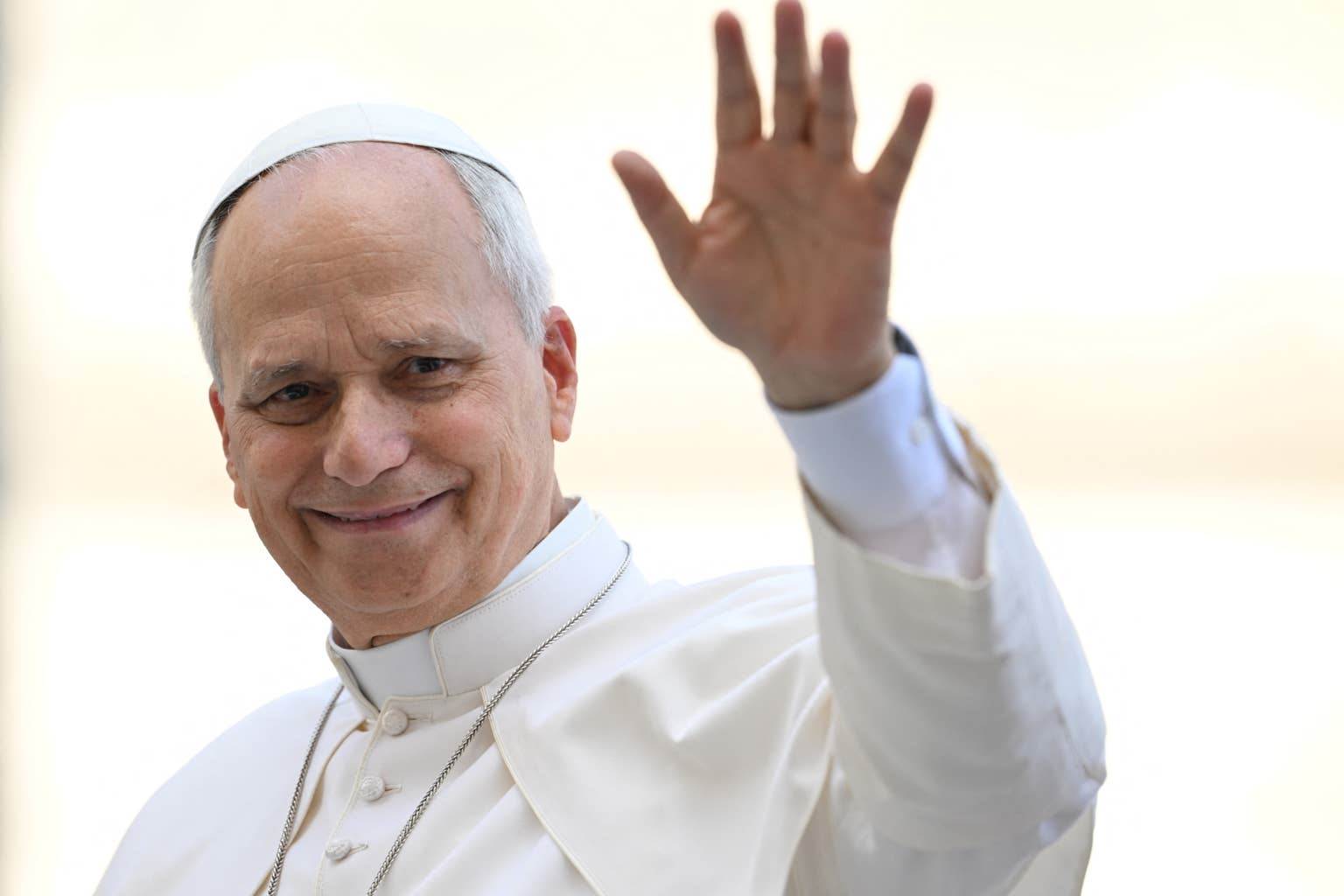
First American Pope: Leon XIV and the Moral Defense Line of Artificial Intelligence
In the two-thousand-year history of the Catholic Church, Pope Leo XIV became the first leader from the United States. His real name was Robert Prevost and was born in Chicago in 1955. Before being elected in May 2025, he served as a missionary and bishop in Peru for two decades. Since he ascended the throne of St. Peter, one theme has become his signature issue more vividly than any other: a technology that originated in his country.
Artificial intelligence: A threat that cannot be ignored
Artificial intelligence, the first American Pope has repeatedly emphasized to the world, is a threat that the Church cannot ignore. His latest voice took place on October 2, pointing to works of art generated by artificial intelligence.
"Algorithms lack the spark of humanity," the Pope wrote,"and it has become urgent to distinguish human art from machine-produced works."
The Pope's view is that art generated by artificial intelligence is based on statistical patterns extracted from millions of photos created by others. In his view, this approach strips away the core elements that make art art.
Today, AI tools can generate paintings, create music and even draft books with a single line of text prompts, and they are flooding into creative areas that the church has spent centuries funding. A UNESCO monitoring report predicts that by 2028, AI-generated content will reduce the income of music creators by 24% and audio-visual workers by 21%. A global economic study commissioned by CISAC, an organization representing 5 million creators around the world, shows that cumulative losses will reach 22 billion euros over five years, while the market size of AI-generated music and video will surge from about 3 billion euros to 64 billion euros.
Who was Leon XIV?
For readers who know him for the first time:
- was born in Chicago in 1955. Robert Francis Prevost grew up on the South Side of the city, the son of a school supervisor and his mother of a librarian.
- A rare mathematical expert. [TAG 25] He received a degree in mathematics from Villanova University and later joined the Augustine Order-which made him arguably the most solidly scientifically trained Pope in modern history, and now he expresses his opinion on algorithms.
- Twenty years in Peru. [TAG 29] He spent most of his career as a missionary and later as bishop of Chiclayo, and in addition to his U.S. passport, he also held Peruvian citizenship.
- Elected in May 2025. After the death of Pope Francis, he became the first Pope to be born in the United States in the Church's 2,000 history.
- The name is a mission statement. [TAG 37] He chose Leon in memory of Leo XIII, the Pope who defended workers from machines in the 1890s in the face of the first industrial revolution. Leon XIV saw artificial intelligence as a new industrial revolution and positioned himself as a continuation of this history.
Theme established since day one
The October 2 warning was not an isolated incident. It was a thread that ran through his entire papacy.
In May this year, Leon issued his first Encyclical, the most authoritative document written by the Pope, entitled "Magnifica Humanitas"(meaning "Glorious Humanity"). The focus is on protecting human dignity, labor and agency in the era of artificial intelligence.
The new Pope has only one opportunity to issue his first encyclical to announce to the world the main purpose of his papacy. The first American Pope chose artificial intelligence.
His predecessor also foresaw this
Leon is not the first Pope to confront the technology industry head-to-head. Pope Francis has focused increasingly on this in his final years:
- "Rome's Call for an Ethical Artificial Intelligence"(2020). The Vatican prompted Microsoft and IBM to sign a commitment to transparent and accountable artificial intelligence-the first step in the church's formal involvement in artificial intelligence governance years before the advent of ChatGPT.
- First Pope to attend the G7 Summit (2024). 方济各专门就人工智能向各国领导人发表讲话,警告说如果人们失去自主决策的能力,人类将被“注定走向一个没有希望的未来”,并呼吁禁止自主武器。
- 他亲身经历过深度伪造。 2023年那张由AI生成的方济各身穿白色羽绒服的图片欺骗了数百万人——使他成为首批被转化为病毒式传播AI虚假信息的全球人物之一。他后来警告了伪造媒体的“扭曲”危险。
方济各设定了教会的人工智能议程,而莱昂将其变成了教皇任期的核心焦点。
硅谷不断来到罗马
今年5月,Anthropic联合创始人克里斯托弗·奥拉赫(Christopher Olah)与梵蒂冈领导层会面,讨论人工智能系统的安全护栏,科技界方面请求教会帮助为机器提供以人为中心的道德框架。
并非所有人都认为教皇准确把握了时机
在联合国教科文组织的一篇博客文章中,艾哈迈德·埃尔加马勒教授(Ahmed Elgammal)认为:“摄影术的出现同样在19世纪被视为对艺术表达的威胁。然而,它催生了新的运动,并获得认可成为一种独立的艺术形式。以类似的方式,人工智能可能会开启一个新的创意时代。”
编辑观点
Stripping off the theology, the Pope called for "distinguishing human art from works produced by machines," echoing the demands that regulators are writing into law.
"The EU's Artificial Intelligence Act requires labeling of AI-generated content. U.S. lawmakers have proposed similar disclosure rules. Watermarking standards are being negotiated within the industry. Leon is defending a policy and the government is building a version of that policy,"pointed out Mehab Qureshi, senior editor at TheStreet.