Exchange Ranking
 Top Exchanges
 24h Volume Ranking
 Popularity Ranking
 Exchange BTC Balance
 Proof of Reserves
 Decentralized Exchanges
 Funding Rate
 Funding Heatmap
 Liquidation Data
 Max Pain
 Long/Short Ratio
 Whale L/S Ratio
 Binance/Okex/Huobi L/S
 Bitfinex Margin L/S
 ETF Tracker
 Solana ETF
 XRP ETF
 Hong Kong ETF
 Bitcoin Treasuries
 Crypto Reversal
 Ethereum Reserves
 HyperLiquid Wallet Analysis
 Hyperliquid Whale Watch
 Large Transactions
 On-chain Movement
 Bitcoin ROI
 Stablecoin Market Cap
 Options Analysis
 News
News Articles
 Economic Calendar
 Features
 Wallet
 Contract Calculator


 Security
 Collections
 Watchlist
 Following
 BTC
BTC  ETH
ETH 2026 Federal Reserve Interest Rate Decision: Key Factors Shaping the September FOMC Meeting
Will the Federal Reserve Board (Fed) keep interest rates unchanged this month, or will it raise interest rates again? This is the core issue behind the Fed's interest rate decision. Commissioner Christopher Waller answered this question in part.
On September 3, 2026, Federal Reserve Governor Christopher Waller said that the current federal funds rate may be enough to curb price increases. He said he would support keeping interest rates unchanged at the meeting.
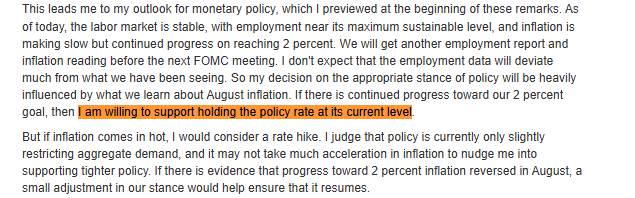
His comments, published two weeks before the FOMC September meeting on September 15 and 16, 2026, caused market forecasts to shift overnight.
This moment is particularly tense because tough rhetoric from other officials earlier this year tilted the market towards interest rate hikes.
September 2026 Federal Reserve Interest Rate Decision: Current Data and Market Probabilities
The CME FedWatch tool tracks futures pricing linked to FOMC meetings and is the main indicator used by the market to assess these probabilities.
The Fed's target interest rate range is 350 to 375 basis points, or 3.50% to 3.75%. As of September 3, the odds given by traders were almost flat: a 49.8% chance of leaving interest rates unchanged and a 50.2% chance of raising interest rates by 25 basis points.
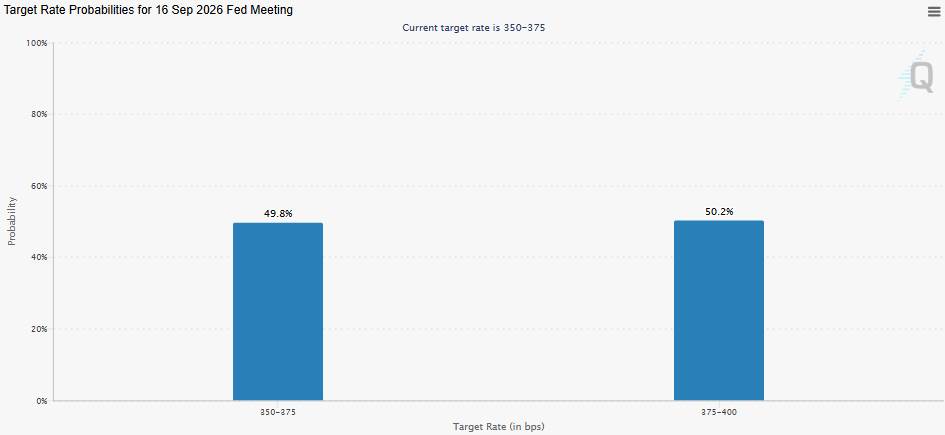
This divergence marks a huge turning point. As early as the day before, September 2, the probability of raising interest rates was still as high as 63.2%; after Waller's comments, the probability dropped sharply.
This shows that every release of new data has a highly sensitive impact on this decision.
Why the Fed's interest rate decision depends on inflation cooling data
Director Christopher Waller explains the reason for keeping interest rates unchanged immediately
Waller pointed out that the Fed's preferred inflation indicator-the core personal consumption expenditure (PCE) price index. Three-month data fell from nearly 4.8% in February to about 3% in July, a steady decline he saw as an encouraging sign. He said annual numbers still look high, but they lag behind current realities.
He also noted that about half of the July increase in core inflation came from estimated costs rather than direct sales data, meaning the underlying pressure may be milder than the headlines suggest. The surge in energy prices and tariffs appears to be a one-time event, while productivity-adjusted wage growth suggests progress is gradually advancing.
Waller described "patience" as a low-cost strategy. He said that even if prices rebound subsequently, keeping interest rates unchanged again will not significantly change the path of inflation. A small interest rate hike now will not bring inflation back to target levels immediately.
He also left room to change his stance, as the August inflation report, due to be released around September 11, could still prompt him to turn to interest rates if prices showed renewed warming.
However, not all Fed officials share the same opinion. Federal Reserve Chairman Kevin Warsh took a firmer stance in late August, and at a July meeting, three regional Fed presidents voted against it in support of a 25-basis point rate hike.
How the Fed's keeping interest rates unchanged affects today and in the future cryptocurrency markets
Because cryptocurrencies are sensitive to liquidity and the U.S. dollar exchange rate, they respond quickly to the Fed's interest rate news. View today's cryptocurrency market data through CoinMarketCap:
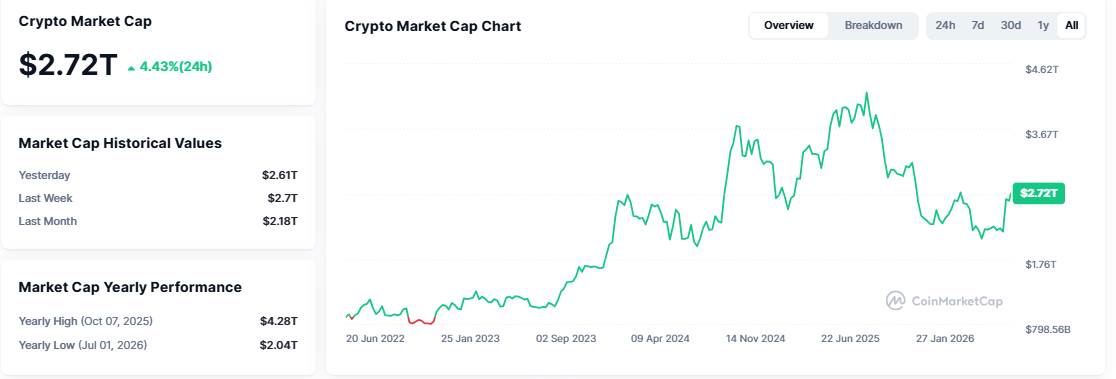
- Bitcoin is close to US$81,188, up about 4.6% intraday
- Ethereum is close to US$2,517, up nearly 4.9%
- The total market value of cryptocurrencies is approximately US$2.72 trillion
- Fear and Greed Index is 77, In the "greedy" territory
- Total open interest in derivatives contracts is close to US$444.79 billion
Keeping interest rates unchanged is usually good for cryptocurrency prices for the following reasons: Stable borrowing costs allow more money to flow into risky assets such as Bitcoin and Ethereum. Maintaining interest rates tends to weaken the dollar slightly, which typically pushes up dollar-denominated assets, including cryptocurrencies.
In addition, keeping interest rates unchanged will also relieve pressure on real yields, which are investors 'returns after deducting inflation. When real yields remain flat rather than rising, non-interest-bearing assets like Bitcoin are more attractive than bonds.
On the contrary, raising interest rates will have the opposite effect. Higher interest rates strengthen the dollar, push up real yields, and often cause funds to withdraw from speculative markets. Over the past month, as expectations for interest rate hikes have changed, the trend of cryptocurrency prices has clearly demonstrated this pattern.
Outlook ahead of the September 2026 Fed interest rate decision
August inflation data may calm the debate. A continued cooling trend could tilt the Fed's interest rate path towards Waller's "patient" stance, while warmer readings could put rate hikes back on the agenda.
Once relevant data is released on September 11, the gold, bond and cryptocurrency markets may experience rapid fluctuations. Until then, the Fed's interest rate outlook remains as unpredictable as a coin toss, and the next few days will bring more clarity than any single speech provides.