Exchange Ranking
 Top Exchanges
 24h Volume Ranking
 Popularity Ranking
 Exchange BTC Balance
 Proof of Reserves
 Decentralized Exchanges
 Funding Rate
 Funding Heatmap
 Liquidation Data
 Max Pain
 Long/Short Ratio
 Whale L/S Ratio
 Binance/Okex/Huobi L/S
 Bitfinex Margin L/S
 ETF Tracker
 Solana ETF
 XRP ETF
 Hong Kong ETF
 Bitcoin Treasuries
 Crypto Reversal
 Ethereum Reserves
 HyperLiquid Wallet Analysis
 Hyperliquid Whale Watch
 Large Transactions
 On-chain Movement
 Bitcoin ROI
 Stablecoin Market Cap
 Options Analysis
 News
News Articles
 Economic Calendar
 Features
 Wallet
 Contract Calculator


 Security
 Collections
 Watchlist
 Following
 ETH
ETH Ethereum is about to usher in the next major upgrade, and a date has been set: Glamstam will be activated on the Sepolia Test Network on October 6, 2026.
Ethereum is about to usher in the next major upgrade, and a specific date has been set for the first time: Glamstam will be activated on the Sepolia Test Network on October 6, 2026. If you commit a pledge operation, from that moment on, your node will need to use a software version that has not yet been released as a stable version. On September 11, 2026, we counted the released version levels of all top ten Ethereum clients to show where the actual preparations are progressing.
Let's start with a brief conclusion: As of that day, none of the ten clients examined carried a stable version that contained the upgrade name. Related work is under pre-release and overnight test construction. This means you don't need to do anything today. It's more important to know when the time will come.
Glamstam, Gloas and Sepolia: The meaning behind the name of the Ethereum upgrade
Three terms appear in every report on this upgrade, with different meanings.
Glamstam is the collective term for the next change to the Ethereum protocol rules. It consists of the names of two layers that Ethereum has changed simultaneously: Gloas for the consensus layer and Amsterdam for the execution layer. So anyone who reads about Gloas in the minutes of the meeting is actually reading the same process, just the other half.
SepoliaIt's a test network. It runs the same software as the main network, but uses worthless tokens. The new agreement rules will be launched in Sepolia before touching real money. Mistakes on Sepolia only consume developers 'time; mistakes on the mainnet can cost investors' money. This is the reason for the order.
Hard fork is a rule change that makes old software incompatible with new software: nodes that do not know the new rules will follow a different chain from the rest of the network from the switching point. This is why updating clients before forking is a prerequisite for participation, not a recommendation.
Why October 6, 2026 appears in Sepolia's calendar
This date comes from the 186th Consensus Layer Developers Conference held on September 3, 2026. There, the client team identified epoch 351232 as the switching point, corresponding to 13:53 UTC on October 6, 2026. Since then, the Ethereum Foundation's roadmap page has consistently listed this date as the next milestone and marked the upgrade status as "testing on devnets."
For the main network, there is no fixed date. The same page states "fourth quarter of 2026" and clearly adds that this date has not been confirmed. The December time point has been discussed in developer circles, but no one is bound by it. Anyone quoting the main network date today is just an expectation.
The Sepolia date itself also comes with reservations. The minutes of the meeting's agenda show that Lido and Optimism required at least one stable running day on the test network before arranging forks. This condition had not been met on September 11.
Devnet-11 on September 14: Whether the Sepolia date can be established depends on this
Devnet is a short-term developer network created specifically for upgrade testing and later abandoned. It is the stage before the public test network.
Glamsterdam-Devnet-10 was originally intended to become the last such network before Sepolia. Plans have changed. Developers have arranged for another network, Devnet-11, to be launched on Monday, September 14, 2026. Testing continues on Devnet-8, while on Devnet-9, the client is being tested separately.
Therefore, the situation before October 6 can be accurately described: there are 22 days between the Devnet-11 and Sepolia dates when the program starts. During this period, the client team must stabilize the network, fix discovered bugs, and build a release from it. If Devnet-11 cannot be maintained, Sepolia's date will be postponed. This is what these networks exist for.
Anyone doing a pledge operation is running two programs in parallel: an execution client and a consensus client. Both must be kept up to date before branching.
Client readiness check: Top Ten Ethereum clients and their versions on September 11, 2026
This survey was conducted by cryptoticker.io on September 11, 2026. Method: Through GitHub's public interface, we searched the release lists of ten open source Ethereum clients, and recorded the latest stable version of each client and its release date; pre-release versions were recorded separately. The reference time was UTC 18:00, and a total of ten objects were inspected.
What we were unable to check also fell within the scope of the investigation: We evaluated the version name, release date, and pre-release markings, rather than the full text of each release note. A version may contain the Glamsterdamrule, but the word does not appear in its name. In addition, not captured are specific devnet-specific builds that teams privately exchange and not release as official releases.
What does the data reveal about Glamestead's schedule
Three findings can be read from the table.
First: None of the ten stable releases contains Glamstam, Gloas, or Sepolia in the version name or label. This is consistent with the development status described on the roadmap page.
Second: The pace of release varies widely. Four clients built their latest stable version in September, and Erigon even did it two days ago. The other four are more than 30 days behind, leading with Geth's 46 days and Prysm's 44 days. This does not lead to conclusions about readiness, but one expectation is that among these teams, the release has not yet arrived.
Third: Visible dynamics occur in pre-release releases. Nethermind released a pre-release version of 2.0.0-rc on September 2, Lodestar released a pre-release version for 1.47.0 on August 27, and Nimbus submitted a night test build on the morning of September 11. Work is currently underway here.
The conclusion for you is unobtrusive but useful: There is nothing to install at the moment. The version you used for forking does not yet exist as a stable version. There is no benefit in rushing updates now.
Execution client and consensus client: Why you have to update both
Since the move to Proof of Stake, the Ethereum node consists of two programs running in parallel and communicating with each other.
Execution client executes transactions and manages the state of the chain. Geth, Nethermind, Besu, Erigon and Reth belong to this group. Consensus client determines which block counts next and is responsible for pledge transactions. Prysm, Lighthouse, Teku, Nimbus and Lodestar handle this work.
Glamstam changes rules on two levels. Therefore, updating just one side is not enough. If someone updates the consensus client but forgets the execution client, the two halves of their node will disagree after the switch. In practice, this means missing attestations, and if you are a verifier, it means forgoing rewards. The cumulative loss depends on how long the situation goes undetected.
If a service pledges ETH for you, then the service undertakes this task. Which providers undertake this task and what the terms are, see our pledge platform comparison for details.
Independent pledgers should check four aspects of the node before branching
Even if no release version is available, the following four points are worth doing in advance:
- Note the version running on the machine : Record the versions of the two clients separately. Surprisingly, many operators don't know this from memory at critical moments, and then search around under time pressure.
- Check whether the installation automatically pulls the release version : Or is it updated manually? For forking, automatic paths are safer if they pull stable versions rather than pre-release versions.
- Check how much free disk space there is : Failure to upgrade because the disk is full is an avoidable interruption.
- Subscribe to release notices from two clients : This is the channel for the team to announce the main network fork date, faster than any news website.
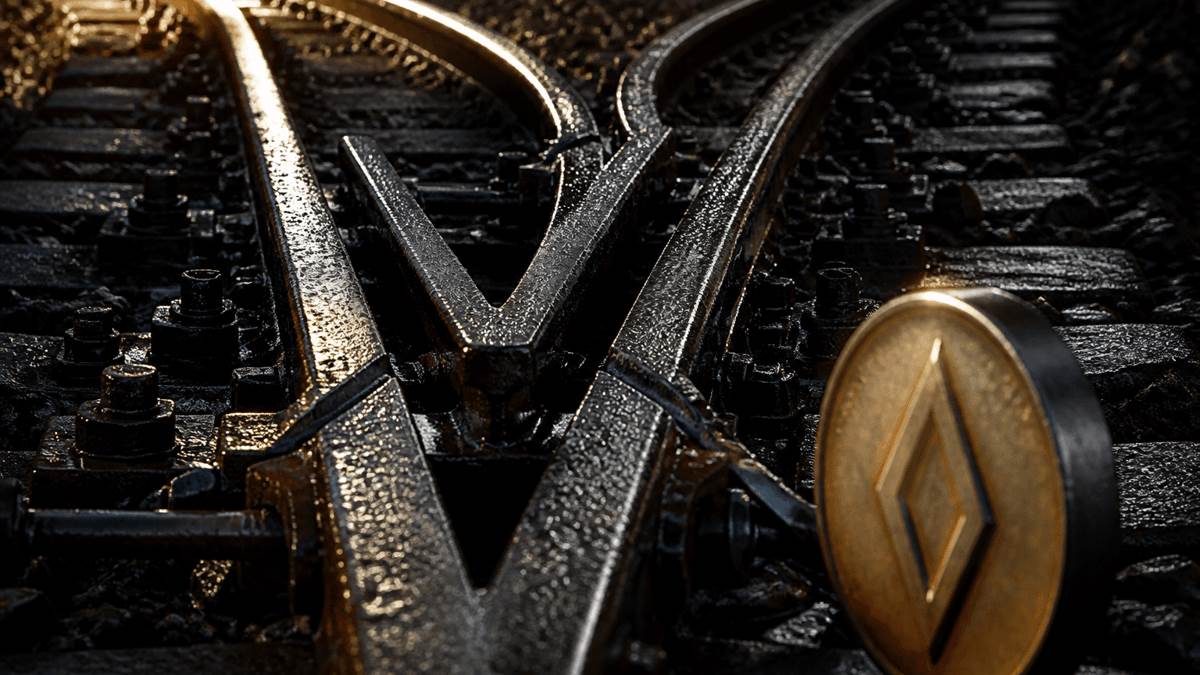
Hard forks separate updated nodes from obsolete nodes: starting from the switching point, they follow different rules.
EIP-8061 and Exit Queue: Impact on Pledge
Among the proposals earmarked for Glamestead, one is directly related to pledge. EIP-8061 increases the so-called churn (turnover rate), which is the number of validators allowed to leave the network or be merged per unit of time.
Why this is important: Anyone who pulls ETH out of the pledge will join the queue. Its length is determined by this upper limit. How long it can be at certain times, we described it in August using the numbers for that day; see our analysis of the pledge queue for details. If the turnover rate increases, waiting times will be shortened if demand remains the same.
Two other proposals shape the nature of the upgrade. EIP-7732 anchors the separation of block proposal and block construction in the protocol. EIP-7928 introduces block-level access lists that inform processors in advance which parts of state a block has touched. Both aim to increase the speed and equality of block construction, rather than change your balance.
The scope of the upgrade is considered frozen, but may still change before the mainnet because the general proposal is officially in draft status. The complete list is hosted by the Ethereum Foundation's roadmap page.
Pledge via provider: What can be checked without running nodes
Most pledged ETH is located on exchanges, pledge services, and liquidity pledge agreements, with only a small portion on private machines. If this describes you, then client updates are not your job. There are still two things worth doing.
First, check whether your provider maintains a status page or announcement channel and whether there is any information on Glamsterdam on it. Providers that silently handle network upgrades make it impossible for you to understand the cause of the outage.
Second, check how your provider handles maintenance windows. Around the main network fork, many services will suspend deposits and withdrawals for several hours. It's routine and usually harmless, but it's not a bad time to make a planned trade.
What this upgrade means and what it doesn't mean for ETH in your wallet
Here are the peace of mind guarantees related to this theme: If you only hold ETH, whether in your own wallet or through the provider, Glamestead has nothing to ask of you. No swaps, no migrations, no deadlines that will cost you money. Your address remains the same and your balance remains the same.
This type of upgrade changes the rules for network construction and checking blocks. It will not change the position in your wallet. Hardware wallets do not require special preparation; which devices cover which functions are listed side by side in the hardware wallet comparison.
Caution is needed elsewhere. Network upgrades are known opportunities for fraud attempts. Around forks, messages often pop up urging so-called migration or requesting mnemonic requests. Real agreement changes never require this. Anyone who asks you to enter a recovery phrase wants your money.
Assessment: How to judge whether a date is reliable
There are three signals that will tell more than any headline in the coming weeks.
The first one was Devnet-11 on September 14. If it runs normally for several days without crashing, October 6 is reasonable. If finalization is interrupted again, the date will move.
The second is the release version of the client team. Once several clients release stable versions that support Sepolia within a few days, the fork is truly ready. This sequence never runs in reverse.
The third one is the roadmap page itself. It carries the next milestone with a date, and the entry is maintained. We described the original decision in August in our article on Sepolia's Glamsburg date; the September reservations there have not yet been included. The minutes of the developer meeting were summarized by Christine Kim in her notes for the 245th executive developer meeting.
Glamstam Dates and Client Updates: Highlights
Record your two client versions today and subscribe to their release notifications.
Nothing needs to be installed: On September 11, none of the ten clients inspected carried a stable version of any Glamsterdam reference. If you don't want to run nodes at all, our pledge platform is a faster way.
Focus on Devnet-11 on September 14, not the calendar.
Sepolia's October 6 date depends on that test, while for the mainnet, there is only an unconfirmed indication for the fourth quarter of 2026 in any case. If you hold your own key during this process, our hardware wallet will help you choose your device.
Treat every migration tip as a fraud attempt.
Agreement upgrades will never ask for your mnemonic. Instead, keep your records clean so you can track pledge rewards; the right tools are in our comparison of cryptocurrency tax instruments.
(As of September 11, 2026. This article does not constitute investment advice. Price and fee structures are subject to change; please check terms with your provider before purchasing.)