Exchange Ranking
 Top Exchanges
 24h Volume Ranking
 Popularity Ranking
 Exchange BTC Balance
 Proof of Reserves
 Decentralized Exchanges
 Funding Rate
 Funding Heatmap
 Liquidation Data
 Max Pain
 Long/Short Ratio
 Whale L/S Ratio
 Binance/Okex/Huobi L/S
 Bitfinex Margin L/S
 ETF Tracker
 Solana ETF
 XRP ETF
 Hong Kong ETF
 Bitcoin Treasuries
 Crypto Reversal
 Ethereum Reserves
 HyperLiquid Wallet Analysis
 Hyperliquid Whale Watch
 Large Transactions
 On-chain Movement
 Bitcoin ROI
 Stablecoin Market Cap
 Options Analysis
 News
 Articles
 Economic Calendar
 Features
 Wallet
 Contract Calculator


 Security
 Collections
 Watchlist
 Following
 BTC
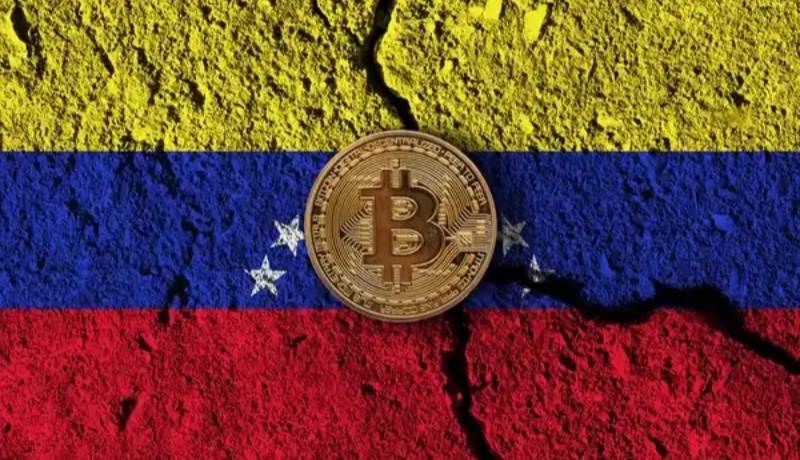
According to reports from CCTV, early on January 3rd local time, the United States launched a large-scale military operation against Venezuela. Venezuelan President Maduro and his wife were captured by American forces and taken abroad. U.S. President Trump confirmed this action during a speech at Mar-a-Lago, stating that the U.S. would “manage” Venezuela until a safe transition could be achieved. He also revealed that major American oil companies would invest billions of dollars in repairing infrastructure in Venezuela.
In addition to physical assets, the whereabouts of massive amounts of digital assets, allegedly accumulated through “gold swaps” and oil trade, remain unknown. According to sources familiar with the situation, Venezuela has established a complex shadow financial network to circumvent sanctions. This network converts national resources such as gold and oil into Bitcoin and USDT.
As the core circle of Maduro’s government disintegrated, who holds the “private key” necessary to access this digital wealth became one of the most concerning issues for Washington.
According to some sources, the figure could be as high as $60 billion. It is believed that this fortune was accumulated over several years through complex channels such as gold swaps and oil trade transactions. With the change of regime, those who possess the “private key” to this wealth have become focal points of attention. Among them, Alex Saab, who is considered the “architect” of this system, is particularly important. The whereabouts of this asset have evolved from a mere financial issue into a complex game involving intelligence, law enforcement, and geopolitical considerations.
The digital assets of the shadowy financial empire
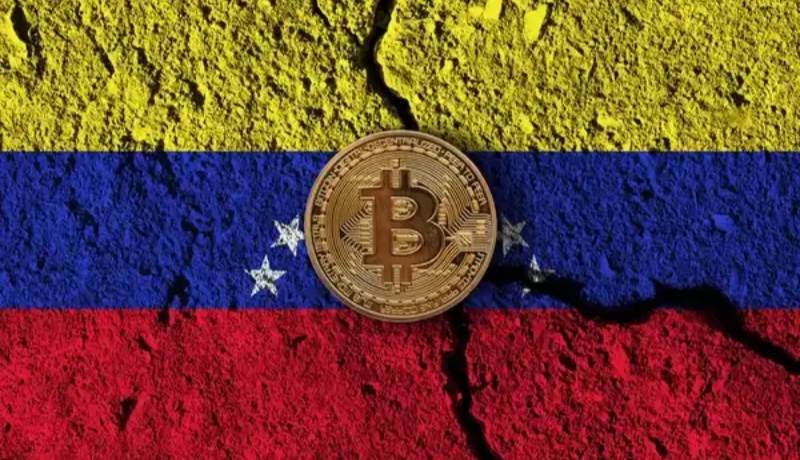
According to sources from Whale Hunting, which rely on HUMINT information, the Venezuelan government may control bitcoins worth up to $60 billion. Although this figure has not been fully confirmed through blockchain analysis, the logic behind this estimate has attracted the attention of financial intelligence agencies.
Reports indicate that this accumulation of funds began in 2018. At that time, Venezuela exported 73.2 tons of gold, worth approximately $2.7 billion. Sources familiar with the matter revealed to the media that if part of this money was converted into bitcoins when their value was between $3,000 and $10,000, and held until its peak at $69,000 in 2021, the appreciation would be staggering.
If this estimate is accurate, the scale of this asset would rival MicroStrategy’s holdings, and even surpass Salvadoran national reserves.
In addition to Bitcoin, stablecoins also play an important role in the country’s financial transactions. According to Zerohedge, as sanctions were tightened, Venezuelan state-owned oil company PDVSA began requiring intermediaries to use Tether USD for settling oil transactions. By December 2025, it was reported that approximately 80% of Venezuela’s oil revenues were received in Tether USD. Although Tether has frozen some related wallets, this may be just the tip of the iceberg.
To facilitate the concealment of assets, intermediaries have established complex networks across Turkey, the UAE, and other locations.
Sources familiar with these operations described to media that the process typically begins with gold mining and export from Venezuela. Gold is transported to Turkey and the UAE for refining and sale. The profits are not directly transferred back, but instead converted into cryptocurrency through over-the-counter brokers. Subsequently, these funds are processed using “coin mixers” to obscure their origin, and finally deposited into cold wallets.
In this process, certain individuals play a key role. The media mentioned a person named David Nicolas Rubio Gonzalez, who is said to be responsible for coordinating the physical transportation of gold. Although he was listed on the US Treasury’s sanctions list as early as 2019, he was not prosecuted criminally, which has led to speculation about whether he may have collaborated with the US authorities. Sources familiar with the matter believe that such intermediaries, who know the details of how funds are transferred, may have knowledge of the ultimate destination of this large sum of money.
The role of Alex Saab, a key figure, is crucial.
在该金融架构中,Alex Saab被普遍视为核心人物。据彭博社报道,Alex Saab曾于2024年1月被马杜罗任命为委内瑞拉国际投资中心负责人。而在华盛顿的视角中,他是构建这一影子金融体系的“建筑师”。
此前披露的法庭文件显示,Alex Saab与美国执法部门有着复杂的关系,他曾于2016年起作为美国缉毒局(DEA)的线人提供信息。随着马杜罗被捕,Alex Saab再次成为各方关注的焦点。前委内瑞拉检察官Zair Mundaray在接受媒体采访时表示,Alex Saab因没有传统政治派系的羁绊而获得信任,实际上充当了资产的“担保人”。
目前的悬念在于,控制这些冷钱包私钥的可能并非某一个人。消息人士透露,可能存在一种由瑞士律师设计的多重签名机制,将密钥分散在不同司法管辖区的多名受信任人员手中,以确保资产安全。随着政权核心的物理隔离,这些加密资产是否会像许多“沉睡”的比特币巨鲸地址一样永久封存,还是会被美方通过法律与情报手段追回,尚不可知。
原油与黄金的市场反应
回到传统金融市场,投资者正在评估美国“接管”委内瑞拉后的经济影响。
Phil Flynn, a senior market analyst at Price Futures Group, pointed out that although Venezuela has an impressive oil reserve of 303 billion barrels, its actual daily production has decreased to around 1 million barrels per day, which accounts for only 0.8% of the world’s total production. Therefore, even if there are short-term supply disruptions, their impact on global oil prices will be quite limited. Flynn believes that market reactions are more psychological in nature, and Venezuela’s share of the oil market can easily be filled by other oil-producing countries. In terms of gold, Venezuela’s annual gold production in 2024 is approximately 31 tons, which is not a significant figure globally. Analysts believe that in the short term, the outcome of military actions may limit the rise in gold prices as a safe-haven asset. However, if subsequent military interventions by the United States in the region lead to broader geopolitical tensions, this could provide support for gold prices in the medium term. Trump has clearly stated that he will allocate billions of dollars to help large American oil companies repair Venezuela’s damaged infrastructure. This means that future market trends will shift from concerns about supply disruptions to expectations regarding Venezuela’s ability to restore production and the return of American energy companies to the country’s market.