Exchange Ranking
 Top Exchanges
 24h Volume Ranking
 Popularity Ranking
 Exchange BTC Balance
 Proof of Reserves
 Decentralized Exchanges
 Funding Rate
 Funding Heatmap
 Liquidation Data
 Max Pain
 Long/Short Ratio
 Whale L/S Ratio
 Binance/Okex/Huobi L/S
 Bitfinex Margin L/S
 ETF Tracker
 Solana ETF
 XRP ETF
 Hong Kong ETF
 Bitcoin Treasuries
 Crypto Reversal
 Ethereum Reserves
 HyperLiquid Wallet Analysis
 Hyperliquid Whale Watch
 Large Transactions
 On-chain Movement
 Bitcoin ROI
 Stablecoin Market Cap
 Options Analysis
 News
 Articles
 Economic Calendar
 Features
 Wallet
 Contract Calculator


 Security
 Collections
 Watchlist
 Following
As we approach the end of 2025, the cryptocurrency industry is facing changes in risk structures despite the apparent improvement in security conditions. Multiple annual reports from security agencies indicate that although the number of attacks has decreased year-over-year, losses due to high-impact attacks on key components such as cross-chain bridges, wallet providers, and node infrastructure have risen to over $3.3 billion, marking a new high in recent years. Attackers no longer focus on achieving a large number of attacks; instead, they prefer to target specific targets with devastating effects. A single vulnerability can significantly undermine the liquidity and trust of an entire ecosystem. This means that cryptocurrency security has evolved from a technical issue to a critical factor affecting market pricing and institutional participation.

Multiple reports confirm that overall losses have increased significantly.
According to independent reports by CoinTelegraph, CertiK, and Business Insider, although the total number of security incidents has decreased, the total losses caused by cryptocurrency hacking, vulnerability exploitation, and fraud remain at around $3.3 to $3.35 billion within just one year.
This difference highlights the structural changes in the threat landscape of cryptocurrencies: while basic vulnerabilities and opportunistic attacks are decreasing, the economic damage caused by successful intrusions is increasing sharply. This is due to highly targeted and sophisticated attack methods.
The number of incidents has decreased, but the average loss has increased significantly.
According to data from CertiK’s annual security reviews, the number of recorded cryptocurrency security incidents has decreased year by year, but the average loss per incident has increased by more than 60%, reaching approximately $5.3 million per incident.
Chainalysis’ analysis confirmed this trend. The report repeatedly pointed out that attackers are increasingly targeting valuable infrastructure targets, rather than smaller-scale, retail-focused attacks. This has exacerbated the economic consequences of successful attacks.
Supply chain attacks cause significant losses
Multiple reports have emphasized the importance of supply chain vulnerabilities as a key issue. CoinTelegraph and Business Insider cited data from CertiK, which showed that just two major supply chain incidents resulted in losses of approximately $1.45 billion, accounting for nearly half of all crypto-related losses that year.
Unlike traditional smart contract exploits, supply chain attacks typically target third-party dependencies, development environments, or infrastructure providers. This allows attackers to bypass traditional audit processes and cause even greater damage.
Taking the BYBIT incident as an example, we can see the systemic risks involved
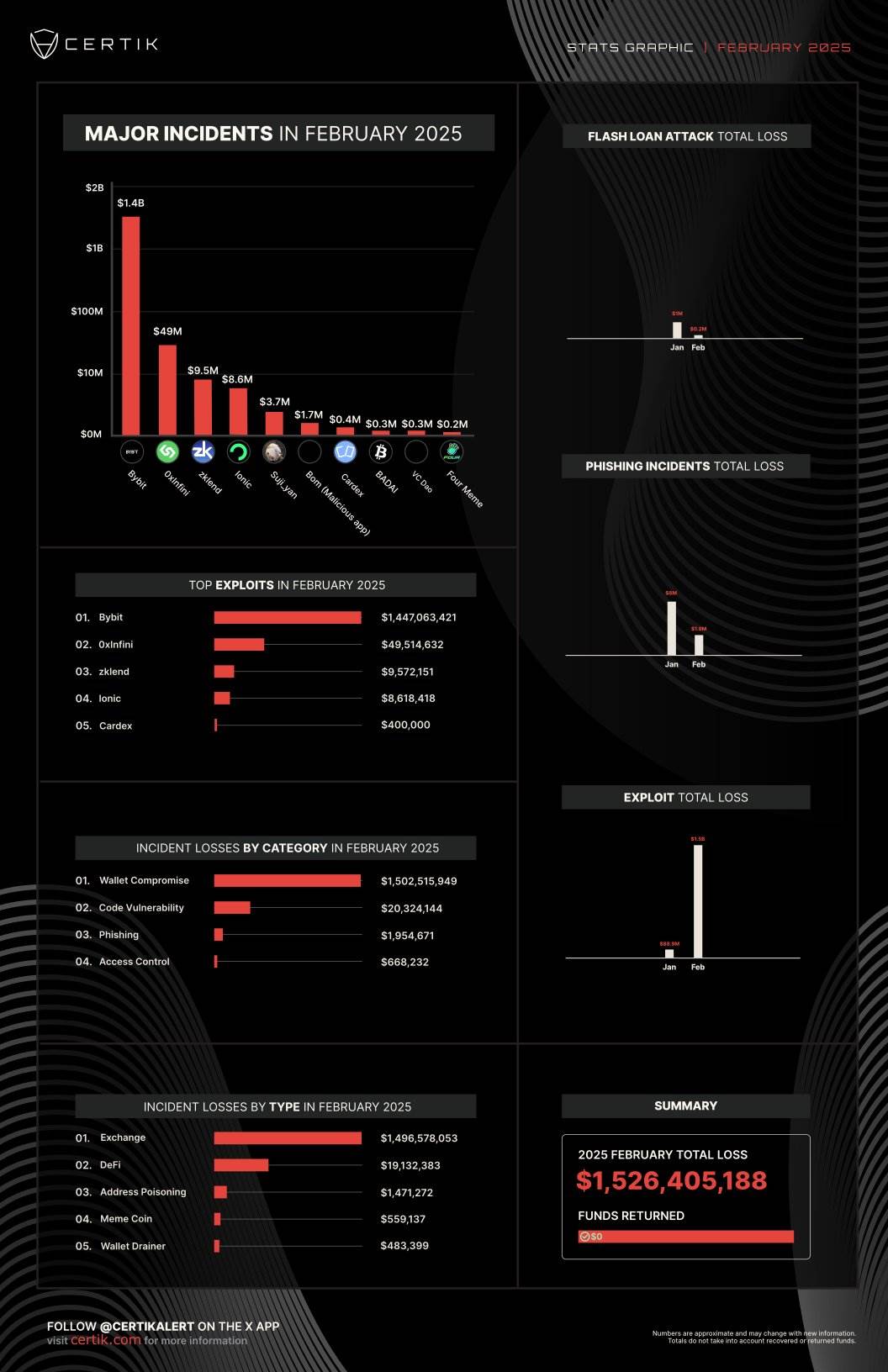
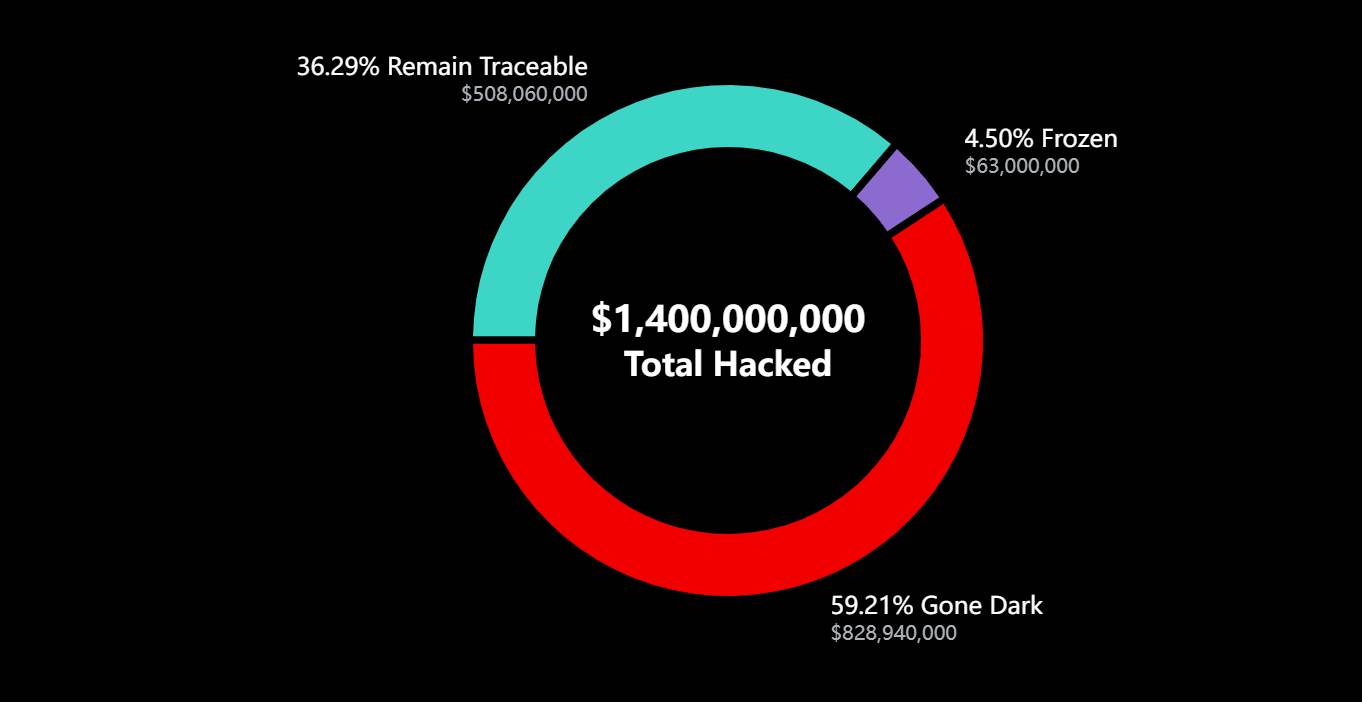
Among all reported incidents, the security breach at Bybit in February was the most serious. According to CoinTelegraph and Business Insider, around $1.4 billion in digital assets were compromised, making it one of the largest cryptocurrency hacking incidents in history.
CoinTelegraph’s subsequent reports confirmed that Bybit took extensive security measures, including multiple external audits and operational improvements. The platform managed to restore liquidity within about 30 days. This highlights the scale of the security breach and the resilience required to recover from such a systemic impact.
The shift in the nature of encryption security risks
indicates that there are significant changes occurring in the security risks associated with cryptocurrencies. While improvements in the security of smart contract infrastructure may reduce the frequency of small-scale attacks, attacks at the infrastructure level and dependency-based attacks are becoming the main sources of economic losses.
This change is particularly important for exchanges, protocols, and institutional participants, as traditional code audits become insufficient to address the most destructive threats.
Security becomes a key factor in the adoption of digital assets by institutions
. As regulatory policies become clearer and more institutions begin to engage with digital assets, security performance becomes a crucial factor in maintaining market trust. Analysis from several reports suggests that the future adoption of digital assets will depend not only on compliance and licensing, but also on their ability to withstand high-impact attacks from both low-frequency and high-risk sources.
In this context, the latest loss data reflect not just isolated incidents; they represent a stress test of the industry’s operational maturity and its ability to function as part of a broader financial system.