Exchange Ranking
 Top Exchanges
 24h Volume Ranking
 Popularity Ranking
 Exchange BTC Balance
 Proof of Reserves
 Decentralized Exchanges
 Funding Rate
 Funding Heatmap
 Liquidation Data
 Max Pain
 Long/Short Ratio
 Whale L/S Ratio
 Binance/Okex/Huobi L/S
 Bitfinex Margin L/S
 ETF Tracker
 Solana ETF
 XRP ETF
 Hong Kong ETF
 Bitcoin Treasuries
 Crypto Reversal
 Ethereum Reserves
 HyperLiquid Wallet Analysis
 Hyperliquid Whale Watch
 Large Transactions
 On-chain Movement
 Bitcoin ROI
 Stablecoin Market Cap
 Options Analysis
 News
 Articles
 Economic Calendar
 Features
 Wallet
 Contract Calculator


 Security
 Collections
 Watchlist
 Following
 BTC
Against the backdrop of a weakening US dollar, repeated expectations of interest rate cuts, and increasing geopolitical risks, safe-haven funds are flowing into the precious metals market at an unprecedented pace. Recent market trends show that the price of London gold has reached a new high of over $4,420 per ounce, representing a nearly 70% increase this year. Silver has even achieved an astonishing return of nearly 140%, making it one of the most outperforming assets globally. This rise is not only due to central banks continuing to increase their holdings and institutions using hedging strategies to manage inflation, but also reflects the collective anxiety of ordinary investors regarding the credibility of fiat currencies and macroeconomic uncertainties. A “value defense battle” involving both traditional finance and crypto assets is taking place simultaneously.

I. Record Highs
On December 22, 2025, the international gold market experienced a “crazy Monday.” The price of London gold exceeded the $4,420 mark, reaching $4420.47 per ounce, setting a new record high. As of that day, the international gold price had increased by 68.05% this year.
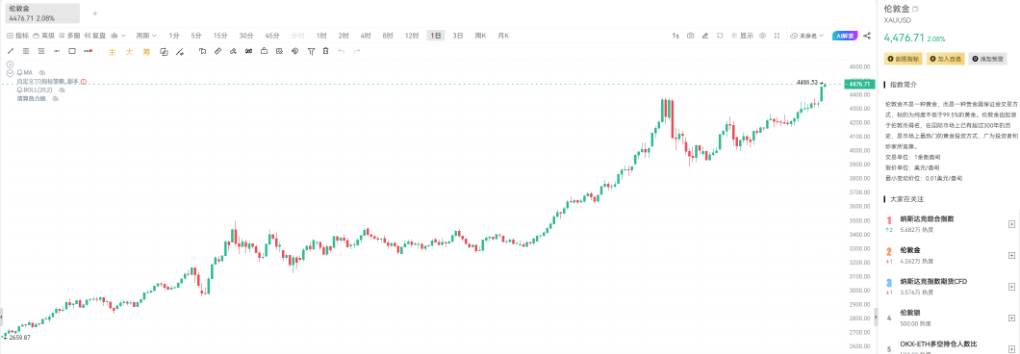
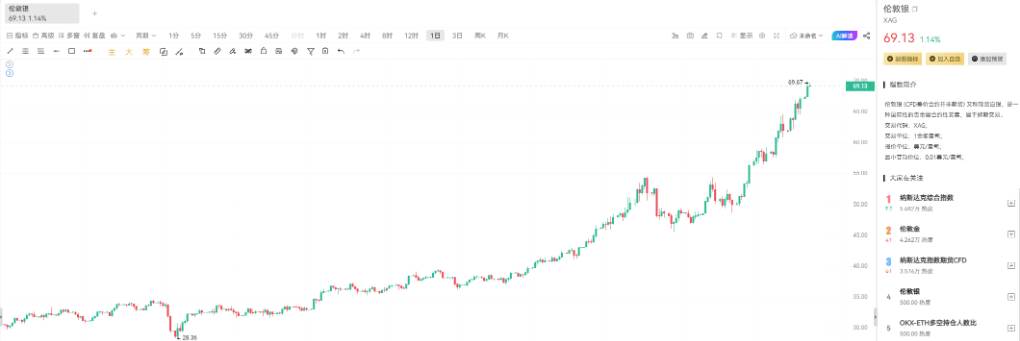
On the same day, the price of silver also reached a record high of $69.45 per ounce. Platinum and palladium futures prices reached limit levels, and the non-ferrous metal market became extremely active.
II. Multiple Drivers: Macroeconomic and Microeconomic Factors Converge
The current rally in gold prices is driven by multiple factors, including both traditional drivers and new variables.
The shift in monetary policy by the Federal Reserve is the primary catalyst.In September and December 2025, the Federal Reserve cut interest rates by 25 basis points on two separate occasions. Futures market pricing indicates that traders expect further rate cuts of 75-100 basis points in 2026. This expectation reduces the relative attractiveness of the dollar, thereby enhancing gold's status as a store of value.
● The global central banks' surge in gold purchases is breaking the traditional balance between supply and demand. Latest data from the World Gold Council shows that in the second quarter of 2025, global central banks purchased a net total of 182 tons of gold, marking the tenth consecutive quarter of net gold holdings increases. In particular, central banks in emerging markets such as Poland and Kazakhstan are significantly increasing their gold reserves. The Chinese Central Bank has been purchasing gold for eleven consecutive months, with a total increase of over 200 tons.
● Geopolitical tensions are driving demand for safe-haven assets. The escalating situation in Venezuela and the attack on Black Sea shipping routes have once again driven up the price of gold due to the increased risk premium associated with precious metals. Historical data shows that during periods of escalating conflict, gold typically receives a 5-8% premium as a safe-haven asset.
● Technological breakthroughs trigger follow-up buying activity. After gold prices break through previous highs, a large number of technical buyers and stop-loss orders are triggered. Both institutional and retail investors increase their holdings of gold-related assets, creating a positive feedback loop between price movements and capital inflows.
III. Perspectives from KOLs: The Return of “Currency Devaluation Trading”
● Robin Brooks, former chief foreign exchange strategist at Goldman Sachs, presented a thought-provoking观点。He believes that the recent gold price highs indicate that “currency depreciation trading” has resumed. He also pointed out that this is not an ordinary bull market for precious metals, but rather a sign of confidence in the legal monetary system being shaken.
● Brooks noted a key phenomenon: not only traditional precious metals like gold and silver are rising, but even currencies of low-debt countries such as the Swedish krona and Swiss franc are showing a strong positive correlation with precious metals.
● He explained, “This indicates that investors are looking for any assets that can help them hedge against currency depreciation, rather than just traditional safe-haven assets. Historically, the Swedish krona was a volatile currency with no safe-haven properties, but now it shows a high correlation with gold prices.”
● The data charts provided by Brooks show that among the G10 currencies, the Swiss franc has a positive correlation of 0.73 with gold, while the Swedish krona has a correlation of 0.68. Such synchronization is extremely rare over the past twenty years.
● Although the US dollar seems relatively stable on the surface, Brooks warned that the strengthening of the dollar against the extremely fragile yen masks its overall weakness relative to other currencies. In fact, the trade-weighted index of the dollar has fallen by about 6% since its highest point this year, indicating that the overall purchasing power of the dollar is declining.
Fourth, Bitcoin and Gold Move Apart
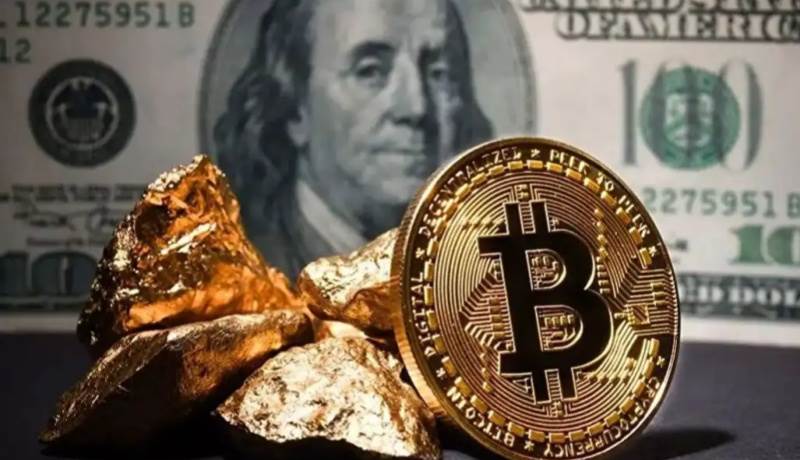
Bitcoin, often referred to as the “digital gold,” did not experience similar price highs as gold. Their trends have diverged significantly.
As of December 22, the price of Bitcoin remained around $88,000, far below the peak of $120,000 reached in October. Since 2025, the price of gold has increased by more than 68%, while Bitcoin has only risen by about 15%. Analysis shows that the correlation between Bitcoin and NASDAQ is now as high as 0.5, whereas its correlation with gold is only 0.2. This indicates that Bitcoin is more closely tied to the performance of technology stocks rather than traditional safe-haven assets. The reasons for this differentiation include:
● Different market participant structures: The gold market is dominated by central banks, institutional investors, and long-term holders; in contrast, the cryptocurrency market is driven more by retail investors and leveraged trading.
● Differences in liquidity conditions: Gold benefits from expectations of global liquidity expansion; on the other hand, the cryptocurrency market faces regulatory pressures and capital outflows.
● Changes in functional roles: Bitcoin is shifting from being a “value store” to a “risk asset,” becoming more influenced by sentiment in the technology sector.
Jaren Blucran, manager of the Blucran Intelligent Multi-Asset Fund, said, “Yen arbitrage trades still support gold, but their impact on Bitcoin is limited. Investors borrow low-interest yen to buy high-yield assets, and gold is one of the main targets of such trades.”
Data shows that the yield on Japanese 10-year government bonds has nearly doubled this year, reaching 2.08%. However, the interest rate differential between Japan and the US remains at 2.5 percentage points, continuing to encourage arbitrage trades.
V. Market Divergence and Future Outlook
Faced with gold at its highest level in history, there is significant disagreement among market participants regarding its future direction.
● Optimistic views: Goldman Sachs expects gold prices to continue rising in 2026, setting a target price of $4,900 per ounce, with room for further increases. Analysts at this bank believe that if the Federal Reserve cuts interest rates beyond expectations, gold prices could even exceed $5,000.
● Cautious views: UBS strategists believe that gold prices may experience technical corrections in the short term, and recommend waiting for a better entry point for investors. They point out that the Relative Strength Index (RSI) has entered an overbought zone, indicating potential short-term overheating risks.
● The framework of real interest rates remains crucial for understanding gold prices. There is a negative correlation between gold prices and real interest rates. Currently, the real interest rate in the United States (yield on 10-year inflation-protected bonds) is around 1.2%. If this rate continues to decline, it could provide more room for gold prices to rise.
● Citigroup’s analysis team believes that the gold market may be undergoing structural changes: “Central banks’ continuous purchases of gold are changing the supply and demand dynamics of gold, making it independent of traditional analytical frameworks. Gold is no longer just a tool for hedging inflation; it has become a barometer of geopolitical risks and national budgetary pressures.”
GF Securities reminds investors that the risk of short-term fluctuations in gold prices cannot be ignored: “Without factors that exceed expectations, London gold prices are expected to remain stable until the end of the year, with possible new highs in January next year.”
The pace of central banks around the world purchasing gold continues. China’s central bank holds only 6.7% of its total asset reserves in gold, compared to over 70% in developed countries like those in Europe and America. Expectations that the Federal Reserve will cut interest rates by 2026, coupled with the fact that the United States has a debt burden of $36 trillion, accounting for 124% of its GDP, create long-term conditions conducive to “currency devaluation trades”.
Gold and Bitcoin—two assets that are considered symbols of wealth by different generations—are undergoing revaluation during the market turmoil in 2025.