Exchange Ranking
 Top Exchanges
 24h Volume Ranking
 Popularity Ranking
 Exchange BTC Balance
 Proof of Reserves
 Decentralized Exchanges
 Funding Rate
 Funding Heatmap
 Liquidation Data
 Max Pain
 Long/Short Ratio
 Whale L/S Ratio
 Binance/Okex/Huobi L/S
 Bitfinex Margin L/S
 ETF Tracker
 Solana ETF
 XRP ETF
 Hong Kong ETF
 Bitcoin Treasuries
 Crypto Reversal
 Ethereum Reserves
 HyperLiquid Wallet Analysis
 Hyperliquid Whale Watch
 Large Transactions
 On-chain Movement
 Bitcoin ROI
 Stablecoin Market Cap
 Options Analysis
 News
 Articles
 Economic Calendar
 Features
 Wallet
 Contract Calculator


 Security
 Collections
 Watchlist
 Following
In December, the cryptocurrency market experienced a significant decline in activity. Both chain-level engagement and new trends became less active, with overall sentiment approaching a “dormant state.” However, despite the low trading volume and few topics discussed in the Chinese-speaking community, there was a new phenomenon that caught people’s attention in the English-speaking world: the Meme coin Snowball went live on pump.fun on December 18th. Within just four days, its market value exceeded $10 million, becoming one of the few exceptions during this downturn. This incident further highlighted the differences in how different communities capture trends and allocate funds.
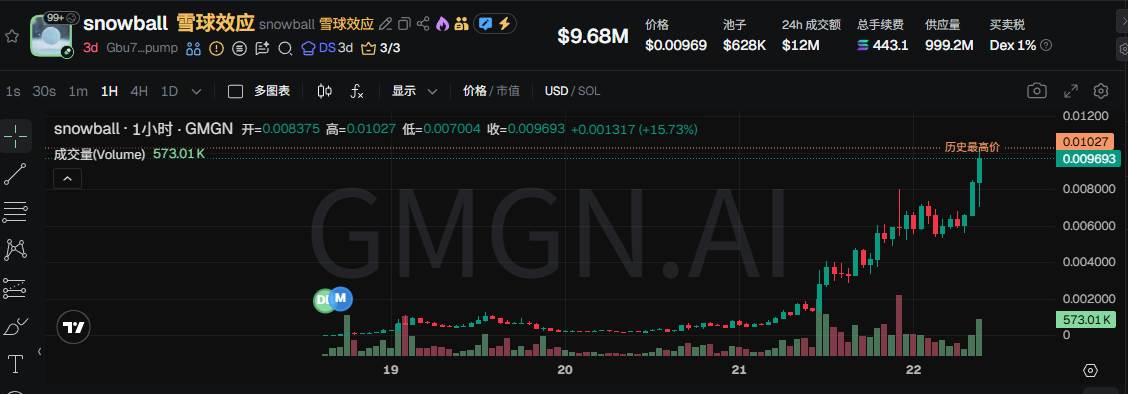
In an environment where there are few new trends and no memes being created, Snowball remains one of the few exceptions that can create some excitement, even if it only has a limited impact on wealth dynamics.
The name “Snowball” refers to a concept known as the “snowball effect” – it essentially describes the mechanism by which tokens can grow larger over time.
It’s a mechanism that allows tokens to “grow bigger on their own.”
By turning transaction fees into buying power, it creates a situation where tokens can continue to grow over time.
To understand what Snowball is trying to achieve, we need to know how tokens on pump.fun typically generate revenue.
On pump.fun, anyone can create a token in just a few minutes. Token creators can set up a “creator fee,” which means they get a certain percentage of each transaction sent to their wallet, usually between 0.5% and 1%.
This money could theoretically be used for community development and marketing efforts. But in reality, most developers choose to use it for other purposes once they have enough.
这也算是土狗典型生命周期的一部分。发射、拉盘、收割手续费、跑路。投资者在赌的不是代币本身,而是开发者的良心。
Snowball的做法是,不要这笔创作者费用的钱。
准确说,是100%的创作者费用不进任何人的钱包,而是自动转进一个链上做市机器人。
这个机器人每隔一段时间执行三件事:
第一,拿积累的资金在市场上买入代币,形成买盘支撑;
第二,把买到的代币和对应的SOL加进流动性池,让交易深度更好;
第三,每次操作销毁0.1%的代币,制造通缩。
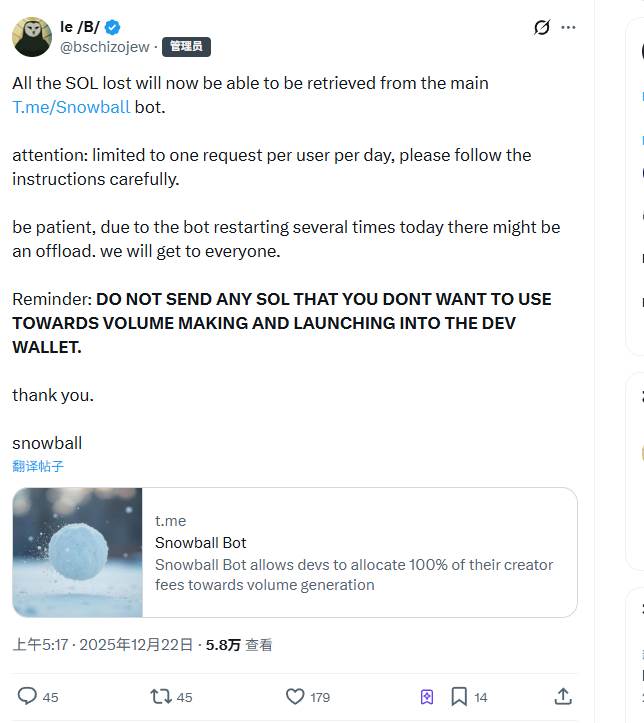
同时,这个币收取的创作者费用的比例不是固定的,会根据市值在0.05%到0.95%之间浮动。
市值低的时候抽得多一点,让机器人更快积累弹药;市值高了就降下来,减少交易摩擦。
用一句话概括这套机制的逻辑,你每交易一次,就有一笔钱自动变成买盘和流动性,而不是进开发者口袋。
因此,你也很容易理解这个雪球效应:
交易产生费用→费用变成买盘→买盘推高价格→价格吸引更多交易→更多费用……理论上可以自己滚起来。
链上数据情况
机制讲完了,看看链上数据。
Snowball was launched on December 18th, and it has been four days since then. Its market value has risen from zero to $10 million, with a 24-hour trading volume of over $11 million.
For a relatively small project like this, this is already considered a successful outcome in today’s market environment.
In terms of token ownership, the current holders own a total of 7,270 tokens. The top ten holders account for approximately 20% of the total supply, while the largest single holder holds 4.65% of the tokens.
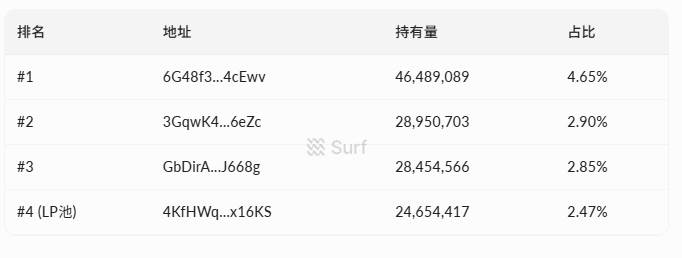
Data source: surf.ai
No single holder owns more than 20% of the tokens, indicating a relatively distributed ownership structure.
In terms of trading data, there have been over 58,000 transactions since launch, including 33,000 buys and 24,000 sells. The total buy amount was $4.4 million, while the total sell amount was $4.3 million, resulting in a net inflow of about $100,000. There was little imbalance between buys and sells, and no one-sided pressure on the market.
There is approximately $380,000 in liquidity in the pool, with half of it being tokens and the other half being SOL. For such a large market value, the liquidity isn’t very high, and large-scale transactions still experience some slippage.
Another interesting point is that Bybit Alpha announced the launch of this token less than 96 hours after its launch, which further confirms its short-term popularity.
A perpetual motion machine in a cold market
After browsing the information, it seems that discussions in the English-speaking community focus mainly on the mechanism of Snowball. Supporters argue that this is the first memecoin where creators’ fees are completely locked into the protocol. Developers can’t just take money and run away; at least, the structure is safer compared to other smaller projects.
The development team is also working together with this narrative. The developer wallets, market-making robot wallets, and transaction logs are all made public, emphasizing the concept of “traceability on the chain”.
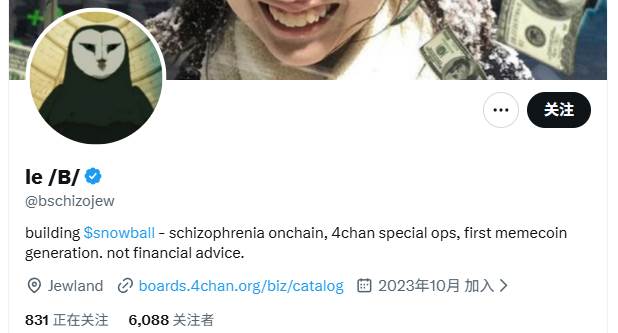
Bschizojew labeled himself as “on-chain schizophrenic, 4chan special forces, and a veteran of the first generation of Meme coins”. This self-mockery-style humor definitely appeals to members of the crypto-native community.
But mechanism security and profitability are two different things.
The snowball effect only works if there’s sufficient trading volume to generate fees, which can then be used to fuel the robots’ repurchase activities. The more transactions occur, the more resources the robots have, the stronger the buying pressure becomes, and the higher the prices. This, in turn, attracts more people to trade…
This is the ideal situation for any Meme coin during a bull market.
The problem is that the “snowball effect” requires external motivation to start.
What kind of environment is the current crypto market? On-chain activity is low, and the overall popularity of Meme coins has declined. There’s already little money available for such investments. In this context, if new buyers can’t keep up, trading volume will decrease, and the robots will receive fewer fees. As a result, the repurchase efforts weaken, support for prices decreases, and trading interest further declines.
The “snowball effect” can either move forward or backward.
A more realistic problem is that the mechanism addresses the risk of “developers running away with money”, but Meme coins face far more risks than that.
Market manipulation, insufficient liquidity, and worn-out narratives—any one of these issues could happen, and 100% fee-based repurchases will have limited effect.
大家都被割怕了,中文圈有老哥也总结得挺到位:
玩归玩,别上头。
不止一个雪球在滚
Snowball不是唯一在讲这个自动做市故事的项目。
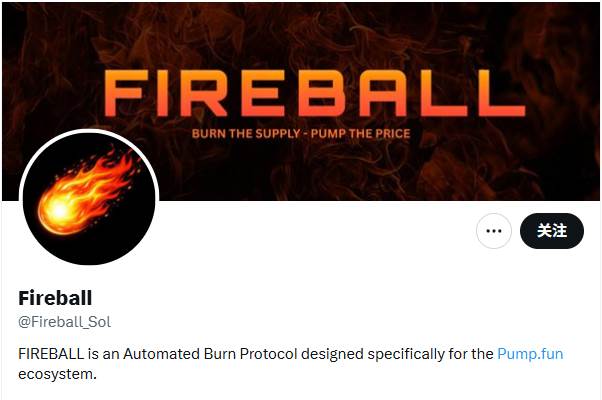
同样在pump.fun生态里,一个叫FIREBALL的代币也在做类似的事:自动回购加销毁,把它包装成一个其他代币可以接入的协议。但市值比Snowball小得多。
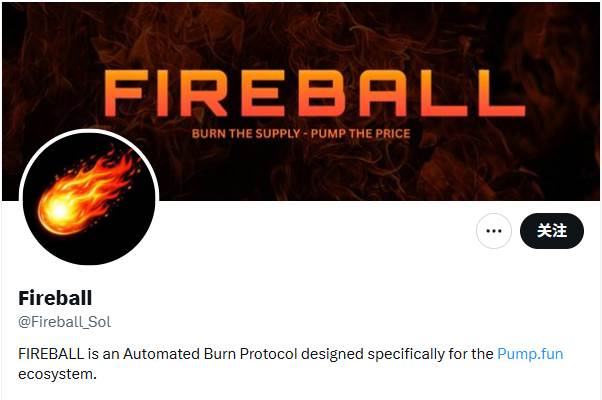
这说明市场现在对「机制型Meme币」这个方向是有反应的。
传统的喊单、拉盘、社区炒作那套玩法越来越难吸引资金,用机制设计讲一个「结构性安全」的故事,可能是Meme币最近的套路之一。
不过说到人为制造某个机制,也不是什么新玩法了。
2021年OlympusDAO的(3,3)是最典型的案例,用博弈论包装质押机制,讲的故事是「大家都不卖就能一起赚」,高峰期市值冲到几十亿美元。后来的结局大家也知道,螺旋下跌,跌去了90%以上。
再早一点还有Safemoon那套「每笔交易抽税分给持有者」的玩法,也是机制创新叙事,最后被SEC起诉,创始人被指控欺诈。
机制可以是很好的叙事钩子,能在短期内聚集资金和注意力,但机制本身不创造价值。
当外部资金停止流入,再精巧的飞轮也会停转。
最后,我们再来捋一下这个小金狗到底在干什么:
把Meme币的创作者费用变成「自动做市机器人」。机制本身不复杂,解决的问题也很明确,就是让开发者没法直接拿钱跑路。
开发者不能跑路,不等于你能赚钱。
如果你看完觉得这个机制有意思,想参与,记住一句话:它首先是个Meme币,其次才是个新机制的实验。