Exchange Ranking
 Top Exchanges
 24h Volume Ranking
 Popularity Ranking
 Exchange BTC Balance
 Proof of Reserves
 Decentralized Exchanges
 Funding Rate
 Funding Heatmap
 Liquidation Data
 Max Pain
 Long/Short Ratio
 Whale L/S Ratio
 Binance/Okex/Huobi L/S
 Bitfinex Margin L/S
 ETF Tracker
 Solana ETF
 XRP ETF
 Hong Kong ETF
 Bitcoin Treasuries
 Crypto Reversal
 Ethereum Reserves
 HyperLiquid Wallet Analysis
 Hyperliquid Whale Watch
 Large Transactions
 On-chain Movement
 Bitcoin ROI
 Stablecoin Market Cap
 Options Analysis
 News
 Articles
 Economic Calendar
 Features
 Wallet
 Contract Calculator


 Security
 Collections
 Watchlist
 Following
 BTC
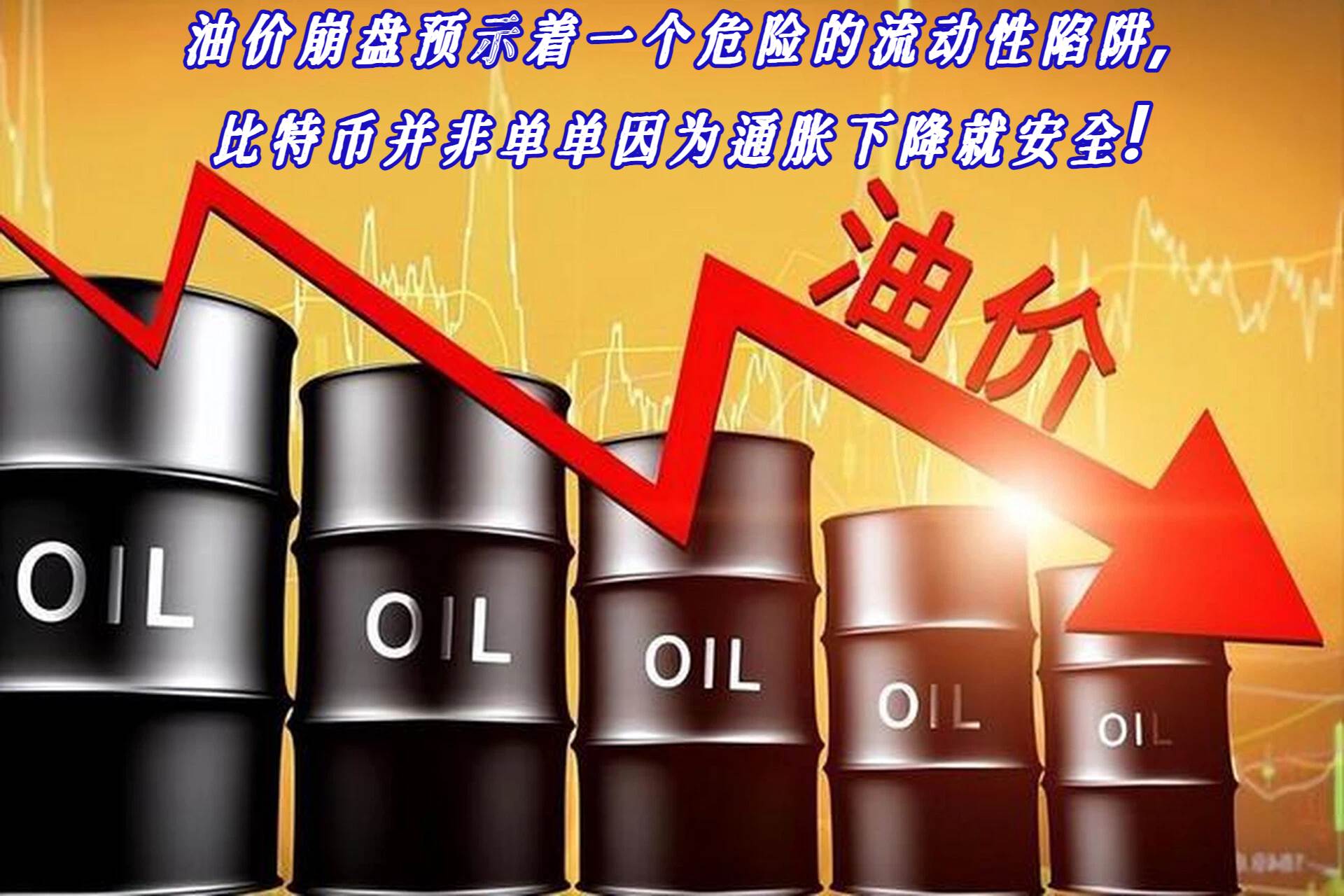
In the past few months, oil prices have fallen below $60 per barrel, and Bitcoin’s value has also dropped from $126,000 in October to around $89,000 today.
So, is this decline in energy prices due to weakened demand or inflation crises? Could this affect future risky assets like Bitcoin?
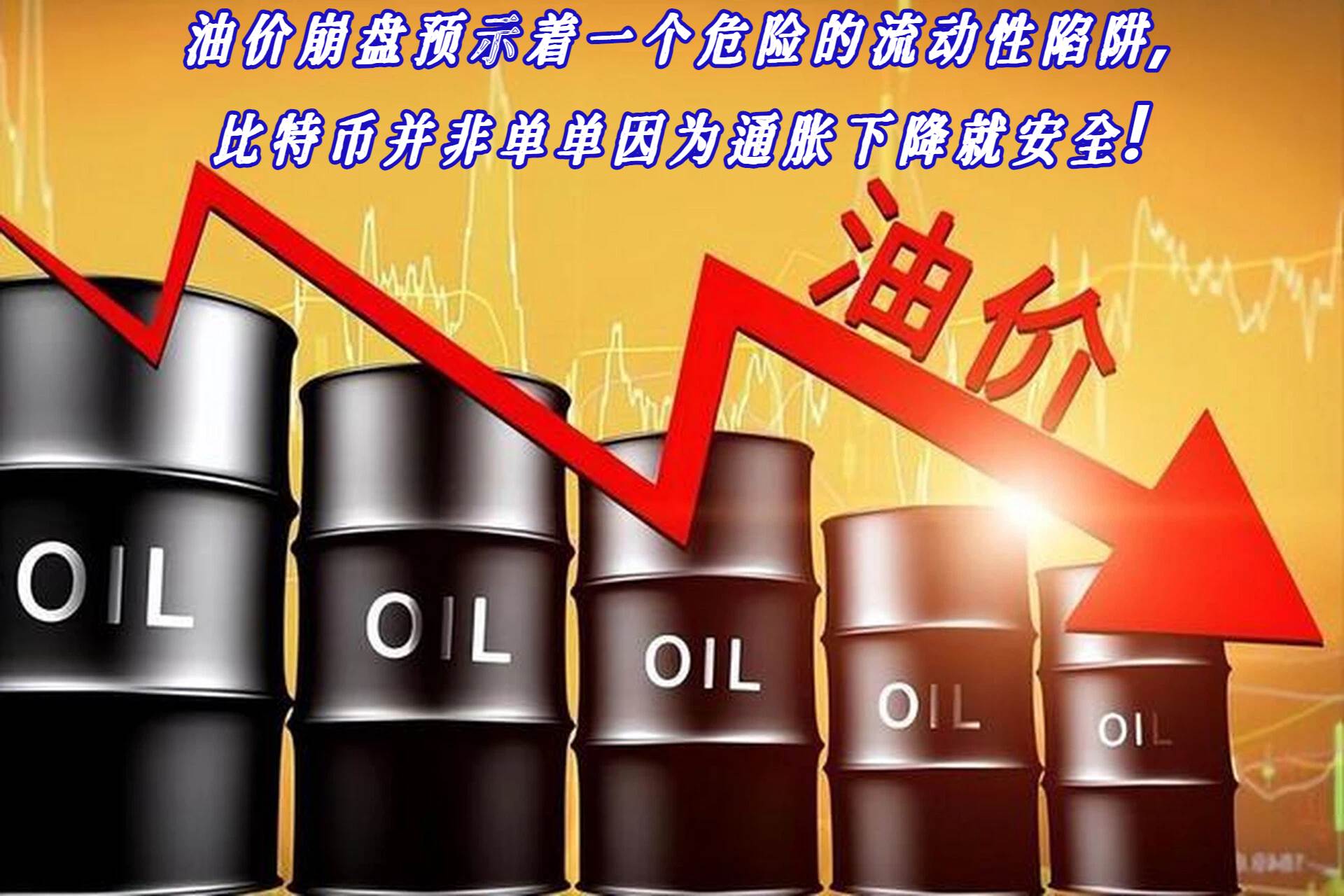
Brent oil closed at $58.92 per barrel, while WTI closed at $55.27 per barrel. Both are the lowest levels since the beginning of 2021.
This situation can be seen as a result of macro-level re-pricing, with supply becoming more abundant and consumption weakening.
For the crypto market, this scenario shifts the focus away from the traditional narrative of “inflations decline, risks rise.”
Instead, it raises the question: Did the growth panic lead to tighter financial conditions before policy easing occurred?
Official forecasts suggest that these conditions will continue until 2026.
The U.S. Energy Information Administration expects inventory levels to continue increasing until 2026. It predicts that Brent oil prices will rise by about $55 per barrel in the first quarter of 2026, and then remain around that level thereafter.
The International Energy Agency predicts that supply will exceed demand in 2026, with an increase of 2.4 million barrels per day, while demand will increase by 860,000 barrels per day.
The World Bank also proposes a downside growth scenario, where oil prices average around $59 per barrel. This scenario links price weakness with activities that are below expected levels.
However, the survey data has not yet been synchronized with oil information, so it’s important for the market to determine which signal comes first.
JPMorgan and S&P Global reported that the November global PMI stood at 52.7, still within the expansion range. This figure is consistent with an annualized global GDP growth rate of around 3% under this framework.
S&P Global indicated that expectations and employment conditions were weakening.
In the United States, the S&P Global Composite Purchasing Manager Index dipped in December, reaching 53, down from the previous level of 54.2. Services sector also showed signs of slowing growth.
In Europe, France’s Composite PMI was around 50.1, close to the zero mark.
Bitcoin’s macro-sensitiveness under this framework often manifests itself in terms of risk appetite and liquidity, rather than just inflation data.
Why are oil prices still important for the macro-structure of Bitcoin?
If oil prices reflect changes in demand, stocks and credit markets may experience fluctuations first. Bitcoin, on the other hand, typically exhibits high beta values during risk-averse phases.
If financial pressures intensify, BTC often acts as a liquidity barometer, quickly responding to tighter financing conditions and wider credit spreads.
During periods of economic panic, expectations of interest rate cuts may increase. However, if position adjustments and leverage adjustments occur faster than policy changes, markets may still prioritize selling risky assets.
So far, no widespread pressures have been identified related to cryptocurrencies.
The U.S. high-yield spread remains near recent lows. The ICE BofA U.S. High-Yield Index’s adjusted option spread was around 2.95% in mid-December.
The government bond curve also shows positive trends; the spread between 10-year bonds and 3-month bonds ended December at +0.54%.
This eliminates one of the common arguments against economic recovery, although concerns about growth continue to exist.
In terms of labor markets, the real-time SAHM rule indicator for November 2025 stands at 0.43, below the threshold of 0.50 associated with economic recessions.
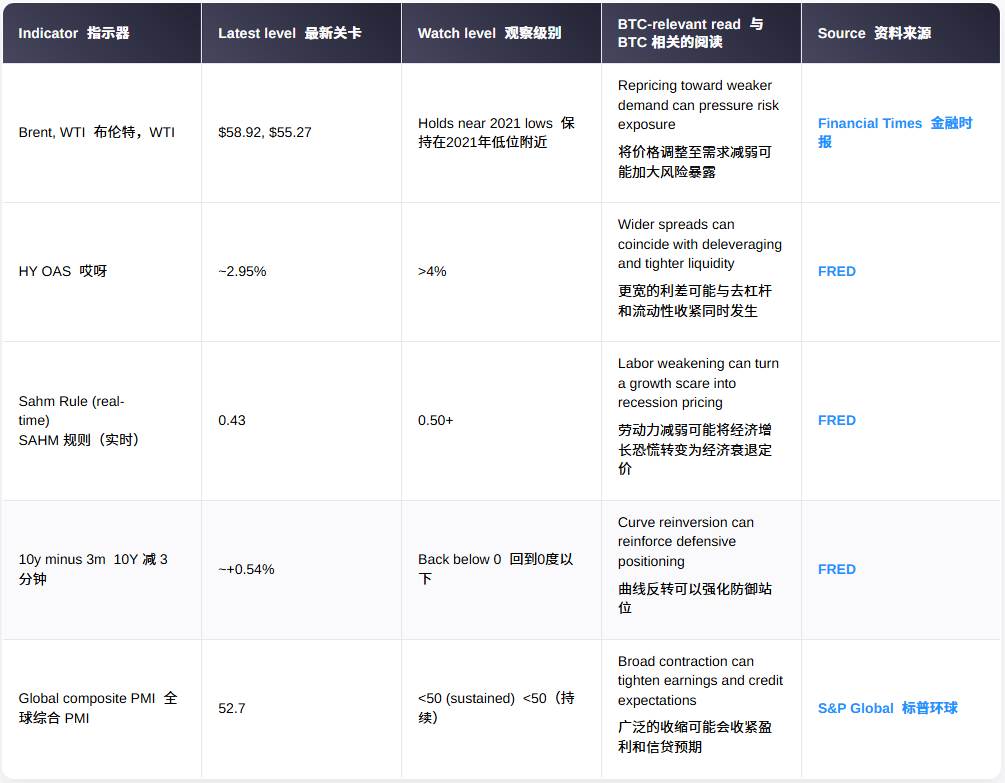
With differences in oil prices, interest rates, and growth prospects, there are three possible macroeconomic scenarios for Bitcoin
. In the coming months, three paths will emerge, depending on whether the decline in oil prices is driven by supply or demand.
If supplies remain sufficient, consistent with EIA and IEA forecasts, and credit conditions remain stable, BTC may remain within a certain range.
In such cases, volatility may be concentrated around interest rates and position sizes, rather than forced sell-offs.
If the PMI moves closer to 50, and unemployment rates remain slightly high, standard risk mitigation measures could still exert pressure on Bitcoin, even without widespread financing measures.
This is because investment portfolio risk budgets usually tighten before recession data is released.
More severe outcomes would require confirmation from credit and labor markets, such as a significant widening of the yield gap and a breach of the 0.50 threshold for SAHM rules.
These conditions might be accompanied by reduced leverage and decreased liquidity.
Interest rate pricing has already reacted to weak data.
According to Reuters, U.S. interest rate futures briefly increased the probability of interest rate cuts in January after employment data in November showed an increase in unemployment rates.
This highlights how quickly policy paths can be renegotiated during periods of growth panic.
Whether this re-pricing is supported in Bitcoin depends on the stability of financial conditions. After all, oil prices remain around the levels seen at the beginning of 2021.