Exchange Ranking
 Top Exchanges
 24h Volume Ranking
 Popularity Ranking
 Exchange BTC Balance
 Proof of Reserves
 Decentralized Exchanges
 Funding Rate
 Funding Heatmap
 Liquidation Data
 Max Pain
 Long/Short Ratio
 Whale L/S Ratio
 Binance/Okex/Huobi L/S
 Bitfinex Margin L/S
 ETF Tracker
 Solana ETF
 XRP ETF
 Hong Kong ETF
 Bitcoin Treasuries
 Crypto Reversal
 Ethereum Reserves
 HyperLiquid Wallet Analysis
 Hyperliquid Whale Watch
 Large Transactions
 On-chain Movement
 Bitcoin ROI
 Stablecoin Market Cap
 Options Analysis
 News
 Articles
 Economic Calendar
 Features
 Wallet
 Contract Calculator


 Security
 Collections
 Watchlist
 Following
 BTC
 ETH
In the encrypted currency market, many beginners only focus on the price fluctuations of various coins, ignoring the more complex derivatives transactions that underlie these movements. The options market for Bitcoin and Ethereum is a typical example. Whenever the expiration date approaches, the settlement of large quantities of contracts can lead to significant price volatility, much like a “time bomb.” For inexperienced traders, such fluctuations can be overwhelming and even affect their trading results. Understanding the expiration mechanism is crucial for grasping the market dynamics and avoiding being caught off guard by market changes.

Key points::
● Expiration of options leads to market volatility, as traders lock in profits, set stop losses, and adjust their positions based on large-scale Bitcoin and Ethereum contracts.
● The bearish/call ratio reflects market sentiment: values above 1 indicate bearish expectations, while values below 1 suggest a bullish outlook.
● Maximum pain point: Price theory suggests that expiration prices tend to occur within a range where the maximum number of contracts becomes invalid. This may increase the risk of potential market manipulation. Understanding the expiration mechanism helps traders track key indicators, predict market fluctuations, and manage risks more effectively during this period.
Upon closer examination, one can see that one of the core factors causing significant market fluctuations is the expiration of options.
When large-scale derivative option contracts approach expiration, the entire encrypted currency market is affected. Understanding this pattern helps traders identify when prices will experience significant fluctuations.
1. What exactly happens during the expiration of options for Bitcoin and Ethereum?
To understand how options expire, it's necessary to first grasp the basic concepts of options. An option is a more complex trading instrument compared to spot transactions.
An option is a contract that gives the holder the right, but not the obligation, to buy or sell Bitcoin or Ethereum at a predetermined price before the contract expires.
As the contract approaches expiration, the trading price of the option changes. Before expiration, prices tend to become more volatile.
When a large number of options expire at the same time, the traditional spot market is also affected, and the price of the underlying asset may experience significant fluctuations.
There are various types of option contracts:
Bull options give holders the right to buy, while bear options give them the right to sell the asset at a specified price before expiration.
The balance between bull and bear options reflects overall market sentiment. If one side dominates, it can drive prices in that direction.
In addition to the expiration date, option contracts also include an exercise price and an option premium. These three elements directly determine profitability and form the mathematical basis for price changes related to option expiration.
It's important to note that Bitcoin options differ from traditional markets in that they do not have a strictly standardized expiration date. They may cover multiple periods, but usually expire at 08:00 UTC on the last Friday of each month.
2. How does option expiration affect the prices and volatility of the crypto market?
For example, if there are option contracts worth 5 billion worth expiring at the same time, even if only a portion of them are exercised or hedged, it could still have a significant impact on the entire market.
It should be noted that options traders have the right to choose whether to buy or sell certain assets. Not all crypto assets worth 5 billion dollars will be traded during this period.
When large-scale option expiries approach, trading activity increases significantly. Traders adjust their positions, leading to a surge in market volume. During these trading periods, price fluctuations are much higher than usual.
Through market analysis, it can be seen that there is a clear connection between option expiries and cryptocurrency price movements. For example, in the case of Bitcoin and Ethereum, market prices change significantly during these times.
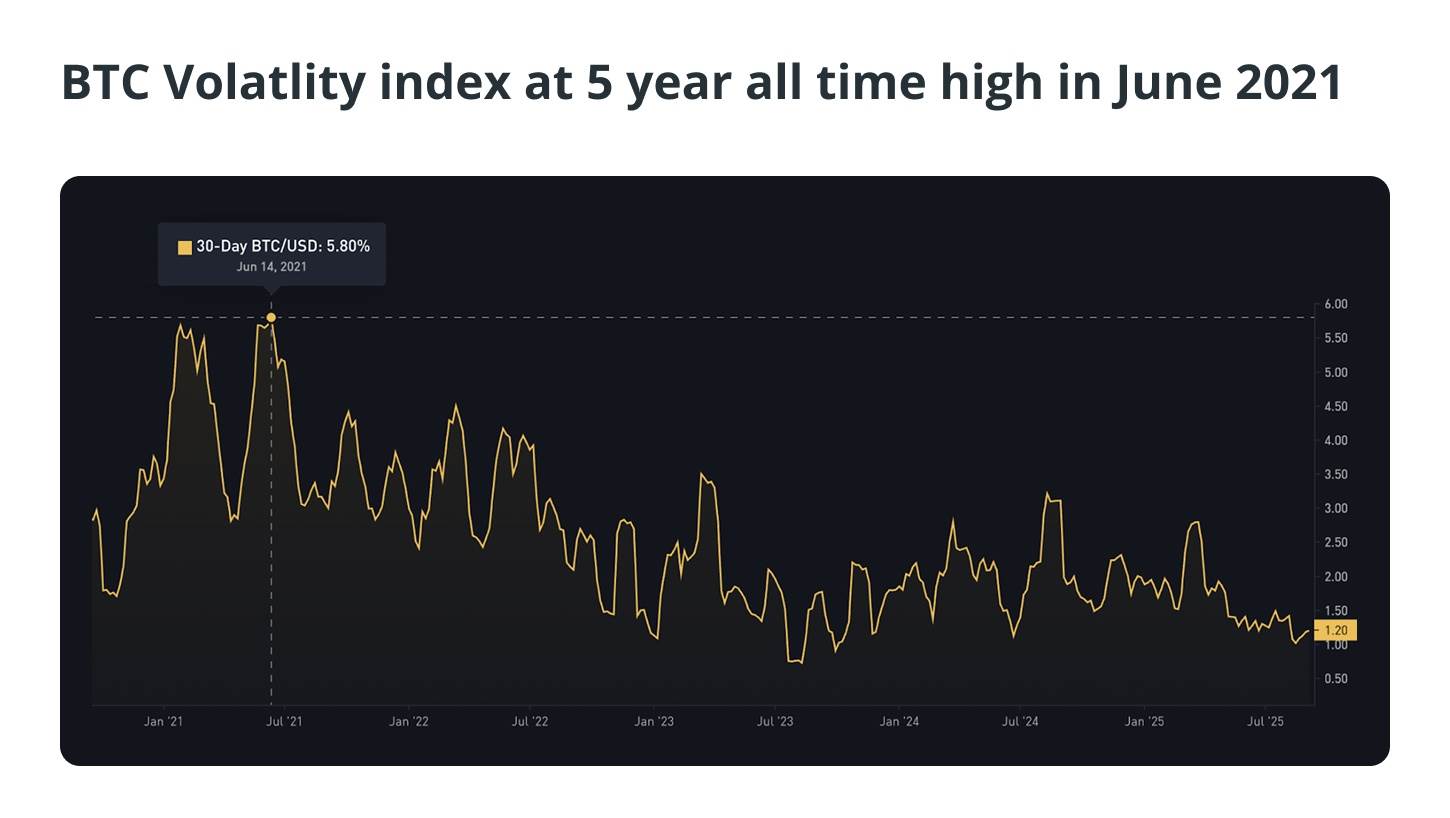
For instance, looking at the Bitcoin Volatility Index, in June 2021, there were more than 4 billion options expiring on Bitcoin and Ethereum, resulting in a 5.80% increase in the Volatility Index on June 14th, the highest level in five years.
In the Bitcoin market, quarterly option expiries usually have a greater impact than monthly ones. This pattern helps us identify which expiration events may lead to higher volatility, allowing us to optimize our trading strategies.
It’s important to note that the world’s first asset options exchange was the Chicago Options Exchange (CBOE), established in 1973, long before Bitcoin was invented.
3. Put/Call Ratio and Market Psychology
As expiration approaches, market volatility increases, and traders may close their positions to lock in profits or avoid losses. This creates a feedback loop that drives further adjustments in positions, further increasing volatility.
Application of Put/Call Ratio
To predict market trends, we can use the Put/Call Ratio. This indicator reflects the market sentiment of both institutional and retail investors.
比率高于1,说明看跌押注占优;低于1则偏向看涨,预示价格可能上涨。
最大痛点价格理论
最大痛点价格理论可视为期权市场的角力。
期权买方希望价格朝有利方向变动,卖方则希望相反。最大痛点是最多期权变为无效的价格区间。
这很关键,因为大型参与者和巨鲸可能推动加密货币价格靠近最大痛点,以影响临近到期时的价格。
该理论反映短期价格走势,同时定位潜在支撑和阻力位。
市场反转
经验丰富的交易者会关注到期日后市场变化。若看跌/看涨比率极端,可能预示市场即将反转。比率达到历史极值时,资产价格往往已超卖或超买,增加到期后反转概率。
值得注意的是,2025年8月,全球最大期权交易所Deribit处理了价值146亿比特币和以太坊期权到期合约,创造2025年数字资产单次到期名义金额最高纪录。
4、应对期权到期波动的实用策略
针对这些事件,交易者可采取以下应对策略:
● 监控关键指标: 跟踪未平仓合约、看跌/看涨比率和最大痛点,提前预警波动性和方向性变化。
● 仓位对冲:利用期权在高波动到期期间保护现货仓位。对冲能限制下行风险,同时保留上涨机会。当价格数小时内波动5%或10%时尤为重要。
● 分散风险: 建议分散资产与时间周期,以降低因到期事件导致的实际损失风险。
● 时间节点管理: 标注关键到期日有助于提前布局,规避损失并把握波动机会。
● 使用高级工具: CoinGlass和CME Group日历等高级数据分析平台可提供期权市场洞察。实时数据可让你在现货交易者中占据优势。
● 关注成交量与流动性: 理解成交量及流动性变化,能在到期临近时更好地管理风险,判断流动性何时枯竭。